For most healthy pet birds kept indoors at normal room temperature (65–80°F), you probably don't need a dedicated bird heater at all. But if your home drops below 60°F at night, you have a sick or recovering bird, you keep a small species like a budgie or cockatiel that chills easily, or you're heating an outdoor aviary, then a safe supplemental heat source makes a real difference. The key word there is safe, because birds are uniquely sensitive to heating hazards that most people don't think about until it's too late.
Best Bird Heater Guide: Choose, Size, and Use Safely

Marcus Chen
19 May 2026
What a "bird heater" is and when you actually need one
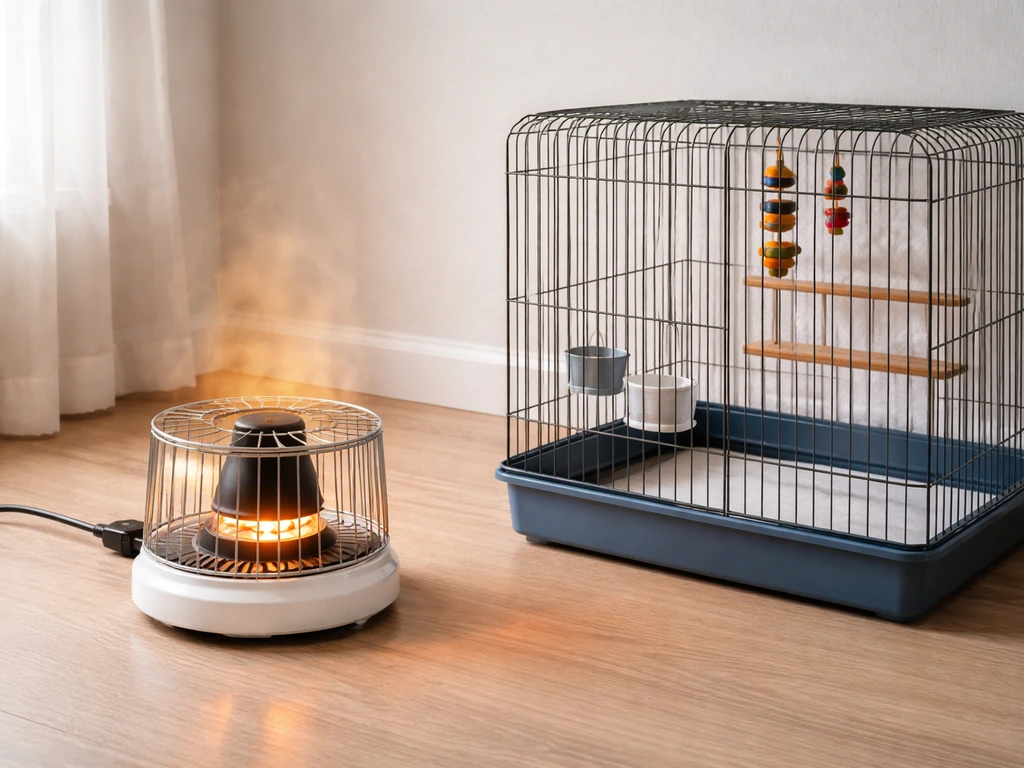
A bird heater isn't a single product category. It's a loose term people use for any supplemental heat source aimed at keeping a bird comfortable: a ceramic heat emitter clamped to a cage, a heated perch, a panel radiating gentle warmth, or a portable space heater warming an entire bird room. Which of those makes sense for your situation depends entirely on why you need heat.
Healthy adult birds of most common pet species handle normal indoor temperatures just fine. Budgies and cockatiels (both from Australia) prefer roughly 70–80°F and start struggling below 60°F. Tropical parrots like conures and amazons are similar. Anything below 40°F is genuinely dangerous for these species. If your home stays in the 68–75°F range year-round, you're probably fine without any extra equipment. Where supplemental heat becomes necessary is in three real-world scenarios:
- Cold rooms or unheated spaces: garages, sunrooms, barns, or outdoor aviaries where temps dip at night
- Sick or recovering birds: a vet or avian husbandry guidance often recommends 80–85°F ambient for ill birds, sometimes up to 95°F for critically cold birds
- Drafty homes: a cage near a window or exterior wall can create localized cold even when the rest of the room feels warm
If your bird is puffed up, lethargic, or shivering, that's a cold signal worth acting on. If they're panting, holding their wings away from their body, or breathing with an open beak, they're overheated. Both are problems you need to solve, and a heater used carelessly can flip you from one to the other fast.
Choosing the right heater type (and what to avoid for birds)
This is where most first-time bird owners make their biggest mistake: grabbing whatever space heater is in the closet without thinking about what it's made of or how it puts out heat. For birds, the material matters as much as the mechanism.
The PTFE/Teflon problem (read this first)
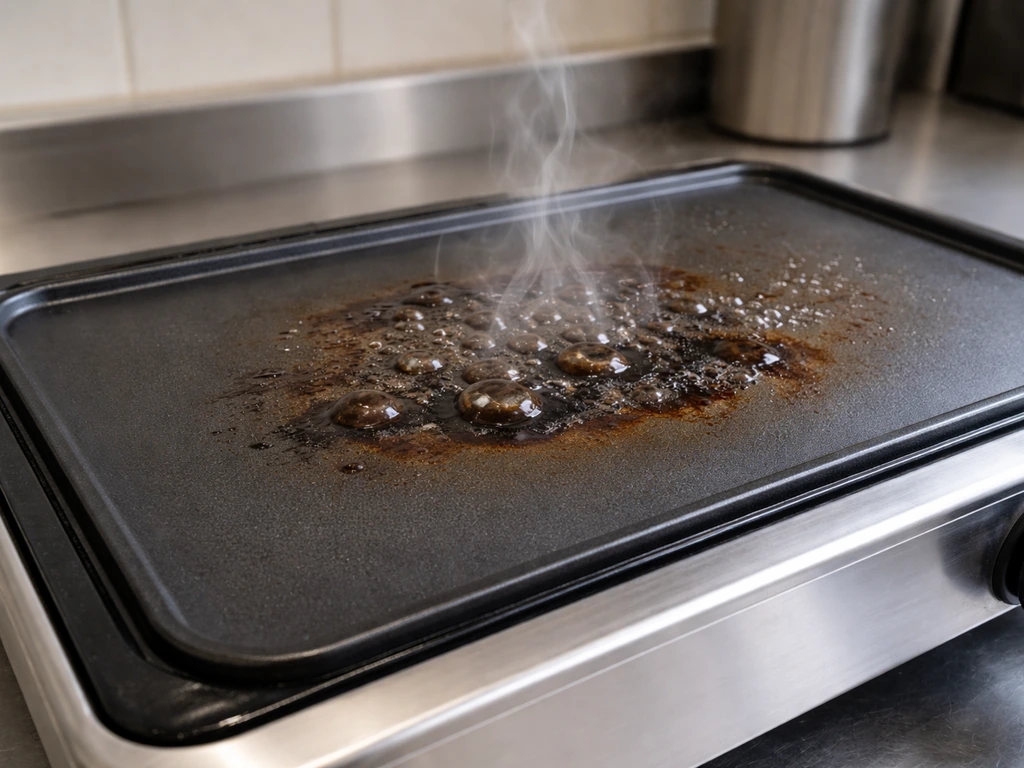
Fluoropolymer coatings, most commonly PTFE (the same material as Teflon), are lethally toxic to birds when overheated. Cornell documented a case where ducks died within hours of a new PTFE-coated heat lamp being installed. The fumes are colorless and odorless, and birds have no chance to escape them. This isn't a fringe risk: many cheap space heaters use PTFE-coated heating elements, and some heat lamp bulbs have fluoropolymer coatings. Before you plug anything in around your bird, check the product materials. Avian Exotic Vet Care’s handout also warns that PTFE-related sources can include heat lamp covers or bulbs, and that aerosol or spray use around birds can be dangerous some heat lamp bulbs have fluoropolymer coatings. If you can't confirm it's PTFE-free, don't use it. Never run a new electric heater around your birds until you've verified what the heating element is made of and burned it off (outside, away from all birds) for at least 30 minutes first.
Heater types compared
| Heater Type | How It Works | Bird-Safe? | Best Use Case | Key Risks |
|---|---|---|---|---|
| Ceramic heat emitter (CHE) | Radiant infrared heat, no light output | Yes, if PTFE-free and thermostat-controlled | Single cage or small aviary supplemental heat | Burns if bird contacts it; must be caged/guarded |
| Heated perch (e.g., K&H Thermo-Perch) | Contact warmth via internal thermostat-regulated element | Yes, built-in thermostatic control | Smaller birds needing gentle warmth from below | Limited to perch-level heat; not for whole-room heating |
| Infrared radiant panel | Gentle radiant warmth, no exposed element | Yes, widely recommended for bird rooms | Bird rooms, aviaries, larger spaces | Must be sized correctly; won't heat a large space fast |
| Convection space heater (ceramic element) | Heats air by convection | Only if PTFE-free and UL-listed with thermostat | Whole-room heating when bird is not directly next to it | Dry air; PTFE risk; tip-over hazard; uneven temps |
| Heat lamp (incandescent/halogen) | Radiant light and heat | Conditionally, if no PTFE coating and positioned correctly | Hospital cage/sick bird supplemental heat | PTFE coating risk; fire hazard if too close; light disrupts sleep |
| Electric blanket / human heating pad | Contact conductive heat | No | Not recommended for birds | Uncontrolled heat, burns, electrical hazard |
| Heat rocks (reptile-style) | Contact heat | No | Not for birds | Severe burn risk, uncontrolled surface temps |
The practical recommendation for most bird owners is this: a thermostat-controlled ceramic heat emitter for single-cage use, or an infrared panel heater for a whole bird room. Heated perches like the K&H Thermo-Perch are a great low-risk addition for birds that need a little extra warmth at roost time. Avoid anything with uncontrolled heat output, anything with PTFE coatings, and never use human heating pads or electric blankets regardless of what you've read elsewhere.
Sizing and placement: keep temps stable without hot spots
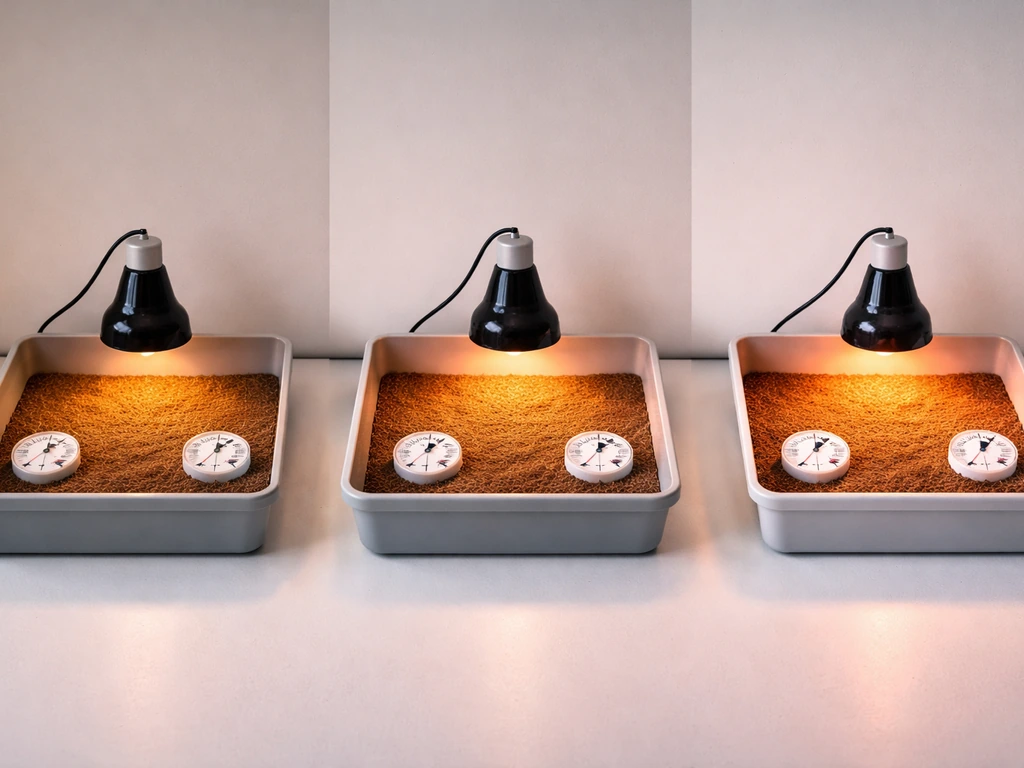
Getting the size right matters more than most people realize. An underpowered heater runs continuously and still can't keep up on cold nights. An overpowered one blasts one side of the cage to 95°F while the other side stays at 60°F. Either scenario is a problem.
Sizing guidelines
- For a single cage: a 100–150W ceramic heat emitter is usually plenty for supplemental warmth in a normal indoor room
- For a bird room (10x10 ft or smaller): a 500–750W infrared panel or a quality ceramic space heater sized for the square footage will typically maintain temperature without running constantly
- For outdoor aviaries: you'll need to account for insulation (or lack of it), wind exposure, and overnight lows — size up and plan for a backup
Placement principles
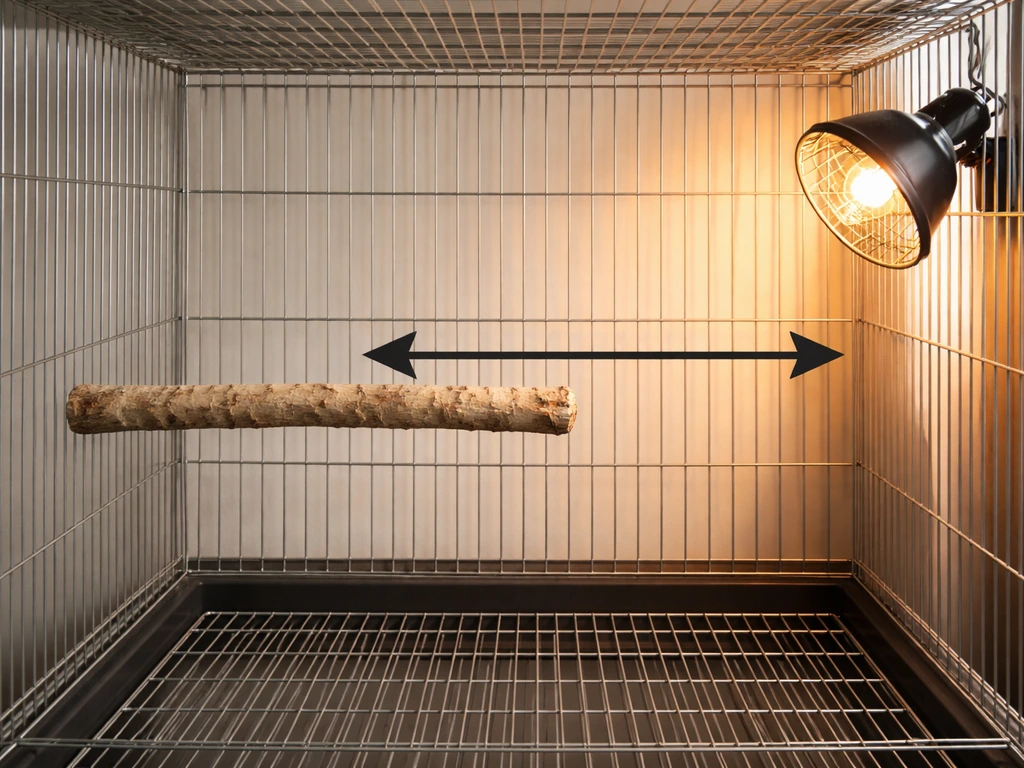
The most important placement rule: create a thermal gradient, not a uniform blast of heat. This means one end or corner of the cage should be warmer, and the other end cooler, so the bird can move to whatever temperature it prefers. This is especially critical for sick birds. The UK National Council for Aviculture recommends a "corner only" approach: place one perch near the heat source and one perch at the opposite end. If the bird plants itself permanently next to the heater, it's cold. If it stays at the far end all day, it's too hot.
- Heat lamps or CHEs: position at least 3 feet from the bird's perch, aimed at one side of the cage, never directly overhead
- Never wrap heat sources fully around a cage — this eliminates the bird's ability to escape to a cooler area
- Keep heaters away from perches, food/water dishes, and any fabric or wood that could ignite
- In a bird room, place panel heaters high on a wall to allow warm air to circulate downward naturally
- Avoid placing any heater near a window or exterior wall where drafts can create temperature swings
Safety checklist for indoor bird heating
I've seen owners do everything right on temperature but overlook a hazard that was sitting right in front of them. Before you run anything new in your bird's space, go through this list.
- Confirm the heater is PTFE/fluoropolymer-free — check the product materials listed by the manufacturer, and if you can't confirm, don't use it near birds
- Run any new electric heater outside, away from all birds, for at least 30–60 minutes before bringing it near the bird room — this burns off manufacturing residues and coating smells
- Choose only UL-listed heaters with a tip-over switch that automatically cuts power if the unit falls
- Make sure the heater has an automatic temperature shutoff (overheat protection) — this is a basic safety feature required on quality units
- Keep all heaters at least 3 feet from the cage, curtains, bedding, or any combustible material
- Never leave a heat lamp or space heater running unattended in a room where you can't check on the bird regularly
- Do not use human electric blankets, heating pads, or reptile heat rocks around birds — they're not designed for this purpose and pose burn/fire hazards
- Check cords for fraying or damage before every use and avoid running cords under rugs
- If your bird shows open-beak breathing, panting, or wing-spreading after you add a heater, reduce heat immediately and contact an avian vet if symptoms persist
Monitoring and settings: thermometers, humidity, and gradual warm-up
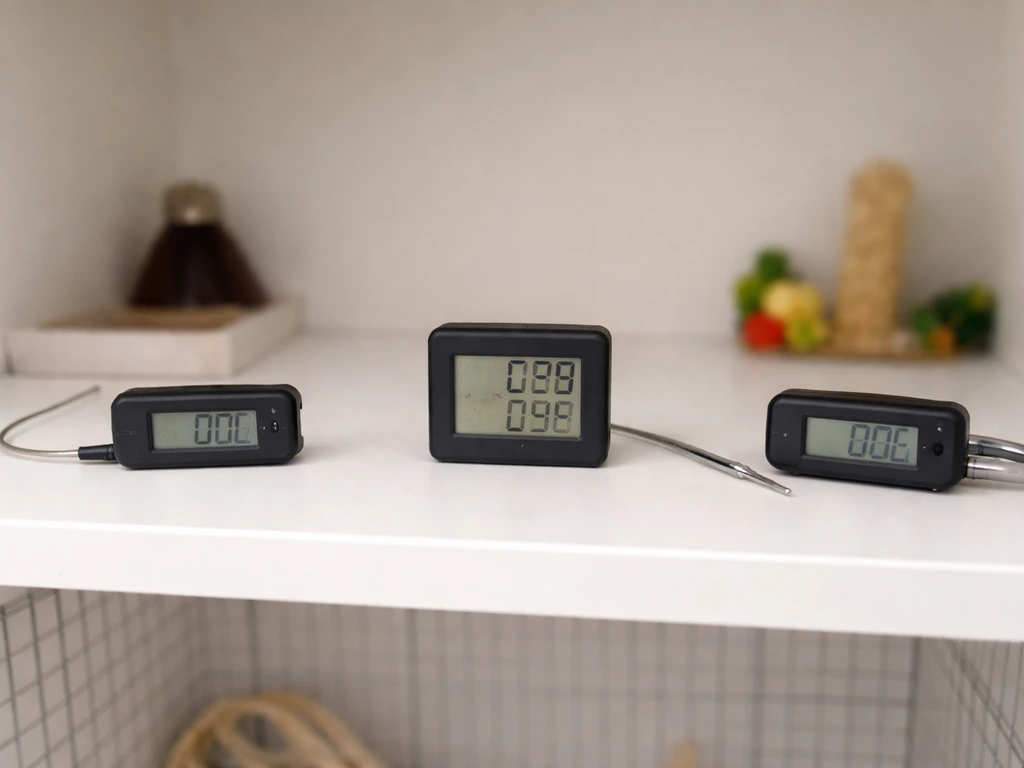
You cannot manage what you can't measure. A digital thermometer with a probe is non-negotiable if you're adding a supplemental heat source. One thermometer on the warm side of the cage and one on the cool side gives you the full picture. A single reading in the center of the room tells you almost nothing useful about what the bird is actually experiencing.
Temperature targets
- Healthy adult birds (budgies, cockatiels, small parrots): aim for 68–80°F in the room, with the warm side of the cage hitting no more than 85°F
- Sick or recovering birds: 80–85°F ambient is typically recommended, with a vet's input; some critically ill birds may need up to 90–95°F short-term
- Night temperature drops: a drop of 5–10°F at night is fine for most healthy birds, but avoid sudden drops of more than 15°F in a short time
Humidity matters too
Heating dries out indoor air, and dry air is genuinely bad for birds' respiratory systems and feathers. Most pet birds do best at 40–50% relative humidity. If you're running a space heater or panel heater and the humidity in the bird room drops below 35%, you need to address it. A hygrometer (humidity monitor) clipped near the cage tells you exactly where you stand. If the air is too dry, a cool-mist humidifier in the room helps. Given that humidity management and heating are closely linked, it's worth thinking about both together when you're setting up your bird room environment.
Warming up gradually
Don't bring a cold bird into a hot room or crank a heater up immediately. Sudden temperature changes are stressful and can cause respiratory and circulatory problems. When warming a chilled bird, raise the ambient temperature by roughly 5°F every 15–20 minutes until you reach the target. If a bird has been severely chilled and is lethargic or unresponsive, that's a veterinary emergency, not a home-heating situation.
Thermostat probe placement (this one trips people up)
If you're using an external thermostat to control a CHE or panel heater, where you place the probe determines what temperature the thermostat thinks it's controlling. Place the probe in a cold corner of the cage and the heater will run long enough to make the warm side dangerously hot before the probe registers target temp. Place it directly in front of the heater and it will short-cycle, leaving the far end cold. The right spot is at bird height, roughly in the middle of the bird's living zone, not at the heater and not in the coldest corner.
Troubleshooting common heating problems
The heater runs but the cage is still cold
First check for drafts. A cage near a window, exterior wall, or air vent can be losing heat faster than the heater adds it. Block drafts with a cage cover (leave ventilation), move the cage away from the cold source, or add insulation behind the cage. If there's no draft issue, the heater is probably underpowered for the space, size up or add a second smaller heat source on the other side.
One side of the cage is too hot
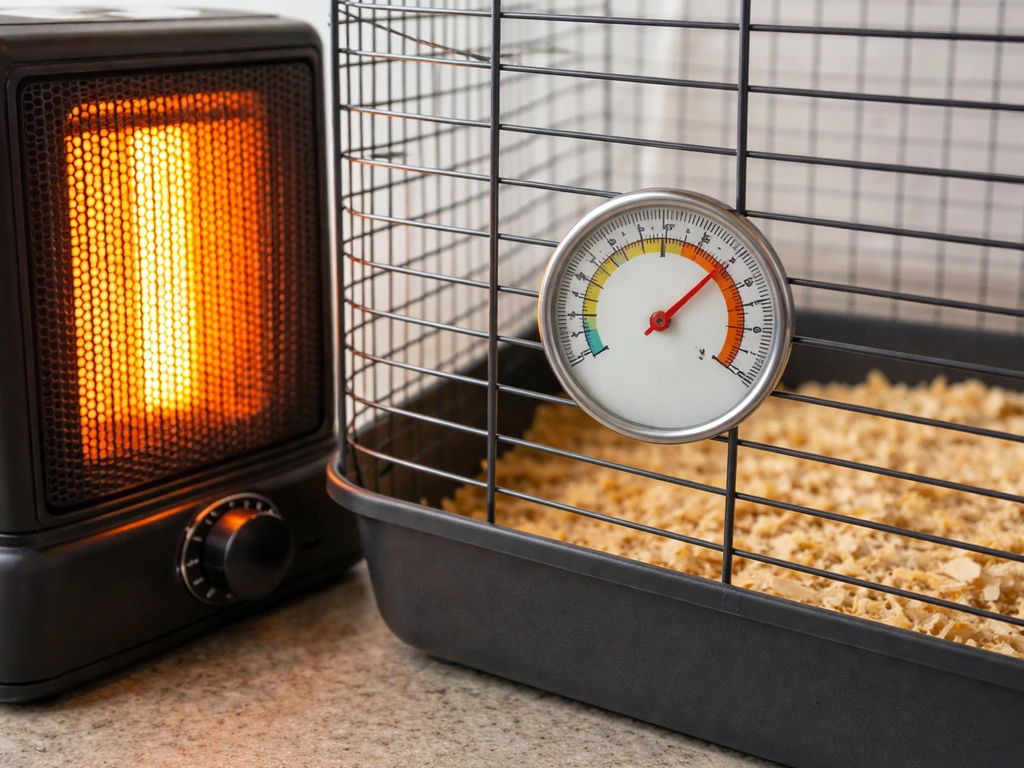
This is a placement problem. The heat source is too close, too powerful, or both. Move the heater further away first, or reduce wattage with a rheostat or thermostat. Check that the bird has a cool perch it can reach easily. If you're using a heat lamp, redirect it to shine beside the cage rather than directly at it.
The air is too dry after adding heat
This is almost inevitable with convection heaters in winter. Add a cool-mist humidifier in the room and monitor with a hygrometer. Target 40–50% humidity. Avoid warm-mist humidifiers near birds, and clean any humidifier regularly to prevent mold.
Condensation forming on the cage or nearby surfaces
Condensation means the surface is cold enough that warm humid air is depositing moisture on it. It usually signals that one part of the bird's environment is much colder than the surrounding air. Check for cold drafts hitting the cage, and consider whether your heating setup is creating a more extreme temperature gradient than intended.
The bird is showing stress signs despite being in the target temp range
If your thermometer says the temp is right but the bird is panting (too hot) or puffed up and lethargic (too cold or ill), trust the bird over the thermometer. Recheck probe placement and verify your readings with a second thermometer. If the bird's signs don't resolve when you correct the temperature, contact an avian vet. Open-beak breathing, labored respiration, or persistent lethargy in a bird that's been exposed to any new heating equipment warrants a call to a vet the same day. The Association of Avian Veterinarians also recommends seeking veterinary care promptly when companion birds show illness or emergency warning signs, including concerning changes in breathing or behavior after heat exposure persistent lethargy in a bird that's been exposed to any new heating equipment.
Top practical buying criteria and how to decide fast
If you've read this far and still need to make a purchase decision, here's how to cut through the noise and pick the right product for your situation.
What to look for on the product page
- PTFE-free confirmed in the product description or by contacting the manufacturer directly — this is a hard requirement
- UL listing (or cUL for Canada) with tip-over auto-shutoff and overheat protection
- Built-in thermostat or compatibility with an external thermostat — fixed-output heaters are harder to control safely
- Wattage appropriate for the space: 100–150W for a single cage supplement, 400–750W for a small bird room
- For CHEs: a ceramic or metal lamp guard is essential so the bird can never touch the element
- For heated perches: look for dual internal thermostats (like the K&H Thermo-Perch) that self-regulate rather than running at fixed heat
- Easy-to-clean surfaces with no crevices where droppings and debris can accumulate and create odor or fire risk
Decision path by situation
| Your Situation | Best Heater Type | Secondary Option |
|---|---|---|
| Single indoor cage, room drops below 60°F at night | Thermostat-controlled ceramic heat emitter (CHE) with lamp guard | Heated perch as a complement |
| Sick or recovering bird needing 80–85°F | CHE + external thermostat, or heat lamp positioned 3+ feet from cage | Infrared panel at close range with digital thermometer |
| Whole bird room heating | Infrared radiant panel heater sized for room square footage | Ceramic space heater (PTFE-free, UL-listed) with room thermostat |
| Outdoor or semi-outdoor aviary | Insulated aviary + infrared panel heater on a thermostat | Multiple CHEs for redundancy on very cold nights |
| Bird that just needs a bit more warmth at the perch | K&H Thermo-Perch or similar thermostat-regulated heated perch | CHE at low wattage positioned to warm the perch area |
Keeping birds comfortable beyond just heat
Heat is one variable in bird comfort, not the whole picture. A well-placed cage away from drafts, good air quality (relevant if you're also thinking about air purifiers or air filters for your bird room), stable humidity, and a consistent day/night light cycle do more for a bird's wellbeing than any single piece of equipment. For bird owners, the best air purifier for bird rooms can help reduce airborne particles that irritate sensitive respiratory systems best air purifier for bird owners. If you are shopping for the best vacuum for bird owners, focus on models that can handle fine dust and pet dander without stirring it back into the air. If you are dealing with extra shedding, choosing one of the best air purifiers for bird dander can further reduce airborne allergens in the bird room. Before you spend money on a heater, make sure the basics are solid: no cold drafts hitting the cage, no sudden temperature swings from nearby HVAC vents, and no respiratory irritants in the air. If you are dealing with bird dust, choose the best air purifier for bird dust to keep the air cleaner and easier to breathe respiratory irritants in the air. A bird in a stable, enriched, draft-free environment at 68°F will usually thrive more than a bird in a drafty, stressful room held at 78°F by an overworked heater.
The bottom line: choose a PTFE-free, thermostat-controlled heat source sized for your actual space, burn it off outside before first use, place it to create a thermal gradient rather than uniform blast heat, monitor with two thermometers and a hygrometer, and let the bird's behavior be your final feedback loop. Get those five things right and you've solved 90% of the bird heating problem.
FAQ
How do I tell if I actually need the best bird heater for my setup, or if I just need to fix drafts and room temperature?
If your room stays between about 68–75°F during the day and doesn’t drop below roughly 60°F overnight, you often don’t need supplemental heat. Before buying, measure temperature on the warm and cool cage ends for several nights, then check for drafts from windows, exterior walls, vents, or HVAC blowing toward the cage. If readings are stable and the bird is not puffed up, shivering, lethargic, or showing heat-stress signs, a heater is probably unnecessary.
Can I use a ceramic heat emitter or infrared panel to heat the whole room with a single device?
Sometimes, but it depends on your bird-room size and airflow. Room heating systems should be controlled by a thermostat using a probe placed at bird height in the living zone. If you only measure near the device or in the center of the room, you can get a hot spot near the heater and a cold spot where the bird actually spends time. For larger rooms, many owners get better results by warming one corner or adding a second heat source rather than trying to heat the entire space evenly.
What’s the safest way to test a new heater before bringing it near my birds?
Verify heater materials first, especially confirm the heating element is PTFE-free. After that, run the heater outside the bird area (or in a separate, fully ventilated space away from all birds) for at least 30 minutes before using it. This is specifically to reveal any odor or off-gassing and to ensure you are not introducing fluoropolymer-related fumes or other contaminants into the bird environment.
Is it okay if the bird spends most of its time near the heater?
It’s not automatically a problem, but it’s a key diagnostic. If the bird constantly stays right against the heat source, that often means the available warmth is insufficient at the rest of the cage, or the bird is trying to compensate for being cold. If the bird refuses the warm end and stays at the cooler end even when they would normally roost elsewhere, the warm side may be too hot. Aim for a gradient and let the bird choose locations comfortably.
Can I rely on only one thermometer to set up my best bird heater?
No, one reading can be misleading. Use at least two thermometers, one near the warm side and one near the cool side of the cage, and place the thermostat probe correctly if you have external control. If you only measure in the middle of the room or near the heater, the bird may experience a different temperature range than your controls indicate.
Do I need humidity control if I’m only using heat at night?
Yes, because heating can drop relative humidity quickly in winter. Monitor with a hygrometer placed near the cage. If humidity falls below about 35%, plan to add humidity, typically with a cool-mist humidifier, and target roughly 40–50%. Dry air can worsen respiratory issues and feather condition even if temperature looks correct.
What should I do if my bird starts panting after I turn on the heater?
Panting is an overheating sign, even if your thermometer seems fine. Immediately reduce heat output (lower thermostat setpoint, reduce wattage, or move the heat source farther away), and confirm with a second thermometer where the bird is perched. Also check probe placement and look for a hot spot caused by the heater being too close or directed. If breathing is labored, open-beak, or the bird does not improve quickly, contact an avian vet the same day.
My thermometer shows the target temperature, but my bird is puffed up and lethargic. What’s the most common cause?
Probe placement or temperature stratification. It’s common for the thermostat probe to be reading “target” while the bird’s actual microclimate is colder or hotter. Recheck with a second thermometer at the warm and cool ends, confirm the probe is at bird height in the living zone, and ensure you are creating a gradient rather than blasting one area.
Is it safe to use heat lamp bulbs or fixtures near birds?
Heat lamps can be risky if they include unsafe coating materials or provide uncontrolled, localized heat. If you use a heat lamp approach, confirm the bulb and fixture materials are PTFE-free, redirect the heat so it warms the side of the cage rather than directly shining onto the bird, and ensure the bird can always move to an easy cooler option. Use behavior as the final check for overheating or chilling.
Can I use a human electric blanket or heating pad for bird warmth?
You should not. Even if it seems convenient, electric blankets and human heating pads create unpredictable hot spots and are not designed for birds’ safety needs. Also, they can overheat surfaces or trap heat in ways that are hard to control safely. Stick to bird-appropriate, thermostat-controlled heat sources designed for cages or bird rooms.
How should I adjust warming if my bird is chilled or recovering from illness?
Avoid sudden changes. Increase ambient temperature gradually by about 5°F every 15–20 minutes until you reach your target, and never skip monitoring. If the bird is severely chilled, lethargic, or unresponsive, treat it as an emergency and contact an avian vet rather than trying to solve it with home heating alone.
Why do I sometimes see condensation on surfaces when I run heat in the bird room?
Condensation usually means one surface is colder than the surrounding warm, humid air, often due to cold drafts, a colder section of the room, or an overly extreme temperature gradient. Look for drafts hitting the cage and identify cold spots from windows, exterior walls, or uninsulated areas, then adjust heater placement to smooth out the environment rather than creating sharp extremes.
Next Article
Best Air Purifier for Bird Dust: Buyer and Setup Guide
Choose the best air purifier for bird dust with HEPA filters, room sizing, placement, and maintenance tips to reduce dan