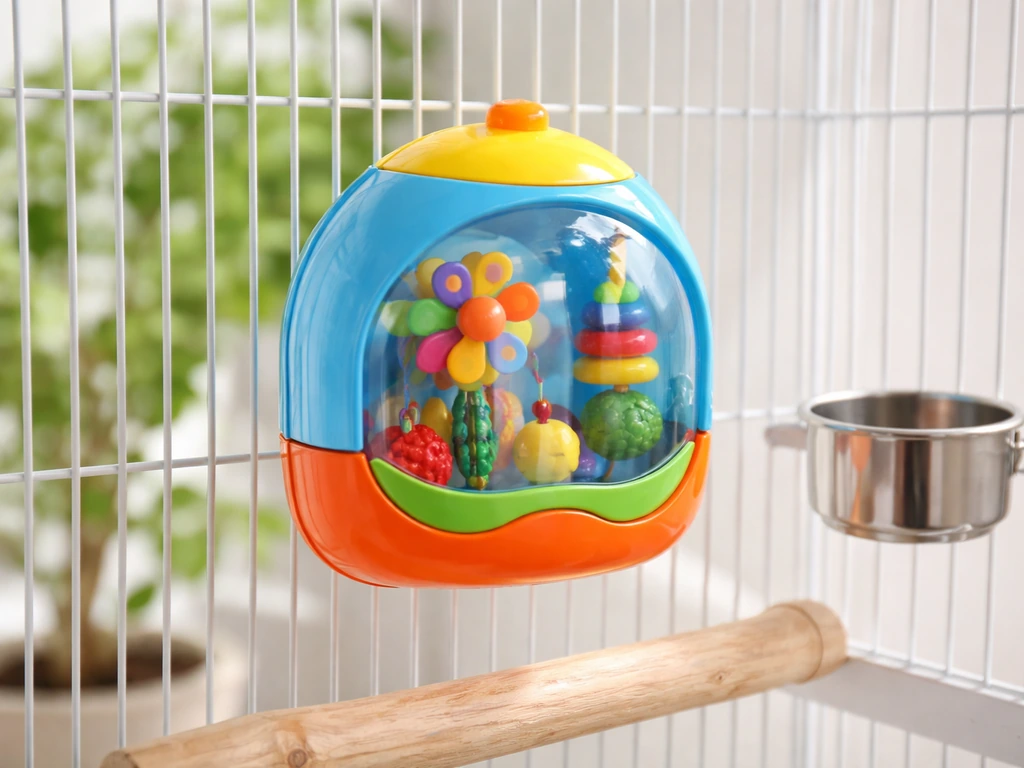
For most indoor cats, a wand-style 'flying bird' teaser (like the classic Da Bird) is the best starting point: it gives you full control over movement, mimics real bird flight convincingly, and costs under $15. For help choosing the right option for your home, see our guide on the best indoor bird toys best starting point. If you want something hands-free, a battery-powered automatic toy like the PetSafe Peek-a-Bird is the next best option for solo play sessions. The catch is that 'flying bird cat toy' is used to describe at least five different product types, and buying the wrong style for your cat's personality is the most common mistake people make. This guide walks you through all of them, what to look for, and how to use whichever you pick safely starting today.
Best Flying Bird Cat Toy for Indoor Cats: How to Choose

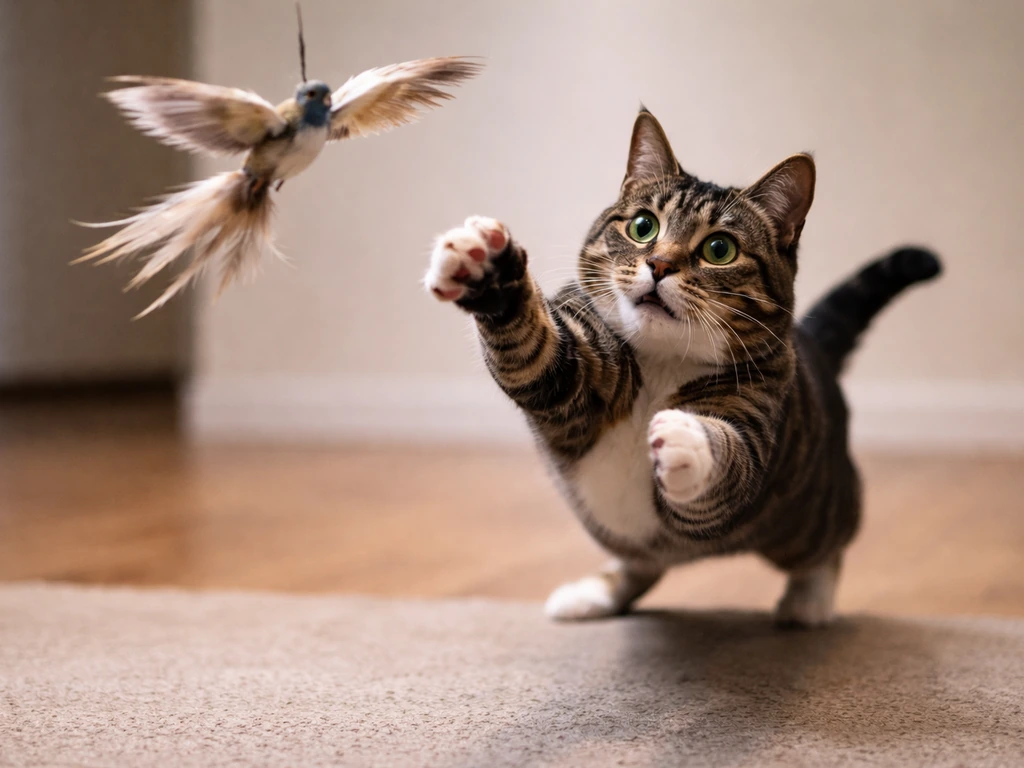
What 'Flying Bird' Cat Toys Actually Are (They're Not All the Same)
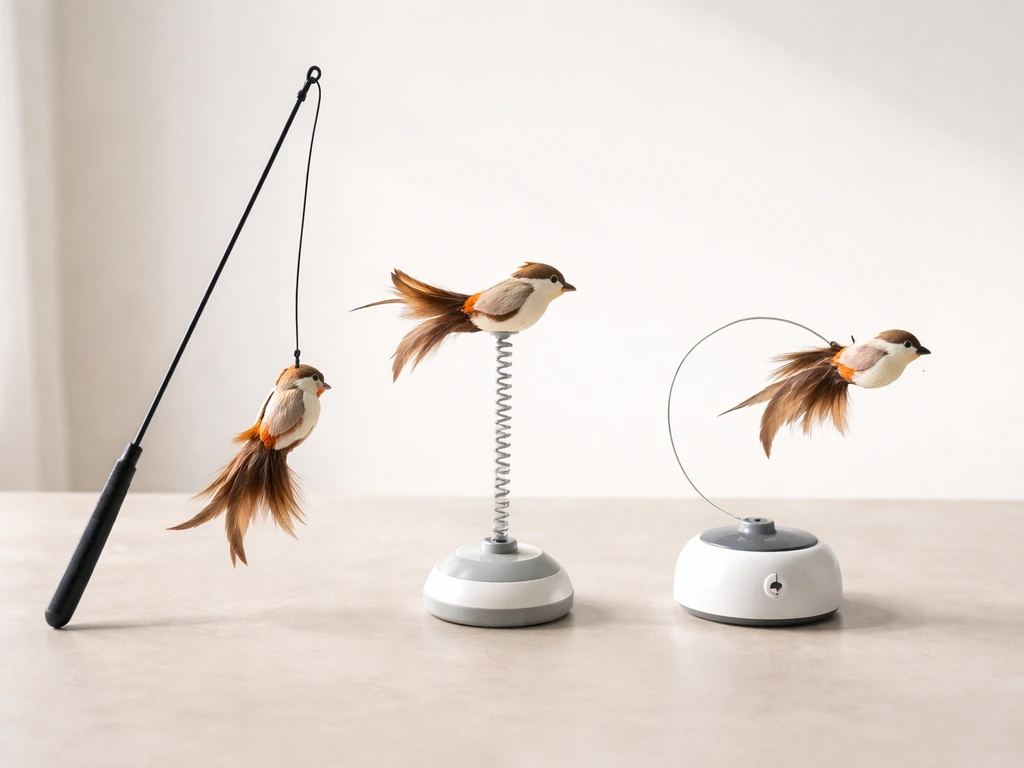
This is worth spending a minute on because the same phrase gets slapped on very different products. Here are the five main types you'll encounter:
| Type | How It Moves | Best For | Supervision Required? |
|---|---|---|---|
| Wand/teaser (e.g., Da Bird) | You swing/drag the wand; feathers rotate on a swivel to mimic real wingbeats | Interactive play, bonding sessions | Yes, always |
| Automatic flapping toy (e.g., PetSafe Peek-a-Bird) | Battery-powered motor flaps feathers; motion sensor wakes the toy when cat walks by | Solo play while you're busy or away | Recommended, optional for short sessions |
| Remote-control chase toy | You trigger movement via a remote/button; more targeted than a wand but less physical | Cats that ignore stationary toys but won't follow a wand | Yes, always |
| Dangling/attachment bird lure | A bird-shaped plush or feather cluster hung from a spring, door, or stand; moves when batted | Low-energy cats, ambient stimulation | Low risk, still inspect regularly |
| On-screen bird video | Motion on a tablet or TV screen; no physical toy involved | Occasional novelty only — not a substitute for physical play | Watch for screen aggression |
The wand style, specifically the Da Bird design, works because the feathers are mounted on a swivel that makes them spin and flutter when you move the wand, so it genuinely looks, sounds, and feels like a bird in flight. Most cats go absolutely wild for it. The automatic flapping version trades that realism for convenience: the PetSafe Peek-a-Bird has a motion sensor that wakes the toy when your cat walks past, and a 'Play-All-Day' mode that automatically activates every two hours. Neither approach is universally 'better.' They solve different problems.
One thing worth flagging: if you've seen 'top bright magnetic bird toy' in search results and wondered if it was relevant here, it's not. TOP BRIGHT makes a magnetic bird-feeding game designed for toddlers. Completely different product category. Don't confuse it with pet toys, and definitely keep loose magnet-based toys away from pets entirely, the CPSC has issued explicit safety warnings about high-powered magnet ingestion risks.
How to Pick the Best Indoor-Safe Option: A Buying Checklist
Before you buy anything, run through this checklist. I've seen people spend $40 on an automatic toy that their cat ignored because they skipped step one.
- Motion realism: Does the 'bird' flutter, spin, or change direction unpredictably? Cats lose interest fast in toys with repetitive, mechanical movement.
- Range of movement: Can the toy move across the floor (prey-chase instinct) AND up in the air (pounce/jump instinct)? The best wands do both.
- Durability of the attachment: Feathers and tinsel shred fast, especially for power-chewers. Look for reinforced connections and check if replacement lures are sold separately.
- String/line safety: Avoid attachments with long, loose strings or tinsel strands that can be bitten off and swallowed. Linear objects (string, yarn) are a genuine intestinal hazard if ingested.
- Noise level: Motorized toys vary from nearly silent to annoyingly loud. If your home is quiet or your cat is skittish, check reviews for noise complaints before buying.
- Setup and power: Wands are zero-setup. Automatic toys need batteries (or USB charging) and mode selection. Make sure you're comfortable with the setup before gifting it to your cat.
- Stability: Floor-based automatic toys should have a weighted or suction base so they don't skid around and frustrate your cat mid-pounce.
- Small-part risk: Avoid toys with small detachable eyes, beads, or plastic parts that could break off and become a choking hazard, especially for kittens.
The Features That Actually Matter for Indoor Cats
Motion patterns
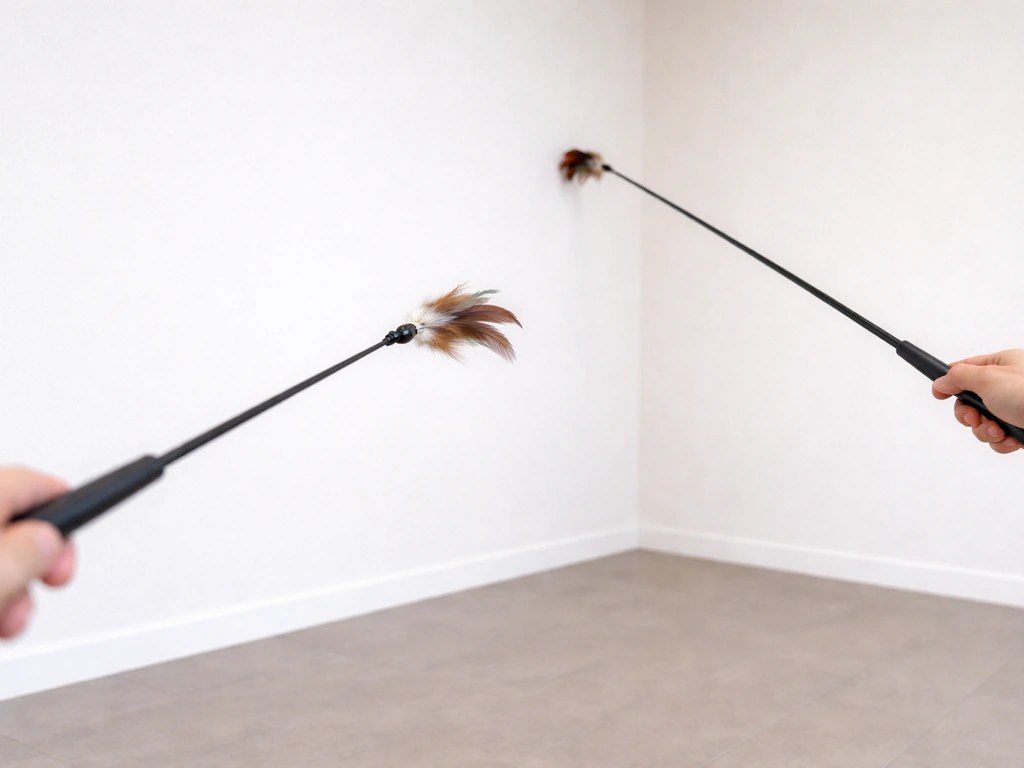
Realistic, variable motion is the single most important feature. A bird that moves in the same arc every three seconds will bore a cat within a week. With wand toys, you control this yourself: drag it across the floor for a chase sequence, then lift it just above your cat's head for a jump. The AAHA recommends exactly this variability, switching between floor-drag and air-swing during a single session keeps the prey-behavior loop fully engaged. With automatic toys, variability is built into the programming, so check that the toy doesn't just repeat one pattern.
Range
Wand toys have the longest effective range because you move around the room. A two-part fiberglass wand (like the Da Bird two-section version) gives you more reach and a more natural arc than a short single plastic rod. Automatic toys are stationary, so their effective range is limited to however far the feather attachment extends from the base.
Durability
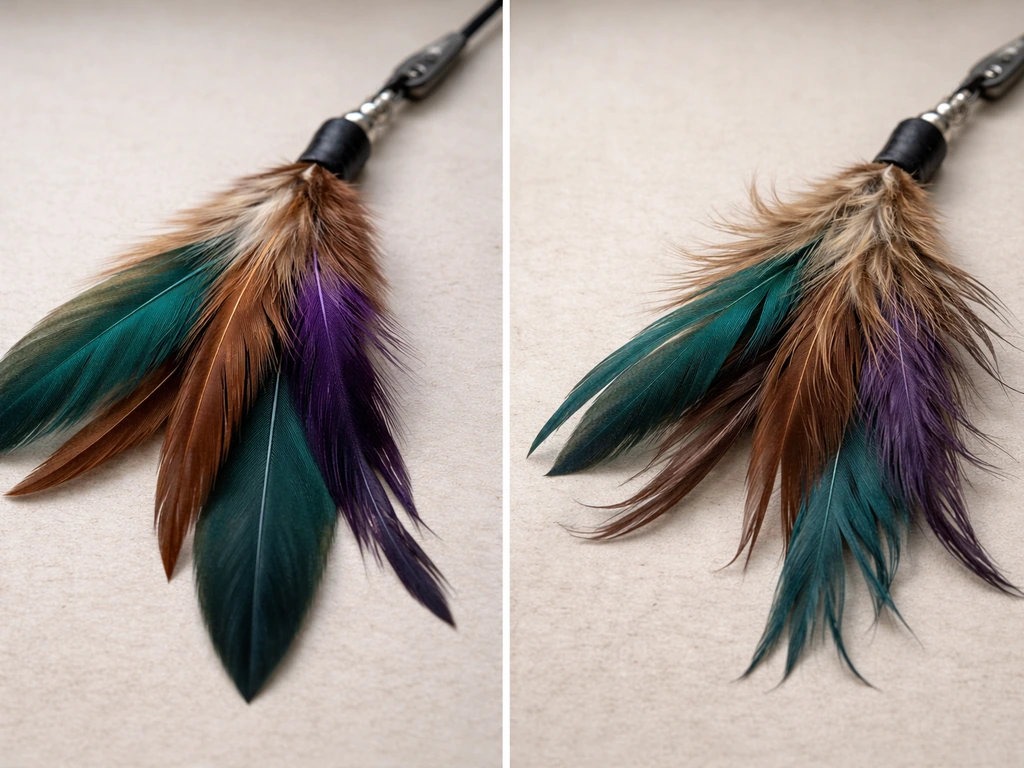
This is where a lot of people get frustrated. One of the most consistent complaints about the PetSafe Peek-a-Bird is that feathers get destroyed within weeks by a determined chewer. Da Bird users frequently report the wand snapping at the joint under heavy use. Neither is a dealbreaker if you plan ahead: check that replacement lures or feather attachments are available and affordable before you commit to any toy. Buying a toy with a one-of-a-kind lure that's impossible to replace is a fast track to a $25 doorstop.
Noise
Wand toys are essentially silent except for the feather flutter, which most cats find stimulating rather than frightening. Motorized toys range widely. If you have a nervous cat, a skittish rescue, or other pets in the home (more on this below), prioritize quiet operation.
Setup
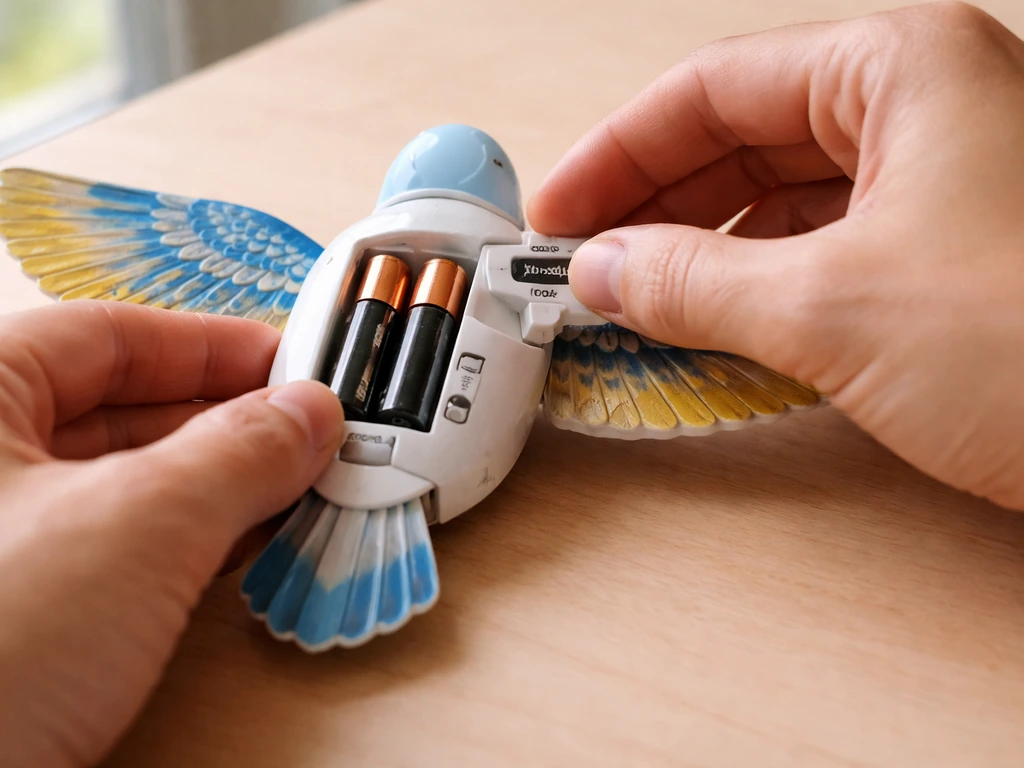
Wands are ready immediately. For battery-powered toys like the Peek-a-Bird, you install batteries, choose between 'One-Time Play' (single active session) or 'Play-All-Day' mode (motion-triggered wakeup plus automatic activation every two hours), and place it where your cat roams. PetSafe provides a 'Get Started' sheet with the product that walks through mode selection clearly. Don't skip reading it, the difference between One-Time Play and Play-All-Day is significant for managing your cat's daily stimulation.
Safety Rules That Aren't Optional
Here's where I want to be direct, because toy safety guidance is often buried in fine print. With flying-bird style toys, the main hazards are string/strand ingestion, small-part ingestion, and overexcitement. All three are preventable with simple habits.
- Never leave a wand toy or any string-based toy out unsupervised. Put it away when play is done. Veterinary and shelter guidance is consistent on this: string and linear objects can act like a drawstring in the intestines if swallowed, which is a surgical emergency.
- Inspect the lure before every session. If feathers are fraying or the attachment is coming loose, replace it before your cat can bite off a chunk.
- Watch for small parts. Plastic eyes, beads, and tiny decorative elements are choking hazards, especially for kittens.
- End play sessions properly. Don't just drop the wand and walk away. Wind down the intensity, let your cat 'catch' the lure a few times, then put the toy away. Cats that never get to complete the hunt-catch sequence can develop frustration behaviors.
- For automatic toys, shorter active sessions are better than marathon sessions. Just like with laser pointers, prolonged play without a satisfying 'capture' moment can tip into overexcitement or anxiety.
- If your cat bites and holds rather than bats and releases, opt for a sturdier lure and supervise automatic toys more closely — these cats destroy attachments faster and are more likely to ingest fragments.
Matching the Toy to Your Cat's Play Style
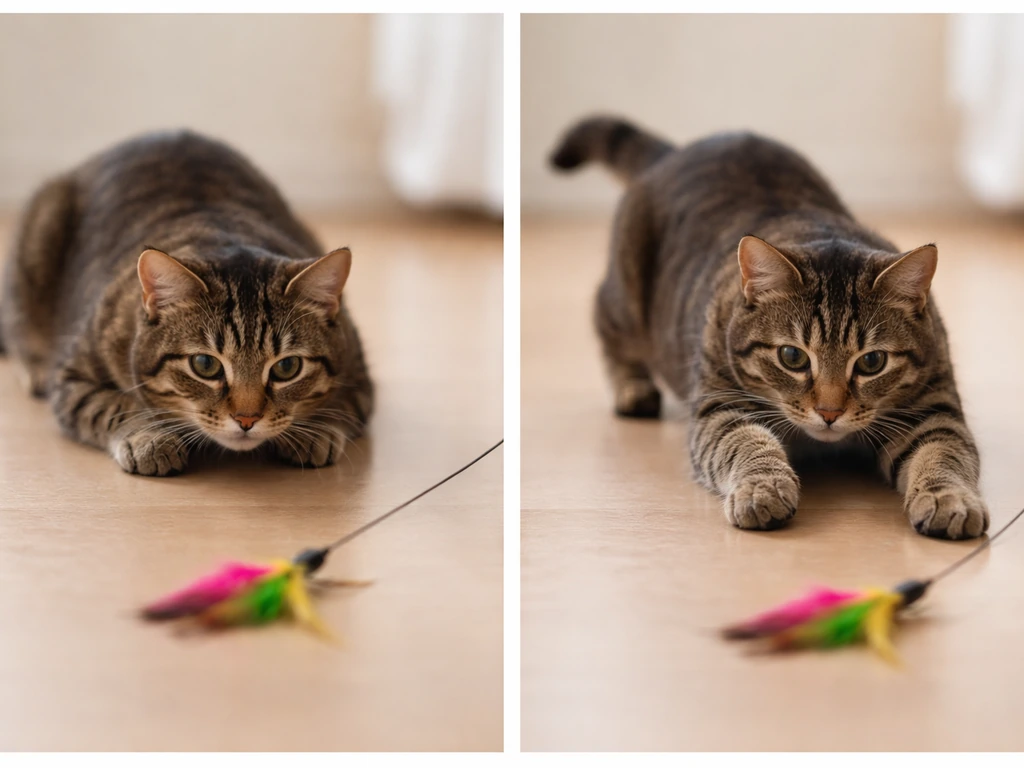
Not all cats hunt the same way, and a toy that drives one cat crazy will be completely ignored by another. Here's a practical breakdown:
| Cat's Play Style | What Works Best | Movement Tip |
|---|---|---|
| Stalker/lurker (watches and waits) | Wand toy dragged slowly across the floor with occasional pauses | Slow irregular drags; freeze the lure, then dart it suddenly |
| Pouncer/jumper (leaps at anything above eye level) | Wand swung at head height or above; dangling attachments on a spring | Sweep upward in arcs, pause just out of reach |
| Chaser (sprints after anything moving fast) | Wand dragged at speed, remote-control chase toys | Fast lateral sweeps across the floor, direction changes |
| Low-energy/senior cat | Automatic flapping toy at floor level; dangling attachment they can bat from sitting | Keep movement slow and within easy swatting range |
| Kitten (high energy, bites hard) | Short wand sessions only, under close supervision; avoid automatic toys unsupervised | Frequent direction changes; end session before they overheat |
Multi-cat homes add a layer of complexity. If you have two or more cats, wand play can trigger resource competition or redirected aggression if one cat feels cut out. Run separate wand sessions when possible, or use an automatic toy as a secondary stimulation source for the cat who isn't in the wand session. One automatic toy in one room, you in another room with the wand, covers both cats without drama.
If You Also Have Pet Birds in the Home
This is the part of the guide most people skip, and it matters a lot if you're here because you're a bird owner. Flying-bird cat toys are specifically designed to trigger predatory behavior. Birdsbesafe notes that some “bird videos” and similar on-screen bird concepts can trigger stalking or attack behaviors toward the screen instead of safe prey play off-screen Flying-bird cat toys are specifically designed to trigger predatory behavior.. If you have a parakeet, cockatiel, parrot, or any other pet bird sharing your home, using these toys around your birds is a serious risk. Here's how to manage it safely.
- Physical separation is non-negotiable. Never run flying-bird cat toy sessions in the same room as your bird's cage or play area, even if the bird appears calm. A cat in active prey-drive mode near a bird is a genuine safety threat.
- Bird stress matters even without direct contact. Birds are prey animals and can read predatory behavior from across the room. Repeated exposure to a cat actively 'hunting' nearby can cause chronic stress, suppress feeding, and trigger feather-destructive behaviors in your bird.
- Keep birds in a secure, separate room during cat play sessions. Close the door. Don't assume a cage is sufficient protection if your cat is leaping and pouncing near it.
- After a play session, give your cat time to calm down before allowing access to the bird's room. The prey drive doesn't switch off the moment you put the wand away.
- Avoid feathered lures that closely resemble your pet bird's size or coloration if you're concerned about reinforcing predatory targeting. It probably doesn't make a practical difference in most homes, but for highly bird-focused cats, keeping the lure visually distinct from your actual birds is a reasonable precaution.
- Air quality note: cat toys with synthetic feathers or dyed materials can shed particulates. Birds have highly sensitive respiratory systems. Store cat toys away from bird spaces and ventilate the room before your bird returns after a play session.
- If you're researching bird enrichment alongside cat enrichment, the overlap topic of bird-safe household setup and what birds actually need versus what cats need are covered separately on this site.
Troubleshooting: When the Toy Isn't Working
Your cat won't engage with it
First, check your timing. Cats are most playful just before feeding times, when their natural hunting instinct peaks. Try the toy when your cat is awake and active, not right after a meal. Second, check your technique. For wand toys especially, the movement matters more than the toy itself. Drag slowly, pause, then dart unpredictably. A lot of people wave the wand too fast or too high and wonder why the cat just watches. Get the lure close to the floor and mimic an injured bird moving in short, irregular bursts.
The toy gets ignored after a few days
Cats habituate quickly to anything that doesn't change. Rotate toys: don't leave any single toy out permanently. Keep the wand or automatic toy stored away between sessions. Novelty drives engagement, so bringing out the 'flying bird' toy after two days of absence is more exciting than leaving it on the floor 24/7. Swapping out the lure attachment (different feather style, different color) can also reset a cat's interest without buying an entirely new toy.
The toy breaks fast
For wand toys: the snap-together joint on cheaper wands is a common failure point. Da Bird users report the two-part wand coming apart during aggressive sessions. If your cat is a power player, either use a single-rod version or reinforce the joint with electrical tape. For automatic toys: feathers on motorized units like the Peek-a-Bird are essentially a consumable. Budget for replacement attachments from the start. If the feather lure is gone within a week, that's not a defect, it means you have an appropriately enthusiastic cat, and you just need a restocking plan.
The automatic toy won't activate
For the PetSafe Peek-a-Bird and similar motion-sensor toys, the most common issue is mode confusion. Read the manual to confirm whether you've set One-Time Play or Play-All-Day mode, and verify the batteries are fresh and correctly installed. In Play-All-Day mode, the toy only activates every two hours automatically, if you're expecting constant motion and it's sitting still, that's by design, not a malfunction. Place the unit in a location where your cat naturally walks past so the motion sensor triggers correctly.
Your cat gets overexcited and starts redirecting aggression
This happens when play sessions run too long or end abruptly without a satisfying 'catch.' Wind down sessions gradually, slow the movement, and let your cat catch the lure a few times before you put it away. If your cat is consistently overstimulated, shorten sessions to five to ten minutes and always end on a calm note rather than at peak excitement. If you’re wondering how long should i let my cat watch bird videos, the safest rule of thumb is to keep sessions short and end before your cat becomes overstimulated. The principle here is the same one applied to laser pointer sessions: always close with something the cat can physically capture and 'win.'
FAQ
How do I tell if a “flying bird” toy is the wand type or something else before buying?
Look for control method details in the listing, if it mentions a wand, feather lure you move by hand, or a swivel flutter at the end, it is the wand category. If it mentions a motion sensor, motion-activated wakeup, or scheduled activation modes (like every few hours), it is automatic. Also check whether the “lure” is removable and replaceable, that usually signals a wand design with consumable attachments.
My cat follows the toy but never pounces. What should I change?
Try lowering the lure to near floor height and switching to irregular, short “bursts” with pauses. Many cats will track without striking if the movement stays too smooth or too high. You can also test a slower drag, then a sudden dart, the goal is to create unpredictable direction changes that trigger the pounce timing.
Should I use the flying bird toy right after meals or wait?
Wait. A good rule is to play when your cat is awake and active, often just before the next normal feeding window. Right after eating, many cats have lower hunting drive, so the toy may be ignored or cause only mild interest.
What’s the safest way to prevent string or small-part ingestion?
Use the toy only with supervision and avoid any lure attachments that have loose strands. If the feather or attachment starts fraying, stop using that lure immediately and replace it. Also store the toy out of reach when not in session so detached parts cannot be found later.
How long should a session last with these toys?
Most cats do best with short sessions around five to ten minutes, then stop while your cat is still “ready,” not frantic. End with a moment of physical capture (let them win a few times), then store the toy. If your cat becomes frantic, vocal, or unable to settle afterward, shorten the next session.
What if my cat is scared by motorized motion?
Prioritize quiet operation and start with wand play if possible, wands are often perceived as less intense because the movement is user-controlled and generally less constant. If you try an automatic toy, place it at a distance so your cat can approach gradually, and test when the room is calm and other pets are separated.
Can I use one flying bird toy for multiple cats without fighting?
Yes, but manage access. Use separate wand sessions when possible, so one cat does not feel displaced. For a simple setup, run wand play with you in one room while the second cat has an automatic toy in another room, this reduces competition and redirected aggression.
What should I do if the feather lure disappears quickly or breaks?
Treat the lure as a planned consumable. Before buying, confirm replacement attachments are available and reasonably priced, then budget for restocking. If the lure is gone within days, that is often a sign of enthusiasm, not a defect, but you should still stop immediately if anything becomes unsafe or frayed.
Are there any red flags that mean I should stop using the toy?
Stop right away if you see the wand snapping at joints, parts detaching and becoming chewable, frayed string/strands, or any magnet-based components in the same product category. Also discontinue if your cat shows sustained overstimulation, such as inability to calm down after the session.
What’s the best placement for a motion-sensor automatic toy?
Place it where your cat naturally walks or circles, not in an open random corner. Since many units activate only when motion is detected and may also run on scheduled intervals, position it to ensure your cat passes the sensor area during normal roaming.
Top Bright Magnetic Bird Toy Guide for Safe Use
Buy and use a top bright magnetic bird toy safely with magnet checks, sizing tips, cage setup, and rotation monitoring.