Bird care for beginners comes down to four things done consistently: choosing a species that matches your experience level, setting up a safe and appropriately sized cage in the right spot, feeding a varied diet free of toxic foods, and spending real daily time with your bird. If you're just getting started with bird keeping for beginners, use these basics as your daily checklist four things done consistently. Get those four right and you'll avoid most of the problems that send new bird owners scrambling for answers in their first few months.
Bird Care for Beginners: Step-by-Step First-Bird Guide
Marcus Chen
18 May 2026
Choosing a beginner-friendly bird
The single biggest mistake beginners make is falling in love with a large parrot before they've kept any bird at all. Macaws, African greys, and cockatoos are brilliant animals that need years of consistent handling, specialized diets, and an enormous amount of mental stimulation. If you get one as your first bird, you're skipping several steps. Start smaller and build your skills.
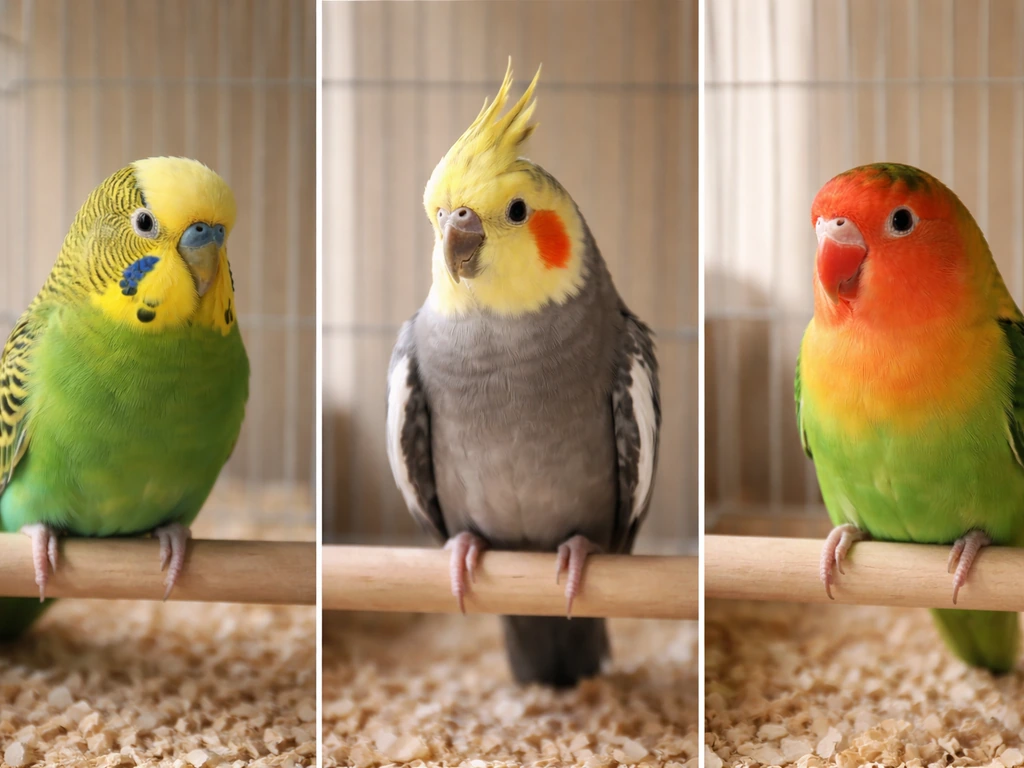
The three species I'd point most beginners toward are budgerigars (parakeets), cockatiels, and lovebirds. Budgies are affordable, hardy, and surprisingly personable once they trust you. Cockatiels are a step up in size but genuinely affectionate and tolerant of handling mistakes that would stress out a more sensitive bird. Lovebirds are feisty and energetic, which some people love, but they need more consistent socialization than the other two. All three sit in the small-bird category with similar cage and diet requirements, so your setup works across any of them.
When choosing an individual bird, look for one that's alert, has bright eyes, clean nostrils, smooth feathers, and moves around its enclosure with confidence. A bird sitting fluffed up in a corner, breathing with its tail bobbing, or showing discharge around the nares is a bird with a health problem you don't want to inherit. Buy from a reputable breeder or an established pet shop with visibly clean conditions, not a random classified ad.
| Species | Size | Noise Level | Talking Ability | Handling Tolerance | Good For |
|---|---|---|---|---|---|
| Budgerigar | Small (25–35g) | Low to moderate | Yes, can be excellent | High once tame | First-time bird owners |
| Cockatiel | Small-medium (80–120g) | Moderate | Whistles well, limited words | Very high | Families, beginners wanting affection |
| Lovebird | Small (40–60g) | Moderate to high | Rarely | Moderate, needs daily handling | Active owners with consistent time |
Getting set up: cage, size, placement, and airflow
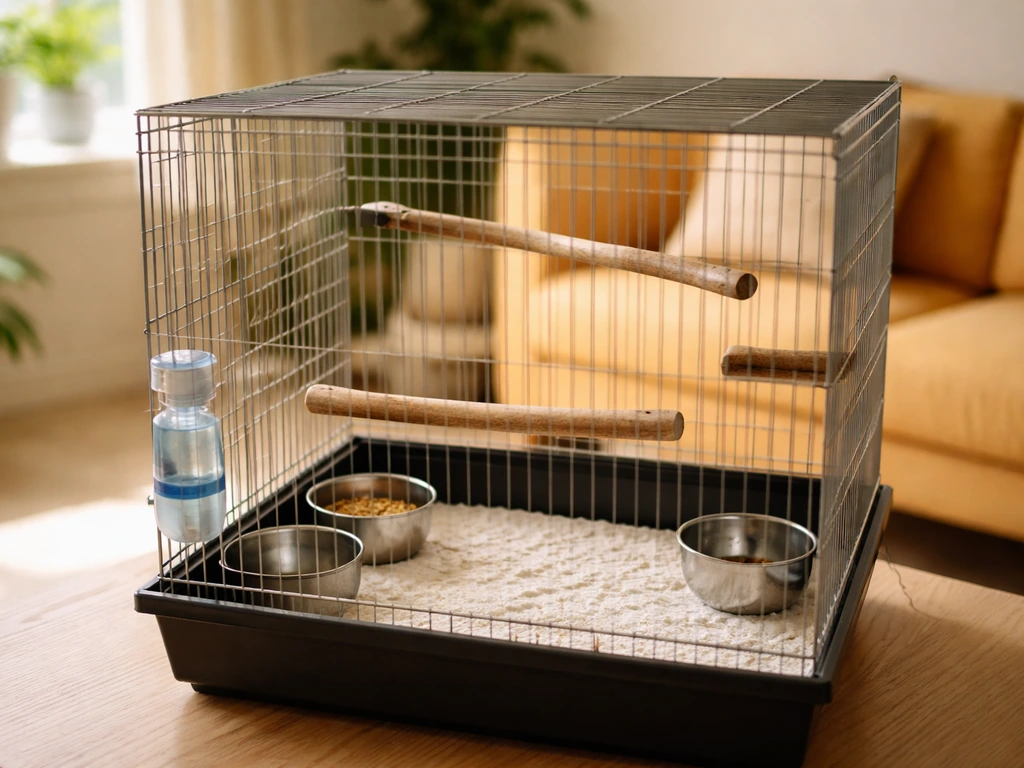
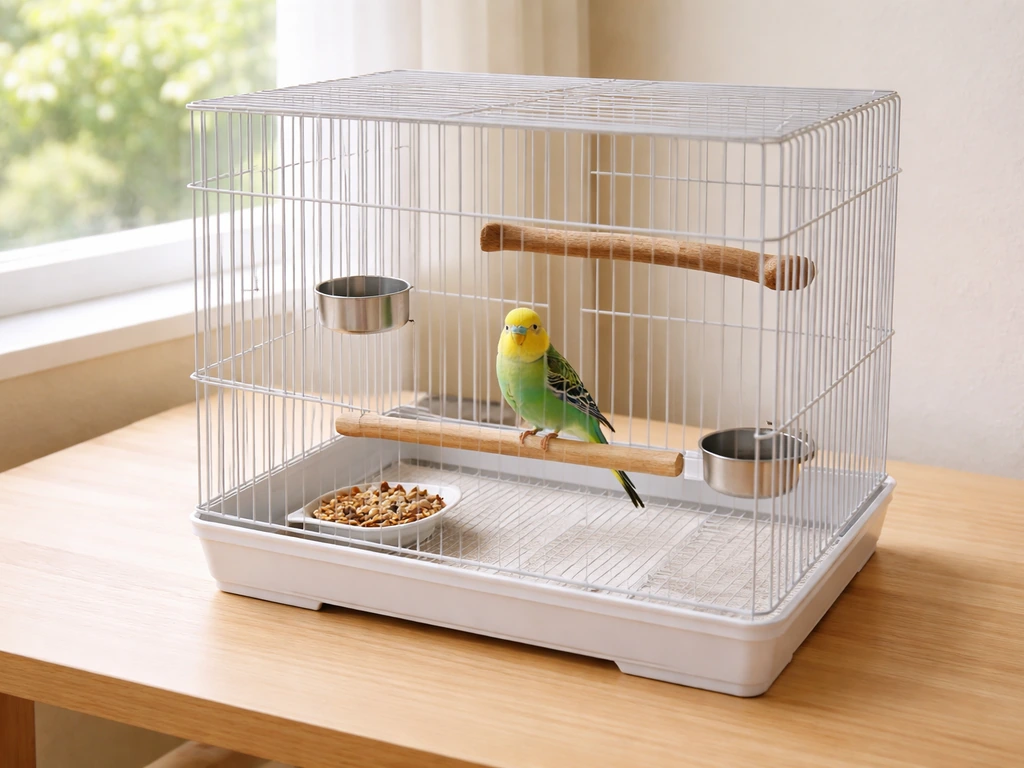
Cage size matters more than most beginners expect. The Merck Veterinary Manual lists a minimum cage size of 20 x 20 x 30 inches for budgerigars, cockatiels, and lovebirds. That's a minimum. Bigger is always better because a bird that can't stretch its wings and move between perches is a stressed and bored bird. For a budgie or cockatiel, I'd aim for at least 24 x 18 x 24 inches if you can swing it, and wider is more valuable than taller since birds fly horizontally.
Bar spacing is one of those details that sounds minor until something goes wrong. For budgies, stick to 1/2-inch spacing. For cockatiels, 1/2 to 5/8 inch works. Purdue University's veterinary guidance specifically warns against any spacing wide enough for a bird to push its head through, because that creates a strangulation risk. If you find a cage at a thrift store or online marketplace, run a ruler across the bars before you trust it.
Where you put the cage in your home matters almost as much as the cage itself. Pick a room where the bird can see and hear family activity, which reduces loneliness, but avoid the kitchen entirely. Cooking fumes, including the extremely toxic fumes released from overheated non-stick cookware coated with PTFE (polytetrafluoroethylene, sold under names like Teflon), can kill a bird in minutes. Birds have highly efficient respiratory systems that pull airborne particles deep into their lungs with each breath, which is what makes them so sensitive to air quality hazards.
Keep the cage away from exterior doors that get drafty, out of direct sustained sunlight (a bit of morning sun is fine, but a cage baking in afternoon sun through a window will overheat your bird fast), and away from air conditioning or heating vents blowing directly at it. A consistent room temperature between 65 and 80 degrees Fahrenheit suits most beginner-friendly species well.
- Never place a cage in the kitchen or a room where non-stick cookware is frequently used
- Avoid candles, air fresheners, aerosol sprays, and scented plug-ins near the bird's room
- Position at least one side of the cage against a wall so the bird feels secure
- Cover the cage partially at night with a breathable cloth to signal sleep time and reduce drafts
- Keep the cage at or above eye level to reduce stress, but not so high that daily interaction becomes awkward
Essential supplies and what to skip
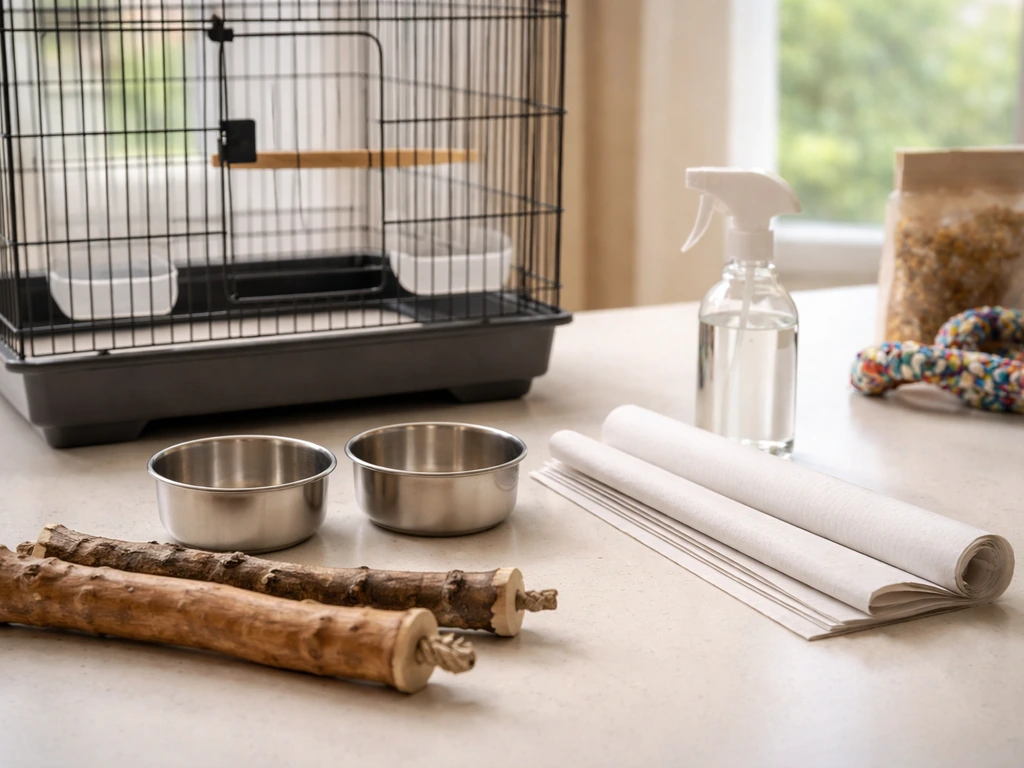
You don't need to buy everything in the bird aisle at once. There's a short list of things you genuinely need before your bird comes home, and then there's a much longer list of things that are nice to have or complete marketing fluff. Separating the two saves you money and keeps you from cluttering the cage with objects that stress a new bird out.
| Item | Essential or Optional | Notes |
|---|---|---|
| Appropriately sized cage | Essential | Correct bar spacing for species, minimum size met |
| Multiple perches (varied diameter) | Essential | Promotes foot health; avoid all dowel/same-diameter setups |
| Food and water dishes | Essential | At least two food dishes and one water dish, easy to remove and clean |
| High-quality seed or pellet mix | Essential | Species-appropriate; pellets preferred as dietary base |
| Cuttlebone or mineral block | Essential | Calcium source, beak conditioning |
| Cage liner/paper | Essential | Plain paper or cage liner; avoid cedar or pine shavings |
| Bird-safe toys (2–3 at a time) | Essential | Foraging, chew, and swing types cover enrichment basics |
| Full-spectrum or bird-safe light | Recommended | Especially useful in rooms with limited natural light |
| Travel carrier | Recommended | Needed for vet visits; better to have it before you need it |
| Misting bottle | Recommended | Many birds enjoy light misting for feather care |
| Bird harness | Optional | Useful later for outdoor time with a tamed bird |
| Automatic feeders/waterers | Skip for now | Harder to monitor intake and hygiene accurately |
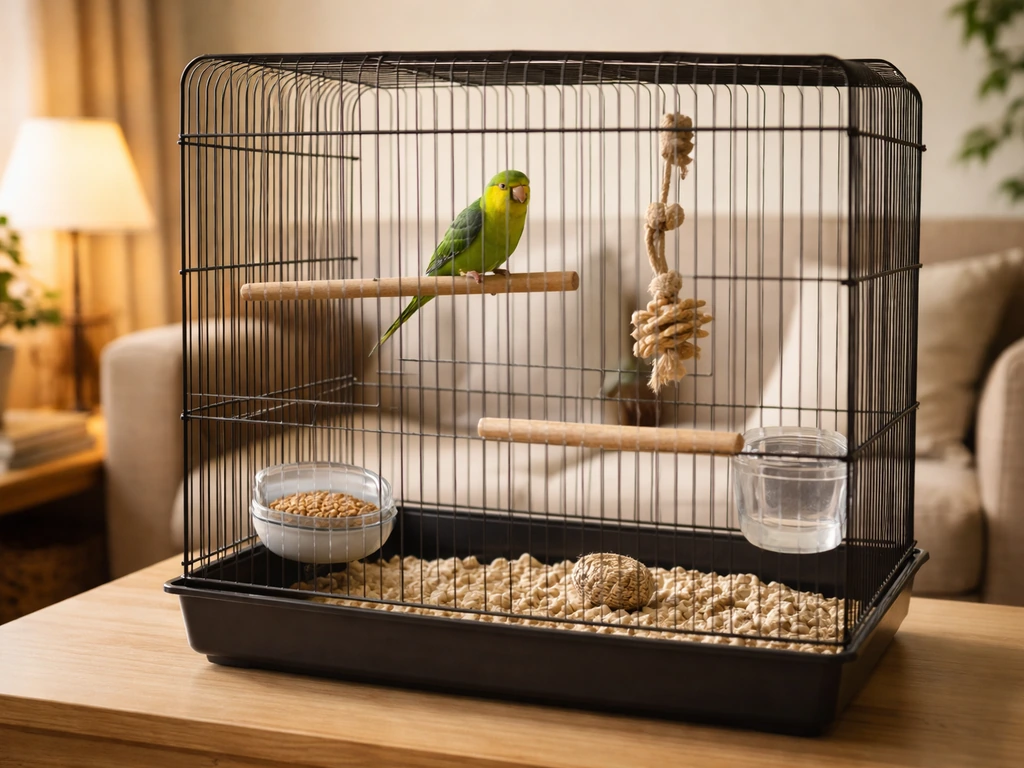
Perch variety is something many beginners overlook. A cage that came with only smooth wooden dowels of identical diameter will cause foot problems over time. Add a rope perch, a natural wood branch perch with irregular diameter, and a platform perch at minimum. Different textures and widths keep the foot muscles working properly and reduce pressure sore risk.
Your daily care routine
Consistency is what separates birds that thrive from birds that slowly decline. A daily routine doesn't need to be elaborate, but it does need to happen every day. Birds are creatures of habit and they track your schedule closely. A routine also means you'll notice immediately when something is off, which is often the earliest warning sign of illness.
Morning tasks
- Remove the cage cover and greet your bird quietly to help it wake up calmly
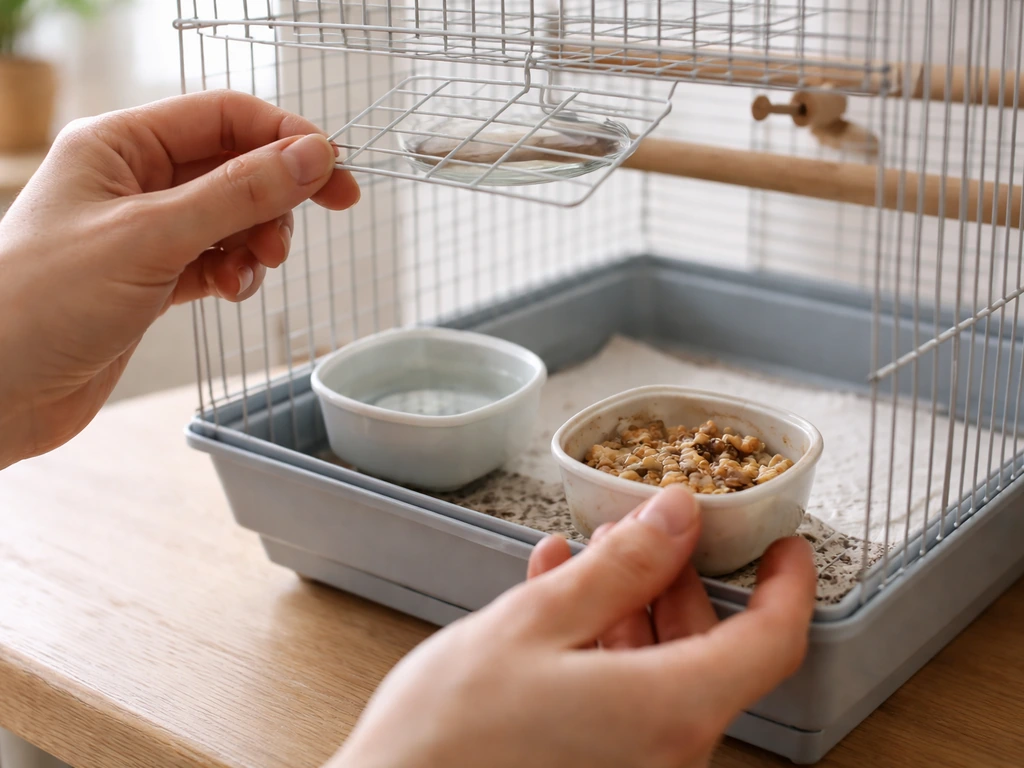
- Remove and replace all food and water immediately — never let yesterday's water or wet food sit into a second day
- Do a quick visual health check while the bird is alert and active (more on this below)
- Offer fresh food alongside the base diet if you're including fresh vegetables that day
- Spot-clean the cage floor: remove soiled liner areas and replace if needed
Evening tasks
- Spend hands-on time with your bird: handling, training, or letting it perch on you
- Remove any uneaten fresh food that could spoil overnight
- Wipe down perches or grate if visibly soiled
- Replace cage liner if heavily soiled
- Cover the cage at a consistent time to establish a sleep schedule (birds need 10–12 hours of darkness)
Weekly deep-clean
Once a week, pull everything out of the cage and scrub dishes, perches, and the cage itself with a bird-safe disinfectant or a diluted white vinegar solution. Rinse thoroughly and let everything dry completely before reassembling. Wet surfaces harbor bacteria and mold fast. While the cage dries, it's a great time to let your bird out for supervised exploration.
Daily health checks
A quick daily health check sounds clinical but it's really just paying attention. Every morning, notice whether your bird is alert, vocalizing normally, eating and drinking, and moving around with normal posture. Look at the droppings on the liner: healthy droppings have a solid dark green or black portion, a white urate portion, and a small liquid component. Runny, discolored, or entirely liquid droppings that persist beyond a day or two warrant a vet call. A bird sitting fluffed, sleeping during peak activity time, or holding one eye closed is showing signs of illness and needs veterinary attention quickly.
Feeding basics: what to give, what to avoid
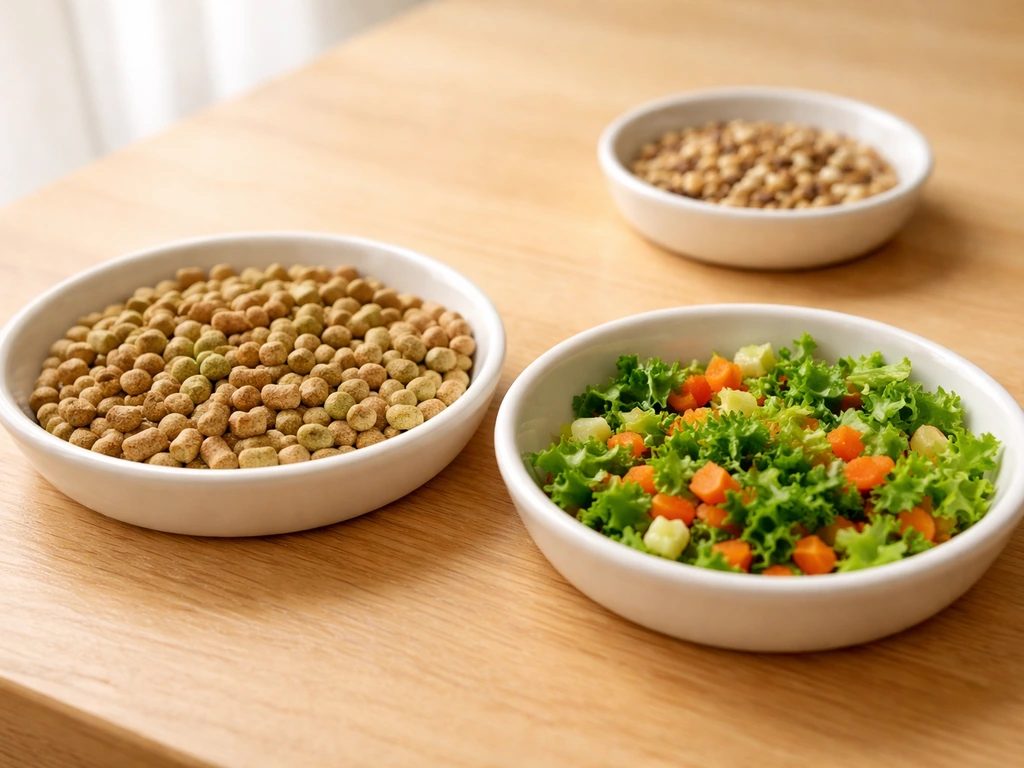
The old image of a parakeet living on a bowl of millet seed is outdated and actually harmful. Seeds are high in fat and low in essential vitamins and minerals. A seed-only diet will keep a bird alive but is a major contributor to fatty liver disease, obesity, and shortened lifespan. For beginner-friendly species, aim for a pellet-based diet making up 60 to 70 percent of total food intake, supplemented with fresh vegetables and a smaller amount of seeds or seed mix as a treat or training reward.
Introduce pellets gradually if your bird is coming from a seed-heavy background. It can take weeks. Mix pellets in with seeds, slowly increasing the pellet ratio over time. Don't withhold food to force the switch, that's dangerous. Just be patient and persistent.
Simple daily diet plan for small birds
| Food Category | Frequency | Examples |
|---|---|---|
| Formulated pellets | Daily, base of diet | Harrison's, Zupreem, Roudybush (species-appropriate size) |
| Fresh vegetables | Daily or most days | Leafy greens, carrots, bell pepper, broccoli, snap peas |
| Fresh fruit | A few times per week, small amounts | Apple (no seeds), mango, berries, melon |
| Seeds or millet | Sparingly as treats | Use for training rewards or enrichment foraging |
| Egg or cooked legumes | Occasionally | Small amounts as protein source, especially during molting |
| Cuttlebone | Always available | Free-choice calcium and beak conditioning |
Foods that can kill your bird
This list isn't meant to frighten you, but it's non-negotiable. Some foods that are totally harmless to humans are acutely toxic to birds, and a few can cause rapid death. Know this list before your bird comes home.
- Avocado: contains persin, which causes respiratory distress and heart failure in birds
- Chocolate: toxic to birds at small doses
- Onion and garlic: cause hemolytic anemia
- Apple seeds and fruit pits: contain cyanogenic compounds
- Caffeine and alcohol: both cause serious cardiac and neurological effects
- High-salt, high-sugar, or processed human food: the bird's digestive system can't handle it
- Xylitol (found in sugar-free products): toxic at very low doses
Enrichment and training to build a bond
A bored bird is a loud, destructive, or self-harming bird. Even a single budgie in a small apartment needs mental stimulation every day. Toys help, but they don't replace time with you. The two things that matter most for enrichment are variety and interaction. Rotate toys every week or two so the cage doesn't feel stale. Include foraging toys that make your bird work for food, because in the wild birds spend most of their time searching for meals.
Training is not just a trick for advanced bird owners. Basic step-up training (teaching your bird to step onto your finger on cue) is the single most useful skill you can build with any bird, and it creates the foundation for trust. Start with short sessions of 5 minutes or less, twice a day. Use a small food reward your bird loves, a tiny piece of millet works well for budgies and cockatiels. Keep it positive and end the session before the bird gets frustrated. Clicker training works well here: mark the desired behavior with a click and follow immediately with a reward.
Spend time near the cage even when you're not actively training. Talking to your bird, letting it watch you work, or playing music in the room all count as social enrichment. Birds are flock animals and they're reassured by your presence. A bird that sees you as part of its flock is a calmer, more trusting bird.
- Start with step-up training using positive reinforcement before attempting any other trick
- Keep sessions short (5 minutes max) and always end on a success
- Rotate 2–3 toys at a time and swap them weekly to keep interest high
- Include at least one foraging toy so your bird works for some of its food
- Talk to and interact with your bird daily, even outside formal training time
- If you have a single bird, consider a mirror or audio enrichment during hours you're away
Common beginner mistakes and how to fix them
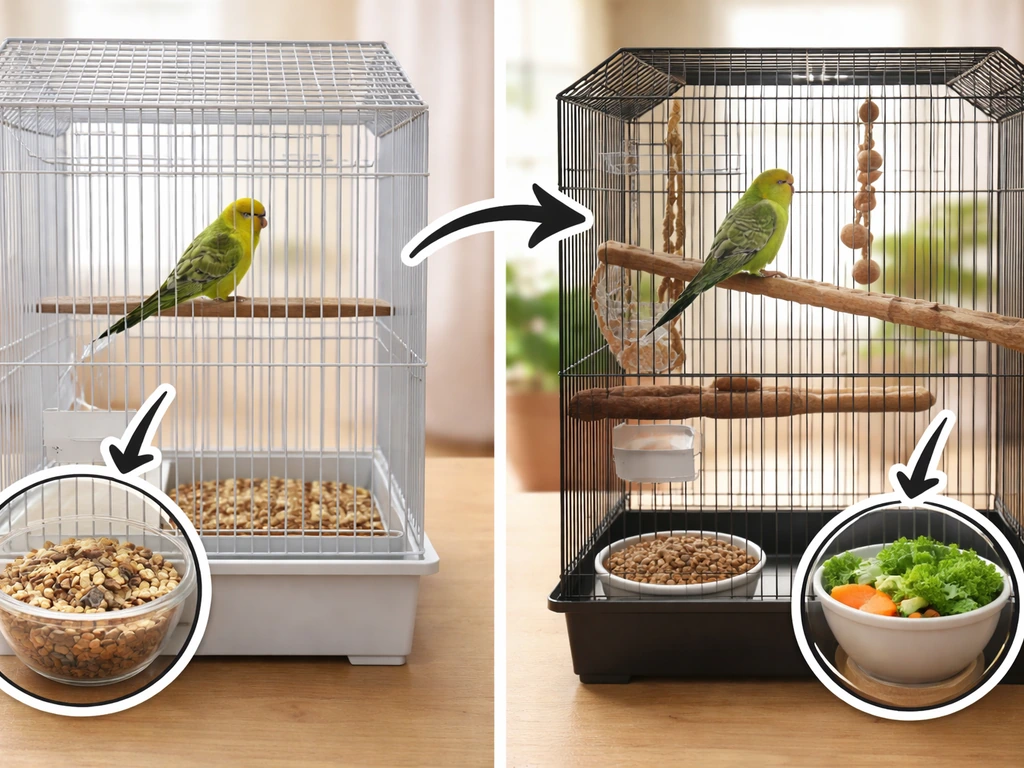
Most problems new bird owners run into are predictable and fixable. The troubleshooting list below covers the mistakes I see come up most often, including a few I made myself.
| Mistake | What Goes Wrong | Fix It By |
|---|---|---|
| Buying too small a cage | Bird can't exercise, becomes stressed and feather-destructive | Upgrade to at least minimum recommended size; wider is better than taller |
| All-seed diet | Fatty liver disease, obesity, shortened lifespan | Transition to pellet-based diet over several weeks using gradual mixing |
| Skipping the avian vet | Missing early illness signs; no baseline health data | Find an avian vet before you bring your bird home; schedule a first visit within a week of arrival |
| Toxic fumes exposure | Respiratory distress or sudden death from kitchen fumes, candles, or aerosols | Keep bird out of kitchen permanently; eliminate all non-stick cookware fumes and aerosols from bird's environment |
| No routine or schedule | Bird becomes anxious, loud, and harder to bond with | Feed, interact, and cover at consistent times daily |
| Handling too early or too forcefully | Bird becomes cage-aggressive and harder to tame | Give new bird 3–5 days to settle before attempting step-up; use patience and positive reinforcement only |
| Ignoring illness signs | What starts as a small problem becomes a crisis | Act on any symptom (fluffing, lethargy, labored breathing, abnormal droppings) within 24 hours with a vet call |
| Overcrowding with toys | New bird feels overwhelmed; can't navigate safely | Start with 2–3 well-placed toys and add more as bird settles in |
One thing worth repeating: find an avian vet before you need one. General practice vets often have limited bird experience, and avian vets can be harder to locate in some areas. Having the number saved and having done a baseline health visit early means you're not scrambling in an emergency. Many bird illnesses progress fast, and having a professional you already know can make a real difference.
If you're drawn to a specific species, going deeper into species-specific care really does pay off. Budgie-specific care, for example, has its own nuances around social needs and diet that go beyond what a general beginner guide can cover. The same goes for broader questions about setting up a bird-friendly home or tackling specific behavior problems as they come up. If you’re running into bird problems home, start with the basics: air quality, cage setup, and daily health checks. Starting here is the right move, but don't stop here. For more detailed budgie bird care for beginners, focus on diet, cage setup, and daily handling so your budgie stays healthy and engaged budgie-specific care.
FAQ
How long should I wait before I handle my new bird after bringing it home?
Give your bird a short settling period first, usually several days, before frequent handling. During that time focus on quiet daily routines, food and water stability, and consistent cage placement. When you start, use short, low-stress sessions (like step-up training) and watch for signs of fear such as backing away, open-mouth gaping, or freezing.
Do beginner birds need a full “sleep schedule,” and what hours should I plan for?
Yes. Aim for a consistent dark, quiet block each day, often around 10 to 12 hours depending on species and your household noise. Avoid turning lights on or off suddenly during the bird’s dark period. Use a solid routine so the bird does not become overly restless at odd hours.
What should I do if my bird’s droppings look different after switching diets or adding pellets?
Mild changes can happen during the transition, especially in color or consistency, but persistent runny droppings beyond a day or two is not normal. Keep the pellet introduction gradual, track changes daily, and call an avian vet if you see prolonged liquid droppings, reduced appetite, lethargy, or straining.
How do I safely introduce fresh vegetables without wasting food or upsetting my bird’s stomach?
Start with one vegetable at a time in small amounts, then observe for 24 hours. Offer chopped or leaf-style pieces that are easy to pick up, and remove uneaten produce within a couple of hours to prevent spoilage. If your bird refuses it, try different textures or warmer room-temperature pieces, rather than abruptly changing many foods at once.
Is it okay to use scented candles, air fresheners, or essential oils near the bird?
It’s risky. Birds are extremely sensitive to airborne chemicals, and many scents can irritate or harm them even when humans feel fine. If you want an easy rule for bird care for beginners, avoid fragrances in the bird’s room entirely, especially sprays, diffusers, and strong cleaners.
How should I clean the cage if I cannot find a “bird-safe disinfectant”?
You can use a diluted white vinegar solution as described, then rinse thoroughly and dry completely before reassembling. Do not rely on household cleaners that leave residues, and never use products with ammonia, bleach, or heavy fragrance near the cage. If you smell lingering odors after rinsing, keep cleaning and drying until there is no scent.
Can I let my bird fly around the room, and how do I make it safe for beginners?
Only with careful preparation. Remove or cover hazards such as ceiling fans, open toilets, exposed wires, and other pets. Keep windows and doors closed, dim the room if needed to reduce panic, and supervise continuously. Plan for step-up training first so you can reliably return the bird to the cage without chasing.
What is the right way to choose and size perches if my bird keeps slipping or seems sore?
Use multiple perch diameters and textures, including a natural branch and a wider platform, then check feet daily. Perches that are too narrow can cause pressure points, and very smooth dowels can reduce grip. If toes look red or curled, or if your bird avoids certain perches, adjust immediately and consider switching to a different surface type.
My bird won’t eat pellets. Should I withhold seeds until it gives in?
No. Withholding can backfire and increase stress, and you can’t safely “force” acceptance with hunger. Keep seeds as a supportive part of the transition at a controlled portion, mix pellets into seed gradually, and use small rewards during voluntary eating. If the bird refuses for weeks or shows weight loss, contact an avian vet.
How can I tell the difference between normal fluffed resting and illness?
Fluffing occasionally can be normal, especially when settling down. Illness signals include persistent lethargy during peak activity, reduced appetite, eye changes (like one eye being closed consistently), breathing effort, or droppings that stay abnormal beyond a day or two. If multiple signs show up together, prioritize a vet call rather than waiting.
What temperatures are safe for beginners, and is 65 to 80°F a hard rule?
The 65 to 80°F range is a practical target for many common beginner species, but stability matters most. Avoid drafts, direct vents, and sudden drops or spikes. If your home is outside that range, aim to manage airflow and provide options like a stable, draft-free corner rather than placing the cage right next to heat sources.
Should I cover the cage at night, and when does it become a problem?
A partial, breathable approach can help keep the environment dark and quiet, but avoid fully suffocating covers, heavy materials, or covers that block airflow. Don’t use covers that allow the bird to overheat. If your bird panics when you cover it or startles repeatedly at cover time, switch to a more consistent room-light routine instead.