Start with the bird, not the cage. That sounds obvious, but most beginners do it backwards: they buy a beautiful cage, fill it with toys, then try to find a bird that fits. The better move is to pick the right species first, because the bird's size, temperament, and noise level will determine everything else, from cage dimensions to how much daily time you actually need to commit.
Bird Keeping for Beginners: First Week Setup and Care
Marcus Chen
18 May 2026
For a true beginner, budgies (parakeets), cockatiels, and lovebirds are the three species worth seriously considering. They're manageable in size, have care needs that are genuinely learnable in the first few weeks, and are widely available from reputable breeders and rescues. Get that choice right, and the rest of the setup falls into place much more easily.
Choosing the right beginner bird species
The three best starter birds for most people are budgies, cockatiels, and lovebirds. Each has a slightly different personality profile, and the right pick depends on your lifestyle more than anything else.
| Species | Size | Noise Level | Social Needs | Lifespan | Best For |
|---|---|---|---|---|---|
| Budgie (Parakeet) | Small (~7 inches) | Low to moderate chirping | Moderate; does well solo or in pairs | 5–10 years | First-time owners with limited space or time |
| Cockatiel | Medium (~12 inches) | Moderate; whistles and calls | High; bonds closely with owners | 15–20 years | People who want a hands-on, interactive bird |
| Lovebird | Small (~6 inches) | Moderate to high; loud for their size | Very high; needs lots of daily interaction | 15+ years with proper care | Owners with time for daily one-on-one interaction |
Budgies are genuinely the most forgiving starting point. They're small, relatively quiet compared to larger parrots, and their care needs are straightforward enough that you can build good habits without feeling overwhelmed. Cockatiels are a step up in personality and bonding potential: they whistle, they follow you around the room with their eyes, and they genuinely seem to enjoy interaction. The trade-off is they need more of your time and attention. Lovebirds are compact but surprisingly demanding socially. PetMD puts their lifespan at 15 or more years with proper care, and they thrive on lots of daily interaction, so they're not a good choice if you're away from home most of the day unless you keep a pair.
Whatever species you choose, try to find a bird that was hand-raised or is already somewhat comfortable with humans. A tame, socialized bird will settle into your home faster and be far less stressful to handle as a beginner. Ask the breeder or rescue to show you the bird stepping up onto a hand before you commit.
Essential equipment and accessories checklist
Before your bird comes home, you want everything set up and ready. Scrambling to buy a water dish on day two while a stressed bird sits in a too-small carrier is not a great start. Here's what you actually need, prioritized by importance.
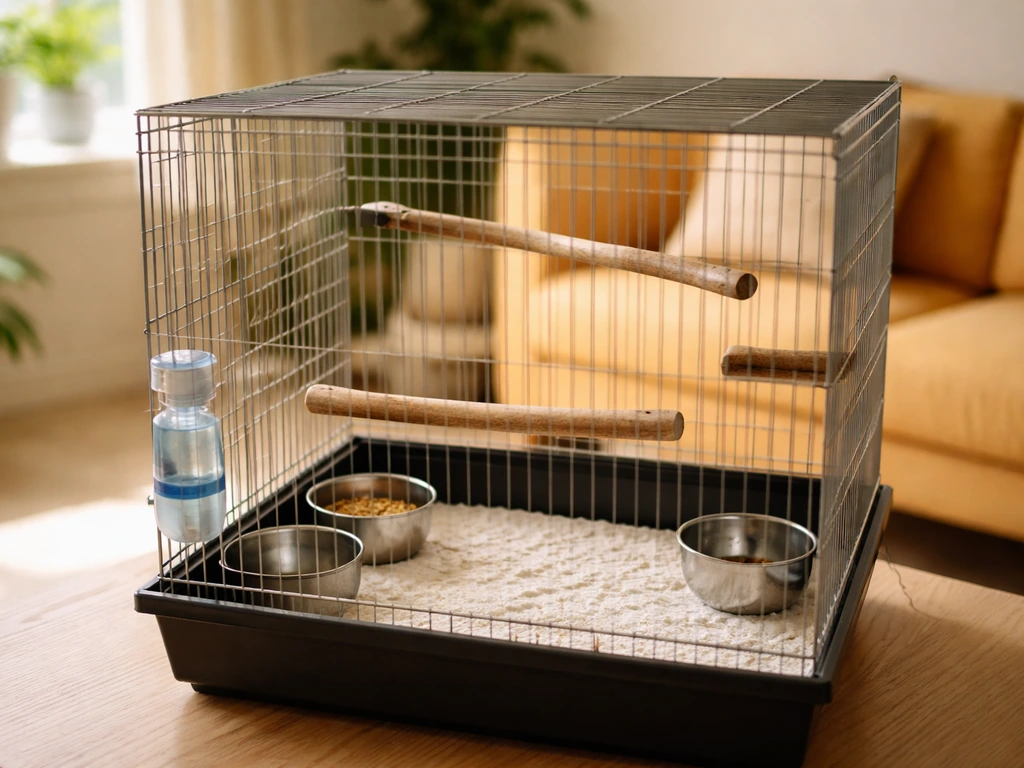
- Cage sized appropriately for your species (see habitat section for exact dimensions)
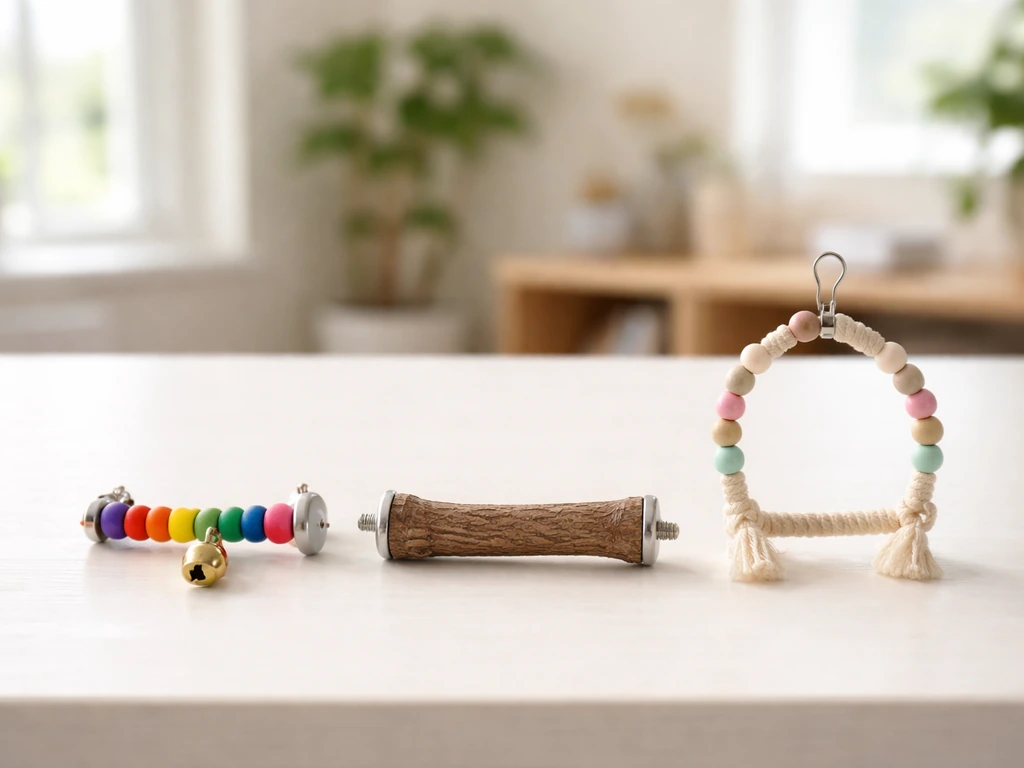
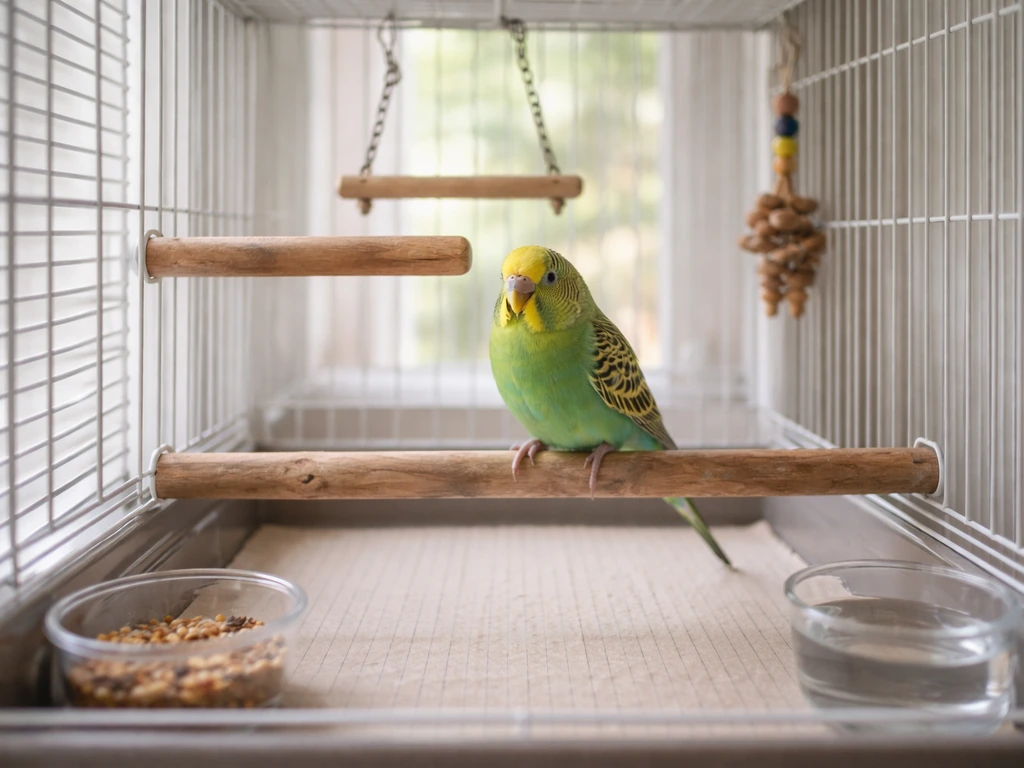
- At least three perches of varying diameter and material (wood, rope, and a cement/rough perch for nail wear)
- Two food dishes: one for pellets/seeds, one for fresh food
- A separate water dish or water bottle (dishes are easier to monitor for cleanliness)
- Cage liner paper or newspaper for the tray (avoid particulate bedding like wood shavings, which can hide droppings and irritate the airway)
- Three to five toys for enrichment, including foraging options and chewables
- A spray bottle for light misting if your species enjoys baths
- A small travel carrier for vet trips and emergencies
- A thermometer to monitor room temperature near the cage
- Bird-safe cleaning spray or diluted bleach solution for weekly deep cleans
One thing a lot of beginners over-buy is toys. Ten toys crammed into a small cage doesn't equal enrichment, it equals stress. Start with three to five good options and rotate them. You'll learn quickly which types your bird actually interacts with and which ones just take up space.
Setting up a safe, comfortable habitat
Getting cage size and bar spacing right
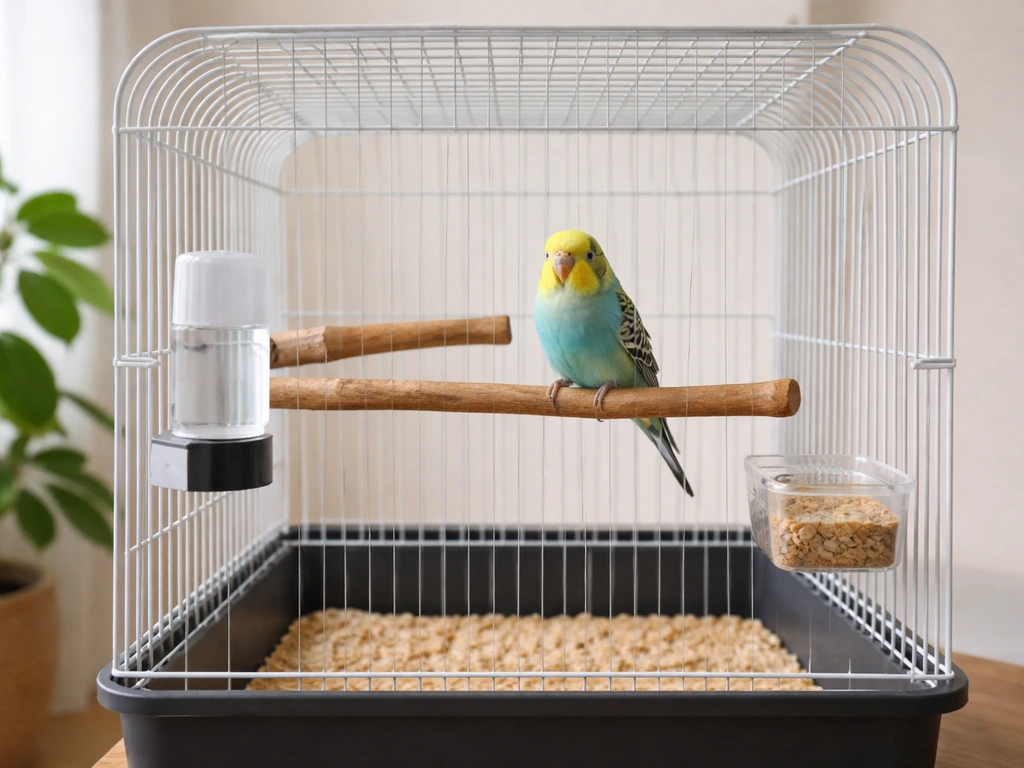
Cage size is the most common place beginners make an expensive mistake: they buy something that looks roomy but is actually undersized. The rule of thumb from the American Association of Avian Veterinarians is that the cage must be large enough for the bird to move around freely, and bar spacing must be narrow enough that the bird cannot fit its head between the bars.
For lovebirds, Petco's care guidance recommends a minimum of 24 inches wide by 18 inches deep by 24 inches high, with bar spacing no more than 3/8 of an inch. Cockatiels need more horizontal space to move and climb. Marin Humane's care guide sets a minimum cage size for a single cockatiel that gives meaningful room to spread wings and climb, and bumping up from the minimum is always a good idea.
For budgies, a pair should have enough width to fly short distances, not just stand on a perch. Bigger is almost always better.
Placement and environment inside the home
Put the cage in a room where the family spends time, because birds are flock animals and isolation leads to stress and behavioral problems. Avoid the kitchen (fumes from cooking and nonstick cookware are genuinely dangerous, blank" rel="noopener noreferrer">more on that below), drafty windows, and direct air conditioning or heating vents. By addressing bird problems home early, you can prevent issues like stress, respiratory risk, and behavior problems from becoming serious.
The cage should sit at roughly eye level or slightly below, against a wall on at least one side so the bird has a sense of security. Direct sunlight for a few hours is fine and beneficial, but the bird needs to be able to move to a shaded spot in the cage if it wants to.
Perches, liners, and inside setup
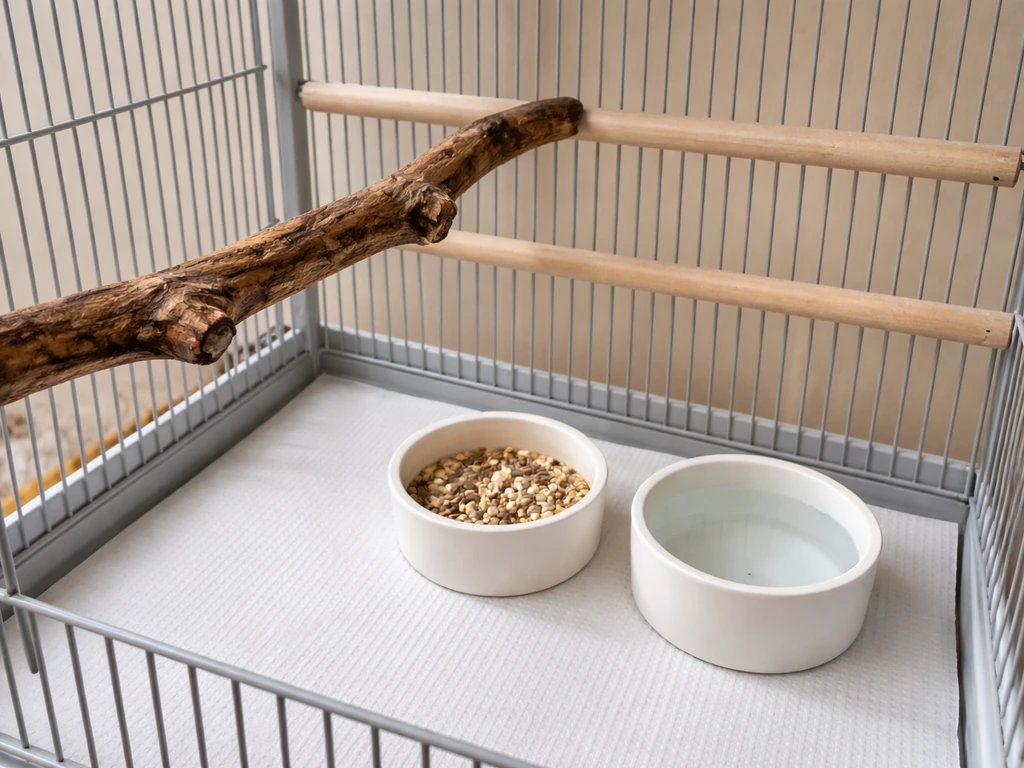
Vary perch diameter and texture. A bird that stands on the same diameter dowel rod 24 hours a day will develop foot problems. Include a natural wood perch (manzanita is popular), a softer rope perch, and one slightly rough perch near the food dish to help keep nails in check. Place perches at different heights but keep the main sleeping perch near the top of the cage where the bird feels safest. Position food and water dishes away from perches to reduce contamination from droppings. Line the cage tray with plain paper or newspaper, not wood shavings or particulate bedding. Particulate liners obscure droppings, which are one of your primary health monitoring tools.
Daily care routine: feeding, water, cleaning, and health checks
Feeding basics
Here's the diet mistake almost every new bird owner makes: buying a bag of seed mix and calling it done. Seeds are high in fat and low in many nutrients birds need. The AAV is explicit that seed-heavy or seed-only diets are a common contributor to malnutrition in pet birds. A well-balanced diet should be built around a high-quality formulated pellet as the foundation, with fresh vegetables and some fruit offered daily.
Merck's feeding guidance for pet birds recommends small amounts of fresh vegetables and fruit daily, discarding anything not eaten within a few hours to prevent spoilage. Treats should make up no more than 10 percent of the total diet. Fresh water must be changed every single day, and the water dish should be washed with soap and hot water at each change, not just refilled.
Cleaning schedule
The cleaning schedule that actually works for most beginners is daily spot-cleaning, a thorough weekly clean, and a full disinfection monthly. Every day: swap the cage liner, wipe any obvious mess from perches or bars, remove uneaten fresh food, and wash the water and food dishes. Every week: remove everything from the cage, scrub all surfaces and accessories with a bird-safe cleaner, and replace liners.
Monthly: do a full disinfection with a diluted bleach solution (approximately half a cup of bleach per gallon of water, per Petco's cleaning guide), rinse everything thoroughly, and allow it to dry completely before reassembling.
PetPlace also advises weekly thorough cleaning and provides bleach dilution guidance to safely disinfect the birdcage approximately half a cup of bleach per gallon of water. Always use cleaners formulated for birds or properly diluted and rinsed bleach.
Aerosol cleaners and strongly scented sprays are a respiratory hazard for birds and should never be used in or near the cage.
Daily health check
Every morning when you uncover or check on your bird, take ten seconds to do a quick visual health check. You're looking at the droppings (normal is a dark solid portion with white urates and some clear liquid), the bird's posture (a puffed-up bird sitting low is a red flag), its energy level (active and alert vs. quiet and withdrawn), and whether it's eating and drinking. Changes in droppings, appetite, or behavior are consistently flagged by the VCA, Merck, and avian welfare resources as the earliest warning signs of illness. The sooner you notice a change, the better the outcome.
Light, temperature, and sleep
Birds need adequate, uninterrupted sleep in a quiet, darkened space. The AAV recommends discussing specific sleep hour requirements with your avian vet, as needs vary by species and can change based on the bird's hormonal state. As a practical baseline, most companion birds do well with 10 to 12 hours of darkness. Cover the cage with a breathable cloth cover at night and place it somewhere quiet. Room temperature should stay between roughly 65 and 80 degrees Fahrenheit for most common species, and the cage must be away from drafts.
Air quality and home safety for pet birds
Birds have a respiratory system that is extraordinarily sensitive to airborne toxins. What barely registers as a mild smell to you can be lethal to a small bird within minutes. This is the area where most new owners are dangerously under-informed, and it's worth spending real time on.
The single biggest risk in most homes is nonstick (PTFE/Teflon) cookware. When nonstick pans overheat, they off-gas fumes that can kill a bird rapidly, sometimes before the owner even notices the pan is too hot. VCA describes PTFE poisoning as a true avian emergency, and SpectrumCare notes that severe respiratory effects and rapid death can occur with minimal warning. The practical rule: don't keep birds in or near the kitchen, and if you're cooking on nonstick surfaces anywhere in the home, make sure the bird is in a well-ventilated separate room. If you ever suspect PTFE exposure, remove the bird to fresh air immediately and get to an avian vet.
The AAV's household dangers guidance lists a wide range of additional hazards that many bird owners don't think about. Scented candles, aerosol sprays (air fresheners, hairspray, cleaning products), nail polish and nail polish remover, paints, varnishes, and fireplace or oven smoke all pose respiratory risks. Even carbon monoxide from a faulty appliance is a threat. The safest approach is to treat your home's air quality the way you would for an infant: if you wouldn't spray it in a room with a newborn, don't use it near the bird.
- Never use nonstick cookware at high heat if the bird has access to kitchen air
- Avoid aerosol sprays, scented candles, and plug-in air fresheners in the bird's room
- Don't paint or varnish near the bird's space without relocating the bird for several days
- Keep the bird's room well-ventilated with fresh air, but away from direct cold drafts
- Check that any new cage, toys, or accessories are free of zinc, lead, and painted coatings that could flake off
Enrichment, socialization, and preventing common mistakes
Keeping your bird mentally engaged
A bored bird is a problem bird. Feather plucking, screaming, and aggression are often symptoms of under-stimulation, not personality flaws. Rotate toys regularly: the AAV recommends rotating enrichment items often (daily or weekly depending on the bird) and suggests timing enrichment changes around deep-cleaning days so the bird explores the refreshed space and forages more actively. Foraging toys, where the bird has to work to access food, are especially valuable because they replicate natural behavior. You don't need expensive toys for this. A small paper cup with treats inside or pellets hidden in shredded paper works just as well.
Building trust and interaction skills
The best interaction you can do in the early weeks is quiet, consistent presence. Sit near the cage, talk calmly, and let the bird come around to you on its own timeline. Once it's comfortable, the step-up command (presenting your finger and asking the bird to step onto it) is the foundation skill for handling. A clicker and target-training approach, where you teach the bird to touch a small stick or target with its beak and reward immediately, is one of the most effective ways to build confidence and reduce fear in nervous birds. Keep training sessions short: three to five minutes is plenty for a beginner bird. Consistency every day beats marathon sessions once a week.
Common beginner mistakes to avoid
- Feeding an all-seed diet and thinking that's complete nutrition (it's not)
- Buying a cage that looks large but has bars spaced too widely for the bird's size
- Placing the cage in the kitchen or near cooking fumes
- Smothering the bird with handling in the first few days instead of giving it time to acclimate
- Using scented candles, air fresheners, or aerosol cleaners in the same room as the bird
- Ignoring changes in droppings, posture, or appetite because 'birds hide illness well' (they do, which is exactly why you need to notice early)
- Overcrowding the cage with toys instead of rotating a smaller selection
- Skipping the avian vet new-bird checkup because the bird 'seems healthy'
First-week plan and when to call an avian vet
Your first-week checklist
The first week is mostly about letting the bird settle in and building your observation baseline. Here's a realistic day-by-day framework.
- Day 1: Place the bird in its pre-set cage, cover three sides for security, and leave it alone for a few hours. Offer food and fresh water. Observe from a distance.
- Day 2 to 3: Start sitting near the cage quietly for 15 to 20 minutes at a time. Talk softly. Don't attempt to reach in yet. Note how the bird holds itself, what it eats, and what its droppings look like.
- Day 4 to 5: Begin offering treats through the cage bars. If the bird is curious and approaching, try presenting your finger at perch height without forcing anything.
- Day 6 to 7: Do your first spot-clean of the cage with the bird present so it gets used to the routine. Schedule your new-bird avian vet appointment if you haven't already.
- End of week one: You should have a baseline picture of the bird's normal behavior, eating patterns, and droppings. Anything that deviates significantly from this baseline is worth monitoring closely.
When to call the avian vet
Every new bird should see an avian vet within the first two to four weeks, even if it appears completely healthy. Birds mask illness instinctively, and a vet baseline gives you reference values for weight and health that make future comparisons meaningful. Beyond the routine checkup, certain signs require same-day or emergency contact with a vet.
- Open-mouth breathing or labored breathing at rest (this is an emergency, not a wait-and-see situation)
- Tail bobbing with every breath, which indicates respiratory distress
- Collapse, seizures, or inability to stand or grip a perch
- Suspected toxin or fume exposure
- Severe trauma or visible injury
- Complete refusal to eat or drink for more than 24 hours
- Droppings that change dramatically in color, consistency, or volume and don't normalize within a day
For anything short of these emergency signs, a good rule is: if you're unsure, call the vet and describe what you're seeing. A two-minute phone conversation can tell you whether to come in now or monitor for another 12 hours. The longer you wait on a sick bird, the fewer options there are, because small birds decline fast. Finding an avian-certified vet before you need one urgently is one of the most practical things you can do in your first week of bird keeping.
Bird keeping has a real learning curve, but it's a manageable one. The mistakes that trip up most beginners aren't obscure: they're usually diet, cage size, air quality, or skipping that first vet visit. Get those fundamentals right from day one, build a consistent daily routine, and most beginner birds will reward you with years of genuinely enjoyable company. If you spot early warning signs, use the right bird problems and solutions approach so you can adjust care quickly before issues grow.
If you're zeroing in on a specific species, dedicated care guides for budgies and general bird care routines can help you go deeper on the details that matter most for your particular bird. If you want an easy start, a bird care guide can walk you through feeding, habitat setup, and daily health checks. A practical bird care for beginners guide can help you turn those basics into a simple, repeatable routine.
If you’re dealing with bird problems, the fixes often start with the right basics, and this bird problems and solutions guide walks you through practical next steps. If you want an easy starting point, use a budgie bird care for beginners guide to learn feeding, habitat, and daily routines step by step dedicated care guides for budgies. For budgie-specific feeding, habitat, and daily care routines, follow a budgie bird care for beginners guide so you know what to do each day.
FAQ
Can I keep my beginner bird in a bedroom or on a TV stand instead of the main living room?
You can, but it’s higher risk. Birds do best with regular human presence and predictable routines, and TV stands often expose them to drafts, heat from electronics, and noise changes. If you must use a bedroom, keep the cage away from direct airflow, keep the room temperature steady, and avoid late-night lights or frequent door openings during the bird’s dark period.
Should I cover the cage with a blanket every night, or is it enough to turn off the lights?
For most birds, turning off lights is not the same as providing darkness and quiet. Use a breathable cover that blocks light but does not press against the bars or reduce airflow. Make sure the cover cannot catch on toys or perches, and check it occasionally so the bird can still move comfortably.
What’s a safe way to handle a new bird that’s frightened during the first week?
Avoid forcing contact. Start with slow, predictable presence, then use the step-up only when the bird is calm and already showing curiosity toward your hand. If the bird backs away, freezes, or puffs defensively, pause and return to quiet interaction and target training. Don’t chase, grab, or corner, since that can create long-term handling fear.
Do I need to quarantine a new bird from other pets or birds at home?
If you have other birds or pets, yes. Even when a new bird looks healthy, respiratory or intestinal issues can be present early. Keep the newcomer in a separate room with dedicated cleaning tools, wash hands between handling, and do not allow contact until your avian vet has cleared them and any recommended observation period is complete.
How do I choose a “bird-safe” cleaner for weekly and monthly cleaning?
Look for products labeled specifically for birds or that are clearly intended for animal habitats. Avoid any cleaner that uses strong fragrances or aerosolized sprays near the cage area. After using any chemical cleaner, rinse thoroughly, let everything dry fully, and only then reassemble, because residue and fumes can irritate the bird’s respiratory system.
Is it okay to use paper towels or newspaper as cage liners long-term?
It’s generally fine as a beginner liner, especially newspaper or plain paper without inks or dyes you’re unsure about. Replace daily, since wet or messy liners can increase odor and bacteria. Avoid scented paper, glossy printer paper, or any liner that sheds particles.
How much should I expect my bird to eat and drink in the first few days home?
Expect less than usual at first, especially in the first 24 to 72 hours when stress is highest. Offer fresh food and water immediately, but don’t panic if the bird doesn’t fully empty bowls right away. Watch trends over days, if appetite does not improve or droppings look consistently abnormal, contact an avian vet.
What are “normal” droppings for beginners, and how can I tell when something is off?
Normal droppings typically include a dark solid portion, a white urate component, and some clear fluid. Red flags include very watery droppings, consistently green output, no urates, blood, straining, or a major drop in frequency. If you notice a pattern change for more than a day, it’s worth calling your avian vet for guidance.
Do I need to weigh my bird to track health, and how often?
Weighing is one of the simplest early warning tools. If your vet provides guidance, weigh at a consistent time of day (often once weekly after the first settling period). Sudden weight loss even without obvious symptoms can be significant, but don’t over-handle, use a reliable scale, and record numbers in a log.
When should I start training and socializing, and what’s the best first skill?
Begin gently as soon as the bird is stable in its new space, usually after the first few days, without pushing daily handling too hard. The safest early skill is voluntary targeting or “touch” training, then progress to step-up once the bird shows comfort with your hand. Keep sessions short, stop while the bird is still relaxed, and prioritize trust over speed.
My bird screams or gets aggressive sometimes, is it always stress or boredom?
Not always, but it’s often a signal. Screaming can be an attention request or alarm response, and aggression can worsen with overstimulation, poor sleep, or handling when the bird is not ready. Improve sleep consistency, adjust interaction timing to calmer periods, and add foraging opportunities, if behavior escalates or includes biting with other symptoms, call your avian vet to rule out pain or illness.
What should I do if I suspect nonstick (PTFE) exposure?
Move the bird to fresh air immediately, keep it warm but calm, and contact an avian emergency vet right away. Don’t wait for visible symptoms, because severe respiratory injury can progress quickly. Also ventilate the home, remove yourself from the fumes, and do not reintroduce the bird to the affected area.
Next Articles
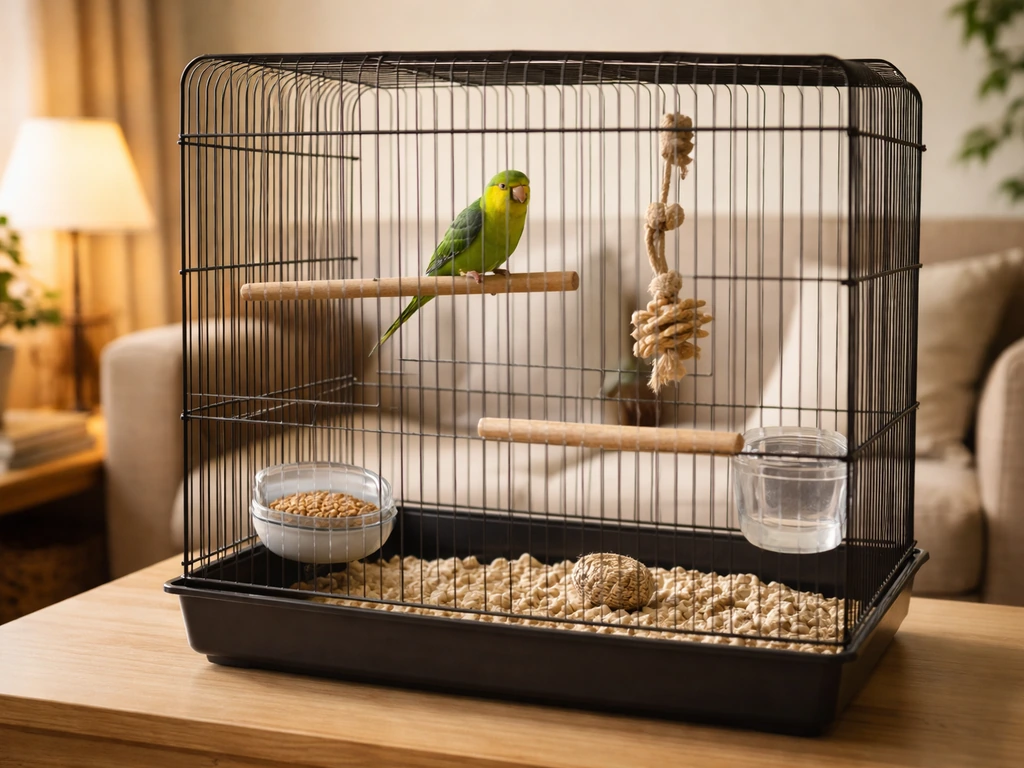
Bird Care Guide: Setup, Feeding, Cleaning, and Fixes
Bird care guide for beginners: set up safe habitat, feed right, clean routines, enrichment ideas, and quick fixes
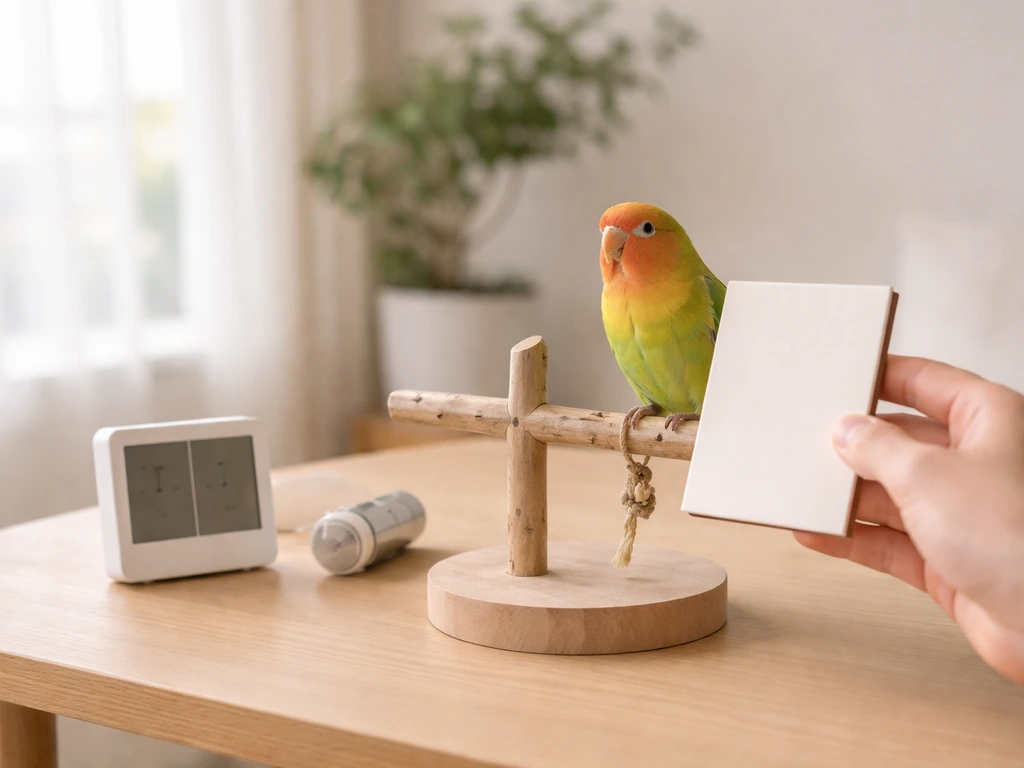
Bird Problems and Solutions: Fix Common Issues Fast
Quick triage for common bird problems, from stress and noise to diet and setup fixes, plus health red flags.
Budgie Bird Care for Beginners: Setup, Routine, and Tips
Beginner budgie care guide with setup checklist, daily feeding and cleaning routine, enrichment, safety tips, and common