Most bird problems at home trace back to one of three things: something wrong with the environment, something off in the daily routine, or an actual health issue that needs a vet. The good news is that you can usually figure out which category you're dealing with in about ten minutes of observation. Start with environment and behavior, rule out the obvious husbandry mistakes, and then decide whether you're looking at a fixable problem or a reason to call an avian vet today.
Bird Problems at Home: Quick Triage and Fixes Today
Marcus Chen
19 May 2026
Quick triage: what's normal vs an actual emergency
Before you change anything, spend two or three minutes just watching your bird. You want to see whether this is a bird who's slightly off or a bird in real trouble. The difference matters because the response is completely different.
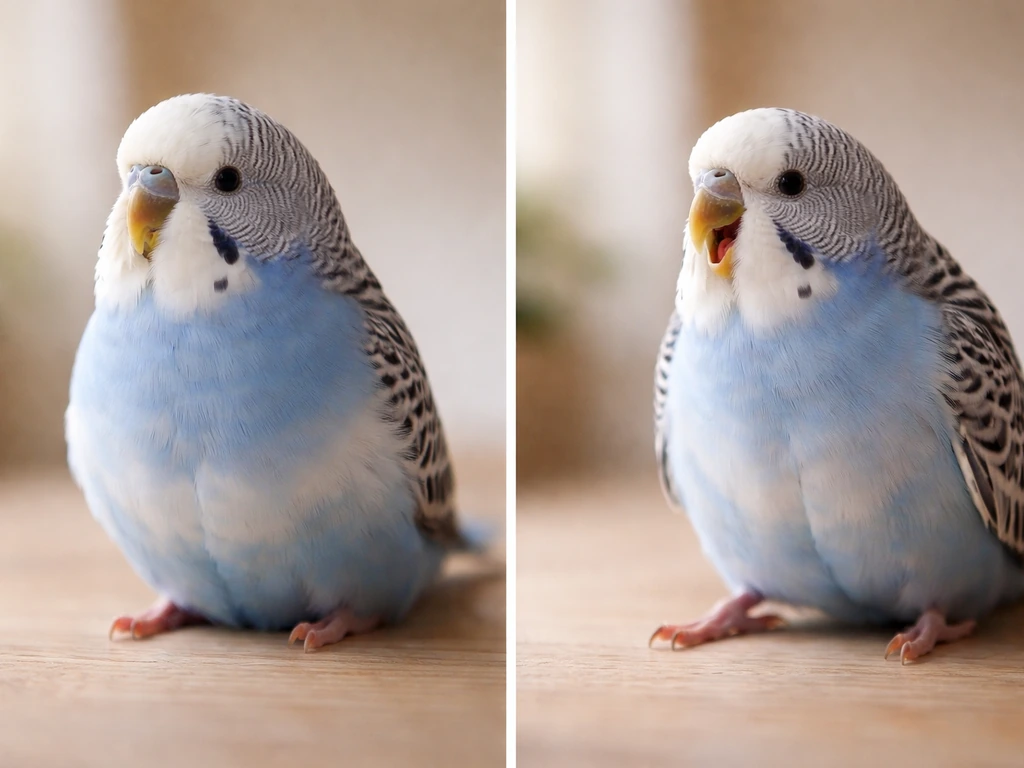
The clearest emergency signs are respiratory. If your bird is breathing with its mouth open, you can see its tail bobbing up and down with each breath, or it's making audible clicking or wheezing sounds, treat that as an emergency and call an avian vet immediately. Open-mouth breathing in a bird is not normal the way panting is normal in a dog. It means the bird is working hard to breathe, and that's always urgent.
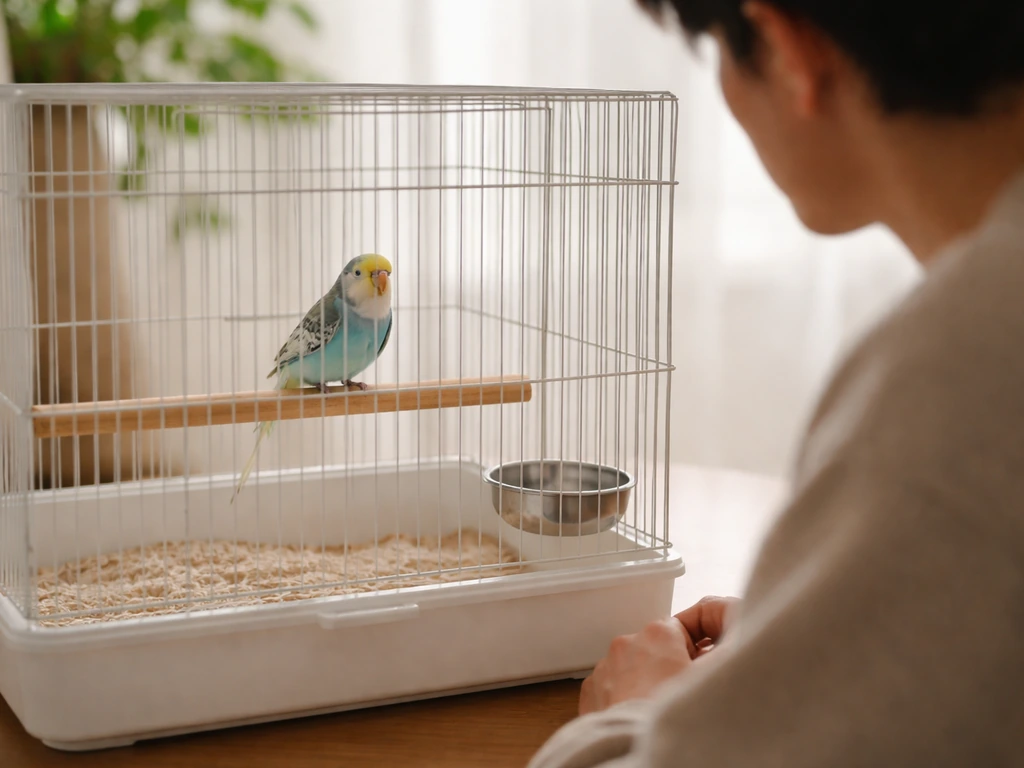
After breathing, look at posture and alertness. A fluffed-up bird sitting quietly on the bottom of the cage, not gripping a perch, with eyes partially closed during daylight hours is showing classic 'sick bird syndrome.' Birds hide illness instinctively, so by the time a bird looks obviously unwell, it's often been struggling for a while. Lethargy combined with no appetite is a vet call, not a wait-and-see situation.
Now here's where it gets slightly tricky: some things that look alarming are actually normal. A bird sitting fluffed up right after a bath, or just before sleep, or during a brief nap in the afternoon is usually fine. A bird who screams at dawn and dusk is almost certainly not sick. The key is pattern. If your bird normally greets you at the cage door and today it won't move, that change in pattern matters far more than any single behavior looked at in isolation.
| What you see | Likely category | What to do |
|---|---|---|
| Open-mouth breathing, tail bobbing | Medical emergency | Call avian vet immediately |
| Fluffed posture + cage floor + not eating | Medical urgency | Avian vet same day |
| Balance loss, falling off perch | Medical urgency | Avian vet same day |
| Screaming at dawn/dusk | Normal behavior | Read behavior section below |
| Fluffed up after bath or at nap time | Normal | No action needed |
| Slight appetite drop, still active | Monitor / check environment | Run through husbandry checklist |
| Biting, stress screaming, not settling | Behavioral / environmental | Check cage, routine, enrichment |
Check the basics at home first: cage, placement, temperature, light, and air quality
I'd estimate that a solid majority of 'my bird is acting weird' situations come back to something fixable in the environment. Before you spiral into worst-case thinking, go through this checklist.
Cage placement and temperature
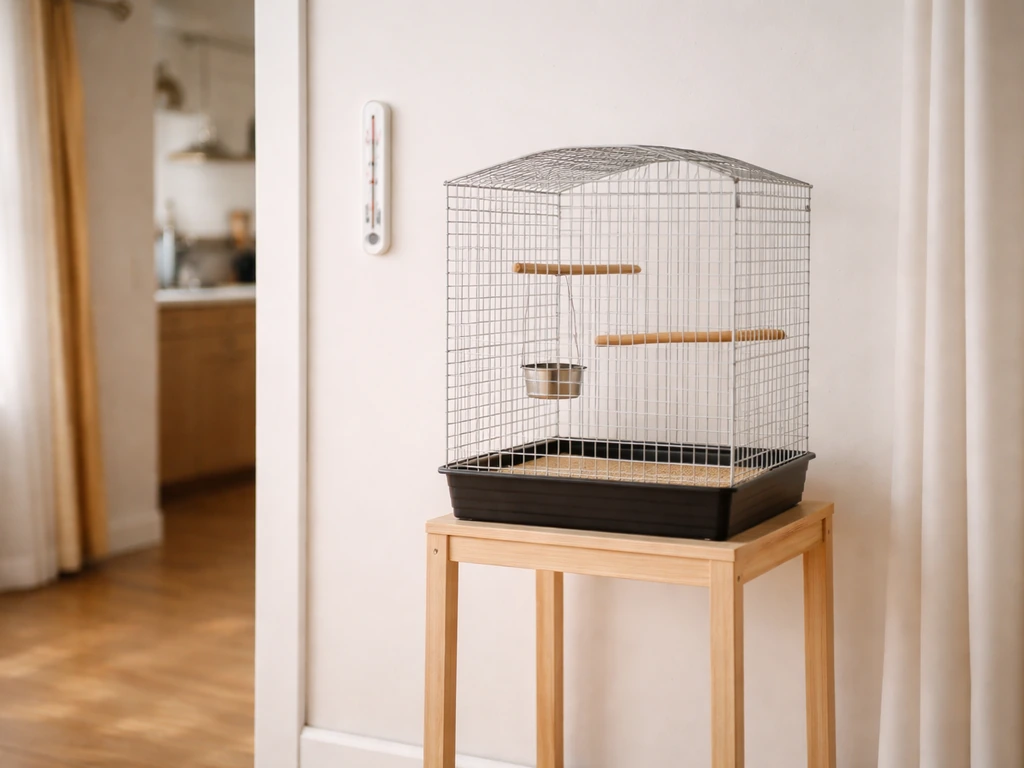
The kitchen is the single worst room for a pet bird. Cooking fumes, nonstick cookware (which releases toxic PTFE fumes when overheated), and extreme temperature swings make it genuinely dangerous. Birds' respiratory systems are extraordinarily sensitive to chemical fumes, including things you wouldn't think twice about: air freshener sprays, scented candles, perfume, cleaning product aerosols, and gasoline vapors from an attached garage. If your cage is near any of these, move it.
For temperature, most common pet birds do well in the range humans find comfortable (roughly 65–80°F / 18–27°C), but the real enemy is fluctuation, not a specific number. A cage placed near a window can swing 20 degrees over a day, and a cage near a floor vent gets blasted with hot or cold air regularly. Both are stressors. Keep the cage away from direct drafts, air conditioning vents, exterior walls in cold climates, and windows that get intense afternoon sun.
Light and sleep
This one gets overlooked constantly. Birds need a consistent light-dark cycle, and most do well with roughly 10 to 12 hours of light and 12 to 14 hours of quiet darkness for sleep. Covering the cage at night helps maintain this cycle and blocks out disruptive light sources like TVs and phone screens. Lack of proper sleep genuinely weakens a bird's immune system over time. If your bird is in a living room where the lights stay on until midnight, chronic sleep deprivation could be causing or contributing to a lot of what you're seeing.
Air quality and humidity
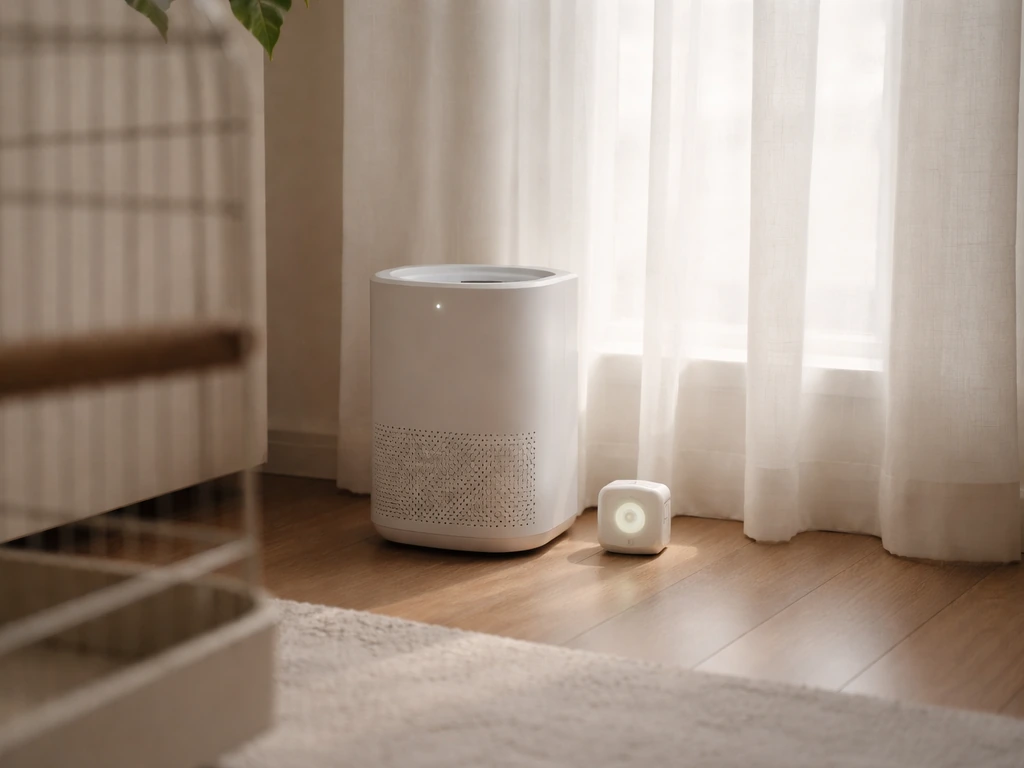
Good air quality means no aerosol sprays near the bird, no scented candles or plug-in air fresheners in the same room, no smoking anywhere in the home, and ideally a HEPA air purifier running nearby. Humidity matters too: very dry air (common in winter with central heating) can irritate airways and skin, while excessively humid conditions encourage mold growth. Aim to match the humidity range natural to your bird's species. For most tropical parrots and parakeets, moderate humidity (around 40–60%) is comfortable.
Cage hygiene
Droppings accumulate on perches, cage bars, food dishes, and the cage floor constantly. When droppings sit on surfaces, bacteria and mold grow, and birds that touch or eat near contaminated surfaces get sick. Wipe down perches and food/water dishes daily. Do a full cage scrub weekly. Use plain hot water or a bird-safe disinfectant (diluted white vinegar works and leaves no toxic residue), never bleach products or scented cleaners while the bird is in or near the cage.
Common bird behavior problems and fast fixes
Here's something worth knowing before you try to 'fix' a behavior: behavior problems can be symptoms of underlying medical issues. If your bird suddenly became aggressive, stopped vocalizing, or started screaming when it never did before, rule out a health problem first. That said, the vast majority of behavior issues in pet birds are environmental or social in origin.
Screaming
Morning and evening contact calls are completely normal for parrots and parakeets. This is flock behavior, and your bird is checking in with its 'flock' (you). Screaming that goes beyond those natural windows, especially when it ramps up whenever you leave the room, is usually separation anxiety or attention-seeking. The fix: don't rush in every time the bird screams, as that trains the bird that screaming works. Instead, return to the room and give attention during quiet moments. Make departures and arrivals low-key. Ensure the bird has enough enrichment to occupy itself.
Biting
Most biting from pet birds falls into a few categories: fear, overstimulation, hormonal behavior, or the bird trying to tell you something (like 'I'm done being handled'). Distinguish grasping behavior (a bird gripping your finger firmly but not breaking skin) from genuine aggression biting. For biting during handling: watch for body language cues before the bite, keep sessions shorter, and don't force contact when the bird is clearly uncomfortable. Forcing handling almost always makes biting worse.
Won't settle, pacing, or seeming stressed
A bird that can't settle is usually overstimulated, under-stimulated, or in an environment with a persistent stressor it can't escape. Check for things the bird might be reacting to: a window with a view of outdoor predators (cats, hawks), a mirror in the cage creating a phantom 'competitor,' loud noise sources, or irregular schedules. Birds thrive on routine. If feeding times, sleep times, and out-of-cage time shift around every day, the bird will stay in a low-level stress state. Consistency is genuinely one of the most powerful tools you have.
Health red flags and when to call an avian vet
Regular vets often have limited bird experience. Ideally you want a vet who is board-certified in avian medicine or at minimum sees birds regularly. Find that vet before you have an emergency, so you're not Googling in a panic at 10pm.
Call the vet today (don't wait) if you see any of the following:
- Open-mouth breathing, tail bobbing with each breath, audible clicking or wheezing
- Bird is on the cage floor and not perching
- Complete refusal to eat for more than 24 hours combined with lethargy
- Droppings that are entirely liquid, black/tarry, or bright lime-green for more than one day
- Visible injury, obvious limb deformity, or swelling on the feet/legs
- Loss of balance or falling off the perch repeatedly
- Bleeding that doesn't stop within a few minutes
- Sudden neurological signs: seizures, head tilting, uncoordinated movement
- Fluffed posture + closed eyes + not responding to your presence during normal alert hours
While you're waiting to reach a vet or travel there, keep the bird warm (a warm, draft-free environment around 85°F / 29°C helps a sick bird conserve energy), minimize handling and stress, don't offer new foods, and don't try to force water. Note the symptoms you've seen and for how long, any changes in droppings, and anything that changed recently in the environment or diet. This information is genuinely useful to the vet.
Feather problems, bathing issues, and mobility concerns
Feather plucking and damaged feathers
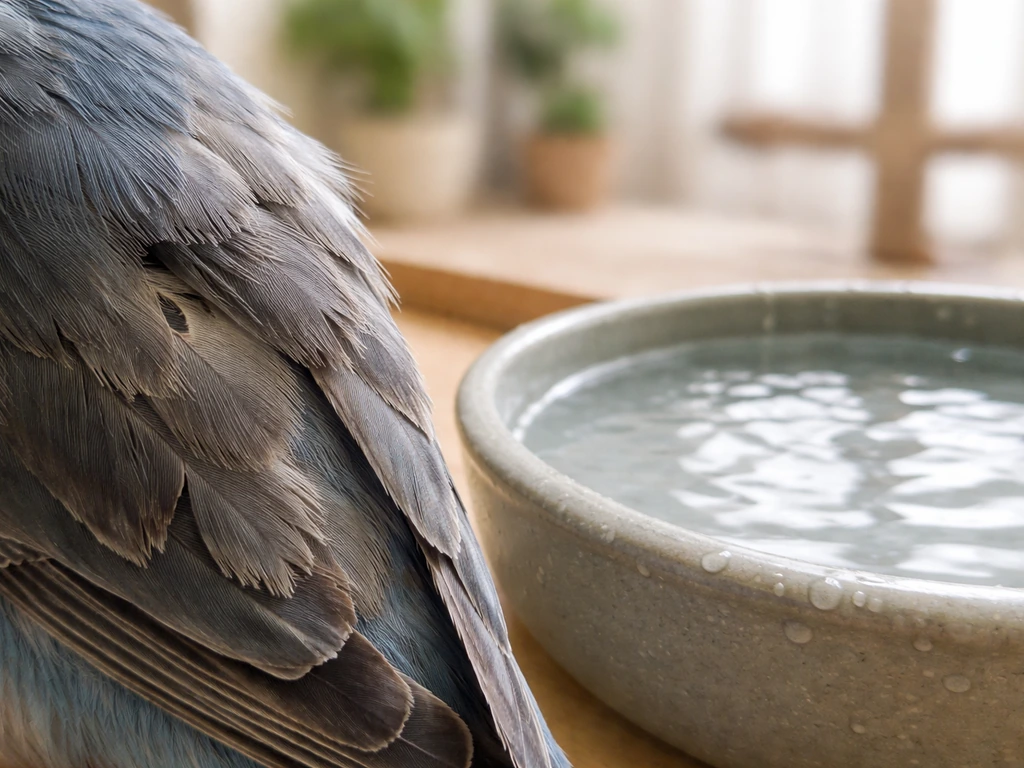
Feather plucking is one of the most distressing things a bird owner sees, partly because it looks awful and partly because the causes are genuinely complex. Physical causes include skin infections, parasites, nutritional deficiencies, and allergies. Psychological causes include boredom, loneliness, fear, anxiety, sexual frustration, and sleep deprivation. A vet should rule out medical causes first because treating boredom won't help a bird with a skin infection. Once medical causes are excluded, the environmental approach includes increasing foraging opportunities, improving sleep consistency, adding social interaction, and sometimes housing changes.
Feathers that look chewed, frayed, or patchy without the bird actively plucking are worth noting and describing to your vet. Some feather damage comes from cage bars, inappropriate toys with rough edges, or malnutrition.
Bathing
Bathing is genuinely important for feather and skin health, not just a nice-to-have. Most birds do well with a bath offered one to two times per week, though some individuals prefer daily and others are less enthusiastic. Offer a shallow dish of lukewarm water, a gentle misting with a spray bottle, or a supervised shower. Never use soap, grooming sprays, or conditioners unless specifically recommended by your vet. Birds preen and ingest whatever is on their feathers, so anything you put on them ends up in their system. Don't force the bird under direct forceful water pressure. Let the bird choose to engage with the water.
A useful trick: pay attention to when your bird naturally starts preening or seems restless in the morning. Many birds have a preferred bathing time, and offering the bath then gets much better uptake than forcing it at a random hour.
Foot and mobility problems
Limping or favoring one foot is often a perch problem. Perches that are all the same diameter cause pressure on the same spots on the foot all day, leading to soreness or bumblefoot (a bacterial foot infection). Use at least two or three different perch diameters and materials (natural wood branches, rope, concrete conditioning perches for nail wear). If the bird cannot perch at all, is lying on the cage floor, has visible swelling or deformity, or is limping along with other symptoms like weakness or breathing changes, go to the vet.
Diet and daily routine troubleshooting
What a balanced diet actually looks like
For most small pet birds (parakeets, cockatiels, small parrots), a reasonable target diet is roughly 40 to 50% quality pellets, 30 to 40% seed mix, 10 to 15% fresh vegetables, and 5 to 10% fresh fruit. Pure seed diets are nutritionally incomplete and are one of the most common long-term health problems in pet birds.
If you're caring for a budgie for the first time, it helps to follow beginner-friendly budgie bird care routines so their diet supports long-term health. If your bird is on a seed-only diet and resists pellets, you're not alone: the conversion process takes time. One approach that works: place pellets on top of the seed in the dish so the bird has to pick through pellets to get to seeds.
Over days to weeks, most birds start eating the pellets.
Appetite changes and hydration
A slight appetite dip during a molt, after a change in environment, or after adding a new bird or pet is common and usually self-correcting. A bird that hasn't eaten meaningfully in 24 hours and is also lethargic needs a vet. Make sure fresh water is available at all times and that the water dish isn't contaminated by droppings (this happens fast when the dish is placed below a perch). Change water at least once daily, more often in warm weather.
Reading the droppings
Normal droppings have three components: a solid fecal portion (typically green or dark brown), white or beige urates, and a small amount of clear liquid urine. Diet affects droppings significantly, so a bird that ate a lot of berries will have colored droppings and that's normal. Stress can also cause loose or watery droppings temporarily. What's not normal: all-liquid droppings with no solid component, droppings that are black and tarry (suggests bleeding in the GI tract), lime-green droppings (associated with some infections including chlamydiosis), or droppings with a consistently foul smell. If you see these patterns lasting more than a day, that's a vet call.
Enrichment and a long-term prevention plan
Most of the recurring problems I see in beginner bird setups come down to boredom and inconsistency. A bird with nothing interesting in its environment, no foraging opportunities, limited social interaction, and unpredictable daily schedules will develop problems, full stop. The good news is this is entirely fixable.
Toys and foraging
Rotate toys every one to two weeks. A toy that's been in the same spot for a month gets ignored. Foraging toys (hiding food inside puzzle feeders, wrapping treats in paper, threading vegetables through cage bars) tap into natural feeding behaviors and occupy birds mentally for hours. Aim for at least a couple of foraging opportunities daily. Shreddable toys made of untreated wood, palm fronds, or paper are particularly good for birds who need to chew.
Social needs and training
Birds are flock animals. Even species that are described as 'independent' need social interaction. Daily out-of-cage time with you, even 30 minutes of just being in the same room while you do other things, makes a real difference. Target training (teaching a bird to touch a stick with its beak for a reward) is one of the best tools available for building trust, reducing fear-based biting, and providing mental stimulation. It takes five minutes a day and pays off dramatically over weeks.
Your daily and weekly routine checklist
Building a consistent routine is one of the highest-leverage things you can do for a pet bird's long-term health and behavior. Here's a simple framework:
- Daily: Fresh water, fresh food, quick dropping check, brief social interaction or out-of-cage time, cover cage at a consistent time each evening
- Every 2 to 3 days: Wipe down perches and food/water dishes, offer a bath
- Weekly: Full cage cleaning with a bird-safe solution, rotate toys, check for any cage damage or sharp edges
- Monthly: Review diet variety, check perch condition, assess whether the bird's behavior has shifted and investigate why
- Annually (at minimum): Wellness check with an avian vet, even if the bird seems healthy
If you're newer to bird ownership and want to go deeper on species-specific care, the fundamentals of setting up a healthy habitat, or what to expect in the early weeks with a new bird, those topics connect closely to everything covered here. If you're looking for bird care for beginners, start with the basics of habitat setup and a consistent routine so you can spot issues early.
Getting the daily care routine right from the start prevents the majority of problems that send owners searching for answers later. For a complete bird care guide, pair that routine with species-appropriate food, enrichment, and habitat basics Getting the daily care routine right. If you want to apply these basics to your own bird, budgie bird care for beginners is a great next step.
The troubleshooting framework here and a solid general care foundation will handle most of what comes up, and knowing when to call an avian vet handles the rest.
FAQ
How can I tell if my bird problem is stress-related or something infectious like a respiratory illness?
Use the pattern approach plus breathing checks. Infectious respiratory illness usually comes with obvious respiratory signs (open-mouth breathing, tail bobbing, clicking, wheeze) and often worsens over hours to a day, while stress problems are more likely to fluctuate with your routine or the environment (for example, worse when you leave the room, better at set times). If you ever see mouth breathing or persistent fluffed lethargy through the day, treat it as medical and call an avian vet immediately.
My bird is shedding feathers and looking rough, but it’s not fully plucking. When should I worry?
Shedding during normal molt is usually symmetrical and not accompanied by skin scabs, crusting, or red, irritated patches. Worry if you see patchy bare areas, broken or chewed-looking feathers, scaly skin, foul odor, or the bird is constantly preening one spot with broken down feathers. Also treat “molt plus behavior change” (sudden aggression, decreased appetite, or unusual quiet) as a reason to call your vet to rule out parasites or nutritional issues.
What’s the safest way to move my cage if I suspect fumes or air quality are causing bird problems at home?
Move the entire cage to a different room before you ventilate or clean in the current room, and keep the bird away from the kitchen while cooking. Avoid running deodorizers, fragranced cleaners, or scented candles during the move. When you arrive at the new spot, confirm it is away from drafts and direct sun, and only then recheck temperature stability and the light-dark cycle.
If my bird won’t eat, is it ever okay to wait 24 hours based on your guidance?
If the bird is lethargic in addition to not eating, don’t wait. The “24 hours” threshold you should use is for an otherwise alert bird with an early appetite dip. Also consider fresh water and pellet access, if diet transition is in progress. If you see crop-bulging, regurgitation, a rapidly worsening attitude, or abnormal droppings, skip waiting and contact a vet sooner.
What droppings changes are most likely to be diet-related, versus a medical red flag?
Diet can change color, for example berries making droppings darker or red-tinged, and a temporary looseness can happen during short stress events. Red flags include black tarry droppings, all-liquid droppings with no solid component, consistently lime-green droppings, persistent foul smell, or no improvement within about a day. If a diet change happened and droppings worsen immediately, still treat the timing plus symptoms as important and consider a vet call.
My bird screams when I leave. How do I respond without accidentally training the behavior?
Don’t give attention during the peak screaming. Instead, return only after a quiet interval, then offer attention, and keep departures calm and predictable. Make the room changes gradual if possible, and add enrichment before you go (foraging tasks, shred toys). If the screaming ramps up specifically with your absence and you can’t get any quiet windows, consider a vet check to rule out discomfort, then reassess environment and sleep consistency.
Could mirror reflections or windows actually cause behavioral issues, and what should I do first?
Yes, mirrors can create a constant “competitor” and birds may escalate aggression, vocalization, or frantic behavior. Outdoor predators seen through windows can also trigger persistent stress if the view is constant. Start by removing mirrors from the cage area and adjusting the bird’s placement so it has a calm side of the room, not a direct predator line of sight.
How do I choose perches if my bird seems sore or starts favoring one foot?
Use multiple perch diameters and materials so pressure points change day to day, and ensure perches are arranged so the bird can step between levels without jumping to stressful gaps. If your bird is limping, lying on the cage floor, or you see swelling or deformity, don’t try to “adjust perches” as the sole fix, go to an avian vet to check for bumblefoot or injury.
Is it safe to use dish soap or disinfectants around the cage if I clean often?
Avoid any scented or harsh products, and don’t use bleach near the bird or the cage. Stick to hot water or a diluted bird-safe disinfectant approach like diluted vinegar, then rinse and dry well. Also prevent droppings from contaminating food and water by placing dishes away from under-perch positions, since “cleaning the cage” doesn’t help if daily contamination continues.
How can I tell whether feather plucking is behavioral or medical before I change routines?
Rule out medical causes first, especially if plucking is sudden or accompanied by skin changes (irritation, scabs), abnormal droppings, or changes in voice and appetite. Behavioral causes are more likely when the bird is otherwise physically normal but has chronic sleep disruption, poor enrichment, low social time, or a persistent stressor it cannot avoid. Either way, document timing (sleep schedule, recent environmental changes, when the behavior starts) and share that with your avian vet.
What exact temperature should I aim for if I’m waiting to reach the vet for a sick bird?
Warm, draft-free conditions help a sick bird conserve energy, around 85°F (29°C) in a safe area. Make sure the rest of the room isn’t actively chilled and that you still provide space for the bird to choose a comfortable spot, avoid overheating, and minimize handling and movement while you wait.
My bird seems to “sleep a lot” after a bath. Is that normal?
Often yes. Birds may fluff and rest after bathing, especially if the bath was recent or it’s near the bird’s usual quiet period. Still, if sleepiness is paired with breathing effort, mouth breathing, tail bobbing, or a failure to return to normal behavior within the same day, treat it as illness rather than bath fatigue and contact your avian vet.
Next Articles
Bird Care for Beginners: Step-by-Step First-Bird Guide
Step-by-step bird care for beginners: choose a starter bird, set up cage, feed safely, clean daily, bond, and avoid haza
Bird Keeping for Beginners: First Week Setup and Care
Bird keeping for beginners: first week checklist for choosing a bird, setting a safe cage, and daily care routines.
Bird Care Guide: Setup, Feeding, Cleaning, and Fixes
Bird care guide for beginners: set up safe habitat, feed right, clean routines, enrichment ideas, and quick fixes