Black-oil sunflower seed is the single best all-around bird bait you can buy. It attracts chickadees, titmice, nuthatches, finches, jays, cardinals, and dozens of other species, and it works in almost every feeder type. But "best" really depends on which birds you want, what time of year it is, and whether you're trying to attract, feed, or redirect. Get that match right and your feeders will be busy within days. Get it wrong and you'll dump bag after bag of seed while squirrels feast and the birds you actually want never show up.
Best Bird Bait: What to Feed by Species, Season, and Setup

Marcus Chen
12 May 2026
Start here: match the bait to the bird and your actual goal
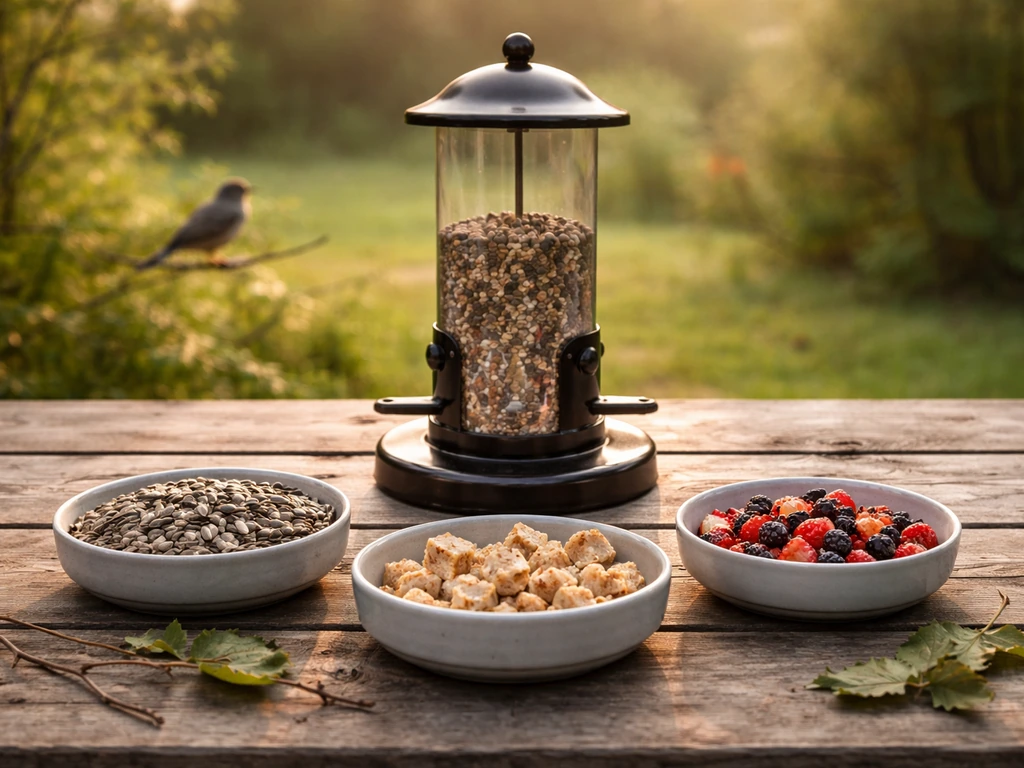
Before you buy anything, be honest about what you're trying to do. There are three distinct goals, and they call for different strategies. Attracting specific species means putting out the exact food that guild wants. Feeding birds you already have means optimizing nutrition and freshness. And luring birds away from problem spots (like a garden or a neighbor's feeder) is a third game entirely that requires placement, not just food selection.
The bird species question matters enormously. Robins, waxwings, bluebirds, and mockingbirds rarely eat birdseed at all. If those are the birds you want, a tube feeder full of sunflower is useless to them. They want fruit. Woodpeckers, nuthatches, and chickadees go straight for suet and seeds. Hummingbirds need nectar. Sparrows and towhees often won't land on a feeder at all but will happily pick up fallen seed off the ground. Knowing your target bird first saves you a lot of money and frustration.
If you're dealing with squirrels overwhelming your feeders, there's a surprisingly effective bait redirect: offer peanuts or dried ears of corn away from your main feeders to distract them. It doesn't eliminate squirrels, but it does take pressure off the feeders so the birds actually get access.
The best bait types and which birds they bring in
Seeds
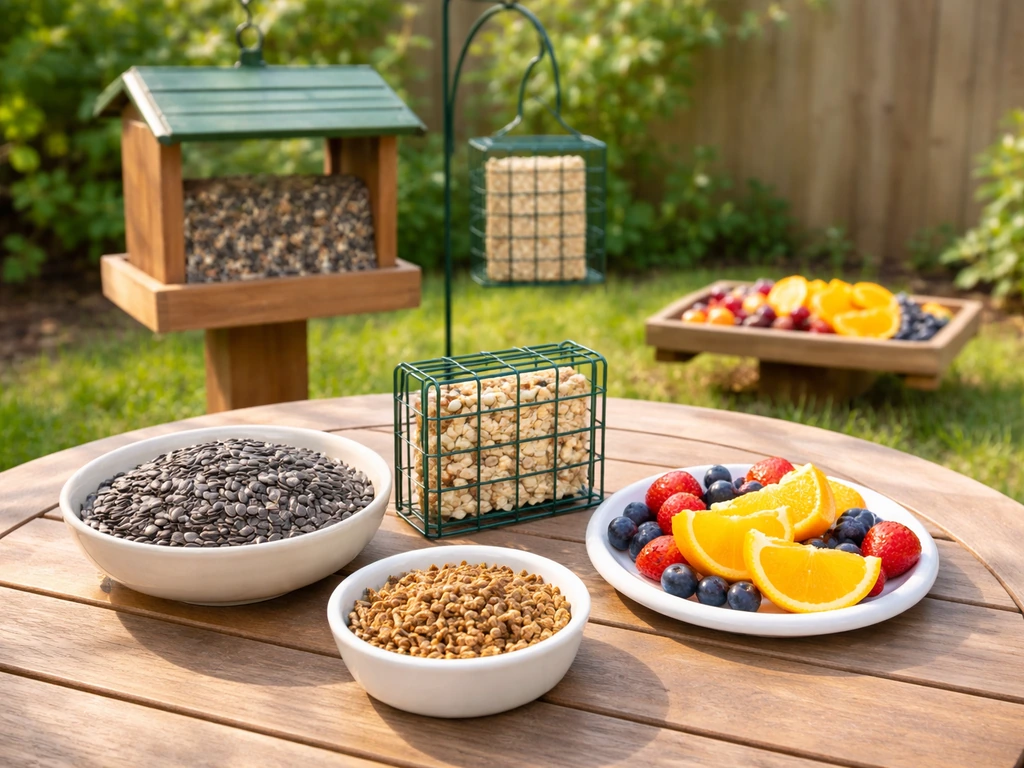
Black-oil sunflower is the anchor of any serious feeding setup. Audubon calls it the "hamburger" of the bird world for a reason: it has a thin shell that small birds can crack easily, a high fat content, and almost universal appeal. Chickadees, titmice, nuthatches, finches, and jays all go for it directly. If you only stock one food, make it this.
Millet is popular in blended mixes but is worth being careful with. The guidance from Cornell is direct: if black-oil sunflower works for the birds you're targeting, millet adds little and mostly creates waste. The birds that like millet tend to be equally drawn to black-oil sunflower. One notable exception is if you're specifically targeting doves or juncos, where white millet on a ground tray does work. Corn is another common filler to treat with skepticism. It's the bird food most likely to be contaminated with aflatoxins, which are toxic even in small amounts. If you use corn, buy in small quantities and store it carefully.
Suet
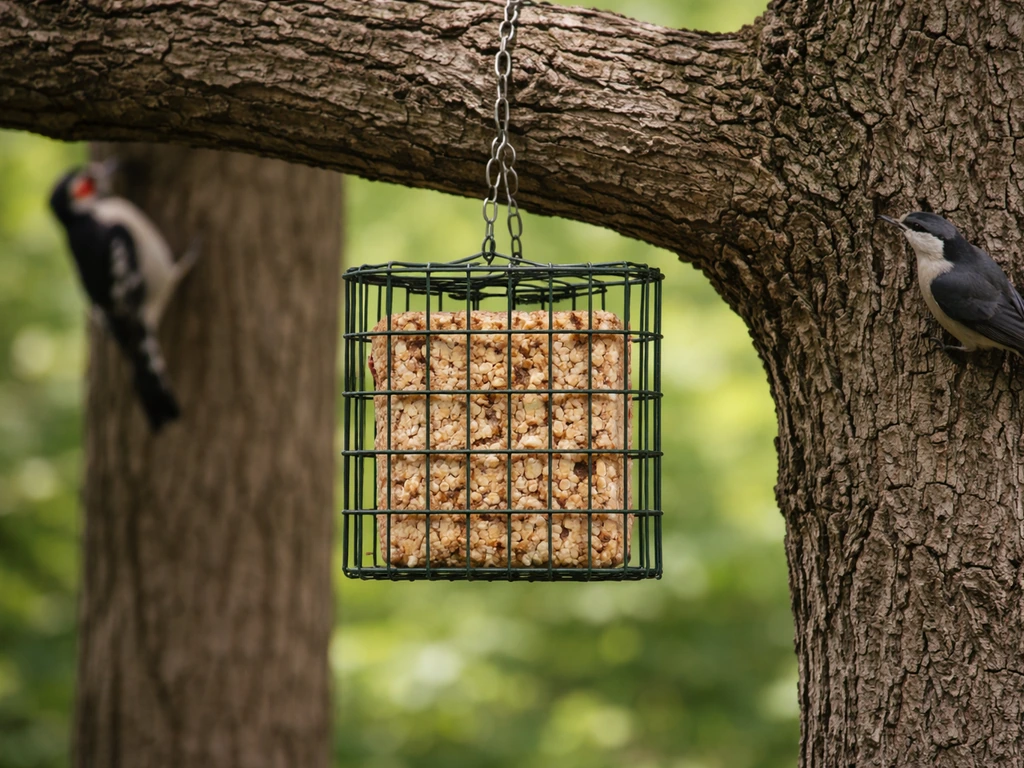
Suet is the go-to for woodpeckers, nuthatches, chickadees, and wrens. For bird hunting, the best choke choice depends on the quarry and range, so match your shotgun choke to the species you are targeting best choke for bird hunting. It's a high-fat, high-calorie food that most seed-eating birds won't touch, which actually makes it useful: it draws a different guild without creating competition at your seed feeders. The catch is temperature. Suet in warm weather quickly becomes rancid and can melt and stick to feathers, which is genuinely dangerous for birds. Stick to suet cakes from late fall through early spring, or buy rendered ("no-melt") suet specifically formulated for warmer temperatures if you want to run it year-round.
Mealworms and insects
Mealworms are one of the most effective baits for bluebirds, robins, thrushes, and wrens. Live mealworms outperform dried ones, but dried work too and are easier to store. One important note: goldfinches are a common exception and generally don't eat mealworms. If you're trying to attract goldfinches specifically, nyjer (thistle) seed in a tube feeder is a far better choice.
Fruits and nectar
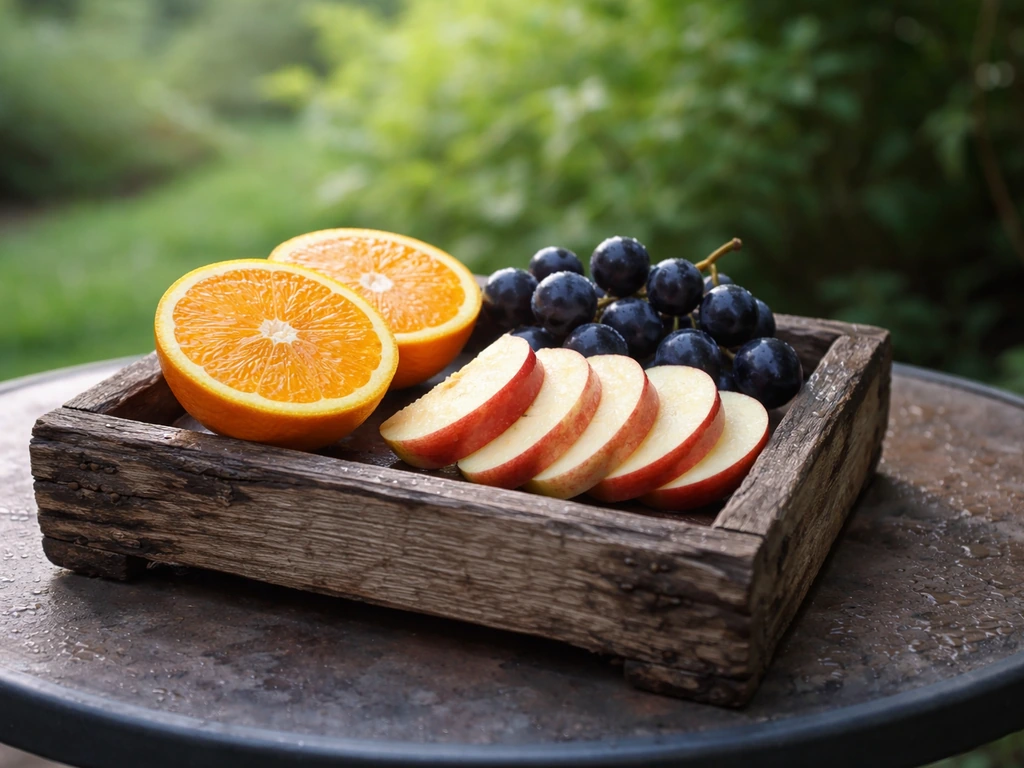
Halved oranges, apple slices, and grapes are the best way to bring in fruit specialists like orioles, waxwings, and mockingbirds. These birds don't use seed feeders, so fruit on a platform tray or an oriole-specific feeder is the only realistic path to getting them in your yard. blank" rel="noopener noreferrer">Nectar (a simple 4:1 water-to-white-sugar mix) is specifically for hummingbirds. Don't use red dye, honey, or artificial sweeteners. Change nectar and wash the feeder every three to five days to prevent mold, more often in hot weather.
Nesting and foraging materials
During breeding season, you can attract birds to your yard by offering nesting materials: small twigs, dried grass, and short natural fiber strips placed in an open wire cage or a mesh bag. Avoid yarn, lint, or synthetic fibers. The U.S. Fish and Wildlife Service specifically warns that yarn and lint can tangle around legs and injure nestlings. Sticking to natural plant-based fibers is the right call. Leaf litter left in corners of the yard also gives ground-foraging thrushes and sparrows a place to dig for insects.
A quick comparison of bait types by bird guild
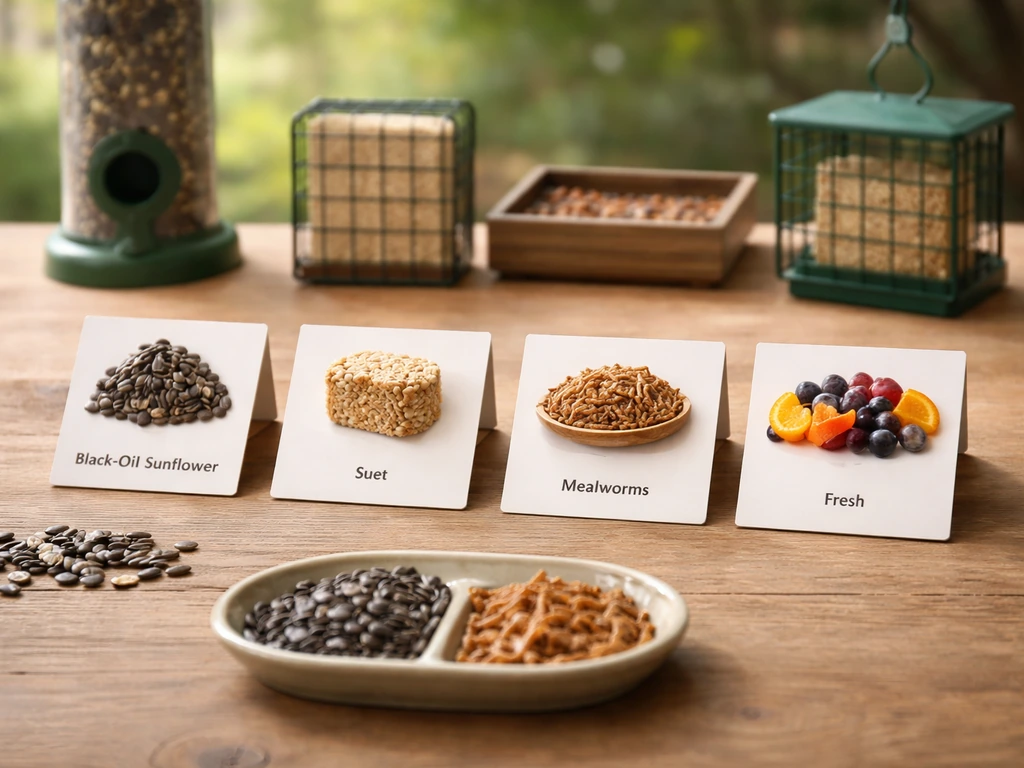
| Bait Type | Best For | Feeder Type | Season Notes |
|---|---|---|---|
| Black-oil sunflower seed | Chickadees, titmice, finches, nuthatches, jays, cardinals | Tube, hopper, or platform | Year-round |
| Suet | Woodpeckers, nuthatches, wrens, chickadees | Wire cage feeder, hung off the ground | Fall through spring; no-melt formulas only in summer |
| Live or dried mealworms | Bluebirds, robins, thrushes, wrens | Open tray or bluebird feeder | Breeding season especially effective |
| Nyjer (thistle) seed | Goldfinches, pine siskins, redpolls | Fine-mesh tube feeder | Year-round, peak in winter/spring |
| Fruit (oranges, apples, grapes) | Orioles, waxwings, mockingbirds | Platform tray or spike feeder | Migration and breeding season |
| Nectar (4:1 water:sugar) | Hummingbirds | Hummingbird feeder | Migration and summer |
| Peanuts (whole or pieces) | Jays, woodpeckers, squirrel distraction | Hopper or open tray | Year-round |
| Nesting/foraging materials | Most cavity nesters and yard birds | Open wire cage or mesh bag | Spring and early summer only |
How to pick quality bait (and what to skip)
The difference between fresh and stale seed is actually a big deal, and most beginners underestimate it. Birds can smell and taste rancid oil in seed. If you're filling feeders and nothing is showing up, bad seed is one of the first things to check. Fresh black-oil sunflower has a clean, mild scent. If it smells musty, off, or faintly like motor oil, it's turned and birds will reject it.
Buy in quantities you can realistically use within four to six weeks. Big-box store mega-bags of seed can sit in a warehouse for months before you buy them and then sit in your garage for months more. A smaller bag from a garden center or dedicated bird supply store is usually fresher. Store seed in a sealed container (metal preferred, since rodents chew plastic) in a cool, dry place.
Cheap seed blends are a common waste of money. Most bags labeled "wild bird mix" are padded with milo, wheat, and red millet that most desirable feeder birds won't touch. You end up paying for filler that falls to the ground, gets wet, and molds. The mold risk matters: moldy seed is a real aspergillosis hazard for wild birds, and the Pennsylvania Game Commission specifically calls out feeders as a potential exposure source. Spend a little more on a clean single-ingredient or minimal-mix seed and you'll use less of it with better results.
- Avoid: "wild bird mix" with lots of milo, red millet, or wheat as primary fillers
- Avoid: corn in bulk quantities or any corn that looks discolored or smells musty
- Avoid: bread or baked goods (nutritionally harmful to birds)
- Avoid: honey in nectar (can ferment and grow harmful bacteria)
- Avoid: suet in warm weather unless it's specifically a rendered no-melt formula
- Buy: black-oil sunflower as your default; buy nyjer, mealworms, or fruit only if targeting specific birds
Feeder placement, setup, and reducing waste
The biggest setup mistake I see beginners make is putting one feeder in one spot and wondering why they only get house sparrows. Different bird guilds use different feeding heights and feeder styles. Ground-feeding sparrows, towhees, and fox sparrows won't use a hanging tube feeder. Woodpeckers and nuthatches want suet hung off the ground on a tree or post. Orioles want an eye-level platform or spike feeder. If you only have one feeder type, you're filtering out most of the birds you want. If you’re using a Bird Buddy, the pole size you need depends on your Bird Buddy model and whether it will mount to a post or attach to a feeder pole what size pole for bird buddy.
Audubon's guidance breaks it down cleanly: use table-like or platform feeders for ground guild birds, tube or hopper feeders for shrub and treetop feeders, and suet cages hung at height for woodpeckers, nuthatches, and chickadees. You don't need all of these at once. Two well-chosen feeders covering different guilds will outperform five identical tube feeders.
On the ground-scatter debate: yes, some species like song sparrows and towhees will only eat fallen seed off the ground. But tossing seed directly on the ground or on flat surfaces like decks increases contamination risk significantly. Virginia DWR specifically recommends against tray feeders on flat surfaces for this reason. A better solution is a low platform feeder with drainage holes set a few inches off the ground, cleared and refreshed regularly.
For waste reduction, offer only what gets eaten in two to three days. Overfilling feeders means seed sits, absorbs moisture, and molds at the bottom of the tube. If you're constantly topping up and nothing is touching the lower half, your birds are picking the fresh top layer and the rest is going bad. Clean out the old seed before refilling, not just top it off.
Seasonal and regional changes to your bait strategy
What's "best" genuinely shifts by season, and ignoring that is one of the most common reasons feeding setups go stale after a few months.
Winter
Winter is peak feeding season for most of North America. Birds are burning more calories to stay warm, natural food is scarce, and feeder activity is at its highest. Black-oil sunflower, nyjer for finches, suet for insectivores, and peanuts for jays and woodpeckers are all highly effective right now. Keep feeders consistently stocked because birds will rely on them as a known food source during cold snaps.
Migration
Spring and fall migration windows bring species through your yard that you'd never normally see. Orioles, tanagers, and grosbeaks pass through during spring migration and can be brought in briefly with fruit, nectar, or fresh mealworms. Keep an eye on eBird or local birding groups to know what's moving through your region, then time your offerings to the peak passage window. This is also when hummingbird feeders should be up and running.
Breeding season (spring through summer)
During breeding season, birds need protein more than fat. Mealworms become especially effective because parent birds will carry them back to nestlings. Nesting materials (natural fibers, short twigs, plant down) can also draw birds in close. This is the window to pull back on heavy seed offerings and lean into live or dried insects and fruit.
The RSPB's guidance for UK feeders (which many North American birders take cues from) is to pause seeds and peanuts from May through October because natural food is abundant and warm-weather feeding can carry disease risks. That's a stricter approach than most North American guidance recommends, but the underlying principle is sound: match what you offer to what birds actually need right now, not what's easiest for you to put out.
Regional differences
Your region changes everything. Desert Southwest birders get different species than Pacific Northwest birders. Coastal birders see migration species that inland birders never encounter. The most practical move is to look up Project FeederWatch's regional common feeder birds list for your area and build your bait selection around the top five to ten species on that list. Don't stock for birds that don't live in your region.
Safety, legality, and keeping birds healthy
Feeding wild birds is legal everywhere in the U.S. and most other countries, but there are specific restrictions in some areas around feeding wildlife that can attract bears or other predators. Always check local wildlife regulations if you're in a bear-active region, as many states have seasonal feeding bans.
Feeder hygiene is not optional. It's where most backyard feeding setups go wrong from a bird welfare standpoint. Infections like salmonellosis spread through shared feeding spots and contaminated perches. The protocol that works: scrub feeders with warm soapy water, then soak in a 1-part bleach to 9-parts water solution for about 15 minutes, rinse thoroughly, and let them dry before refilling. Do this every two weeks minimum, and more often during warm weather or if you notice sick birds. The dishwasher works too if your feeder is dishwasher-safe and the water gets hot enough.
Hummingbird feeders need more frequent attention than any other type. Change nectar and clean the feeder every three to five days, more often in heat. Moldy or fermented nectar can make hummingbirds seriously ill. If you see black mold inside the feeder, that's a sign cleaning has fallen behind.
Moldy seed is an aspergillosis risk for wild birds. This fungal disease is difficult to treat once a bird contracts it, and the spores are environmental, so prevention is the entire strategy. Don't let seed sit wet or clumped in feeders. Empty and inspect feeders before refilling. Any seed that looks discolored, clumped, or smells musty goes in the trash, not back in the feeder.
- Clean feeders every two weeks with a 1: 9 bleach-to-water soak, rinse thoroughly
- Change hummingbird nectar every 3 to 5 days; increase frequency in hot weather
- Discard any seed that is wet, clumped, discolored, or smells off
- Avoid bread, honey, flavored syrups, or foods with artificial additives
- Don't use yarn or lint as nesting material; use short natural fibers only
- Remove feeders temporarily if you see multiple sick or lethargic birds
- Check local regulations before feeding in bear-active regions
Troubleshooting: when the birds you want don't show up
If your feeders have been up for two or more weeks and the birds you want aren't coming, work through these in order before assuming the birds just aren't there. A good bird decoy can also help redirect attention when the birds you want are nearby but your setup is competing with other food sources.
- Check your food first. Smell the seed. If it's rancid or musty, birds are rejecting it. Empty everything, clean the feeder, and start with a fresh batch of quality black-oil sunflower.
- Check whether you're offering the right food for your target species. Fruit specialists like waxwings and robins won't come to seed feeders. Ground-foraging sparrows won't use hanging tube feeders. Reread the guild table above and match your offering.
- Check placement. Feeders placed in exposed, open spots with no nearby shrubs or trees make birds feel unsafe. Most songbirds want cover within ten to fifteen feet so they can dart in and retreat quickly. Move your feeder closer to natural vegetation.
- Check competition. Aggressive birds like starlings, house sparrows, and pigeons can crowd out smaller species. Caged tube feeders with small openings exclude larger birds and give finches and chickadees more access. Suet feeders that require birds to hang upside-down deter most starlings.
- Check the season. If it's summer and birds are ignoring your seeds, natural food may simply be abundant enough that they don't need you. Switching to mealworms and fruit during breeding season often gets activity going again when seeds don't.
- Consider adding a water source. A clean, shallow birdbath with fresh water can triple the variety of birds visiting your yard, especially for species that never use feeders at all. Many insect-eating birds that ignore bait entirely will reliably visit a water feature.
- Give it more time and be consistent. If you stop and restart feeding frequently, birds that were learning your yard as a reliable food source have to relearn it each time. Consistency matters more than perfection.
One last thing worth knowing: your setup doesn't need to be complicated to work. A single clean tube feeder with fresh black-oil sunflower, placed near some shrubs, and maintained on a regular cleaning schedule will outperform an elaborate multi-feeder station loaded with cheap mixed seed and cleaned twice a year. To get those birds in sharp, useful photos, pair your feeding setup with the best monopod for bird photography so you can stabilize your camera quickly. To get the best results with a bird buddy, pair that tube feeder setup with the best pole height and stability so the birds feel safe while feeding. Start simple, observe which birds show up, and layer in targeted foods like mealworms or fruit only when you have a specific species goal in mind. That approach gets results faster and costs less.
FAQ
If I want the best bird bait, how do I choose between a feeder full of seed versus a platform of food when I do not know what birds are around yet?
Start with black-oil sunflower in a tube or hopper feeder and add one small platform tray for fruit only if you see fruit eaters. If after a week you only get a narrow guild, switch one variable at a time (feeder style or food type), not both. This prevents you from guessing which change caused the new activity.
How long should I wait after changing bird bait before deciding it is not working?
For most seed targets, give it 3 to 7 days, since birds must learn the new resource. If you change food because your seed smelled off or looks wet, expect results faster after cleaning and replacing, usually within a few days. If no birds visit after two weeks, re-check feeder placement, hygiene, and that the feeder type matches the species you want.
What is the safest way to handle and dispose of moldy seed or spoiled suet?
Do not compost it and do not spread it on the ground. Bag it and toss it to prevent spores and contamination. Wash gloves and any scoop or container that touched the spoiled food, because residues can re-contaminate fresh bait during refills.
Can I use sunflower seeds with the birds still, or should I always buy black-oil sunflower specifically?
Black-oil sunflower is the best all-around choice because it is easy for small birds to crack and is broadly accepted. If you use other sunflower types, larger birds may dominate and seed waste can increase if shells are harder, which also means more leftover food can mold in feeders.
Do I need to worry about feed going rancid even if the birds are still eating it?
Yes. Birds may temporarily continue visiting, but rancid oils reduce feeding quality and can cause rejection. If the seed smells musty, off, or like old motor oil, replace it immediately and clean the feeder so the next refill is not tainted by residues.
What feeder height and placement works best when different birds refuse to share one location?
Place feeders at different vertical levels when possible, for example, tube feeder at a convenient height for small birds and suet lower on a tree or post for woodpeckers and nuthatches. Also consider cover, shrubs for small birds and open sightlines for species that dislike close approach. If your only feeder is in one spot, you effectively cap the bird diversity.
If squirrels are stealing the bait, is it better to trap or to change the bait?
Changing bait alone rarely solves squirrels. Use a squirrel-distracting decoy (peanuts or dried corn) away from the main feeder as the article suggests, and also tighten the feeding strategy by using feeders designed to resist access (baffles and weight-activated ports). The goal is reduced time squirrels spend at your main feeding area so birds get consistent access.
Is white millet always unnecessary if I already use black-oil sunflower?
In most cases, white millet mostly creates waste when black-oil sunflower is already working for your target birds. The exception mentioned is ground-feeding species like doves or juncos, where a ground tray with white millet can attract them when they will not rely on tube or hopper feeders.
Can I feed corn, and what is the safest way if I want to try it anyway?
Corn can be risky because of aflatoxin contamination. If you choose to use it, buy in small quantities, store it in cool dry conditions, and discard any suspicious or spoiled material rather than mixing it into fresh batches. If you are seeing moldy corn, stop immediately and switch to safer bait options.
What should I do if my feeder attracts the wrong birds, like house sparrows, and I want something else?
Do not only change food, change the feeder style and access. House sparrows often take advantage of ground-access seed, so use feeder types that exclude ground feeding when possible and ensure you are not scattering seed on flat surfaces. Add a second feeder type that matches your target guild, so you are not relying on one bait that the sparrows can monopolize.
How often should I change hummingbird nectar, and can I make it last longer?
Change nectar every 3 to 5 days, more often in hot weather, because mold and fermentation can harm hummingbirds. Do not try to extend intervals when temperatures are high. If you see black mold inside the feeder, clean more thoroughly and shorten the cycle going forward.
What nesting materials are safest if I want to attract birds during breeding season?
Use natural, short materials such as small twigs, dried grass, or short plant-based fiber strips. Avoid yarn, lint, and synthetic fibers because they can tangle around legs and harm nestlings. If you provide materials in a mesh bag or open cage, keep it off the ground so the items do not become wet and contaminated.
If I want a ground-feeding bird like towhees, is tossing seed on the ground the best approach?
It can work, but it increases contamination risk if seed sits on flat surfaces. A better compromise is a low platform feeder with drainage holes placed a few inches off the ground, with frequent clearing and fresh refills. This preserves the “ground feel” without creating a wet, dirty seed layer.
Next Articles
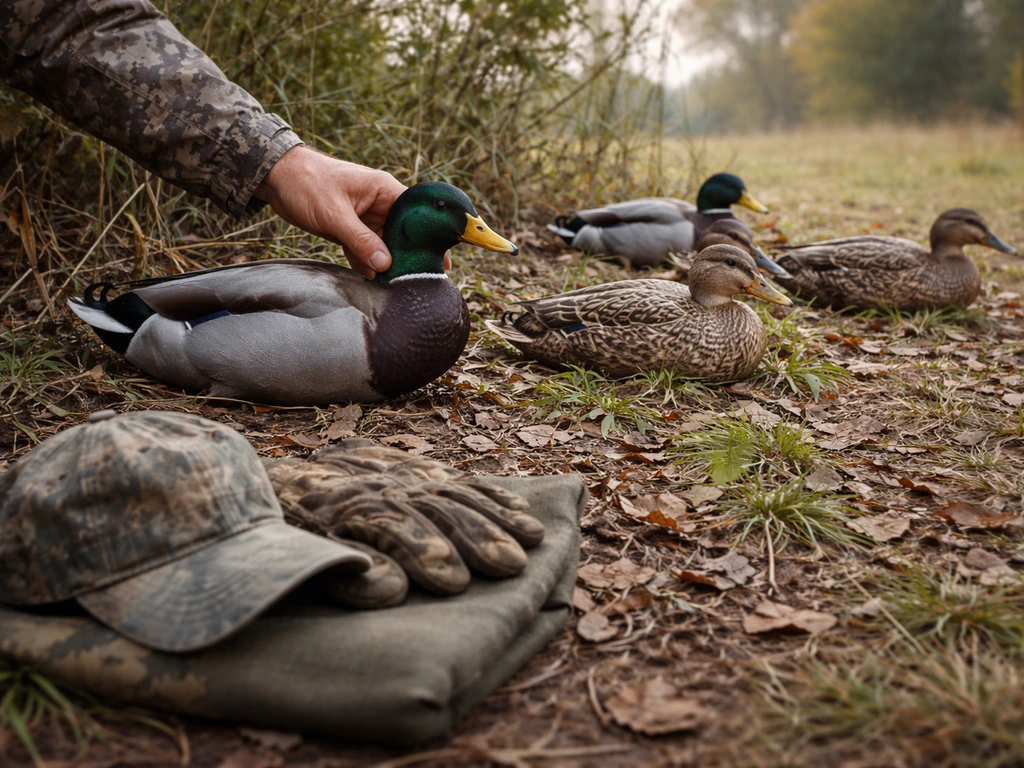
Best Bird Decoy Guide for Beginners: Choose, Set Up, Succeed
Pick the best bird decoy for your goal, set it up right, and troubleshoot placement, timing, and species match.
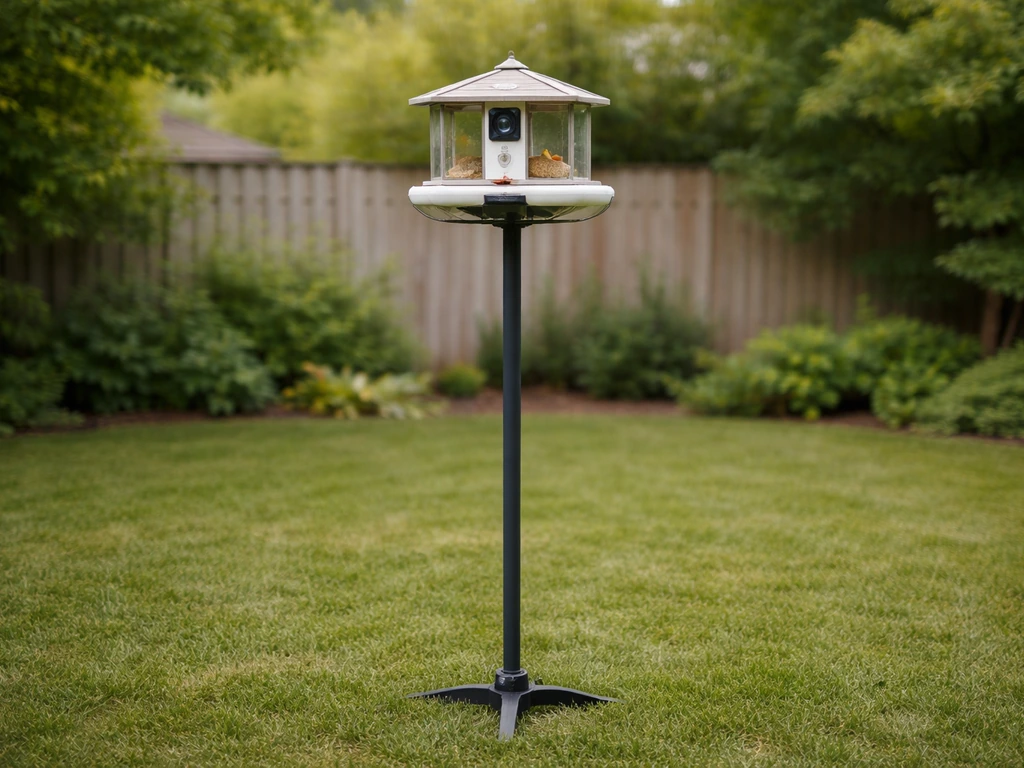
What Size Pole for Bird Buddy Perch and Stand Guide
Find the right Bird Buddy perch or pole size, diameter, height, and fit for budgies, cockatiels, and small parrots.
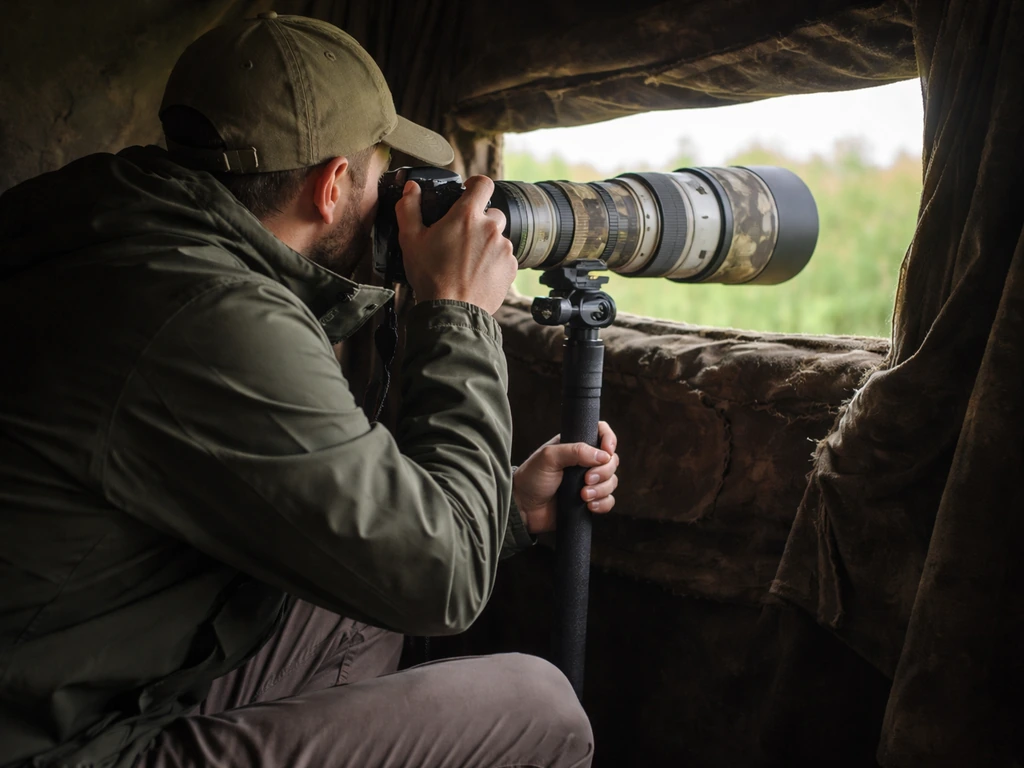
Best Monopod for Bird Photography: Buyer Guide & Picks
Buyer guide with top monopod picks for bird photos, features, best-for scenarios, setup tips, and a buying checklist.