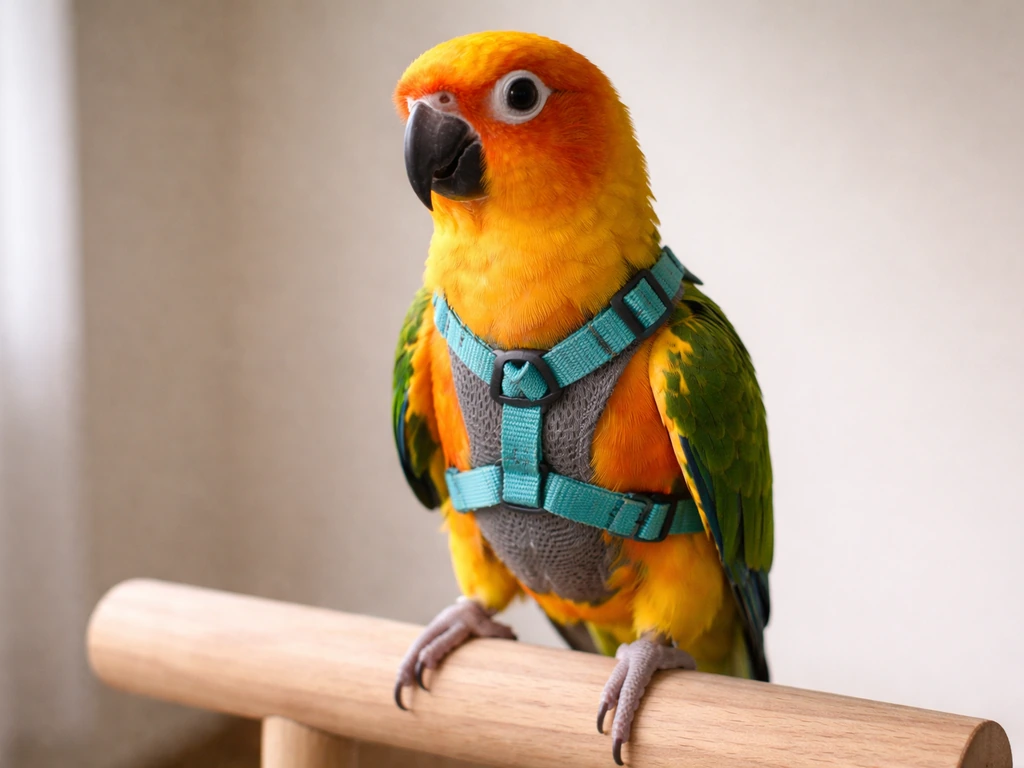
A bird vest is a soft, wrap-style garment that fits snugly around your bird's body and usually includes a leash or harness attachment point so you can take your bird outside or handle it safely in open spaces.
Best Bird Vest: How to Choose, Fit, and Use Safely

Marcus Chen
18 Jun 2026
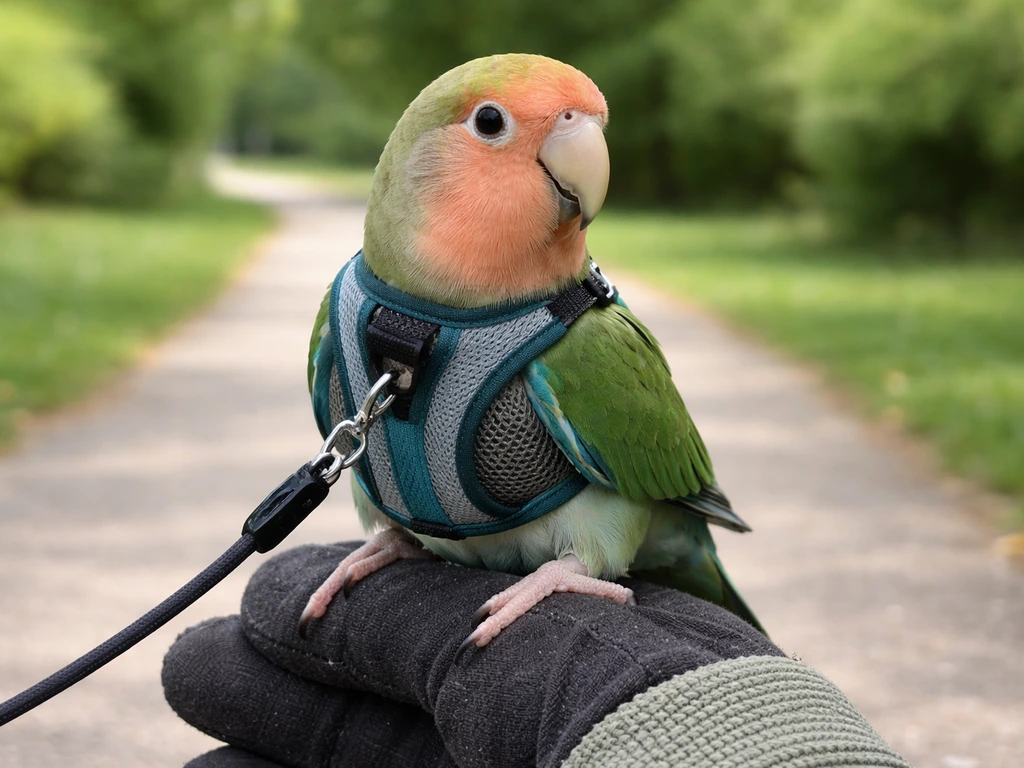
The best one for your bird depends almost entirely on size and fit: a snug but not tight vest that covers the chest and back without restricting wing movement, made from breathable cotton or mesh, with a secure D-ring or loop for a leash. For most budgies and small parakeets, something in the 'extra-small' vest range works. Cockatiels typically need a small. Conures and small parrots fit a small-to-medium.
If you're buying today, prioritize adjustable velcro closures, mesh panels for ventilation, and a reinforced leash ring, then size down if you're unsure, because too loose is more dangerous than slightly snug.
What a bird vest is actually for (and when it's worth getting one)
A bird vest isn't a fashion accessory. It's a piece of safety gear designed for one specific purpose: giving your bird controlled freedom outside the cage without the constant risk of sudden flight into traffic, a tree, or a predator. Think of it as the middle ground between keeping your bird locked in a carrier and just letting it ride on your shoulder with no restraint at all.
The vest sits against the bird's body, and a leash clips to a ring on the back, so if your bird spooks and tries to fly, it's tethered to you. If you're shopping for a complete setup, the best bird leash should match the vest hardware and be securely tethered for everyday outdoor use.
You genuinely need one if you want to take your bird outdoors for fresh air, socialization, or enrichment and you want your hands free while doing it. They're also useful during outdoor training sessions, camping trips, or casual backyard time where a full carrier feels like overkill. What they're not ideal for: replacing a carrier on long trips (a carrier is still safer for travel), keeping a bird restrained indoors for behavioral reasons, or any situation where you're not actively supervising. The Association of Avian Veterinarians is clear that no bird harness or vest is escape-proof, and the same logic applies here. You still need to watch your bird the entire time it's wearing one.
One thing I'd push back on: the idea that only 'outdoor birds' need vests. Even if you rarely take your bird outside, having your bird vest-trained means you have a safe option ready for emergencies, unexpected vet runs in warm weather, or just supervised enrichment on a balcony. Training early, before you urgently need it, makes the whole process less stressful for both of you.
Safety first: materials, fit, and keeping your bird comfortable

Material and fit are where most bad vest purchases go wrong. The vest needs to be soft enough not to chafe delicate feathers and skin, breathable enough to prevent overheating, and snug enough that your bird can't wiggle out of it mid-adventure. Here's what actually matters.
Materials that work (and ones to avoid)
Cotton and cotton-mesh blends are the gold standard. They're soft against feathers, wash easily, and breathe well in warm weather. Avoid anything with synthetic coatings, foam padding, or tight woven fabrics that trap heat. Also skip vests with loose threads, fringe, or dangling decorative elements, birds will chew on anything they can reach, and loose threads can catch a toe or a beak. Metal hardware should be stainless steel or nickel-plated, not bare zinc or cheap plated rings that can corrode and cause zinc toxicity if chewed.
Getting the fit right
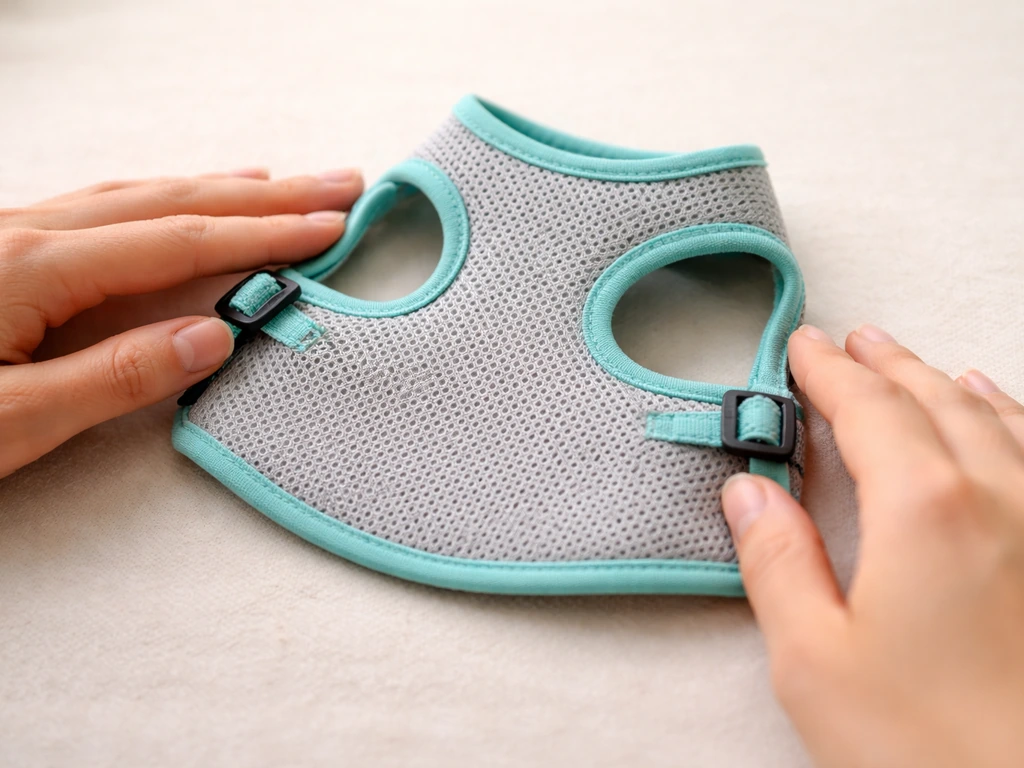
A properly fitted bird vest should sit flat against the body with no bunching. If you're shopping for the best small bird harness, focus on the same safety details: breathable materials, a secure fit, and training that prevents escape attempts properly fitted bird vest. You should be able to slide one finger under the side panels with mild resistance, tight enough that the bird can't back out, loose enough that breathing and crop expansion aren't restricted.
The vest should never compress the keel (the central chest bone) or restrict full wing extension. If your bird is panting, holding its wings away from its body, or breathing with its beak open while wearing a vest, those are overheating warning signs and you need to remove the vest and move the bird to a cool, shaded, well-ventilated space immediately. Those same signs, open-beak breathing, wing drooping, seeking cooler areas, signal heat stress that can escalate fast.
The supervision rule you can't skip
I'll say this plainly: never leave a vested bird unattended, even for a minute. A bird can catch a claw in a poorly designed vest, get tangled in the leash, or overheat in direct sun faster than you'd expect. A parrot first-aid reference document also lists overheating among emergency issues and emphasizes taking first-aid actions and calling a vet for serious cases overheat in direct sun faster than you'd expect. Kersting Veterinary Hospital's guidance on outdoor bird time is blunt: even with a harness or vest, there are still real dangers, and the vest is an aid to your supervision, not a substitute for it.
Matching the vest to your bird's size and temperament
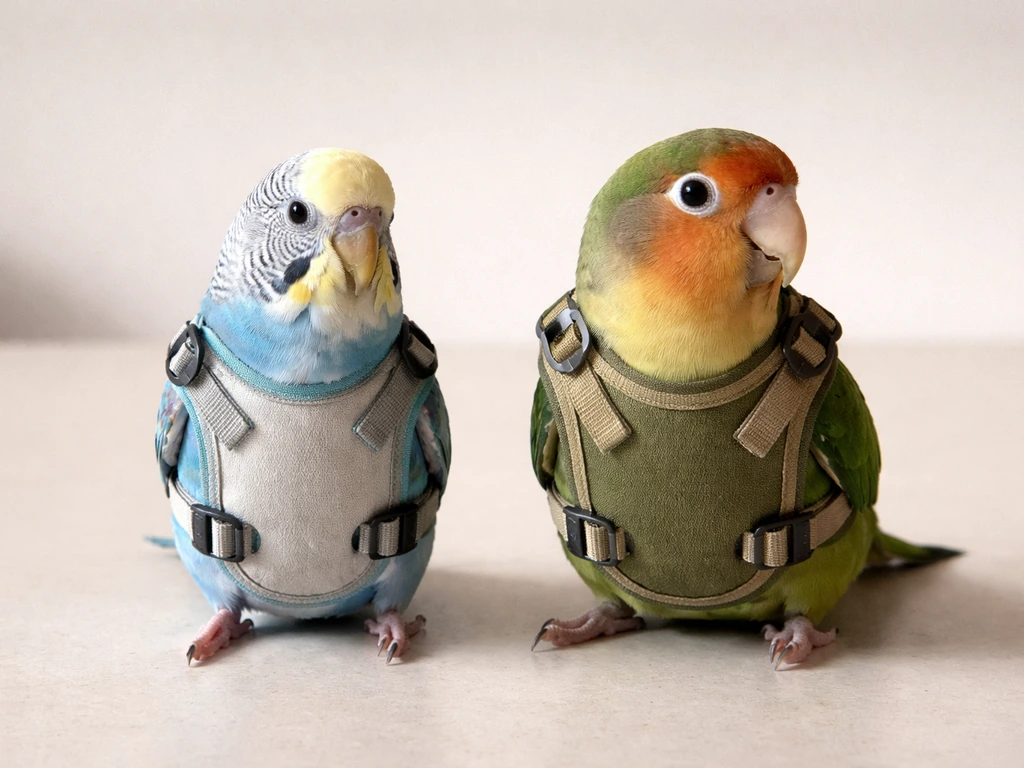
Sizing a bird vest is trickier than it looks because bird bodies vary a lot even within the same species. A plump, hand-fed cockatiel and a lean, aviary-raised cockatiel of the same species can need different sizes. Use your bird's actual measurements, chest circumference just behind the wings and body length from base of neck to base of tail, and compare them against the manufacturer's size chart before buying. If you're shopping for a cockatiel, look for the best bird harness for cockatiel that matches your bird's measurements and fits comfortably without restricting breathing.
| Bird Type | Typical Size | Key Fit Notes |
|---|---|---|
| Budgie / Parakeet | Extra-Small (XS) | Very snug fit needed; tiny margin for error; look for adjustable closures |
| Cockatiel | Small (S) | Watch the crest; vest shouldn't ride up toward the neck or restrict head movement |
| Conure (green cheek, sun) | Small to Medium (S-M) | Active birds; prioritize secure leash ring and reinforced stitching |
| Caique / Pionus | Medium (M) | Stocky body; measure chest carefully; these birds are strong and will test the seams |
| African Grey / Amazon (smaller) | Medium to Large (M-L) | Need robust hardware; mesh ventilation panels especially important in warm climates |
| Cockatoo / Macaw | Large (L) or custom | Standard vests often don't fit well; custom or harness-style may be better option |
Temperament matters almost as much as size. Calm, handleable birds that are already used to touch and training adapt to vests relatively quickly. Flighty, fearful, or recently rehomed birds need much more gradual introduction and may not be vest candidates until they're settled and trusting. A bird that panics when restrained and flails against the vest is at real risk of injury, feather damage, skin abrasion, or worse. If your bird is still in the 'I bite everything and everyone' phase, work on basic handling and trust first.
Top features to look for before you buy
Not all bird vests are built equally, and the difference between a frustrating purchase and a genuinely useful piece of gear usually comes down to a few specific features. If you’re specifically shopping for conures, use these same fit and material checks to find the best bird harness for conure. Here's what I'd check on any listing before clicking buy.
- Leash attachment ring: Should be a solid, welded D-ring or O-ring on the back (between the shoulders), positioned so the leash pulls upward rather than sideways. A ring that sits too far forward will pull the vest toward the neck; too far back and it catches the tail.
- Closure system: Velcro closures are easiest for most owners, but check that the velcro is fine-tooth and won't snag feathers. Some vests use snap buttons, which are fine if they're smooth-edged. Avoid laces or ties that a bird can chew loose.
- Ventilation: Mesh side panels or a mesh back insert are worth paying extra for, especially if you live anywhere that gets warm. Solid fabric traps heat fast on a small body.
- Coverage and cut: The vest should cover the chest and back but leave the wings fully free to extend. A vest that creeps up onto the wing joints restricts flight reflex and causes panic.
- Reinforced stitching: Especially at the leash ring attachment point. A strong bird on a spooked flight puts real force on that ring. Double-stitched or bar-tacked attachment points are a sign of quality.
- Adjustability: Even a well-sized vest benefits from minor adjustability (a sliding chest strap, adjustable side panels) to account for seasonal weight changes and individual body shape variation.
One feature that sounds good but often isn't: padded vests. Padding adds insulation, which means heat buildup, which is a real problem for a small bird on a warm day. Unless you're using the vest specifically in cold weather, skip padding and go with lightweight, breathable fabric instead.
How to introduce the vest without causing panic
This is where most first-time vest owners go wrong: they get the vest, try to put it on their bird the same day, and then wonder why the bird screams, bites, or refuses to be handled for a week. Bird vest training is a gradual desensitization process, not a one-time event. Budget two to four weeks for a calm, handleable bird, longer for a flightier one.
- Day 1-3 — Just let the vest exist near your bird. Leave it on top of the cage, near the food dish, or on your hand during handling sessions. Let your bird sniff it, chew the edge, and generally decide it's not a threat.
- Day 4-7 — Touch the vest to your bird's back and chest briefly during positive handling sessions, then immediately offer a treat. Keep sessions short (under two minutes). No attempt to close or secure anything yet.
- Day 8-12 — Drape the vest loosely over your bird's back for a few seconds at a time, then treat and praise. If your bird stays calm, gradually increase duration. If it panics, go back a step.
- Day 13-18 — Begin closing the vest loosely, not for fit, just so your bird feels the light pressure. Keep the bird occupied with a high-value treat and remove the vest before the bird shows stress signals (eye pinning, raised crest, tail fanning, or vocalizing aggressively).
- Day 19+ — Increase wearing time gradually. First five minutes inside the house, then ten, then move to a familiar outdoor space for short sessions. Attach the leash only once your bird is comfortable wearing the vest indoors without distress.
- Throughout: always end every vest session on a positive note before your bird decides to protest. You want 'vest comes off' to never be a reward for struggling — so take it off while the bird is still calm, not after a tantrum.
Some birds take to this faster than others. I've seen young cockatiels accept a vest in ten days and older conures take six weeks. The pace is set by your bird, not by the calendar. If you're comparing this to harness training, the process is essentially the same, the vest style just tends to feel less constricting to most birds because it has more surface contact and no straps crossing between the wings. If you've already worked through harness training with your bird, vest training will likely go faster.
Washing, inspecting, and knowing when to replace it

Bird vests need regular cleaning. Your bird will poop on it, sometimes chew it, and drag it through whatever surface it lands on. Washing instructions vary by product, but most cotton vests are safe for hand-washing in warm water with an unscented, bird-safe soap. Avoid laundry detergents with fragrance, optical brighteners, or fabric softeners, birds have extremely sensitive respiratory systems and any chemical residue left in the fabric is a real risk. Air-dry fully before the next use. Never put a damp vest on a bird; evaporative cooling on a small body can cause rapid temperature drops.
Inspect the vest every time you use it. Specifically look for fraying threads near the leash ring (a sign the attachment is weakening), worn velcro that no longer holds a firm grip, stretched or deformed closures, and any cracks or corrosion on metal hardware. A frayed leash ring is a single-point failure that can let your bird escape during a startle, don't wait until it looks bad, replace the vest at the first sign of wear around that critical point. Most quality bird vests last one to two years with regular use and proper washing, but if your bird is a chewer, expect shorter lifespan and inspect more frequently.
Where to buy and how to avoid getting burned
Bird vests are a niche product and the market has a lot of poorly made options masquerading as premium gear. The safest places to buy are specialty avian retailers (online or local), reputable bird supply stores, and established pet gear brands with verifiable customer reviews from actual bird owners. Avoid buying from generic marketplace listings with no brand name, no size chart, no material disclosure, and only a handful of reviews, that's a red flag pattern for dropshipped junk.
When evaluating a listing, here's my practical checklist: Is there a real size chart with measurements, not just 'small/medium/large for parakeets'? Does the listing specify the fabric composition? Are there customer photos showing the vest actually on a bird (not just product shots)? Are reviews from identifiable bird owners (mentioning specific species, fit details, wear time)? Does the seller offer returns or exchanges for size issues? If a listing fails more than two of those checks, move on.
Price-wise, a decent bird vest typically runs between $15 and $45 depending on size and quality. Anything significantly cheaper should be scrutinized for hardware quality and material safety. Anything much more expensive without clear justification (custom sizing, premium material, brand reputation) isn't necessarily better. Mid-range options from avian-specific suppliers tend to hit the sweet spot of quality and value.
One last thing worth knowing: if you're already using a bird harness, a vest is complementary rather than redundant. Harnesses are often better for birds that don't accept full-body coverage, while vests work well for birds that find individual straps uncomfortable or that have already been desensitized to body contact. Both are blank" rel="noopener noreferrer">safer than going outside unrestrained, and both require the same commitment to gradual training and active supervision. The vest is one piece of a broader strategy for outdoor time, a good carrier for transport, a solid vest or harness for active outdoor sessions, and your full attention the entire time your bird is outside.
FAQ
Can I use a bird vest indoors, for example near a balcony door or during supervised playtime?
Yes, as long as you are actively supervising and the area is bird-safe. Indoors still carries escape risks if the bird startles, so keep the leash controlled, remove hazards (curtains, ceiling fans, open windows), and avoid hot spots near direct sun because overheating can happen just as quickly indoors.
How tight should the vest be if my bird is wiggly or tries to back out?
Aim for snug with mild resistance when you slide one finger under the side panels, but never so tight that the keel or the chest area compresses. If your bird is backing out repeatedly, do not “crank down” the fit, instead switch to the next correct size or a different style, because a poorly fitted vest increases panic and injury risk.
What should I do if my bird panics during the first attempts at vest training?
Stop the session before your bird escalates, return to a calmer handling step, and try again later with shorter, more frequent sessions. A bird that flails against the vest can suffer feather abrasion or skin injury, so do not force contact to “get it over with” on the same day.
Do I need to take my bird outside right away once the vest fits properly?
Not necessarily. Before going outdoors, confirm your bird accepts touch and movement while the vest is on (standing, gentle turning, and calm leash handling) in a controlled indoor area. Only then introduce outdoor time gradually, with shade and a short tethering duration to reduce startle events.
Is open-beak breathing always overheating, or can it be stress?
Open-beak breathing can indicate heat stress, but it can also happen with agitation. Use the full picture: if wings are held away, wing droop appears, breathing is rapid, and the bird seeks cooler surfaces, remove the vest immediately and move to shade with good airflow. When in doubt, treat it as heat risk first.
How long can a bird safely wear a vest during one session?
Start with brief sessions and increase based on your bird’s tolerance and temperature. Even with a breathable vest, direct sun and air temperature matter, so plan for shorter outings in warm weather and stop immediately if you see overheating signs. The article emphasizes supervision for the entire time, not a specific maximum duration.
Can my bird chew or damage the vest, and is that dangerous?
Chewing is a serious risk because fraying threads, damaged closures, or weakened leash attachment can fail during a startle. If you see bite marks near seams, the leash ring, or velcro, stop using the vest until it is repaired or replaced, since a single-point failure can lead to escape.
What leash setup should I use with a vest, and how do I prevent tangling?
Use compatible leash hardware that securely attaches to the vest’s ring, then manage slack by keeping the leash controlled and avoiding loops around legs or perches. If your setup allows the leash to wrap when your bird hops or turns, switch to a design with better tether routing and shorter effective leash length.
Can I clean a vest using regular detergent or fabric softener?
Avoid fragranced detergents, optical brighteners, and fabric softeners. Birds have sensitive respiratory systems, residue from these products can remain on fabric, so use unscented bird-safe soap (as applicable to the brand’s washing guidance) and fully air-dry before reuse.
How often should I inspect the vest, and what are the most important things to check?
Inspect it every time before use, focusing on wear at the leash ring and along velcro closures. Look for fraying threads, worn grip on velcro, stretched or deformed closures, and any corrosion or cracks on metal hardware. The leash ring and attachment area are the highest priority.
How do I measure my bird correctly for sizing if my bird won’t hold still?
Measure in calm conditions and have a helper if needed. Take chest circumference just behind the wings and body length from base of neck to base of tail, then compare against the manufacturer’s chart. Do not guess based on species alone, and if the bird is actively panicking, pause and try again later rather than forcing measurements.
Is a vest redundant if I already use a harness?
Usually, they serve different fit needs and training stages. The vest can be complementary, not redundant, if your bird dislikes individual harness straps or has already been desensitized to full-body coverage. However, both still require active supervision and never count as escape-proof restraint.
What should I do if the listing does not include a real size chart or fabric details?
Treat that as a purchase-risk signal. Without measurements, material composition, and clear hardware information, it is harder to avoid incorrect fit and unsafe fabrics. The article’s checklist suggests skipping listings that fail multiple checks like missing size chart, missing fabric disclosure, or minimal unidentifiable reviews.
Is a cheaper vest always worse, or can it be okay if the fit looks right?
Price can be a clue, but the real deciding factors are material safety, hardware quality, and correct sizing. A vest that is significantly cheaper may still be usable if the fabric is breathable and the leash ring and closures are robust, but if hardware is unclear or reviews show fit and wear problems, it is safer to move up to an avian-specific retailer or established brand.
Next Article
Best Bird Harness for Conure: Fit, Training, and Top Picks
Pick the best bird harness for conures with fit sizing tips, training steps, safety checks, and top recommended models.