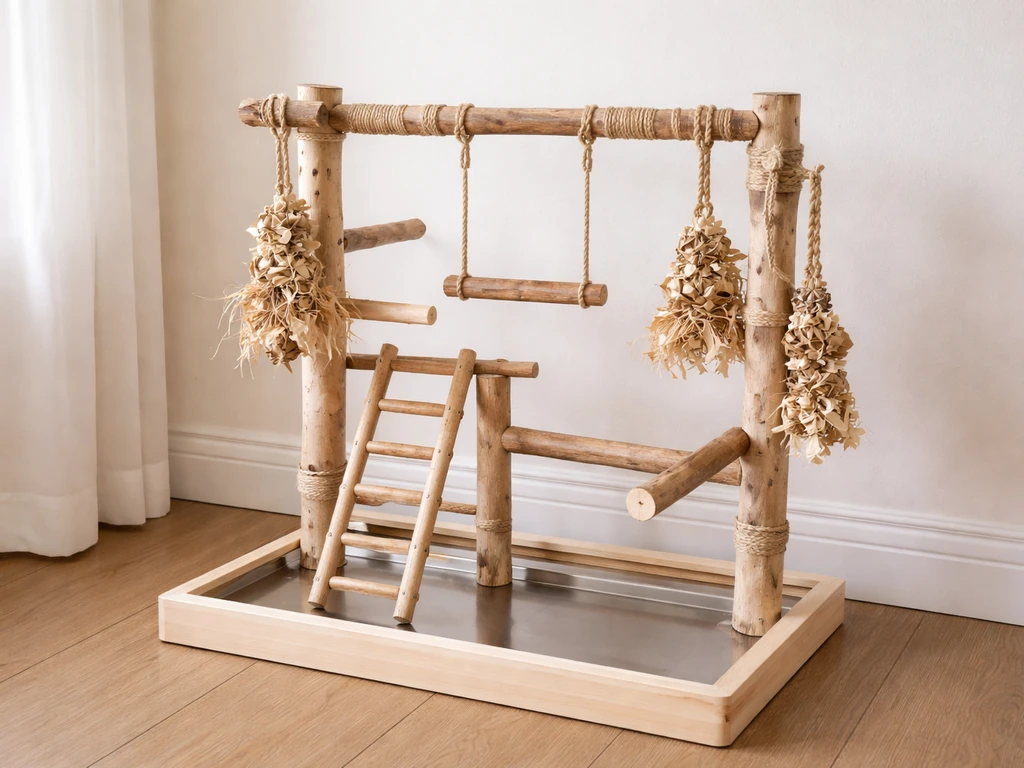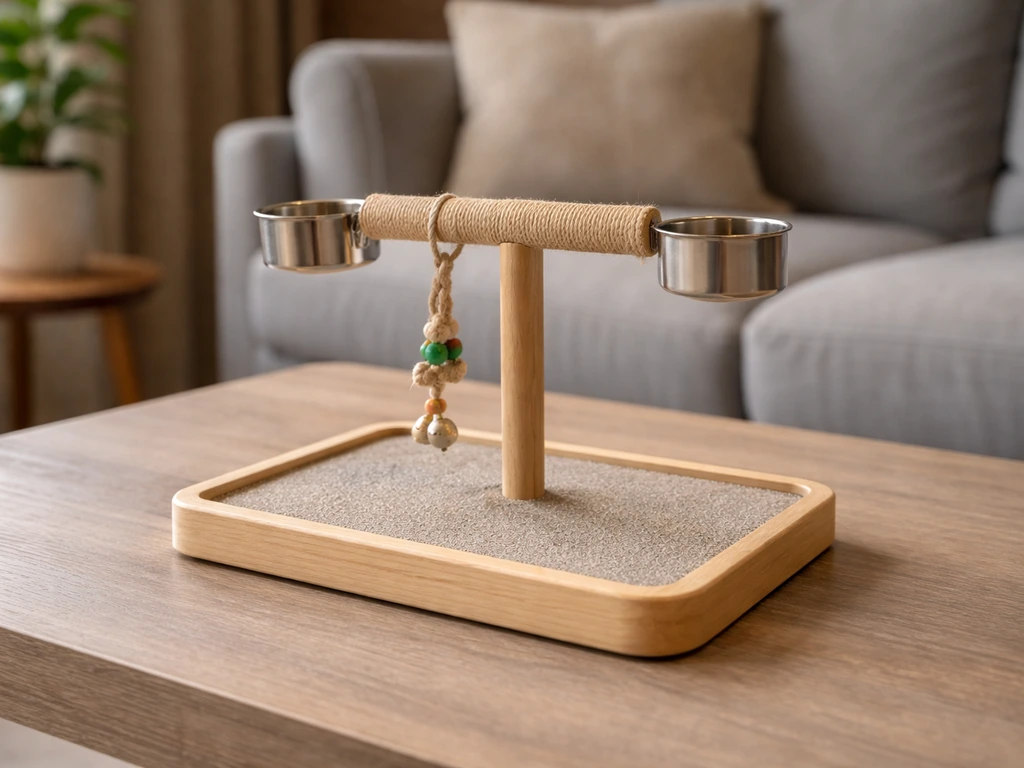
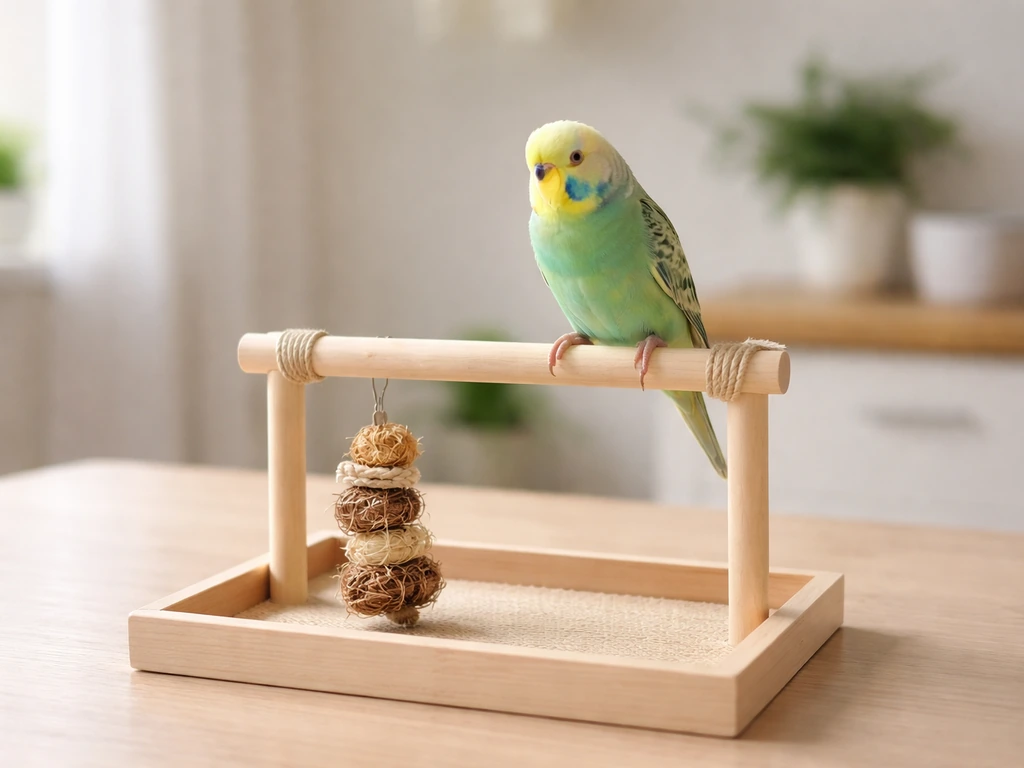
A bird table top play stand is a compact perch-and-activity structure designed to sit on a table, counter, or desk so your bird can spend supervised time blank" rel="noopener noreferrer">outside the cage without roaming freely around your home. Choosing the right table top bird stands setup also means making sure it fits your bird's size and stays stable on your table. If you're a first-time bird owner, this is one of the most practical purchases you can make, because birds genuinely need out-of-cage time for mental stimulation and physical exercise, and a tabletop stand gives you a safe, contained spot to make that happen every day.
Bird Table Top Play Stands: Setup Guide for Safe Enrichment
Marcus Chen
29 May 2026
What a tabletop bird play stand actually is (and who needs one)
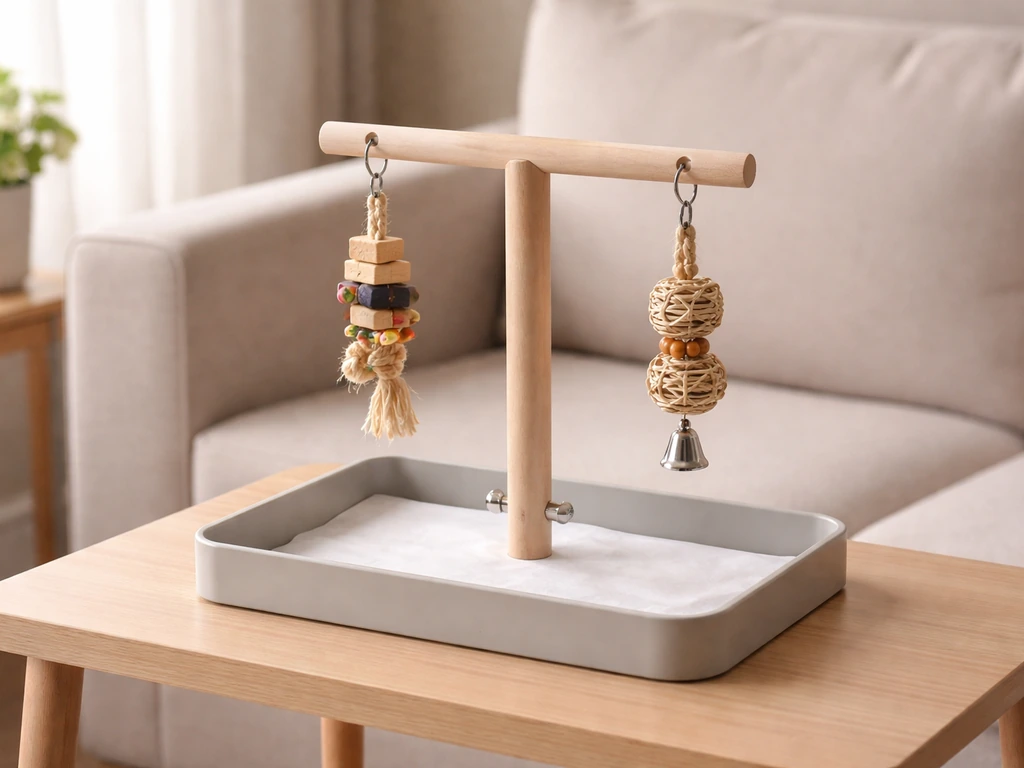
Think of a tabletop play stand as a miniature bird playground that lives on your furniture. It typically has a central perch or perch system, hanging points for toys, sometimes a small tray or grate underneath to catch droppings, and a compact enough footprint to sit on a table without taking over the room. Parrot Wizard, which makes a popular small-parrot version, describes it simply as something you set on a table or countertop so your parrot can spend time away from the cage, and that's exactly right.
Tabletop stands are different from full floor-standing bird gyms, which are taller, heavier, and more expensive. They're also distinct from the "top" section of a cage-mounted playstand, which sits above the cage roof. If you've been searching for a "bird table top only" because you want just the activity platform without a whole cage setup, a tabletop play stand is almost certainly what you're looking for. They're ideal for budgies, cockatiels, lovebirds, conures, and similarly sized birds, though some are built for medium parrots like caiques or Pionus parrots.
Purdue's veterinary guidance is clear that out-of-cage time on a playpen is genuinely beneficial for a bird's wellbeing, provided the bird is supervised and the environment is safe. The key word there is supervised. A tabletop stand is not a containment device. It's an enrichment platform. Your bird is free to step off, and that's exactly why setup and placement matter so much.
Choosing the right size, perch type, and materials
Getting the sizing right is the single most important decision when buying a tabletop play stand. A stand built for a macaw will dwarf a budgie and leave it nervous and underequipped. A stand built for a parakeet will frustrate a conure that needs more climbing real estate. Start with your bird's species and body size, then match the stand's perch diameter, platform dimensions, and weight capacity to that. Birdsprees’ perch-diameter guideline table by bird size category can help you choose appropriate perch diameters, with examples like budgies/finches/canaries around 3/8", 3/4" and cockatiels and similar species around 1/2", 7/8".
Perch diameter by bird size
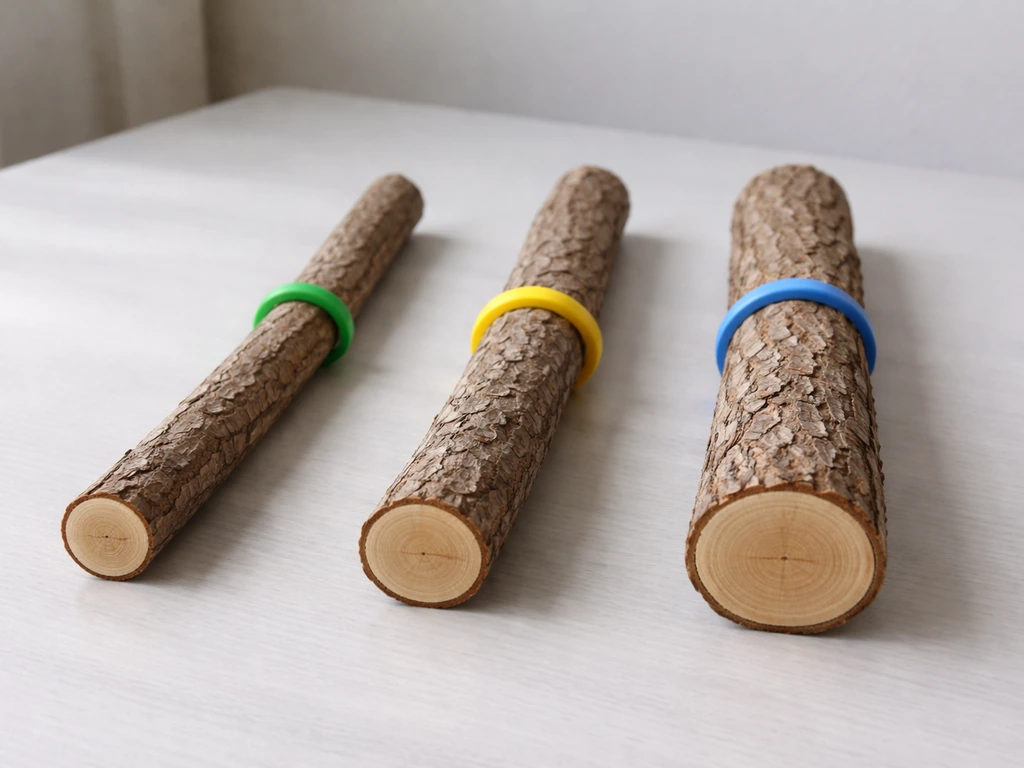
Perch diameter is the detail most beginners overlook, and it genuinely affects your bird's long-term foot health. Lafeber's research shows that birds standing on perches that are all the same diameter over time can develop foot disorders or arthritis. Variety in diameter matters. Choosing the best bird perches means varying perch diameters so your bird can use different foot positions over time. As a starting point, aim for the range appropriate to your species, then mix perch types within that range.
| Bird size/type | Recommended perch diameter range | Example species |
|---|---|---|
| Tiny (finch/canary/budgie) | 3/8" to 3/4" | Zebra finch, canary, budgerigar |
| Small (cockatiel/conure/lory) | 1/2" to 7/8" | Cockatiel, sun conure, lovebird |
| Small-medium parrot | 3/4" to 1 1/4" | Caique, Pionus, small Amazon |
Marin Humane's guidance for budgies is a useful rule of thumb across species: the bird should be able to close its feet about halfway around the perch. If the toes wrap all the way around and overlap, the perch is too thin. If the foot sits flat on top like a step, the perch is too thick. For most budgies, a 1/2" diameter perch is about right. For cockatiels, something between 5/8" and 3/4" works well for a primary perch, with variation up or down to encourage different foot positions.
Perch materials worth using (and ones to skip)
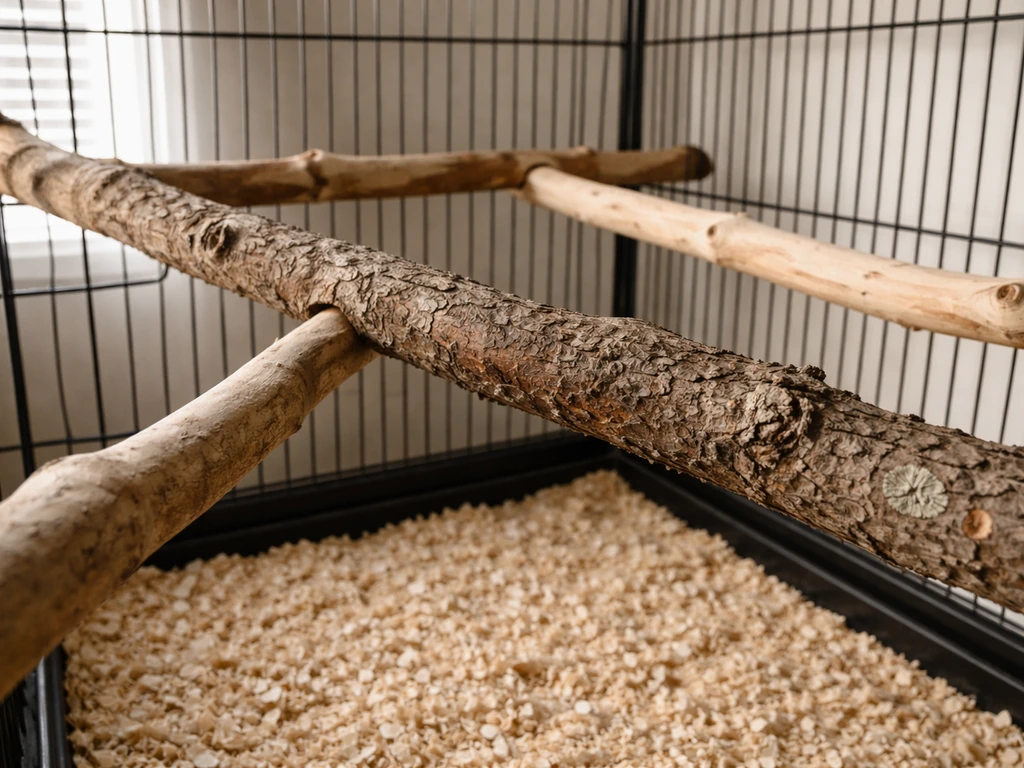
VCA notes that birds use perches for far more than just standing: they climb them, rub their beaks on them, chew them, and use them as a cleaning surface. That means material choice affects both safety and enrichment. Natural wood perches from bird-safe species (manzanita, java wood, dragonwood) are durable, have natural variation in diameter, and satisfy the chewing urge. If you want the best wood for bird perches, choose bird-safe natural options like manzanita, java wood, or dragonwood.
Hemp rope perches and perches made from untreated cotton rope are also good options that offer grip variety and are gentle on feet. Avoid perches made from pressure-treated or painted wood, sandpaper-covered perches (they abrade the footpad over time and are largely a myth as a nail-trimming tool), and anything with plastic coating that can chip and be ingested.
Stand footprint, stability, and materials
The stand's base needs to be wide enough that your bird landing or shifting weight won't tip the whole thing over. A wobbly stand is stressful for the bird and a safety hazard. Look for a base with rubber feet or a weighted tray at the bottom. Stainless steel stands are the gold standard for hygiene because they don't absorb droppings, don't harbor bacteria, and can be disinfected without damage. Solid hardwood stands are also excellent. Avoid stands with hollow plastic tubing that's hard to clean inside, or with many small crevices where debris and bacteria can accumulate.
Setting it up safely on your table
Placement is where a lot of beginners make avoidable mistakes. The table surface matters, the location in the room matters, and what's nearby matters. Here's how to think through it.
Where in the room to put it
Parrots.org's guidance is direct: place play stations out of main traffic areas and away from drafts. High-traffic zones mean more stress for the bird and more chances for someone to brush past the stand and destabilize it. A household hazards guide advises keeping play areas well away from ceiling fans and ventilation hazards, and drafty spots near windows or air vents can cause respiratory problems. Pick a spot that has good visual access from where you'll be sitting (you need to keep eyes on the bird) but isn't in the middle of a walking path or directly under a ceiling fan.
Table surface and stability
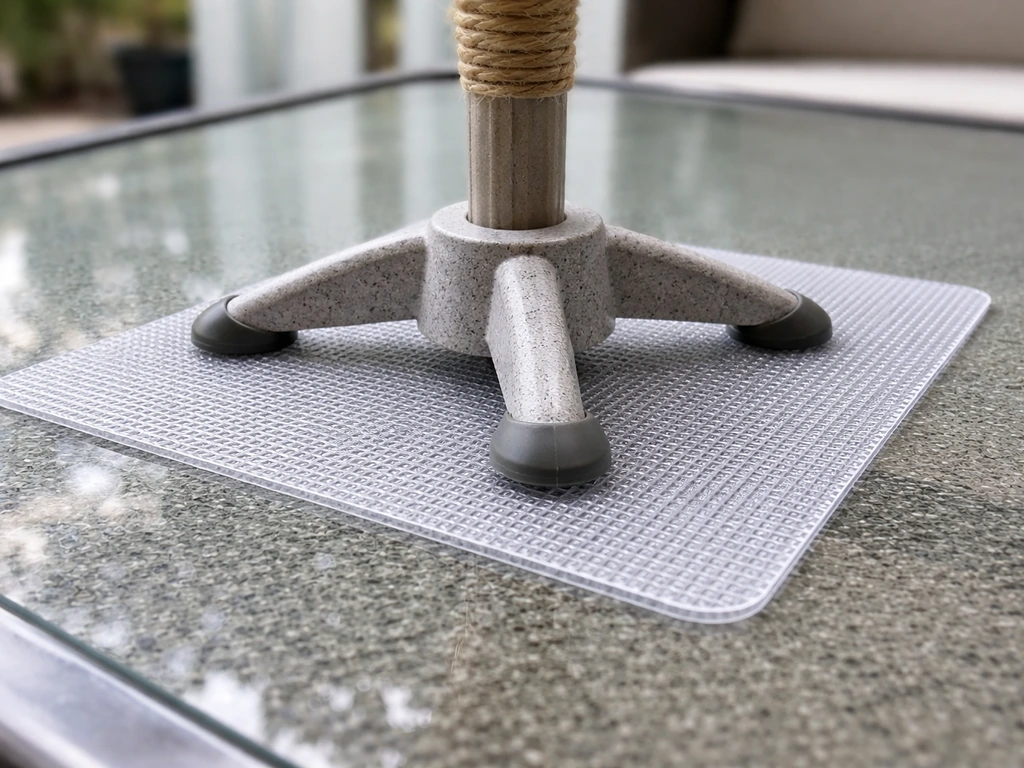
Put a non-slip mat under the stand if the base doesn't have rubber feet. This is especially important on smooth surfaces like glass-top or lacquered wood tables. If your bird is a climber that really throws its weight around, consider placing the stand near a wall so it can't tip in that direction, or use a stand that has a weighted seed/drip tray at the base to lower the center of gravity. You don't need to bolt anything down, but the stand should not wobble when you push it gently.
Supervision is non-negotiable
Parrots.org puts it plainly: never leave a parrot out of its cage unattended unless the area is 100% bird-proofed. A tabletop stand is not a bird-proof area. Your bird can step off, walk across the table, find a tablecloth to chew, or encounter another pet. The practical advice is this: only have the bird on the stand when you're in the same room, actively present. If you are specifically shopping for open top bird tables, focus on stability and safe supervision so your bird can explore without escaping. If you need to leave, the bird goes back in the cage. It sounds strict but it prevents the majority of out-of-cage accidents.
Also check the immediate area before each session. Purdue's veterinary guidance specifically calls out toxic plants and leaded glass or window putty as hazards that need to be eliminated from the bird's reachable zone. Other common table-area hazards include candles, scented plugins, lit stoves or ovens nearby, open cups of hot liquid, and other household pets.
Enrichment: toys, foraging, and daily interaction
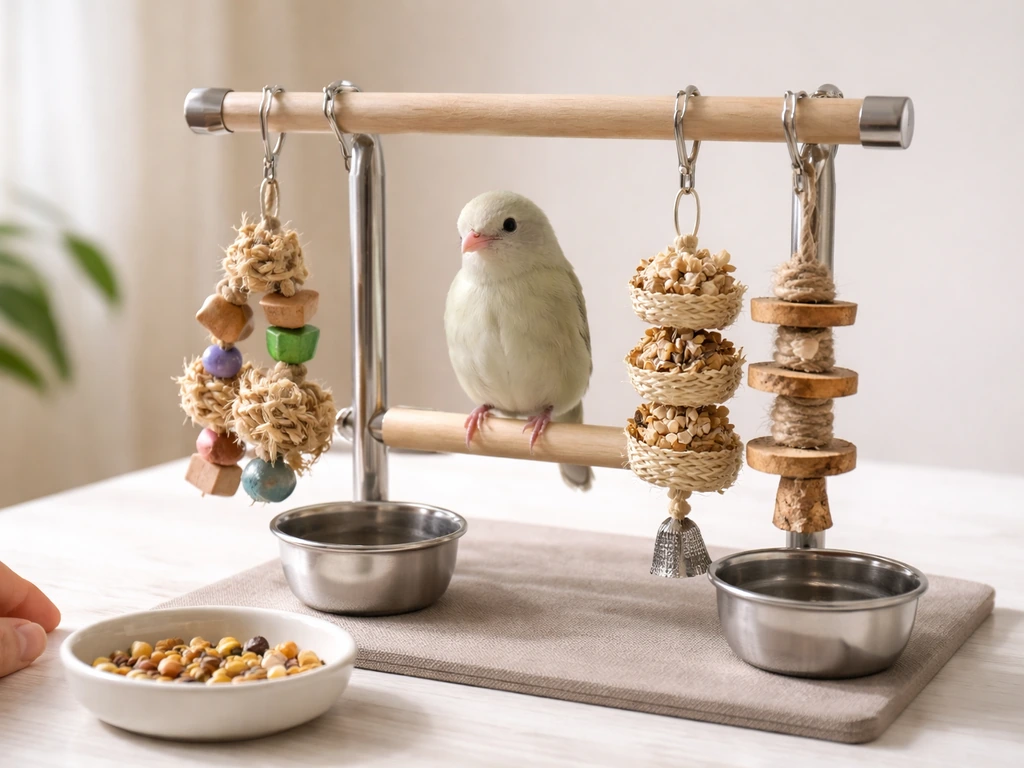
A bare perch is better than nothing, but a well-equipped tabletop stand is genuinely exciting for your bird. The goal is to give the bird things to do, because boredom is a real welfare issue for parrots and intelligent small birds. Here's how to layer enrichment onto the stand without overdoing it.
Toy safety basics first
Before hanging anything, check it for entrapment hazards. PetMD specifically warns that toy attachment hardware (clips, chains, catches) can trap toenails or toes, causing serious injury. Best Friends Animal Society flags jingle bells as a particular risk because a toe or beak that slides along the bell's slit can get stuck. VCA recommends avoiding toys with spaces large enough to trap a bird's head, and avoiding easily dismantled toys made of balsa wood or small-link chain. Messy Beaks' safety checklist adds long strings and ropes to the hazard list because they can entangle feet or necks. Inspect every toy before it goes on the stand, and re-inspect weekly as the bird chews and modifies it.
Toy types that work well on a tabletop stand
- Foot toys: small wooden blocks, cork pieces, or soft leather strips the bird can hold and manipulate while perching
- Foraging toys: small cups or boxes you can hide pellets, nuts, or dried fruit in, attached to a hanging point or placed on a tray
- Shreddable toys: palm leaf, vine ball, or seagrass items that satisfy the chewing and destruction urge safely
- Rope or cotton knot toys: good for beak and foot activity, provided the strands are kept short enough that loose threads can't entangle
- Puzzle feeders: small acrylic or wooden puzzles that require the bird to solve a mechanism to access a treat
Keep the stand from getting overcrowded. Two to three toys at a time is enough. Rotate them every few days so the bird encounters novelty, which is one of the best forms of enrichment you can provide. The same principle applies to perch variety: if the stand has multiple perch options (different diameters, textures, heights), the bird will naturally shift between them, which is better for foot health than sitting on one static perch the whole session.
Interaction routines that actually help
Use the tabletop session as your daily bonding window. Step-up practice, recall training, and target training all work well with a bird on a stand because the height gives you good eye-level access. Keep sessions to 20 to 30 minutes when you're starting out. Watch your bird's body language: fluffed feathers, pinned eyes, or rapid tail bobbing are signs the bird is stressed or overstimulated and needs a break. A calm, curious bird that explores and vocalizes is having a good session.
Cleaning, maintenance, and keeping it hygienic
Hygiene on a tabletop stand is genuinely more demanding than cage hygiene, because the stand doesn't have a sealed drop tray system. Droppings land on the stand, on the table underneath, and sometimes on nearby surfaces. Getting into a simple daily and weekly routine makes this manageable.
Daily cleaning
After each session, wipe down the stand's surfaces and perches with a damp cloth to remove droppings. If the stand has a drip tray, empty and rinse it. Wipe the table surface under the stand. This takes about two minutes and prevents buildup that hardens and becomes much harder to remove later.
Weekly deep clean
Once a week, disassemble the stand as much as possible and disinfect it. An effective and bird-safe option is a bleach solution: King County Public Health recommends a 1:32 dilution for regular 5.25% bleach, which works out to about half a cup of bleach per gallon of cold water. Apply, let it sit for a few minutes, then rinse thoroughly. PetPlace emphasizes that after disinfecting you need to wash surfaces with mild dish soap to remove any disinfectant residue that could harm the bird. Never use ammonia-based cleaners near a bleach solution: Michigan MDARD's guidance explicitly warns against mixing ammonia with bleach because of the toxic gas it produces. Let all parts dry completely before reassembling.
Natural wood perches are the one part that requires extra attention. They absorb moisture, and a wet perch that's reassembled before drying can harbor bacteria and mold. The Happy Perch recommends rotating perches regularly so each one gets proper drying time between uses. Inspect wood perches weekly for cracks, splinters, or deep grooves from beak damage. A cracked perch can harbor bacteria in ways that are nearly impossible to clean, so replace it rather than trying to salvage it.
Replacing worn parts
Any perch that's heavily chewed, rope that's fraying into long loose strands, or toy hardware that's showing rust or deformation should be replaced immediately. There's no rule for how often this happens because it depends entirely on how active and destructive your bird is. A heavy chewer like a conure might go through a wood perch in a month. A gentler bird like a canary might use the same perch for a year. Check everything at the weekly cleaning and replace as needed.
Your buying checklist and next steps
Before you buy, take five minutes to measure and note down the specifics for your bird and your space. This will save you from buying the wrong stand and having to return it.
- Measure your bird's foot span and look up the recommended perch diameter for your species (use the table above as a starting point)
- Measure the table or surface where the stand will live and confirm the stand's footprint fits with room to spare on all sides
- Check that the stand has at least two different perch diameters or that you can add a second perch type after purchase
- Confirm the base material: stainless steel or sealed hardwood are easiest to disinfect
- Confirm the base has rubber feet or buy a non-slip mat to go under it
- Check for a drop tray: not essential, but it makes daily cleanup significantly easier
- Look at the toy attachment points: are they smooth, closed rings or bolts rather than open hooks or small-link chain?
- Buy two to three starter toys before day one, checking each for entrapment hazards before hanging
- Have your diluted bleach solution and dish soap ready for the first weekly clean
- Decide where in your home the stand will live and confirm it's away from ceiling fans, drafts, vents, and high-traffic zones
If you're also looking at larger setups, a tabletop stand is a great complement to a full floor-standing bird playground or an open-top bird table configuration. The tabletop version gives you portability and flexibility: you can move it to whatever room you're working in, which is genuinely useful for bonding, especially in the early weeks with a new bird. The perch choices you make for the stand also apply directly when you're thinking about standalone perch options for the main cage, so the sizing knowledge carries over.
The most common beginner mistake with tabletop stands isn't buying the wrong size or the wrong material. It's setting the stand up once, putting the bird on it, then walking out of the room because it feels like the bird is "contained." It isn't. The stand is a tool for supervised enrichment, and the supervision part is what makes it safe. Commit to that from day one, and tabletop playtime will become the best part of your daily routine with your bird.
FAQ
Can I use a bird table top play stand on any table surface, like glass, laminate, or a kitchen counter?
You can, but the surface affects stability. Use a non-slip mat if the stand has no rubber feet, and avoid slick areas that allow sliding. Also make sure there is enough clearance so the bird cannot reach table edges to chew or access cables, and test the stand by gently pushing it in all directions before each session.
How close should I keep the stand to me, and do I need to watch the bird the entire time?
Keep the stand in your line of sight and remain in the room for the entire session. Tabletop stands are not escape-proof, so if you turn away even briefly, the bird can step off and investigate hazards like cords, hot items, or other pets. A practical approach is to start sessions at 20 to 30 minutes while you stay seated and attentive, then lengthen only if your bird stays calm.
What if my bird keeps trying to chew the stand or the tray, is that normal?
Chewing can be normal enrichment, but persistent aggressive chewing on structural parts is a safety red flag. Check that the stand’s materials are bird-safe and that any removable hardware, clips, or toy attachment points cannot pinch toes. If the perch or any plastic/painted components show wear, replace the part rather than letting the bird keep modifying it.
Is it okay to leave toys on the stand between sessions?
It’s better not to. Droppings and moisture can collect on toys, and many toys degrade faster once they are constantly exposed to chewing and debris. Remove toys after playtime, inspect them for fraying or loosened parts, and store them dry so you can reintroduce them cleanly and safely.
My bird sometimes steps off the perch onto the table, how do I prevent this from turning into a roaming session?
Plan the tabletop area so it is safe and predictable, then treat step-offs as expected behavior. Place the stand in a bird-safe zone with barriers where needed (for example, keeping it away from table edges and cords) and only allow the bird to be out when you are present. If your bird is repeatedly heading toward off-limits areas, reduce session time and improve placement rather than “chasing” the bird across the table.
How often should I disinfect a bird table top play stand, and what is the minimum routine?
Do a quick wipe-down after every session, then disinfect weekly. The minimum routine is removing droppings from perches and surfaces, emptying and rinsing any drip tray, and wiping the table underneath. For disinfection, use a bleach dilution that is appropriate for the product strength, then rinse thoroughly and follow with mild dish soap to remove residue before drying completely.
Are rope perches and natural wood perches both safe, and how do I keep them from becoming hazardous?
Yes, both can be safe, but they require different monitoring. Rope perches should not be fraying into long loose strands, and you should replace them before fibers loosen. Wood perches should be inspected for cracks, deep grooves, and splinters, and fully dried between uses to prevent mold and bacteria growth.
Do I need to adjust perch diameter for my bird if the stand’s perches are fixed?
If the stand includes a fixed perch system, you cannot fully “tune” fit, but you can still improve foot health by choosing a stand whose perch diameter matches your bird’s size range. Use variety when possible, even if it is limited, such as swapping in additional safe perches that match the species-appropriate wrap fit. If the toes overlap or the bird can only balance on top, the stand is likely the wrong fit and should be replaced.
How do I choose a bird table top play stand when I have multiple birds of different sizes?
Avoid using one stand that only fits the largest bird. Instead, choose the stand size and perch diameter for the smallest bird that will use it, then ensure the stand’s base is stable under the heaviest bird’s weight and climbing style. If they need different perch diameters, consider separate perches or different stands to prevent foot problems and frustration.
What are common toy mistakes that cause injuries on a tabletop play stand?
Avoid toys with gaps or slits where toes, beaks, or heads can get stuck, and avoid dangling strings, long rope ends, or easily dismantled parts that can separate during chewing. After hanging toys, manually check for pinch points and entanglement risks, and re-inspect at least weekly since many injuries come from hardware loosening over time.