An open top bird table is a tabletop or freestanding play stand with no roof over the bird's head, giving your bird an open, supervised space to perch, forage, and interact with you outside their cage. They work brilliantly for small-to-medium birds like budgies, cockatiels, lovebirds, and small parakeets, and they can even handle a medium-large bird like an African Grey if the base is sturdy enough. The key things to get right from day one are size relative to your bird's wingspan, bar or rail spacing that prevents head entrapment, a stable non-tip base, bird-safe materials, and a placement spot that's away from drafts, fumes, and open windows. Get those five things sorted before you add a single toy or treat dish, and you'll have a setup your bird can use safely from the very first session.
Open Top Bird Tables: How to Choose, Set Up, and Clean
What an open top bird table actually is (and who it's for)
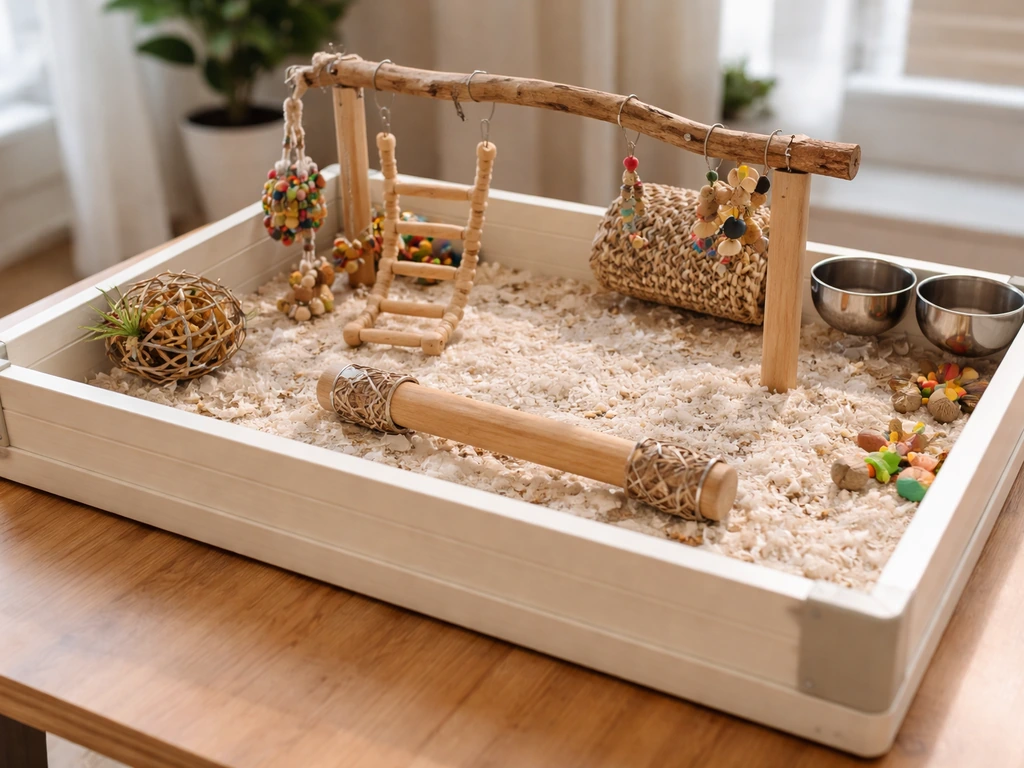
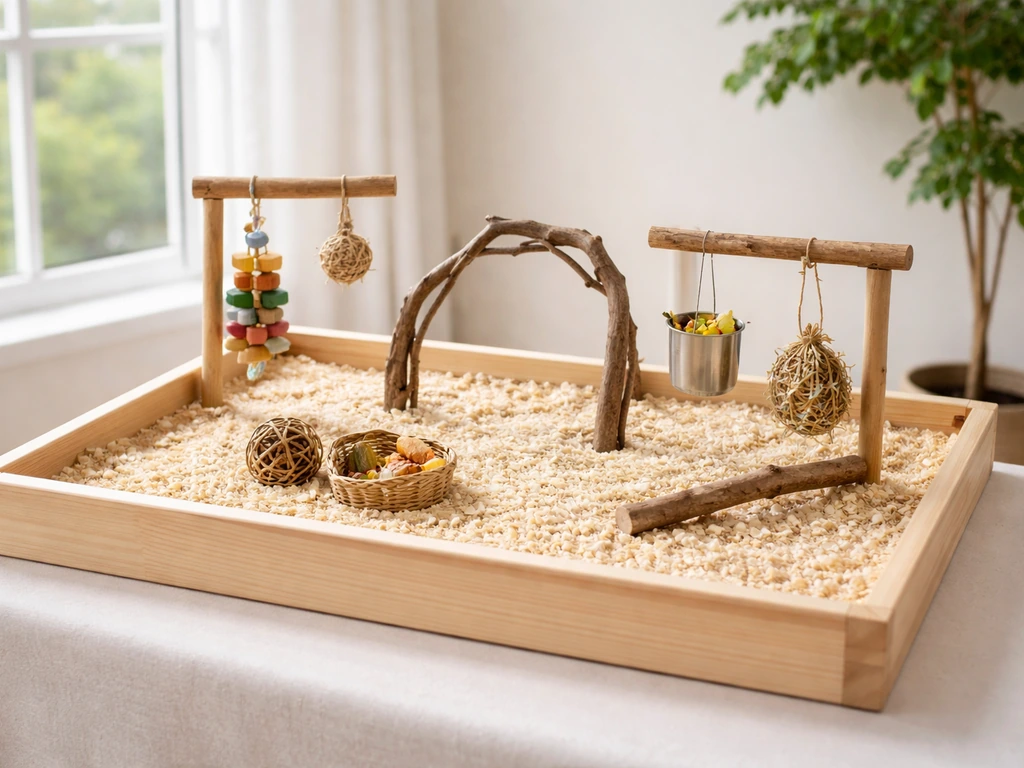
The term "open top" in the pet bird world simply means the play area has no cage roof above the bird. Some designs are fully open on all sides (pure play stands), while others have partial rails or panels on the sides but remain uncovered on top. Either way, the defining feature is that your bird isn't enclosed overhead, which means they can hop up, spread their wings a little, and engage with you face-to-face without bars in the way.
These setups are best described as a designated enrichment zone, a spot away from the main cage where your bird forages, plays, and socialises with the family. That distinction matters: an open top bird table is not a substitute for a proper, secure cage. It's supervised time outside the cage made safer and more productive with a structured space. If you're leaving your bird unattended, they need to be back in their secure enclosure.
In terms of who benefits most, open top tables are ideal for tamer birds that are already comfortable stepping up and being handled, and species that enjoy active play: budgerigars, cockatiels, lovebirds, monk parakeets, and similarly sized birds. Larger birds like African Greys can use them too, but you need a correspondingly larger, heavier table and more robust perch hardware. If your bird is very new, flighty, or not yet hand-tame, a more enclosed playtop cage design may be a safer starting point while you build trust.
Choosing the right size, height, and material
Size is the most common place beginners go wrong, usually by buying too small. As a working rule, the table surface should be wide enough that your bird can extend both wings without hitting a rail or edge. For a budgie or cockatiel that's roughly 18 to 24 inches across. For a medium-large parrot like an African Grey, you're looking at 30 inches or more. Going bigger is almost never a problem; going too small means your bird will feel cramped and is more likely to fly off unpredictably.
Height matters more than most people expect. You want the main perch to sit somewhere around your chest or shoulder height when you're standing. This keeps you at roughly the same eye level as your bird during interaction, which most birds respond to positively, and it puts the table high enough that other pets or young children can't easily reach up and startle the bird. Adjustable-height freestanding models give you flexibility, but a fixed table at the right height works perfectly well.
For materials, stainless steel is the gold standard for any hardware, rails, or food/water cup fittings. It doesn't corrode, doesn't leach anything harmful, and survives aggressive chewers. Powder-coated steel is a common and acceptable alternative as long as the coating is confirmed non-toxic and chip-free. Avoid zinc, lead, and any uncoated galvanised hardware entirely, as these cause metal toxicity in birds.
For the perch material itself, natural wood like manzanita, java wood, or dragonwood is ideal because the varying diameter is good for foot health. Always check that any wood perches or accessories are confirmed bird-safe before installing them. Choosing the best wood for bird perches means opting for bird-safe natural options that are smooth enough to prevent splinters while still giving comfortable grip variety wood perches.
| Material | Best For | Watch Out For |
|---|---|---|
| Stainless steel | Rails, cups, hardware | Higher upfront cost, but worth it |
| Powder-coated steel | Frame, base | Check coating is non-toxic and intact |
| Natural hardwood (manzanita, java wood) | Perches, climbing branches | Confirm species is bird-safe before buying |
| Acrylic / clear panels | Side rails on some designs | Ensure edges are smooth, no sharp cuts |
| Galvanised / zinc hardware | Avoid entirely | Metal toxicity risk for all bird species |
Safety essentials: gaps, escape-proofing, and stable placement
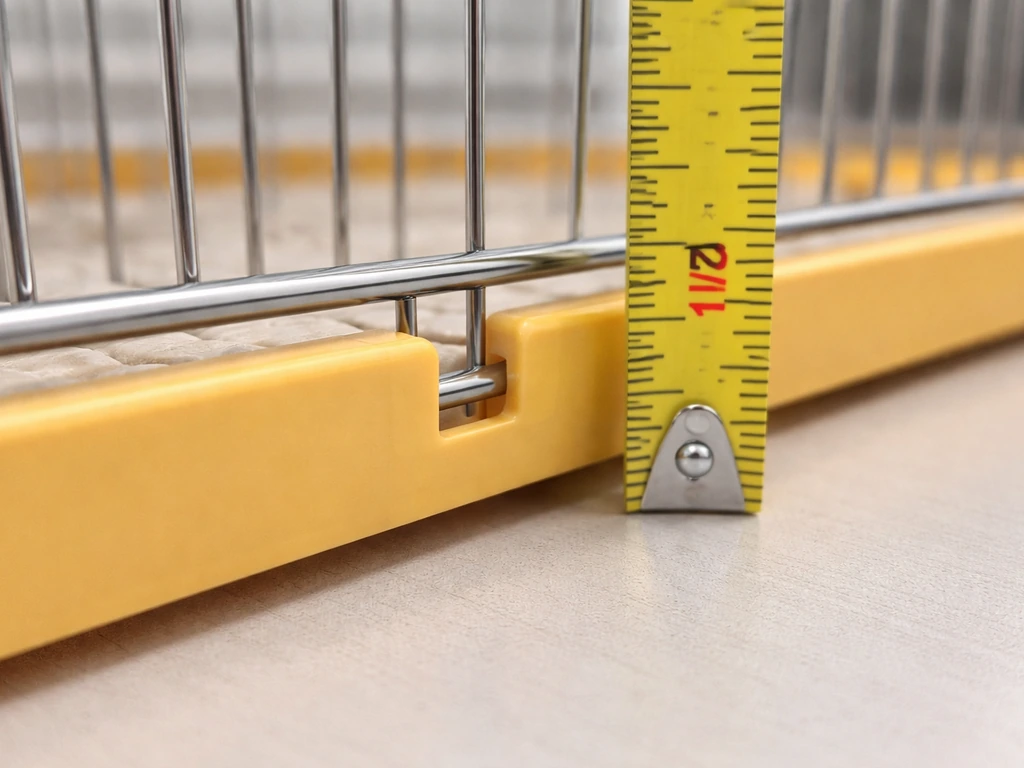
Bar or rail spacing is a life-or-death spec that surprisingly many beginners overlook. For small birds like budgies and cockatiels, you want no gap wider than half an inch (roughly 1.2 cm). Gaps larger than that can trap a head or a foot, which causes panic injuries or worse. For medium parrots, up to three-quarters of an inch is acceptable, and for large parrots around one inch. If you're looking at a table with decorative cutouts or unusual rail designs, measure the actual gaps yourself rather than trusting the listing description.
Because the table has no roof, escape-proofing works differently than in a cage. You're relying on the bird's recall, their comfort level with you, and the room environment rather than physical containment. Before your bird's first session on the table, do a room sweep: close windows and doors, cover mirrors (birds can fly into them at speed), turn off ceiling fans, and remove other pets. It's also worth checking for any gaps behind furniture the bird could drop into if startled.
Stability is non-negotiable. A toppling stand is one of the most common causes of bird injury at home. Any freestanding table should have a wide, weighted base, and if it feels at all wobbly when you press on the perch area with your hand, add grip mats underneath, secure it to a wall bracket, or simply choose a different model. If you're placing the table on a hard floor, rubber feet are a must. On carpet, wider base feet distribute weight and prevent sinking. Never put a bird table on a narrow shelf or precarious surface just because it fits.
- Check rail/bar gaps against your bird's size: no more than 0.5 inch for budgies and cockatiels
- Close all windows, doors, and ceiling fans before every open-top session
- Cover mirrors and glass surfaces in the room
- Remove other pets from the room entirely
- Test table stability by pressing firmly on the perch area before your bird uses it
- Use rubber feet or grip mats on hard floors; wide base feet on carpet
- Inspect all edges and corners for sharp points before first use
Airflow, air quality, and keeping things clean
Placement relative to airflow is where I see beginners make a mistake that's easy to miss: putting the table near a window for "fresh air" and accidentally creating a cold draft that chills the bird. Birds are extremely sensitive to drafts and sudden temperature changes. Good airflow means gentle, indirect ventilation, not a breeze blowing directly across the perch. A spot a few feet from a window that's cracked slightly, or near a room with good general circulation, is ideal. Avoid placing the table near air conditioning vents, exterior doors, or anywhere that gets sudden blasts of cold air.
Air quality matters just as much as airflow. Birds have highly efficient respiratory systems that make them vulnerable to airborne toxins that wouldn't bother a human. Keep the table away from the kitchen (cooking fumes, especially from non-stick cookware, are acutely dangerous), away from candles, air fresheners, and scented plug-ins, and away from any room where painting, cleaning with strong chemicals, or smoking occurs. If you're using any sprays or aerosols anywhere in the home, move your bird to a different room and ventilate thoroughly before letting them back out on the table.
Cleaning the table itself should be a daily and weekly habit rather than an occasional task. Daily, wipe down the main perch surface and any food or water cup areas with a bird-safe cleaner or plain warm water. Weekly, do a more thorough clean of the whole table including the base and any seed catchers, and inspect for chewed or splintered wood that needs replacing. Monthly, check all hardware connections for corrosion or loosening. Having a simple routine takes less than five minutes a day and prevents the bacterial and mould buildup that causes respiratory and digestive problems.
- Daily: wipe perches and food/water areas with bird-safe cleaner or warm water; remove droppings and food debris
- Daily: check water cups are fresh and not contaminated with food or droppings
- Weekly: full table wipe-down including base, seed tray, and side rails; replace any worn or chewed perch material
- Monthly: inspect all hardware for corrosion, loose fittings, or structural wear; tighten or replace as needed
Setting up perches, accessories, and enrichment
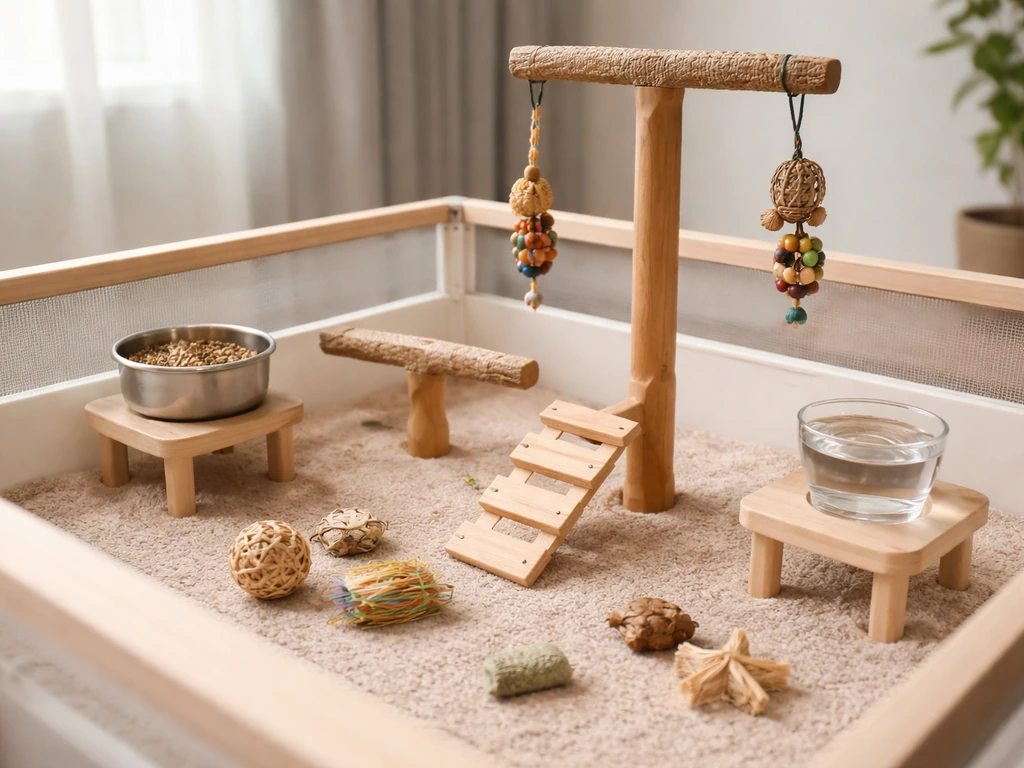
Most open top tables come with one central perch, which is a fine starting point, but adding variety is genuinely beneficial for foot health and mental stimulation. For many owners, the best bird perches are the ones that offer a secure grip and gentle variety in height and texture. Natural wood perches of varying diameters force your bird to grip differently throughout the session, which strengthens foot muscles and reduces the risk of bumblefoot. If the table has room for a secondary perch at a different height or angle, add one. Rope perches work well as a complement, but check them regularly for frayed threads your bird could get a toe caught in.
Food and water cup placement follows a simple principle: high enough to keep them out of the dropping zone, and positioned so your bird doesn't have to reach awkwardly or lean unsafely over an edge to access them. Most tables have pre-drilled cup holders on the side rails, which is ideal. Avoid placing cups directly below perches where droppings will contaminate them constantly. Fresh water should always be available during any out-of-cage session, and soft foods or treats should be given in small amounts and removed before the session ends to prevent spoilage.
For enrichment, a couple of rotating toys hung from the table frame or positioned on the surface keeps things interesting without overcrowding the space. Safe toy materials include stainless steel, untreated natural wood, food-grade leather, and hard plastic that's confirmed non-toxic. Avoid anything with small metal parts that can be pried off and swallowed, rubber toys that can be torn into dangerous pieces, or toys with chain loops large enough to trap a toe. Swap toys out every week or two to maintain novelty. Foraging opportunities, like wrapping a small treat in paper or tucking it into a wooden block, are especially valuable for parrots and take almost no effort to set up.
If you're building out a more ambitious setup, it's worth thinking about how the open top table fits alongside other play and perching options. Table top play stands and bird table top play stands address the same need from slightly different design angles, and if your bird is going to spend significant time outside the cage daily, having a couple of perching options around the room gives them more to explore and keeps sessions from getting monotonous.
Table top play stands and similar setups can also be rotated to offer new viewpoints and keep your bird engaged. Table top bird stands like these are especially useful when you want a dedicated, open space for supervised perching and interaction outside the main cage table top play stands. The same logic applies to choosing the right perch types and materials, which directly affects how comfortable and foot-healthy your bird stays over time.
Daily use tips and beginner mistakes that are easy to avoid
The biggest mistake I see new bird owners make with open top tables is treating them like a safe containment option. They set the bird on the table and then walk out of the room or get distracted by a phone for twenty minutes. Open top means supervised, every single time. It takes only seconds for a bird to fly into a window, drop behind a heavy piece of furniture, or get into something toxic. Stay in the room. This isn't about being overly anxious; it's just the basic agreement you make when you choose an open setup over an enclosed cage.
The second common mistake is overloading the table with toys and accessories right from the start. I understand the impulse: you want your bird to have everything. But a new bird on a new table needs space to feel secure first. Start with one perch and one familiar toy, let your bird explore and settle over a few sessions, and then add things gradually. Overcrowding the surface makes the bird feel cornered and can actually reduce the time they'll willingly spend on the table.
Third, don't skip the daily cleaning because it seems like a lot of effort. A five-minute wipe-down prevents the kind of bacterial buildup that leads to real health problems, and a clean table is a table your bird will actually want to use. Grimy, smelly surfaces stress birds out just like they would any animal with sensitive senses. Build the cleaning into your morning routine alongside freshening the water and you'll barely notice it.
Finally, watch your bird's body language during table sessions. A bird that's fluffed up, tail-bobbing, or repeatedly trying to fly away from the table is telling you something is wrong, whether that's a draft, a sound that's stressing them, a toy they find threatening, or just fatigue. Open top time should be something your bird visibly enjoys, with active foraging, vocalising, and engagement. Choosing the best bird playground for your bird comes down to having the right size, safe materials, and a supervised setup. If you're not seeing that after a few weeks, reassess the setup before assuming it's a bird behaviour problem.
Quick safety and readiness checklist
- Table surface is wide enough for your bird to extend both wings without hitting a rail
- Main perch is at approximately your chest-to-shoulder height
- All rail gaps are within the safe limit for your bird's species and size
- All hardware is stainless steel or confirmed non-toxic powder-coated steel (no zinc or galvanised fittings)
- Table is stable with no wobble when you press firmly on the perch area
- Rubber feet or grip mats are in place on the floor
- All edges and corners are smooth with no sharp points or burrs
- Table is placed away from drafts, AC vents, and kitchen fumes
- No scented candles, plug-ins, or aerosol sprays used in the same room
- Room is bird-proofed: windows and doors closed, ceiling fans off, mirrors covered, other pets removed
- Water cup is fresh and positioned away from the dropping zone
- Toys are confirmed bird-safe materials with no small detachable parts or large chain loops
- Daily cleaning routine is established before the first session
FAQ
How can I tell if my open top bird table is too small or the wrong shape for my bird?
Watch for repeated wing-tip contact with rails or the bird constantly repositioning to avoid the edges. If your bird stops extending both wings during standing or seems reluctant to step fully onto the main perch, go up in surface width before changing anything else. Measure the usable area, not the overall tabletop size.
My bird is comfortable with stepping up, but gets nervous the first time on the table. What should I do?
Do a gradual orientation, start with the bird on or next to the table and add treats so they associate the area with positive outcomes. Keep the room quiet, avoid unfamiliar toys at first, and limit sessions to short windows (minutes, not long blocks) until the bird shows relaxed posture like loose feathers and calm vocalizing.
Can I use an open top bird table for a pair of birds together?
Yes only if both birds fit the space without crowding and the perch arrangement does not force them to share the same exact spot. Provide separate access to food and water, and ensure rail spacing is safe for both species. If you see guarding behavior or persistent chasing, switch to individual supervised sessions or add a second perch at a different angle so the birds can separate.
What is the safest way to handle escape risk if I need to step away briefly?
Avoid stepping away entirely during early sessions. If you must pause, use a hard barrier routine, for example lure the bird back to the cage first, then close the door behind you. Even a few seconds can be enough for a startle flight into a window or behind furniture.
How do I choose bar or rail spacing when my table has decorative cutouts?
Measure the maximum gap at the height where your bird stands and hops, because cutouts near the base can be different from the top rail gaps. If you are unsure, test by gently using a safe, rigid gauge (like a known small ruler edge) to confirm no gap aligns with the smallest head-foot clearance your bird could fit through.
Is it okay to put the open top bird table near a balcony door or a frequently opened window?
Only if you can prevent sudden blasts of air and you can reliably keep the space draft-free. Birds can also react to outside movement, noise, and reflections. In practice, choose a location with indirect circulation, keep the door closed during sessions, and confirm there are no gaps where the bird could drop behind door framing or curtains.
What cleaning products should I avoid completely on or around the table?
Skip any cleaners with fragrances, essential oils, bleach mixes, ammonia, or strong disinfectant smells. Avoid aerosols and spray-on products entirely during out-of-cage time, even if you wipe later, because airborne residue can irritate sensitive respiratory systems. Use plain warm water or a bird-safe cleaner, then rinse and dry thoroughly.
How often should I replace wooden perches on the table?
Inspect weekly for splintering, soft spots, or chewed-through edges, and replace immediately if you see roughness or grooves that catch toes. Even bird-safe woods can wear down unevenly, and uneven perch surfaces can increase foot pressure. If the perch becomes slick or heavily soiled, swap it instead of trying to “scrub harder.”
Can I add a second perch or rope perch after my bird starts using the table?
Yes, but introduce it one change at a time so the bird can relearn the layout. For rope perches, check daily at first for fraying, loose fibers, and areas where a toe could snag. Keep the second perch positioned so your bird can access it without leaning over gaps or over the cup area.
Where should I place food and water cups so they stay clean?
Position cups so your bird does not have to stretch over the main droppings zone, and avoid direct placement under or immediately next to high-traffic perching points. If your table has cup holders on side rails, use them. Consider adding a simple catch or using daily wipe-down to prevent seed husk buildup around the cup rims.
What signs mean my bird is stressed or overstimulated on the table?
Fluffed posture held for long periods, tail-bobbing with attempts to retreat, repeated frantic hopping, or aggressive body language toward the perch or you can all indicate stress. If the bird is not settling after a few sessions, reassess airflow, noise triggers, toy placement, and session length rather than assuming it is “normal.”
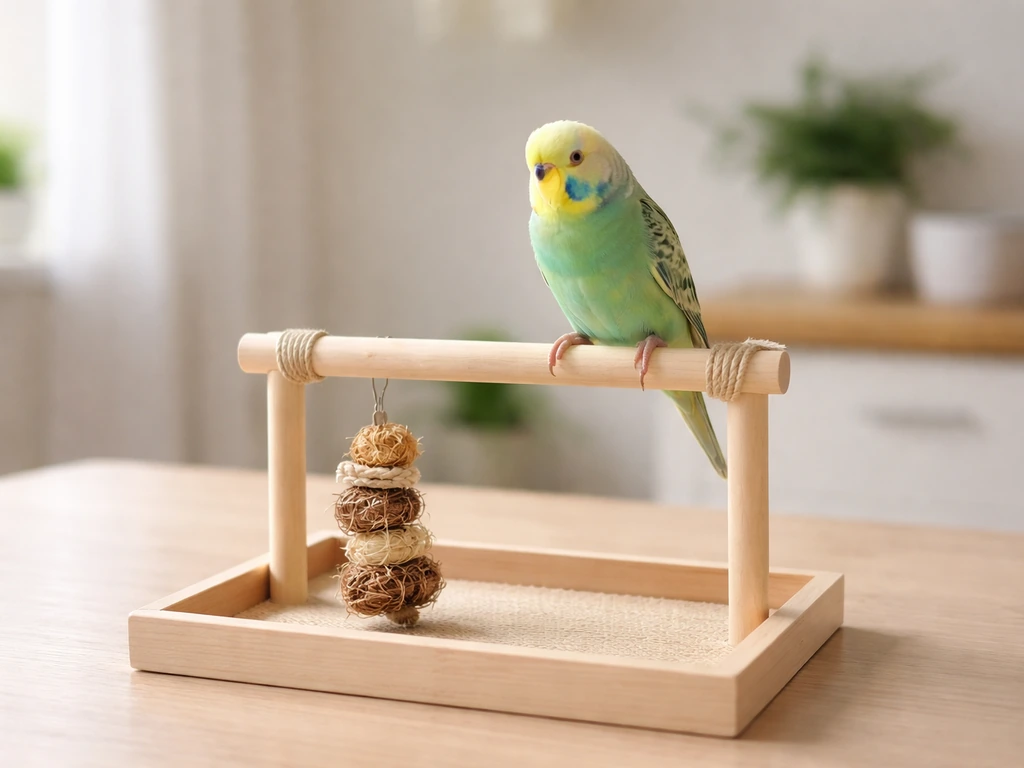
Step-by-step guide to choose and set up a bird tabletop play stand for safe, enriching out-of-cage time.
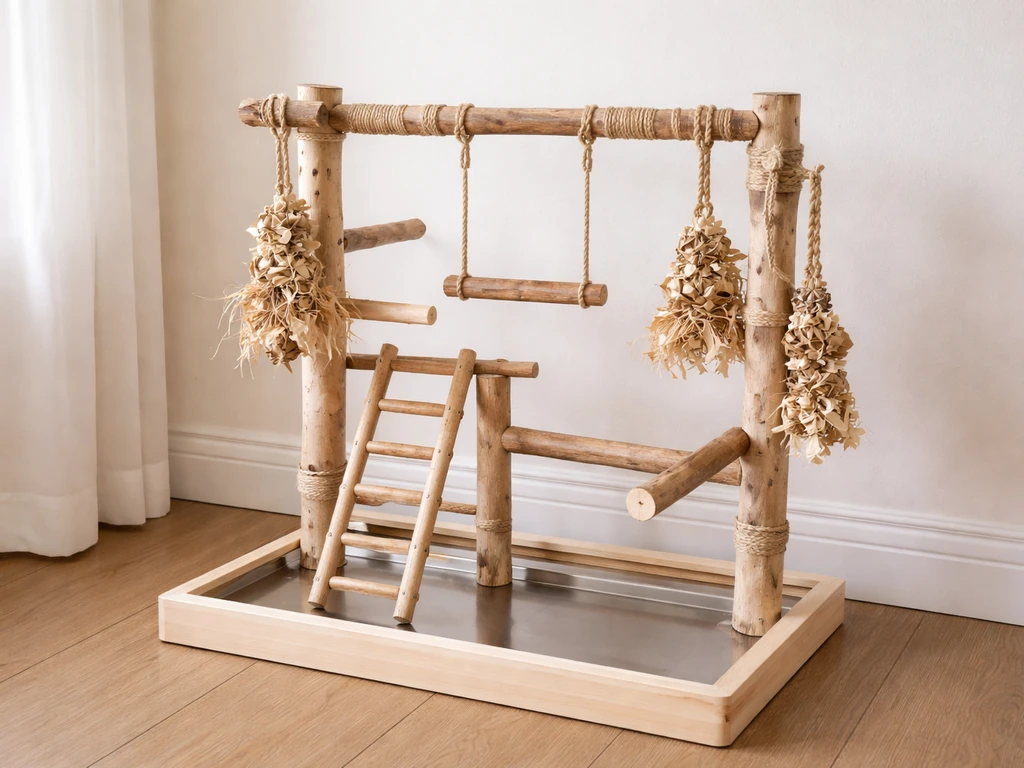
Choose the best bird playground with safe materials, correct sizing for your bird, setup options, and a buying checklist
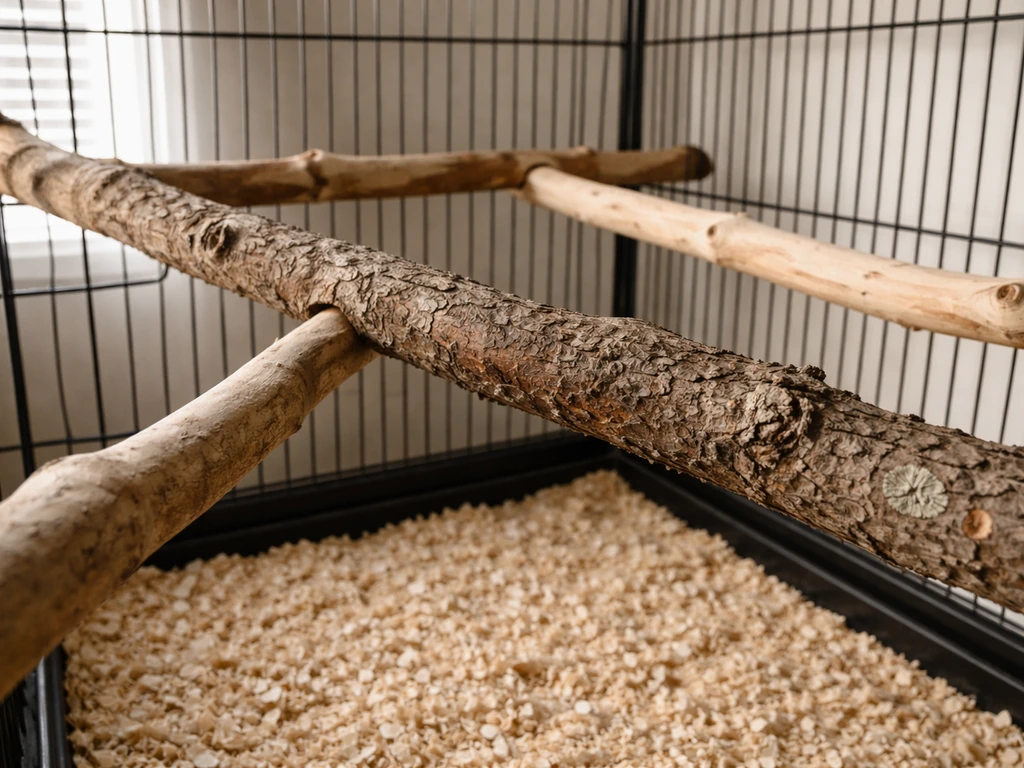
Safe wood guide for bird perches: what to buy, what to avoid, and how size shape affect foot health and cleaning.