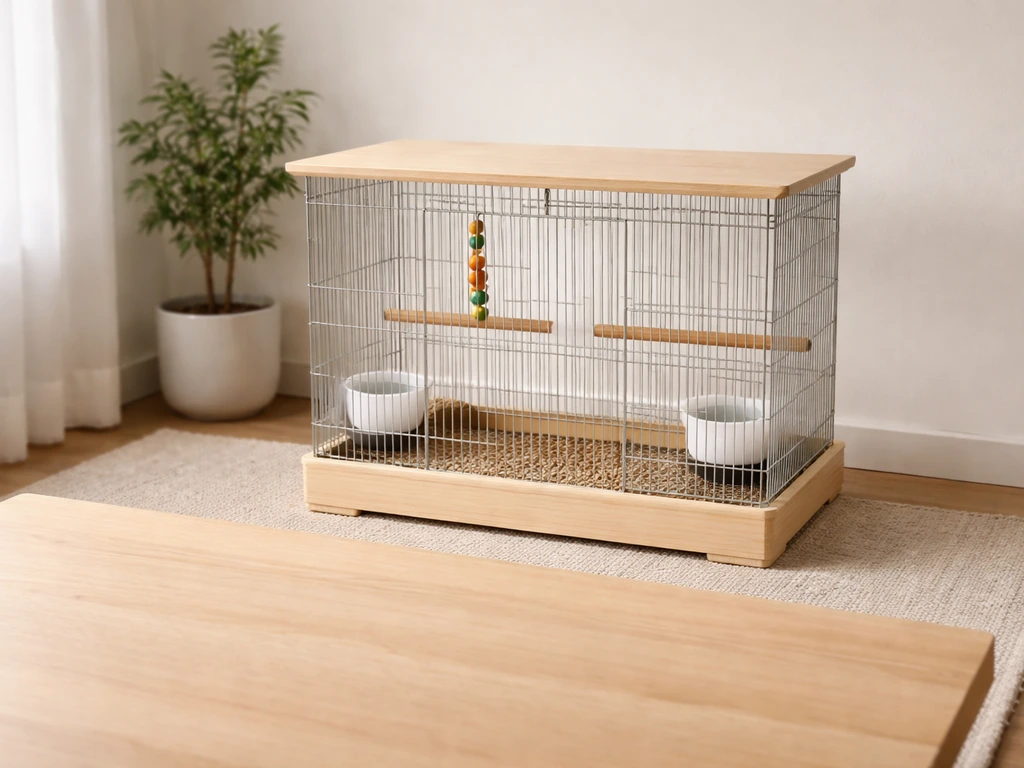
A flat top bird table is a stable, level surface used either as a cage stand or as a dedicated out-of-cage perch and play station for your bird. You place your starter cage on top of it, or you use the surface itself as a supervised enrichment zone with perches, food cups, and toys. Done right, it gives your bird a safe, consistent spot outside the cage without turning your whole living room into an obstacle course. Done wrong, it wobbles, collects bacteria, and puts your bird in a spot that's drafty, fume-exposed, or just plain stressful. This guide walks you through every step so you get it right the first time.
Flat Top Bird Table Guide: Buy, Set Up, and Care Safely

Marcus Chen
6 Jun 2026
What a flat top bird table actually is (and how beginners use it)
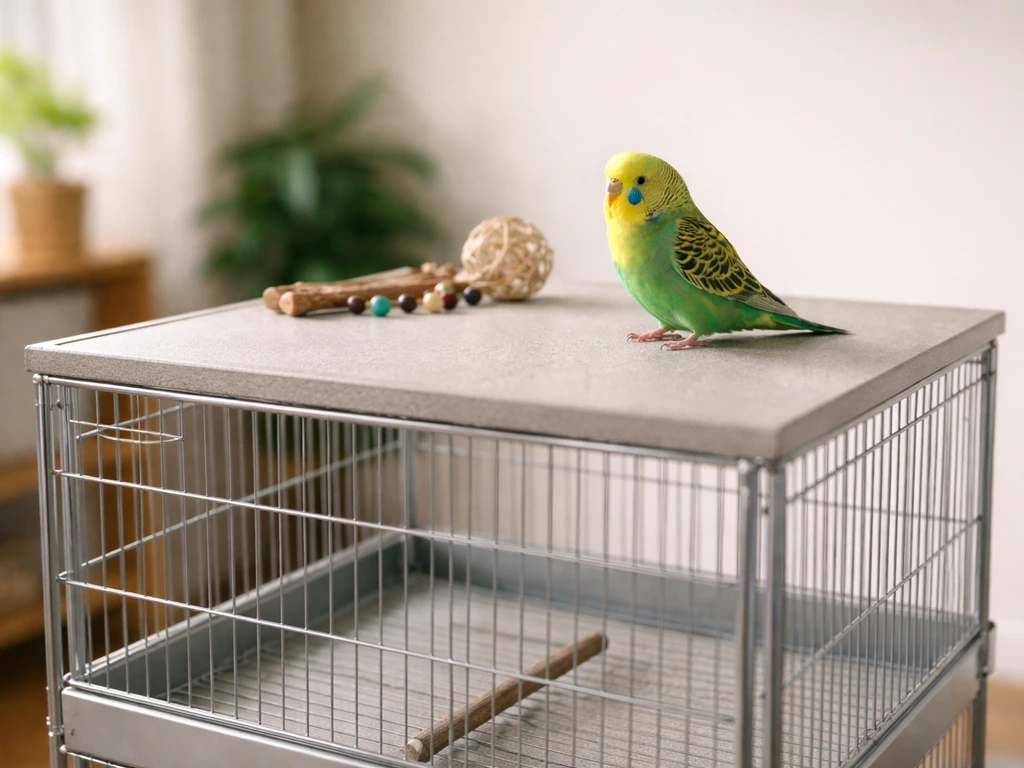
The term gets used in a few overlapping ways, which is where the confusion starts. Some brands like Prevue Pet Products make cages that have a completely flat upper surface, sometimes called a "flat top" cage, where the top of the cage doubles as a usable platform. Others, like A&E Cage Company, build "play top" cages where the cage lid folds open or transforms into a play area with a perch, ladders, and a toy hook attached. Then there are standalone tabletop play stations from companies like Quill & Roost, which are wooden jungle gym-style setups you simply place on any flat surface to give small-to-medium birds a structured play spot during supervised out-of-cage time.
For a first-time bird owner, the most practical way to think about it is this: a flat top bird table is whatever stable, flat surface your bird's cage sits on or plays on. That could be a purpose-built cage stand with a flat top, a proper tabletop play gym, or a flat-top cage that doubles as its own stand. What matters is that the surface is sturdy, the right height, non-toxic, and easy to clean. Best Friends Animal Society specifically recommends giving parrots a designated area away from their cage for foraging, play, and family interaction, and a flat top table setup is exactly how most owners make that happen at home.
Choosing the right flat top bird table
Stability and height
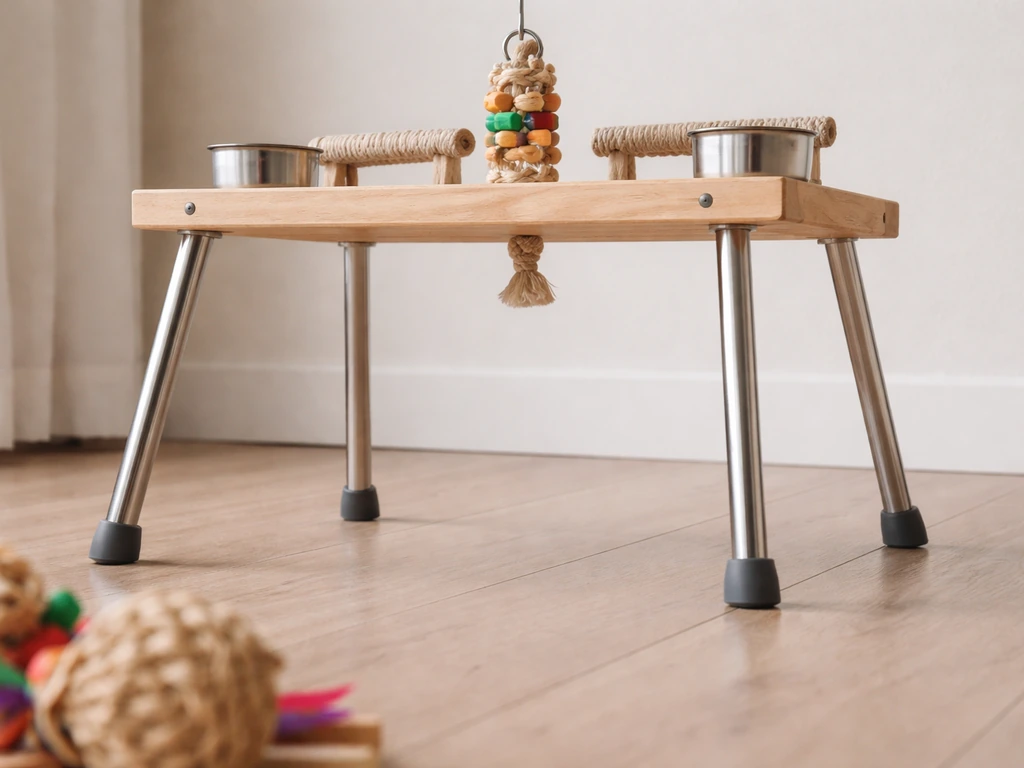
This is the one thing I'd tell every beginner to obsess over before anything else. If the table wobbles under load, your bird will stress out every time it lands, and a tipped cage is a genuine safety emergency. Test any stand fully loaded before you let your bird near it.
For cage stands, the flat top surface needs to be wider than the cage base on all sides, ideally by at least an inch, so the cage isn't teetering at the edges. Height-wise, you generally want the cage perch level to sit at roughly your eye level when you're seated, around 4 to 5 feet from the floor for most setups.
This puts your bird at a comfortable social height without encouraging dominant behavior that some larger parrots can develop when perched above your eye level.
Materials and finishes
Non-toxic materials are non-negotiable. Birds chew on things they're not supposed to, and they breathe air that picks up off-gassing from nearby surfaces. The Merck Veterinary Manual specifically flags paints, varnishes, and treated surfaces as household hazards for pet birds. That means you should avoid any flat top table or stand with unknown paint, a glossy varnished finish that smells fresh, or a particle-board surface treated with formaldehyde-based sealers.
If you're buying a wooden tabletop play station, look for natural untreated wood or products explicitly marketed as bird-safe. For perches attached to the surface, natural wood is the standard choice. To get the best perches for bird nails, focus on natural wood options and the right perch diameter so your bird can grip comfortably.
Stainless steel food and water cups are the gold standard if your flat top setup includes feeding stations, because stainless is non-porous and survives the repeated hot-water scrubbing that hygiene requires. Plastic cups like the hooded ones on the Prevue Southbeach Flat Top are functional, but they need more frequent replacement as surface scratches harbor bacteria over time.
Wire spacing (if it's a cage-style flat top)
If you're buying a flat-top cage rather than a standalone table, wire spacing matters as much as the surface itself. Prevue's own spec sheets note that 3/8-inch wire spacing is suitable for small birds like finches, canaries, and budgies. Wider spacing is an escape and entrapment risk for smaller species. Match the wire spacing to your specific bird, not just the general size category on the box.
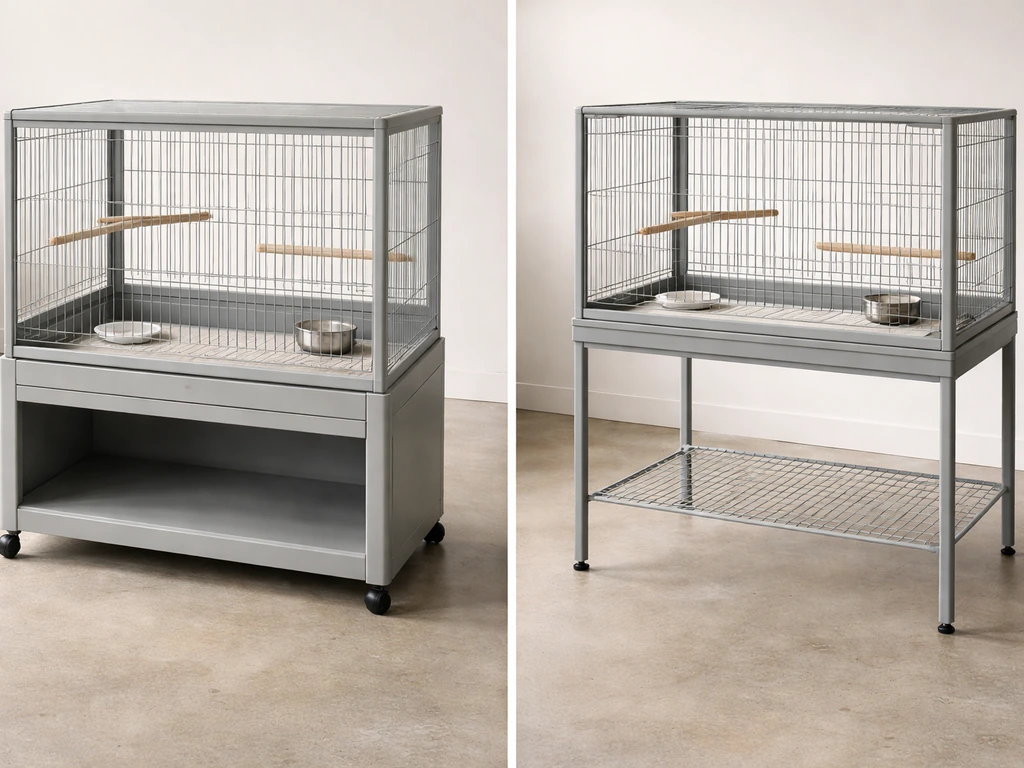
Quick comparison of flat top table types
| Type | Best For | Stability | Cleaning Ease | Cost Range |
|---|---|---|---|---|
| Flat-top cage (integrated stand) | Beginners with one small-to-medium bird | High (one unit) | Moderate (more crevices) | $$-$$$ |
| Play-top cage | Birds needing daily supervised out-of-cage time | High (one unit) | Moderate | $$$ |
| Standalone tabletop play gym | Adding play station to existing cage setup | Moderate (surface-dependent) | Easy (simple structure) | $-$$ |
| Cage stand with flat top | Elevating a separate cage | High if wide-based | Easy (flat surface) | $-$$ |
Where to put it in your home
Placement is where most beginners make their biggest early mistakes, and it's honestly where I made mine. The instinct is to put the bird near a window so it can watch the world, and while a room with a view does matter, PetMD's cage setup guidance explicitly warns to keep cages away from windows and drafts because outside activity visible through glass can trigger fear and panic responses in birds. A spot where your bird can see the room and interact with family, but isn't directly in front of a cold window or a sliding glass door, is ideal.
The kitchen is a hard no. VCA Animal Hospitals is direct about this: it's generally unwise to house a bird in the kitchen because of cooking fumes, smoke, and cleaning product exposure. Overheated nonstick (PTFE) cookware alone can kill a bird rapidly from respiratory distress, and Chewy's bird-safe cookware guidance frames eliminating PTFE-coated products entirely as the safest approach. Even if you don't cook with nonstick pans, the general fume and aerosol traffic in a kitchen is too high a risk.
Foot traffic matters more than people expect. Parrots.org enrichment guidance specifically advises placing indoor play stations out of the main traffic area of a room. A flat top setup in a busy hallway or directly next to a frequently slammed door is going to produce a stressed bird. Pick a corner or a wall that gets family activity but not constant rushing-past.
- Keep the table at least 3 to 4 feet from exterior windows and exterior doors
- Avoid placement near air vents, heaters, and air conditioning units
- Stay out of the kitchen entirely
- Avoid areas where aerosol sprays (hairspray, air fresheners, cleaning sprays) are regularly used
- Position where your bird can see family activity without being in the middle of heavy foot traffic
- If you use a HEPA air purifier in the room, place it a few feet away, not directly blowing on the table
Setting it up: two main scenarios
Using it as a cage stand
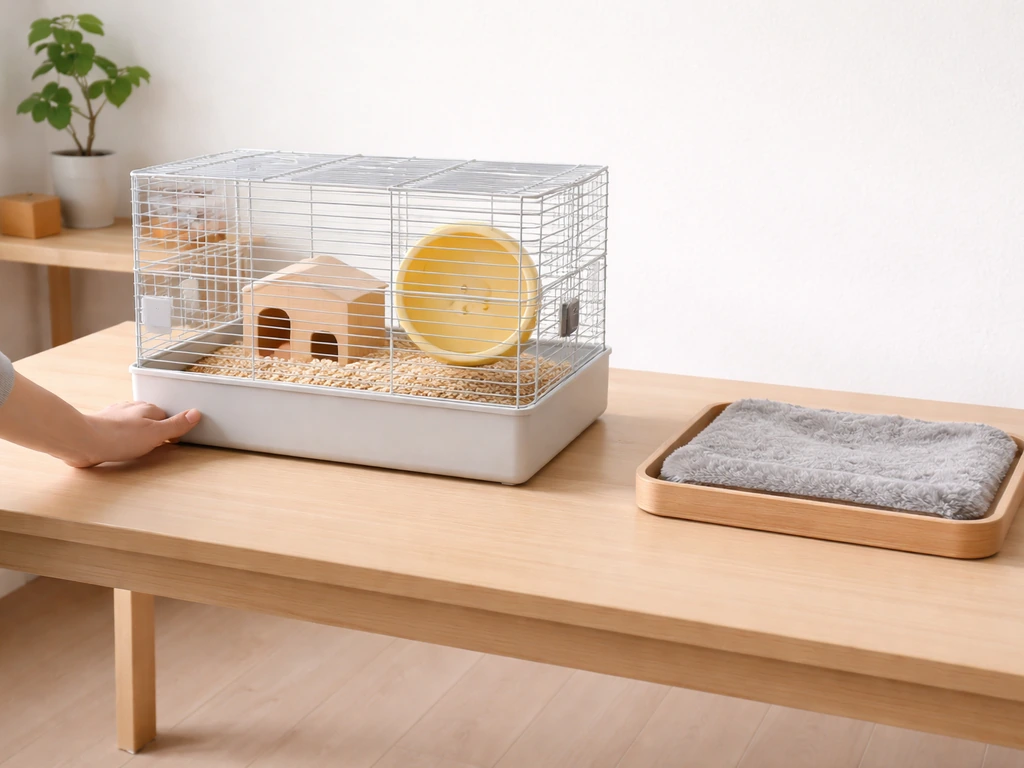
If your flat top table is primarily a cage stand, the setup is straightforward but the details matter. Center the cage on the table surface and check that no legs are overhanging. Run your hand along each table leg and check for wobble before you add the cage weight. If you're placing the cage on a stand that has wheels, lock them immediately and check the locks weekly. Keep feeding accessories, toys, and water bottles inside the cage rather than cluttering the table surface around the cage base, because a crowded surface makes cleaning harder and creates tripping and tipping hazards.
Using it as a supervised play and perch area
A tabletop play station is only for supervised time. Never leave your bird unattended on an open play gym, no matter how confident they seem. For setup, start simple: one wood perch, one or two toys, and a stainless steel or ceramic food cup if you're offering treats during playtime. The Kaytee T-Stand approach of pairing a natural wood perch with stainless steel food and water cups is a solid template because stainless survives repeated sanitizing. Make sure no electrical cords run near the table surface, VCA Animal Hospitals calls out cord access as a specific household hazard for birds. If your table has any rough edges, sand them smooth or cover with bird-safe tape before use.
Contamination-proofing the surface
Food and droppings are going to end up on your flat top surface. That's just the reality. Line the flat surface with a sheet of paper or a washable mat that you can swap out daily. Don't use cedar shavings, scented liners, or anything chemically treated as a surface liner. Plain paper towels or unbleached paper cage liners are the cleanest, easiest option and they make daily mess management much faster.
Cleaning and maintenance: what the schedule actually looks like
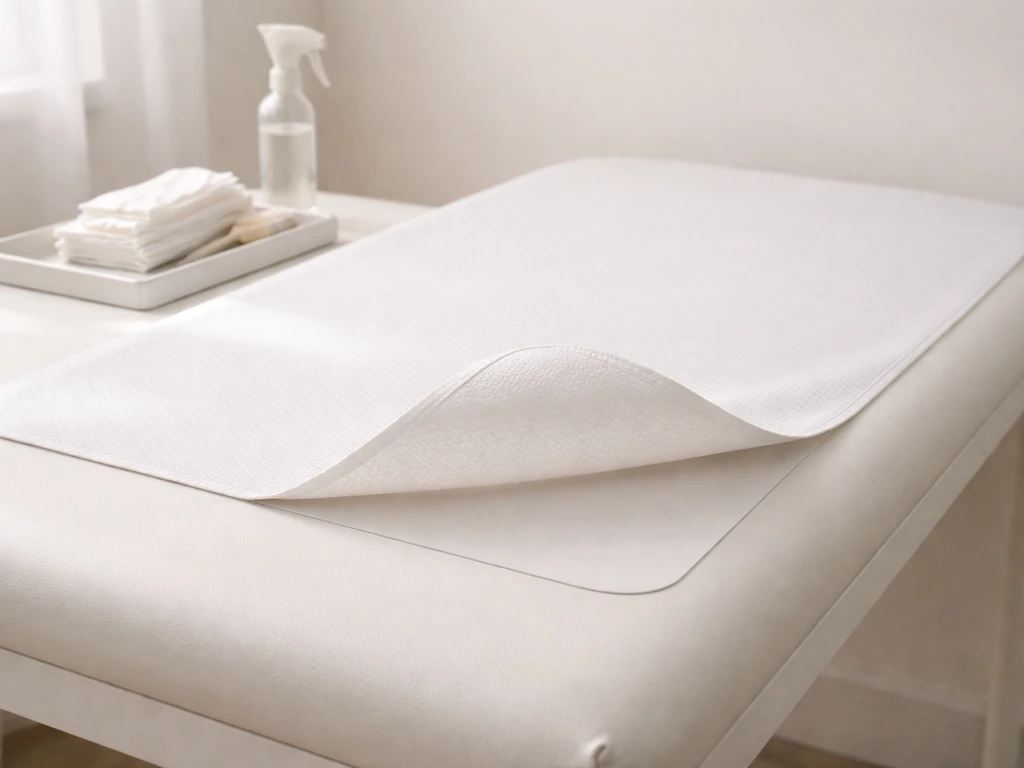
Hygiene on a flat top setup is one area where beginners consistently under-prepare. The table surface itself is an extension of the cage environment, and it needs almost as much attention.
| Frequency | What to Do | Products to Use |
|---|---|---|
| Daily | Remove droppings and food debris, replace paper liner, wipe down any soiled surface areas | Hot water with a small amount of bird-safe dish soap; rinse thoroughly |
| Weekly | Full wipe-down of the entire table surface, perches, and accessories; wash any cups or toys | Bird-safe habitat cleaner or diluted dish soap; rinse completely and air dry before bird returns |
| Monthly | Deep clean: scrub all surfaces with non-toxic disinfectant, rinse off all chemical residue, allow to fully air out | Properly diluted bleach solution (thoroughly rinsed until odor is gone) or a purpose-made avian-safe disinfectant |
The cleaning chemistry here is worth taking seriously. VCA Animal Hospitals notes that many disinfectants, including bleach and vinegar, can release toxic fumes. The ASPCA's guidance is nuanced but practical: a diluted bleach solution used for cleaning is not expected to cause harm IF it's properly diluted, thoroughly rinsed, and the bleach odor has fully dissipated before your bird is back near the area. That last part is the piece most people skip. Don't rush it. Let surfaces air dry completely and do a sniff test before bringing your bird back.
Also: never spray aerosol cleaners near your bird or in the same room while your bird is present. If a pet bird is exposed to aerosol sprays or fumes, the Merck Veterinary Manual advises removing it to fresh air immediately and seeking urgent veterinary care aerosol cleaners near your bird. PetMD's guidance on aerosol poisoning in birds is clear that aerosol sprays, including disinfectants and air fresheners, can be directly harmful. Clean when the bird is in another room, ventilate well, and only return the bird once the room smells neutral.
Common beginner mistakes and how to fix them
The table wobbles
A wobbling flat top is usually one of three things: uneven floor, loose hardware, or a stand that's simply undersized for the load. Start by checking the floor. A rubber furniture pad under each leg solves most mild wobble caused by uneven flooring. If the hardware is loose, tighten every bolt and check again in a week, new furniture settles. If the stand flexes under the cage weight even on a flat floor, the stand is undersized and you need to replace it before your bird uses it.
Using furniture that's not designed for birds
I've seen people try to use plant stands, entertainment shelves, and random side tables as bird tables. The problem isn't always stability, it's materials. Most decorative furniture uses varnishes, lacquers, and composite wood products that off-gas chemicals birds are sensitive to. If you didn't buy it specifically for birds (or verify the materials), don't use it. The risk isn't theoretical.
Unsafe or cluttered surfaces
A flat top that becomes a storage surface for toys, food bags, and accessories is a mess management problem and a hazard. Keep only what your bird actively uses on the surface. Everything else goes in a dedicated storage spot. The more clutter there is, the harder the table is to clean, and the more chances there are for your bird to get into something it shouldn't.
Skipping the off-gassing period for new furniture
New tables and stands, especially anything with painted or varnished surfaces, need time to off-gas before a bird is anywhere near them. Set a new table up in a ventilated space for at least a few days before placing it in your bird's room. If it still has a chemical smell after a week, don't use it. This is one of those mistakes people only make once.
Match your setup to your bird and your space
Not every flat top setup works for every bird. The table, its size, and how you configure it should reflect what you're actually keeping and where you actually live.
For small birds like finches, canaries, and budgies, a compact flat top cage stand or a small tabletop play gym is plenty. These birds don't need a large surface footprint, but wire spacing (no wider than 3/8 inch) matters critically for safety. A simple stand with a flat top and a single natural wood perch is genuinely all you need for a budgie's out-of-cage supervised time.
For medium birds like cockatiels, conures, and lovebirds, a slightly larger footprint and more enrichment options on the surface make sense. A tabletop play gym with ladders and a toy hook, like the kind A&E and Quill & Roost produce, gives these more active birds enough to do during out-of-cage sessions. These birds also tend to be messier, so a wide, easy-to-wipe surface and a daily liner change are non-negotiable.
For larger parrots, the flat top setup needs to handle more weight and more destruction. Larger birds will try to dismantle anything on the surface, so lightweight tabletop gyms won't hold up. A dedicated, heavy-duty cage stand with a flat top, designed for larger cage weights, is the practical choice. The play area on top of or adjacent to their cage should be built-in or bolted rather than sitting loose.
If your space is small, like an apartment or a single-room setup, a flat-top cage that combines the cage and the play station into one unit is the most efficient approach. It reduces floor footprint and keeps everything in one place to clean. If you have more room, separating the cage stand and the tabletop play station gives your bird two distinct zones, which can support enrichment and routine in a way that single-unit setups don't always allow.
Related setups worth thinking about alongside this include tabletop play gyms specifically designed for out-of-cage enrichment, dedicated bird stands, and even deck or patio perch areas if you're planning outdoor supervised time. If you are specifically looking for a safe, reliable setup, choosing the best bird stands for your bird’s size and needs is the key.
If you want outdoor supervised time, a better bird deck porch patio setup is a great way to keep the same flat-top benefits while adding fresh-air enrichment deck or patio perch areas.
Your practical checklist before the bird steps on it
- Confirm the table surface is wider than your cage base on all sides and shows zero wobble under full load
- Verify all materials and finishes are bird-safe and have fully off-gassed (no chemical smell)
- Check wire spacing if it's a cage-style flat top (3/8 inch or less for small birds)
- Position the table away from windows, doors, the kitchen, and any aerosol or fume sources
- Line the surface with plain paper or a washable mat for daily mess control
- Confirm stainless steel or ceramic cups are used for any food or water on the surface
- Remove all electrical cords and unsafe items from reach of the play area
- Lock any wheels on the stand and test stability one more time
- Establish your daily, weekly, and monthly cleaning schedule before the bird's first use
- Always supervise your bird during any out-of-cage time on the flat top play area
FAQ
Can I use a “flat top” coffee table or plant stand as a flat top bird table if it looks stable?
It’s usually risky even if it’s level, because many decorative pieces use finishes or composite materials that can off-gas. Birds chew and inhale close to the surface, so only use furniture that you can confirm is bird-safe (natural/untreated or explicitly marketed as bird-safe) and that you can verify is fully stable under the cage’s actual weight.
How long should I wait for a new flat top bird table to off-gas before introducing my bird?
If the tabletop has any paint, varnish, stain, or unknown sealers, set it up in a ventilated area first. Start with a few days, but use odor as your decision rule, if it still smells chemical after a week, do not use it. Also avoid using it during the initial ventilation period if your bird’s room shares the same airflow.
What’s the safest way to deal with droppings and spilled food on the table liner?
Use a liner you can remove and replace daily (paper towels or unbleached paper liners). Do not use scented liners or chemically treated pads, and don’t “spot clean” with sprays while the bird is nearby. After removing the soiled liner, wipe and fully dry the surface before returning the bird.
How often should I clean the flat top surface and attached perches?
At minimum, clean the surface daily because it gets food, droppings, and foot contact. For perches and any cups, clean after each use or daily if they’re used throughout play time. If you use plastic cups, plan on replacing them more often since scratches can hold bacteria even after washing.
Is it okay to leave my bird on the flat top table when I step out for a minute?
No, a flat top play station is for supervised time only. Even calm birds can get into unsafe items, tangle with cords, or slip if the setup shifts. If you need a quick break, move the bird back to its cage or a secure travel carrier first.
My flat top bird table wobbles slightly, what’s the fastest safe troubleshooting order?
Check the floor first (uneven flooring is common). Then verify hardware is tight (recheck after a week since new furniture settles). If it still flexes under full cage load even on a flat surface, the stand is likely undersized and you should replace it rather than trying to “balance” it.
What wire spacing issues should I watch for if I’m using a flat-top cage instead of a standalone table?
Match spacing to your specific bird size, because wider gaps can create both escape and entrapment risks for smaller species. For small birds, 3/8-inch spacing is typically cited as appropriate by manufacturers, but if you’re between sizes or have a curious chewer, size down for safety rather than relying on the label category.
How high should the perch or table be, and how do I adjust for different heights?
A practical target is roughly eye level when you’re seated (commonly around 4 to 5 feet from the floor for many homes). If your bird’s perch is consistently above your head when you’re seated, watch for dominance or aggression, then lower the setup. For very small birds, you may also need to reduce the height so they can step comfortably without awkward jumps.
What should I do if my flat top setup is near a window or in a drafty spot?
Avoid placing the setup directly in front of cold glass, windows with airflow, or sliding doors that create temperature swings. Use the room for visibility, but reposition so the bird can see people and activity without being in the path of drafts that can trigger fear or stress responses.
Are there any kitchen-related “almost safe” situations where I can keep a flat top bird table?
Even if you rarely cook, kitchens can still be hazardous due to aerosols, cleaning products, and fumes. Overheated nonstick cookware can be rapidly dangerous, so if you can smell cooking or cleaning residue, move the bird elsewhere and keep the flat top setup out of that environment entirely.
How do I keep cords and small hazards away from the table or play gym?
Route electrical cords away from the bird zone entirely, use cord covers if needed, and ensure there are no loose wires the bird can reach from the table. Also remove dangling straps, tags, or small accessories that could be chewed or swallowed during supervised play.
What materials should I prioritize for cups and perches on a flat top bird table?
For cups, stainless steel is the easiest to keep truly hygienic because it handles frequent hot-water scrubbing well. For perches, choose natural wood options and size the diameter to your bird’s grip so toes can curl comfortably. Avoid unknown treated surfaces and glossy, freshly finished areas until they’ve fully off-gassed.
Next Articles
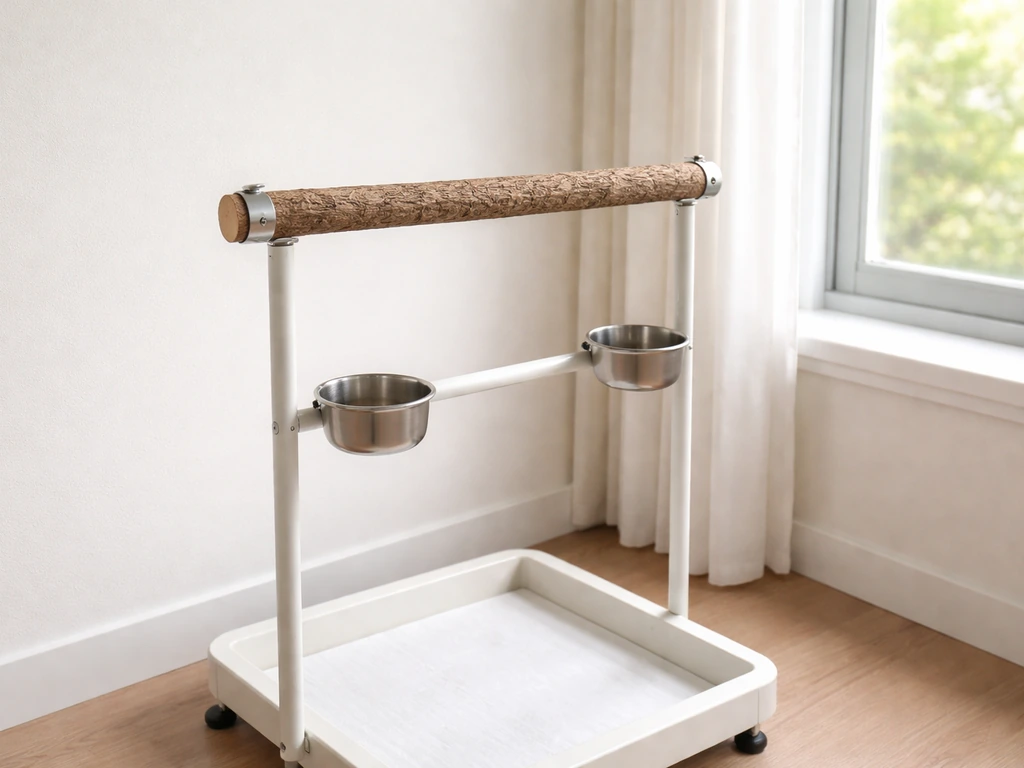
Best Bird Stands Guide for Beginners: Size, Setup, Perches
Beginner guide to choosing the best bird stands: size, placement, safe perches, mounting, and a simple setup checklist.
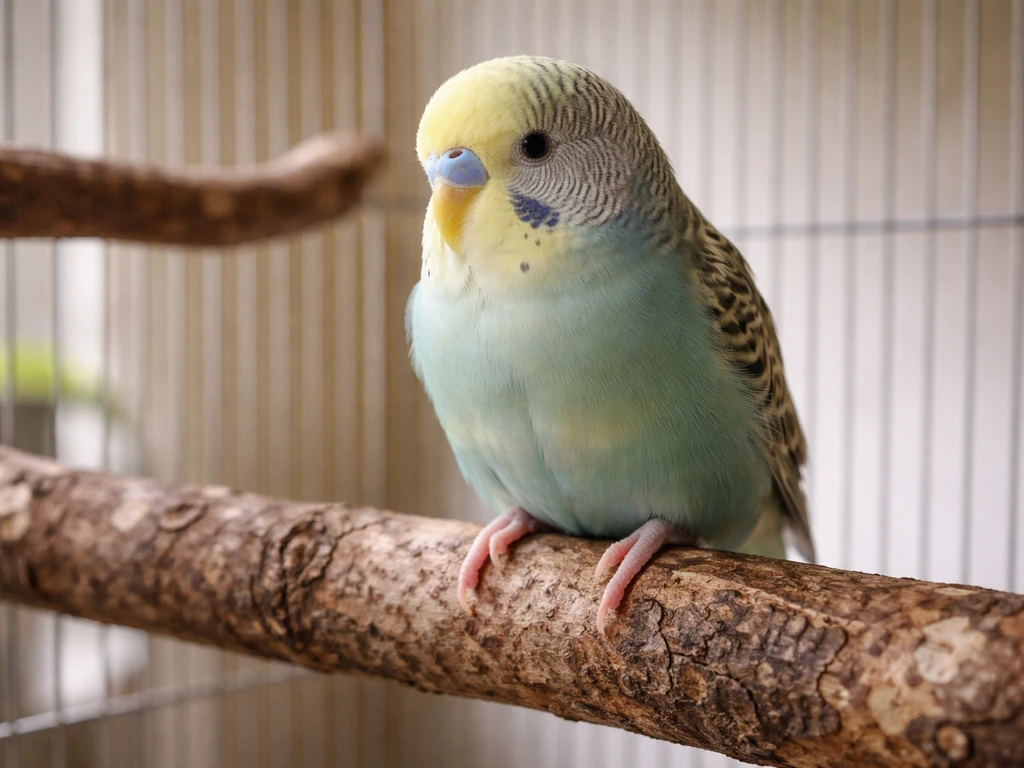
Define Bird Perches and Choose Safe Ones for Your Cage
Learn what bird perches are and pick safe cage perches by size, material, placement, cleaning, and foot health.
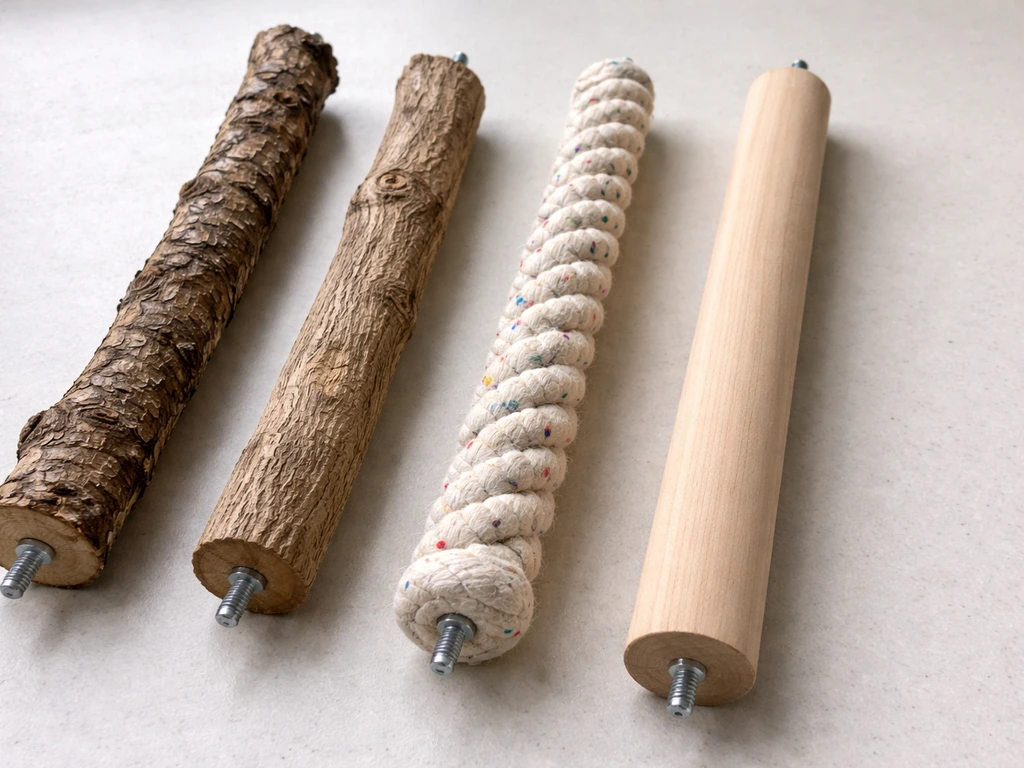
Best Perches for Bird Nails: Safe Sizes, Materials, Setup
Choose the best bird perches by material, diameter, grip, and placement to keep nails trimmed safely and prevent foot so