The best bird stand for your pet depends on three things: your bird's size, where you're putting it, and how easy it is to keep clean. For most beginners with a budgie or cockatiel, a simple freestanding tabletop play gym or a cage-mounted perch setup hits the sweet spot. For medium to large parrots like conures, Amazons, or macaws, a rolling floor stand with a stainless steel tray and multiple perch levels is the practical choice.
Best Bird Stands Guide for Beginners: Size, Setup, Perches

Marcus Chen
4 Jun 2026
Get the perch diameter right (about 1/2 inch for budgies, around 1 inch for cockatiels, larger for bigger birds), use natural wood or cotton rope as the primary surface, and position everything so droppings don't land in food or water. That's the core of it.
What stand type fits your bird
"Bird stand" is a loose term that covers everything from a single perch bolted to a cage wall to a full floor-standing play gym on wheels. Knowing which category you actually need saves a lot of wasted money. Here's how they break down by bird type.
Small birds: finches, canaries, budgies, lovebirds
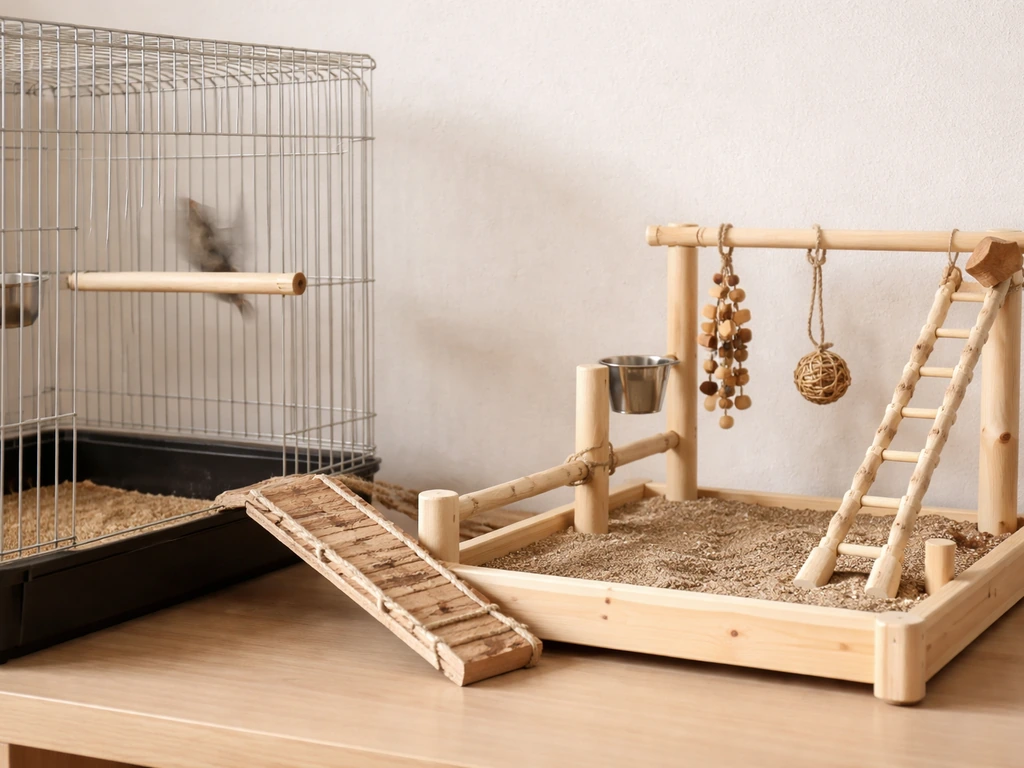
These birds spend most of their time inside their enclosure, so the "stand" situation is mainly about cage-mounted perches and a small tabletop play gym for supervised out-of-cage time. A table top bird play gym can be a great option for supervised out-of-cage time tabletop play gym. You don't need a massive floor stand. A compact tabletop bird play gym with a couple of perch levels, a rope swing, and maybe a small dish holder is plenty. The footprint is small, it's easy to move, and it won't dominate your counter space.
Medium birds: cockatiels, conures, caiques, small Amazons
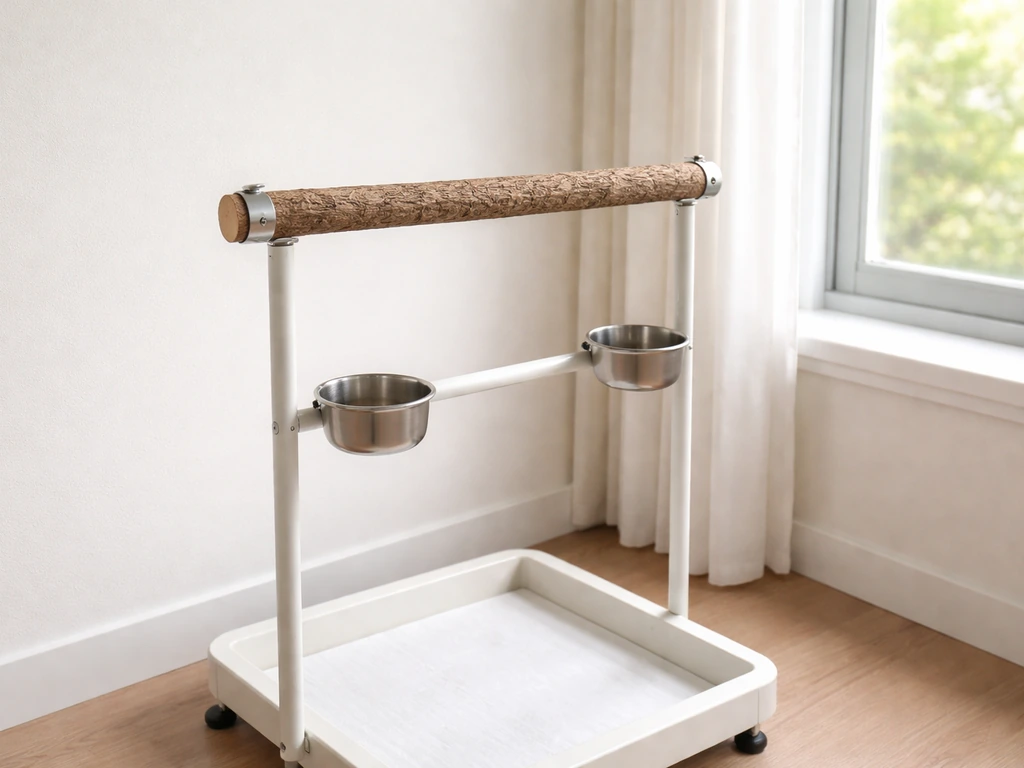
This is where a standalone floor stand starts making real sense, especially if your bird gets regular out-of-cage time. A mid-size rolling playstand with a flat top perch, a droppings tray underneath, and a couple of stainless steel food and water cups is the go-to. Models with a 28-inch diameter tray (like the A&E Cage Company Rolling Playstand sold at PetSmart) are designed specifically for this size range. The wheels matter more than people think: you'll want to move it toward a window for daylight and back toward a corner at night, and doing that daily without wheels gets old fast.
Large birds: African greys, large Amazons, cockatoos, macaws
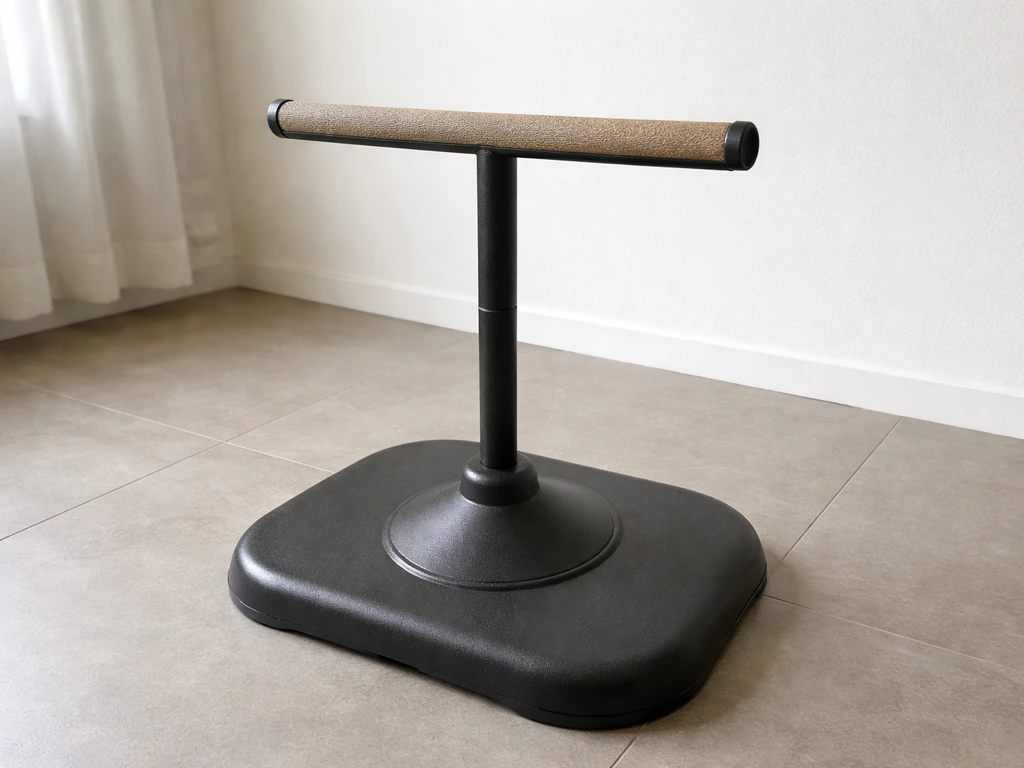
Large birds need heavy-duty stands that won't tip when a two-pound bird lands hard on the side. A flat-top stand with a wide, weighted base is the priority here. Look for stainless steel or powder-coated metal construction, chunky hardwood perches, and a pull-out tray you can actually clean without disassembling the whole unit. Stability beats aesthetics at this size.
Sizing and placement: height, footprint, and where not to put it
Stand height matters both for the bird and for you. A perch sitting too low makes your bird feel exposed and stressed. Too high and you lose the eye-contact dynamic that helps with taming and interaction. A good rule of thumb is placing the main perch at roughly your eye level or slightly below when you're seated, so you're not constantly looming over the bird. Some specialized stands keep the perch height very compact (around 9 inches from tray to perch on small single-perch models), which works well for tabletop setups where you want the bird close but contained.
Footprint and stability go together. A stand with a narrow base will tip, and a tipped stand is a genuine injury risk. For floor stands, look for a wide base or a cross-leg design, and if you're on a smooth floor, rubber feet are not optional. Keep floor stands away from ceiling fans, open windows, kitchen fumes, and any area where other pets can approach unsupervised. Near a wall or in a corner gives your bird a sense of security and cuts off the approach angles for cats or dogs.
Placement relative to food and water is something a lot of beginners get wrong. Birds will defecate from wherever they're perched, and if their food and water bowls sit directly below, those dishes will be contaminated constantly. The RSPCA specifically flags this: don't place bowls directly beneath perches, and don't put food and water bowls side by side because birds will dunk food into water and foul both at once. Position cups to the side or use holders that keep dishes offset from the main perch line.
Perches vs. stands: materials, diameter, and why foot health depends on both
The stand is the structure. The perch is what your bird actually grips all day. Getting the perch right is genuinely more important for your bird's long-term health than the stand brand or finish. Here's where the practical details really matter.
Perch diameter by bird size
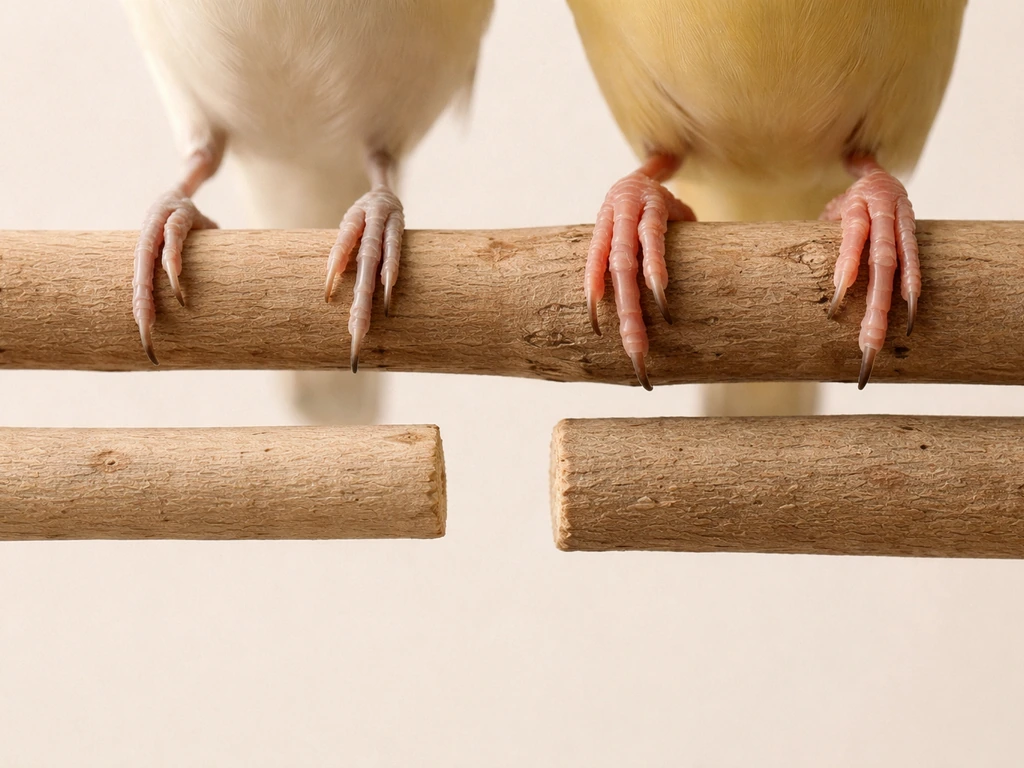
The diameter rule is simple: your bird's front and back toes should not overlap excessively when gripping the perch. For budgies and similarly sized birds (finches, canaries, lovebirds), aim for about 1/2 inch diameter. Cockatiels do best on perches around 1 inch in diameter. Larger parrots need proportionally thicker perches. If a perch is too thin, the bird's toes wrap all the way around and the feet can't relax. Too thick and the bird can't grip securely, which is tiring and stressful.
| Bird Type | Recommended Perch Diameter | Notes |
|---|---|---|
| Finches, canaries, lovebirds, budgies | ~1/2 inch (X-Small) | Toes should close about halfway around |
| Cockatiels | ~1 inch (Small) | Front and back toes should not overlap excessively |
| Conures, caiques, small Amazons | ~3/4 to 1.5 inches (Medium) | Varies by exact species size |
| African greys, large Amazons, cockatoos | ~1.5 to 2 inches (Large) | Chunky hardwood branches work well |
| Macaws | ~2 to 2.5 inches (X-Large) | Thick manzanita or java wood preferred |
Best materials (and what to skip)
Natural wood branches are the gold standard for perches. The irregular surface means your bird's grip shifts slightly with every step, which exercises foot muscles and prevents the pressure-point buildup that leads to bumblefoot. Smooth wooden dowel rods are the worst common choice because they're uniform diameter and slick, giving zero grip variation. If you're sourcing branches from outside, you need to bake them at 200°F (93°C) for 30 minutes to kill bacteria and parasites before putting them in the cage.
Cotton rope and natural hemp rope perches are a legitimate second material to add. They're soft, easy for birds to grip, and most parrots enjoy chewing them. The one watch-out: monitor rope perches for fraying. If strands start coming loose, a bird can get a toe or leg tangled in the fibers, which is a real injury risk. Swap out frayed rope perches promptly.
Concrete and cement perches are useful for naturally wearing down nails, but they should never be the only perch in the setup. If you also want nail maintenance, aim for the best perches for bird nails in addition to a sturdy stand. Used as the sole perch, concrete is abrasive enough to cause sores on the bottom of a bird's feet. If you use one, blank" rel="noopener noreferrer">orient the smooth side for the bird to stand on and save the rough surface for the nail-wear benefit. Similarly, avoid sandpaper perch covers entirely. The RSPCA warns they cause abrasions on the foot's sole that can turn into infections.
For play stand surfaces, safe materials include untreated natural wood, stainless steel, ceramic powder coating, cement (used correctly), acrylic, and PVC. What you want to avoid is anything with a shiny painted finish that might chip (birds will chew it), zinc hardware, and galvanized metal that hasn't been confirmed bird-safe.
Mounting options: cage-mounted, freestanding, and travel stands
Each mounting style has a real use case. Understanding the trade-offs helps you decide what combination makes sense for your setup.
Cage-mounted perches
These screw or clamp directly to the cage bars and are the foundation of any bird's environment. They take up no floor space and let you position perches at exactly the heights and spacing you want. The RSPCA recommends spacing cage perches apart to encourage movement and short flights between them, and to never place one perch directly above another (because the lower perch will be covered in droppings). Cage-mounted is your always-on, daily-use setup.
Freestanding floor stands
Floor stands are for out-of-cage time and are where most bird-owner quality time happens. A rolling playstand with a tray and food cups gives your bird a consistent safe zone outside the cage. If you’re also thinking about a better bird deck porch patio setup, choose a playstand that can be moved safely and cleaned easily in that outdoor space a rolling playstand with a tray and food cups.
The pull-out tray design is a genuine feature worth paying for: it lets you clean up droppings without moving the entire stand or disturbing a bird that's settled on the perch. Wheels with locking mechanisms are similarly useful since you want the stand to stay put when the bird is on it but be easy to relocate when cleaning.
Travel stands
If you take your bird to the vet, to a friend's place, or you travel with them, a compact portable perch stand is worth having. These are usually single-perch designs with a small weighted base or a suction-cup mount, and they fold down to nothing. They're not enrichment setups, they're just a safe place for the bird to land while you're away from home. Don't try to make a travel stand do double duty as a primary stand: they're too lightweight to be stable for a large bird and too minimal for extended supervised sessions.
Picking the best stand for beginners: what actually makes cleaning easy
I'll be honest: I picked my first bird stand based almost entirely on how it looked in the product photo. That was a mistake. The features that matter most are almost all about cleaning, because you will be cleaning this thing every single day.
Here's what I'd actually prioritize if I were buying a first stand today. A pull-out droppings tray is the single most useful feature. Without one, you're scraping dried droppings off a fixed surface daily, which is both unpleasant and means you're more likely to skip it. A tray you can slide out, rinse under a faucet, and slide back in takes about 90 seconds. Stainless steel food and water cups are the second must-have because they're dishwasher safe and don't harbor bacteria the way plastic does. Everything else is secondary.
For beginners, a mid-size rolling playstand with natural wood perch, stainless steel cups, a pull-out tray, and locking wheels covers all the bases for cockatiels, conures, and similarly sized birds. For budgie owners, a smaller tabletop play gym is the more practical (and affordable) starting point. Avoid stands sold with only smooth dowel perches: buy the stand and then immediately add a natural wood perch of the right diameter.
You'll also want to supplement any stand with at least two different perch types inside the cage itself: one natural branch-style perch, one rope perch, and optionally a concrete perch for nail maintenance. Variety in perch surfaces and diameters is what protects against pressure sores and keeps your bird's feet healthy over the long term.
Setup checklist and daily habits
Once you have the right stand and perches, getting the setup right takes maybe 20 minutes. Use this as a one-time checklist when you set up and a quick reference for daily use.
One-time setup checklist
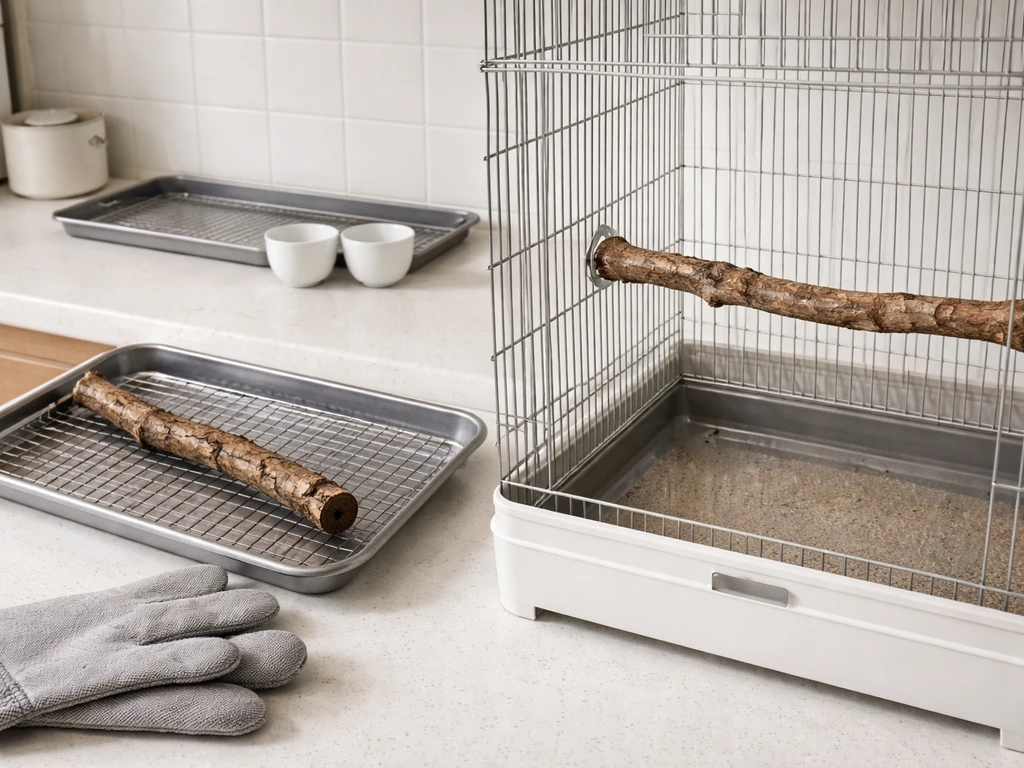
- Choose perch diameter to match your bird's size (1/2 inch for budgies, 1 inch for cockatiels, scale up for larger birds).
- If using a natural branch from outside, bake it at 200°F (93°C) for 30 minutes before placing it in the cage or on the stand.
- Install at least two perch types in the cage: one natural wood, one cotton or hemp rope perch.
- If adding a concrete perch, orient smooth side up and make sure it's not the only perch.
- Remove any sandpaper perch covers included with the cage.
- Position cage perches at different heights and spaced apart to encourage movement between them.
- Make sure no perch sits directly above another perch or above food and water cups.
- Position food and water cups to the side of the perch line, not directly below any perch.
- Place the floor stand away from the kitchen, ceiling fans, open windows, and anywhere other pets have unsupervised access.
- Lock the stand's wheels once it's in position.
- Confirm the stand base is stable and does not rock when you apply pressure from the side.
Daily use habits
- Pull out the droppings tray each morning, rinse it, and replace it before your bird's first out-of-cage session.
- Wash stainless steel food and water cups daily with soap and hot water or run them through the dishwasher.
- Check rope perches for fraying every day: if strands are loose enough to tangle a toe, replace the perch.
- Wipe down wood perches with a damp cloth when visibly soiled; let them dry fully before the bird uses them.
- Do a full cage and stand sanitize once a week, including scrubbing perch surfaces.
- Rotate perch positions every few weeks so your bird works its feet differently and you can inspect each perch surface for wear or damage.
Good perch and stand hygiene directly connects to your bird's respiratory and digestive health. Droppings sitting on perches or near food cups create bacterial and mold growth fast, especially in warm rooms. The daily tray and cup routine is genuinely not optional if you want a healthy bird. Keep it simple, keep it consistent, and you'll have a setup that works well for years.
FAQ
How can I tell if my stand placement will contaminate food or water?
If you use a floor stand, aim for a clear “no bowl under the perch line” rule. Put cups offset to the side, or use a stand with cup holders designed to sit away from the tray center, then verify with a quick test by placing the bowls at the intended height and watching where droppings land during a typical session.
What if my stand only comes with one perch, is that enough?
For most birds, use a branch-style perch plus at least one different texture (rope or concrete only as an addition). Even if a stand perch is the right diameter, a single surface type increases the chance of pressure-point buildup, so rotating perch materials weekly helps protect foot health.
Can I use a bird stand on a carpeted or slippery floor?
Yes, but only as a temporary safety measure. Set the stand on a level surface, check that the base does not rock by pushing gently with your hand, and for smooth floors add rubber feet or use a non-slip mat under the stand base. Never use a stand that slides when your bird lands.
What should I do if my bird seems stressed by the perch height?
Choose heights based on your bird’s comfort, not just your eye level. If your bird keeps backing up, hunching, or avoiding the perch, lower the perch slightly or move the stand closer to a corner so the bird has visual security.
How often should I deep-clean the stand, not just wipe it?
A wipe-down is not enough if droppings sit on the tray edges or cup rims. Use the pull-out tray daily (rinse and reassemble), and at least weekly wash stainless cups more thoroughly by soaking in hot soapy water first, then rinsing until there is no residue before drying.
How do I know when to replace a rope perch?
Rope perches should be inspected at least weekly for fraying, stiff knots, or loose fibers. If you see any strand separation or your bird is pulling fibers loose rapidly, replace the rope perch right away, since tangles can happen before you notice severe damage.
Can concrete or cement perches replace natural branches?
With concrete or cement, keep it as an extra nail-wear perch, not the only grip surface. Avoid using it as the primary perch line if your bird is showing redness or discomfort on the foot sole, and always provide softer textured perches so the feet can recover from abrasive contact.
Are powder-coated or ceramic parts safe if my bird chews them?
Powder-coated or ceramic finishes are usually fine, but the key is bird-chew resistance and chipping. If the coating chips, exposes rough metal, or produces sharp edges, remove or replace the stand component immediately rather than trying to sand it down.
Do rolling stands really need locking wheels, or is it optional?
Locking wheels matter most when your bird is on the stand. Use the locks any time the bird is actively perching, and when you move the stand, move slowly and avoid sudden turns that can shift the tray and startle your bird.
What materials should I avoid even if a product claims they are bird-friendly?
Don’t assume a “bird-safe” label means it is safe for all birds. Avoid zinc hardware and any galvanized metal that has not been confirmed bird-safe, because birds can ingest particles if chewed. When in doubt, stick to stainless steel or properly finished metal components only.
My stand includes a smooth dowel perch, what’s the best immediate upgrade?
If you can’t buy separate perches immediately, prioritize a branch perch of the correct diameter on the stand first, then add rope as soon as possible. A stand with a smooth dowel only delays good foot comfort, so upgrade the stand perch rather than trying to compensate with a different stand.
Is it better for the perch to be at my eye level or above it for taming?
For birds that are still learning taming, a perch slightly below your eye level often feels less dominant than being placed higher. If you notice repeated avoidance, freeze behavior, or tail flaring, adjust downward first, then keep the stand positioned near a wall for better confidence.
Next Articles
Define Bird Perches and Choose Safe Ones for Your Cage
Learn what bird perches are and pick safe cage perches by size, material, placement, cleaning, and foot health.
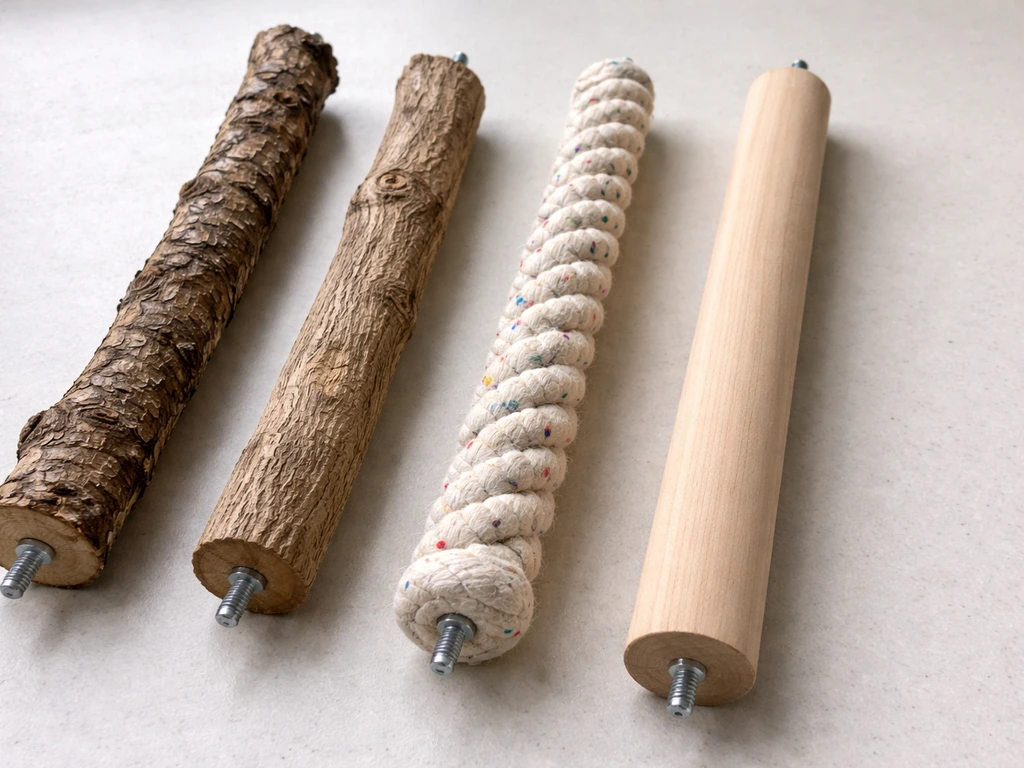
Best Perches for Bird Nails: Safe Sizes, Materials, Setup
Choose the best bird perches by material, diameter, grip, and placement to keep nails trimmed safely and prevent foot so
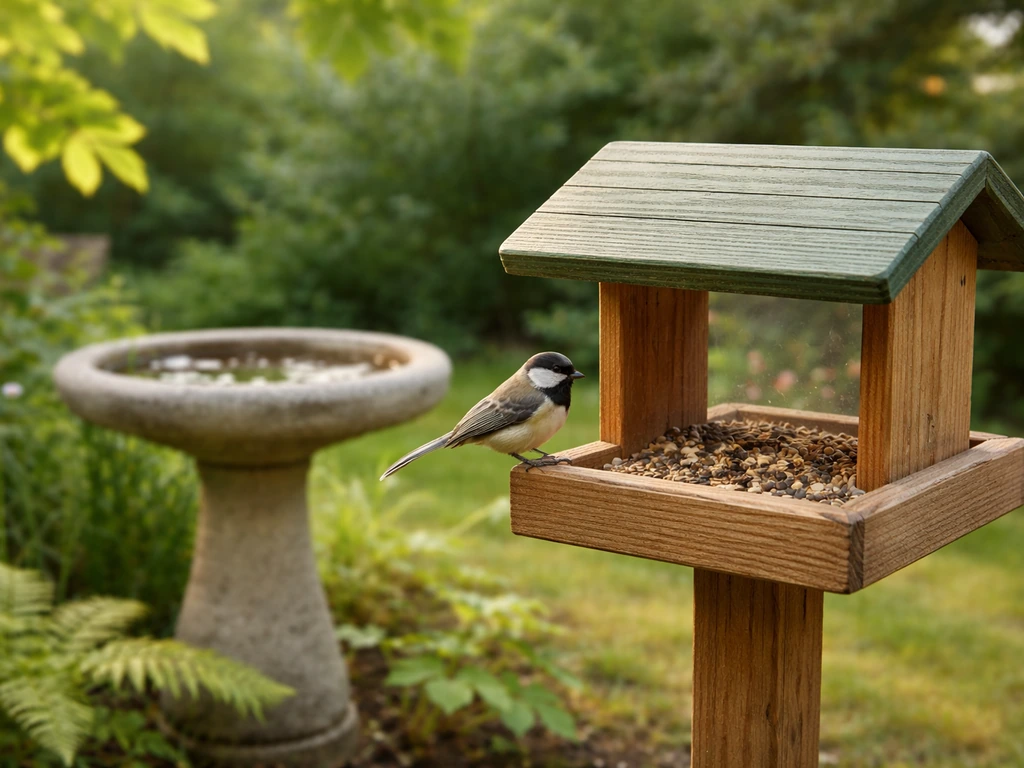
Garden Bird Checklist: Wild Species, IDs, and Tracking Tips
Ready-to-use wild garden bird checklist with IDs, field marks, tracking tips, and a bird station setup for beginners.