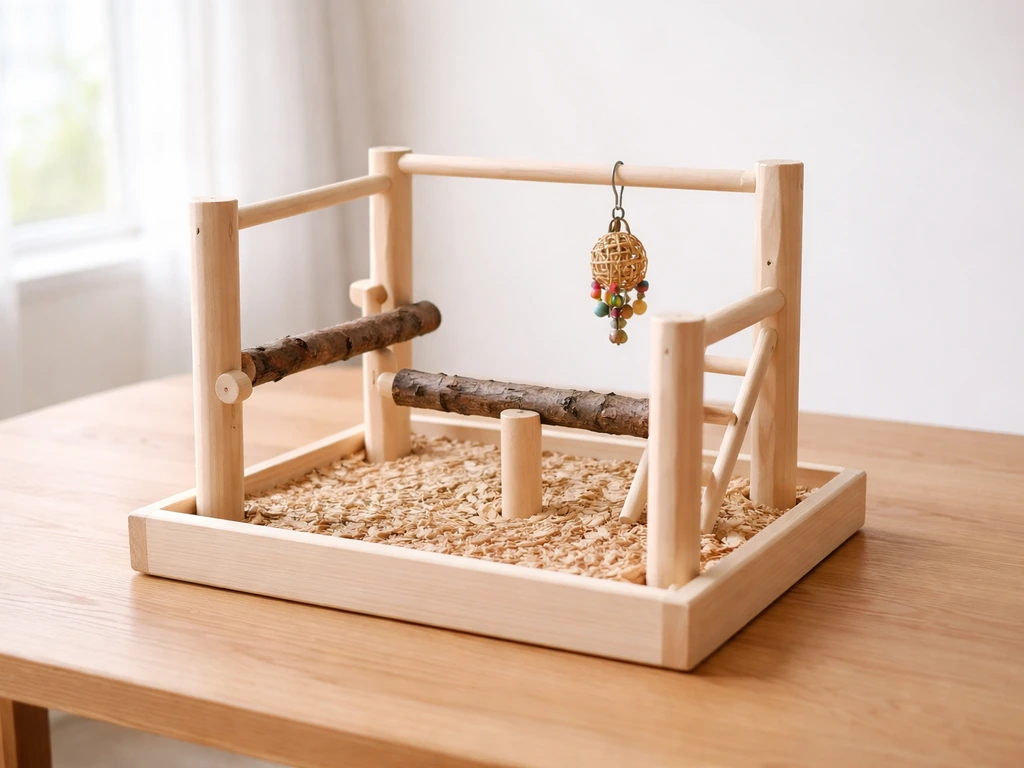
A tabletop bird play gym is a compact, freestanding perch-and-activity station that sits on a table, counter, or desk and gives your bird a safe place to hang out, play, and stretch outside its cage. For small birds like budgies, cockatiels, lovebirds, and conures, a good tabletop gym can be one of the best enrichment investments you make. It gets your bird out of the cage during supervised time, keeps it mentally stimulated, and gives you a predictable spot to bond and train without chasing the bird around the room.
Table Top Bird Play Gym Setup Guide for Safe Enrichment
Marcus Chen
14 Jun 2026
What a tabletop bird play gym actually does (and when it's worth it)
Think of a tabletop play gym as a bird's version of a living room couch. It's not a replacement for the main cage, which is your bird's home, sleeping space, and safe retreat. The gym is the "out time" destination, a spot your bird learns to associate with freedom, play, and interaction. When you open the cage door and your bird flies or climbs to the gym, that's enrichment happening in a controlled, predictable way.
For first-time owners, the biggest benefit is structure. Without a designated spot, out-of-cage time tends to go sideways: the bird lands on the curtain rod, disappears behind the TV, or ends up somewhere it shouldn't be. A tabletop gym solves that by giving your bird a compelling, familiar place to land. Most birds pick it up within a few days of consistent use.
A tabletop gym is especially worth it for: budgies and parakeets who need daily out-of-cage time but are small enough to get lost in a large floor stand; cockatiels who love a high perch with toys nearby; lovebirds who need stimulation and something to chew; and single birds without a cage companion, since solo birds need environmental enrichment even more urgently. If you have a larger parrot like an African grey or an Amazon, you'll probably outgrow a tabletop gym quickly and need a proper floor-standing bird stand instead.
Choosing size, perch type, and placement for your bird
Getting the size right
The gym needs to feel spacious enough for your bird to move around but compact enough to fit comfortably on a table without tipping. A good rule of thumb: the gym's footprint should be at least 1.5 to 2 times your bird's wingspan. For a budgie (wingspan around 10 to 12 inches), something in the 18 to 24 inch range works well. For a cockatiel (wingspan 12 to 14 inches), aim for 24 inches or wider. Height matters too since most birds feel more confident when perching above eye level, so a gym that puts your bird at or slightly above your shoulder when you're seated is ideal.
Perch diameter and texture
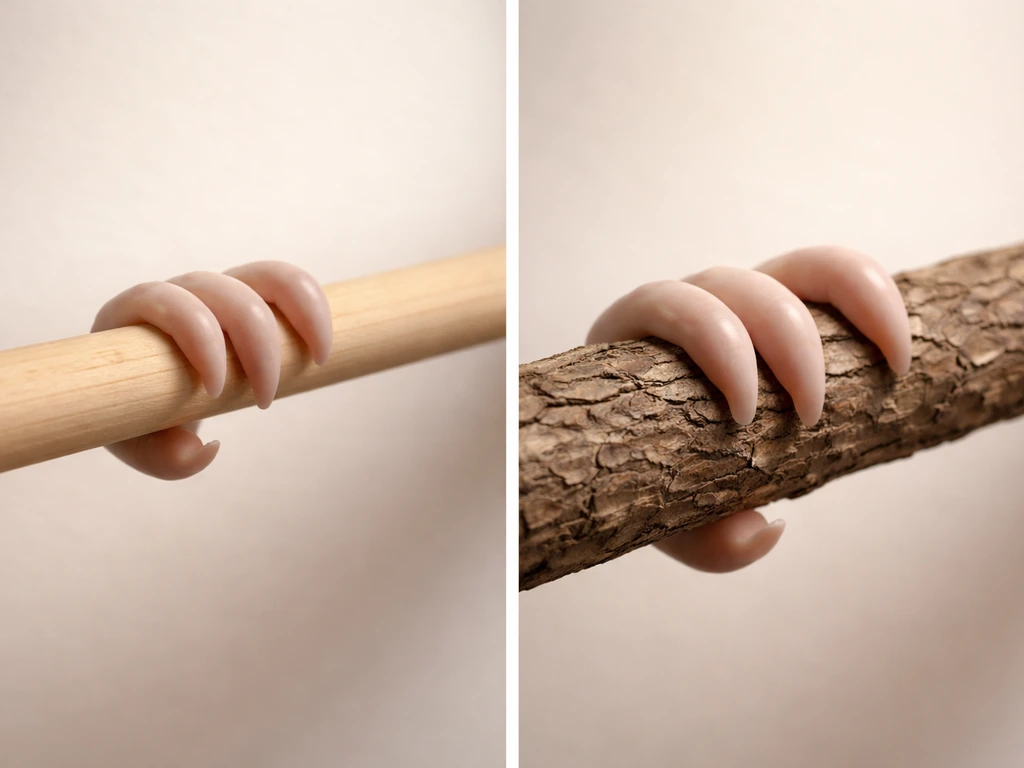
This is the part people get wrong most often. Perch diameter should match your bird's foot size so that the toes wrap about two-thirds of the way around. Too thin and the bird grips too hard (leading to foot fatigue); too thick and the toes can't grip properly, which creates the slipping and instability that Purdue University veterinary researchers link to bumblefoot. For budgies and small parakeets, aim for 3/8 to 1/2 inch diameter perches. For cockatiels and lovebirds, 1/2 to 3/4 inch. For small conures, 3/4 to 1 inch.
Texture matters just as much as diameter. Smooth wooden dowels are fine as one perch option but shouldn't be the only texture. Natural wood branches with irregular surfaces, rope perches, and occasional pumice or calcium perches give feet varied stimulation and help maintain nail length naturally. If you are also trying to support healthy growth, choosing the best perches for bird nails is a great next step nail length naturally. If you notice a bird slipping on any perch, that's worth addressing immediately, either by wrapping the perch in vet wrap or swapping it out.
Where to put the gym in your home
Placement matters more than most people expect. Avoid putting the gym near windows with strong drafts, directly under ceiling vents or fans, or in the kitchen where cooking fumes (especially from non-stick cookware) are a serious hazard for birds. Parrots.org recommends keeping play stations out of the main foot-traffic area to reduce the risk of a bird being stepped on or startled. A corner of the living room or a dedicated spot in a study or bedroom tends to work well. The bird should be able to see the main activity of the room without being in the thick of it.
Buying vs DIY: what to look for in ready-made gyms
Ready-made tabletop play gyms range from about $20 to $120 depending on size, material, and included accessories. The cheap end tends to have thin wooden dowels, lightweight bases that tip easily, and toys that fall apart quickly. The better mid-range options (think $40 to $80) usually have a solid base, a combination of perch heights, and a few attachment points for hanging toys. They're a good starting point if you're not sure whether your bird will take to gym time.
What to actually look for when buying: a base that's heavy or wide enough not to tip when your bird lands or hangs off one side; perches made from untreated natural wood or food-safe materials (avoid painted or lacquered dowels); stainless steel hardware throughout, since galvanized or zinc-coated metal can leach toxins if a bird chews on it; and a design that's easy to disassemble for cleaning. Avoid gyms with fabric parts that can't be washed, any rubber or latex components (birds chew everything), or extremely flimsy toy attachment rings.
Common product pitfalls to watch for: gyms marketed with "decorative" paint or varnish on the wood (strip it or skip it), rope perches that are so loosely woven that toes can get caught in loops, and gyms that arrive with all perches at the same height and diameter, which eliminates one of the main benefits of having multiple surfaces.
DIY gyms are genuinely a good option if you're handy or just like tinkering. The basic components are: a flat or weighted base (a scrap piece of hardwood or a ceramic tile works), a vertical center post of natural branch or untreated hardwood dowel, horizontal arm perches at two or three heights, and hardware to attach everything (stainless steel screws and cup hooks).
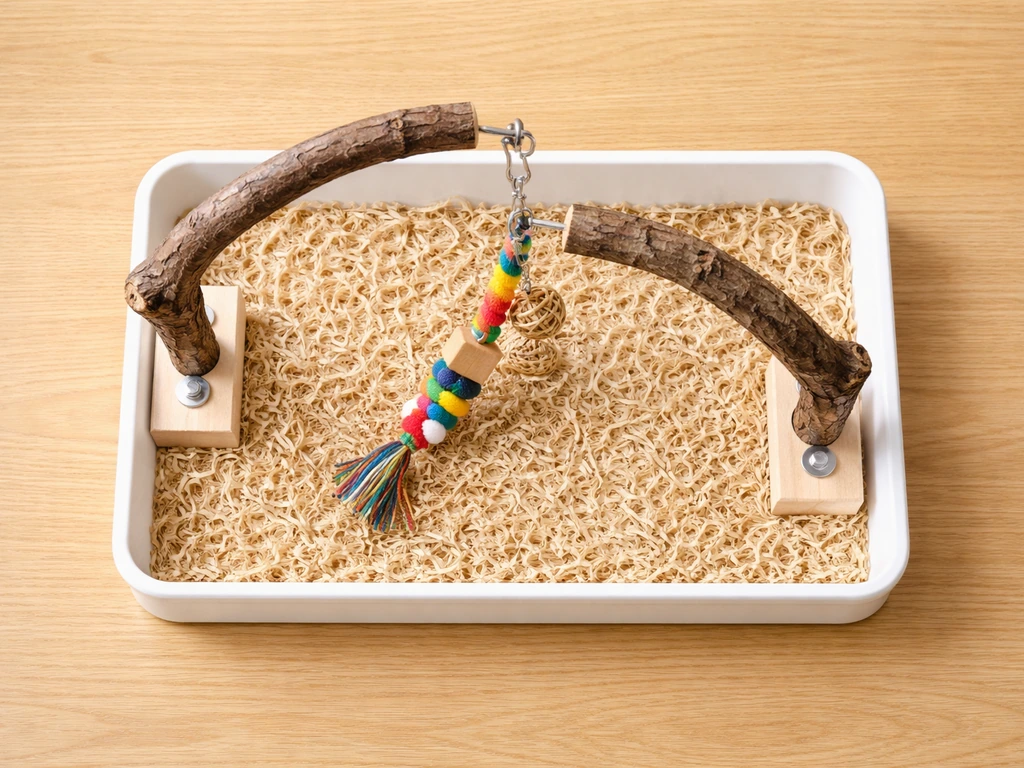
A flat top bird table can work as a simple DIY platform for building a stable tabletop play area that your bird can explore safely DIY gyms are genuinely a good option. You can add a swing, a few toy hanging rings, and a small stainless steel cup holder for treats. The total material cost is usually $10 to $25.
The main advantage of DIY is that you can size it exactly for your bird and swap out components easily.
How to set up and assemble safely
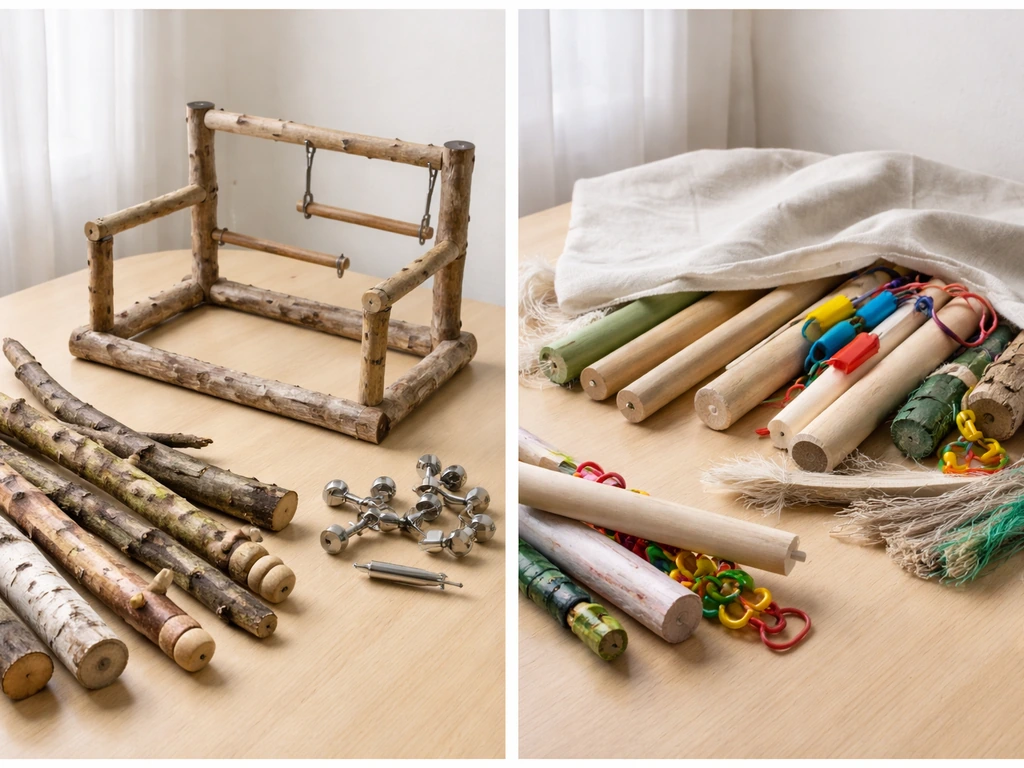
Materials to use (and avoid)
| Material | Safe to use? | Notes |
|---|---|---|
| Natural hardwood branches (apple, birch, willow, manzanita) | Yes | Ideal; varied texture, pesticide-free if sourced correctly |
| Untreated pine dowels | Yes (with caveats) | Safe if unfinished; some birds are sensitive to pine resins |
| Stainless steel hardware | Yes | Best choice for all metal parts |
| Galvanized or zinc-coated metal | No | Can cause zinc toxicity if chewed |
| Painted or varnished wood | No | Most paints and varnishes are toxic to birds |
| Cotton rope (tightly woven) | Yes (supervised) | Monitor for fraying; replace when loose threads appear |
| Rubber or latex components | No | Birds chew and ingest pieces; choking and toxicity risk |
| Sisal rope | Yes | Good for texture; less fraying risk than cotton |
| Treated/pressure-treated lumber | No | Chemical treatments are toxic |
Stability and assembly
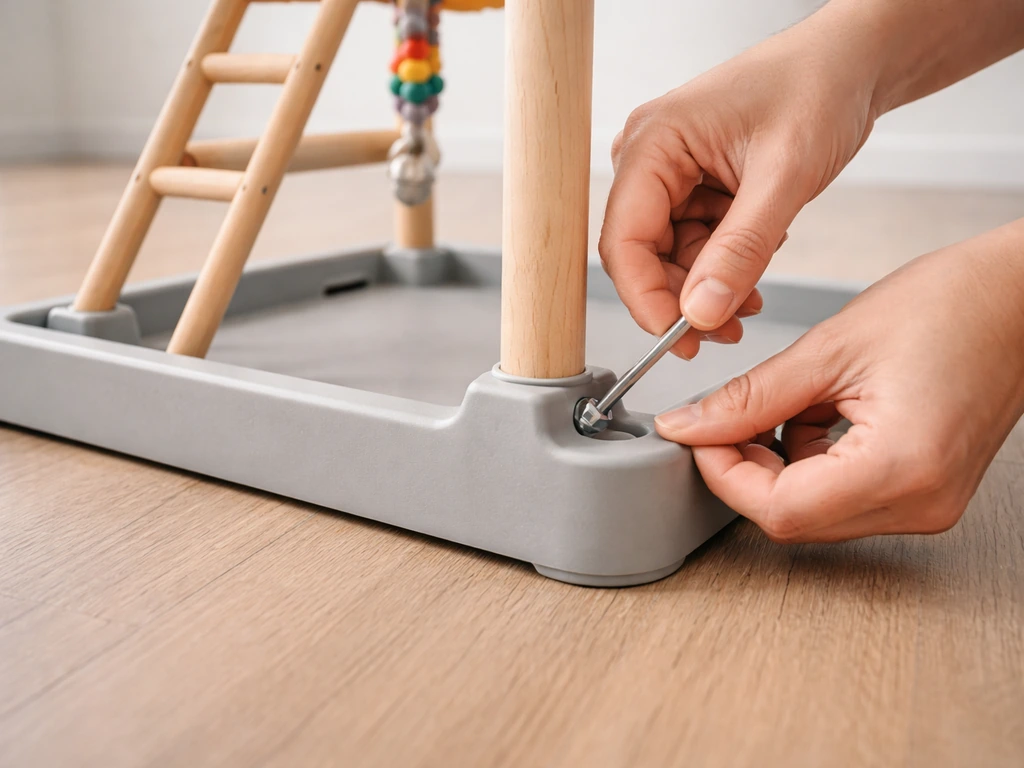
Stability is non-negotiable. A gym that tips when the bird lands hard or hangs off one side is dangerous, not just annoying. For ready-made gyms, test stability before your bird ever uses it by pressing down on each perch end with moderate pressure. If the base lifts on the opposite side, add weight to the base (a sandbag, a flat piece of marble tile, or even a heavy book taped underneath works fine as a temporary fix until you find a better solution). For DIY builds, a wider base footprint always beats a heavier one, since spreading the weight over a larger area resists tipping more effectively.
When assembling, double-check every connection point before your bird touches the gym. Loose screws, wobbly perch joints, and poorly attached toy hooks are the most common assembly hazards. If you're using cup hooks for toy attachments, twist them fully closed with pliers so there's no gap a toe or beak can get caught in. Any quick-link rings should be closed tight. Revisit these connections weekly because birds loosen hardware surprisingly fast.
Clearance and placement on the table
Leave at least 12 inches of clearance above the highest perch point to the ceiling or any overhead obstruction. Birds often launch upward when startled, and clipping the ceiling or a shelf is a real injury risk. Make sure the table surface beneath the gym is easy to clean since birds will drop food, molt feathers, and produce droppings during gym time. A waterproof table liner or a sheet of newspaper under the base makes cleanup much faster.
Enrichment ideas: toys, foraging, and rotation
The gym is only as good as what's on it. A bare perch is better than nothing, but a gym loaded with rotating enrichment items is where the real behavioral benefits kick in. The goal is to give your bird something to chew, something to forage, something to swing on or climb, and something to interact with in a new way each week.
Toy types that work well on tabletop gyms
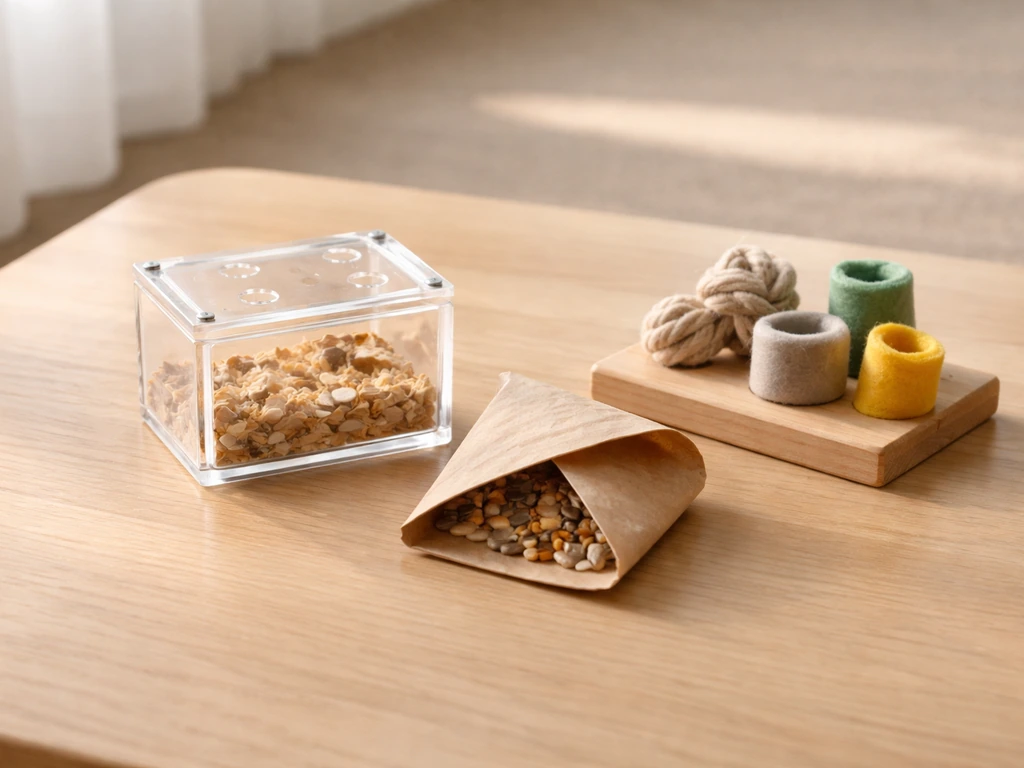
- Foraging toys: small acrylic or wood boxes with hidden treats inside, or a folded paper "taco" with seeds tucked in the fold. Foraging is the single highest-value enrichment activity for most parrots and parakeets.
- Chew toys: untreated softwood blocks, cork, palm wood strips, or cuttlebone attached to a ring. Chewing satisfies a natural behavior and keeps beaks in good shape.
- Swings and boings: a simple swing attached to the top arm of the gym adds movement, which most small parrots love. A boing (a coiled rope perch) doubles as both a perch and a climbing toy.
- Puzzle feeders: small treat-dispensing balls or foot toys that hold a piece of millet or a nut. These work especially well for cockatiels and lovebirds.
- Mirror toys (use cautiously): fine for single budgies in small doses, but avoid for birds showing obsessive mirror behavior or for birds you're trying to bond with you rather than a mirror reflection.
- Foot toys: small wooden pieces, beads on a string, or crinkled paper balls left on the gym's base platform for the bird to pick up and manipulate.
Rotation strategy
Rotate toys on a weekly or every-other-week schedule rather than leaving the same items out permanently. Birds habituate quickly to familiar objects and stop engaging with them. Keep a small bin of 6 to 10 gym toys and cycle three or four of them out each week. Something that was ignored two weeks ago will often get enthusiastic attention when it reappears. This also makes your toy budget go further since you're not constantly buying new items.
Foraging is the enrichment category most beginners underuse. Instead of putting seeds or pellets in a bowl on the gym, hide them inside a folded piece of newspaper, tuck them into a vine ball, or wedge them between the bark of a natural perch branch. Even 10 minutes of active foraging does more for a bird's mental health than an hour of sitting on a bare perch.
Daily routine, training tips, and safety checks
Building a daily gym routine
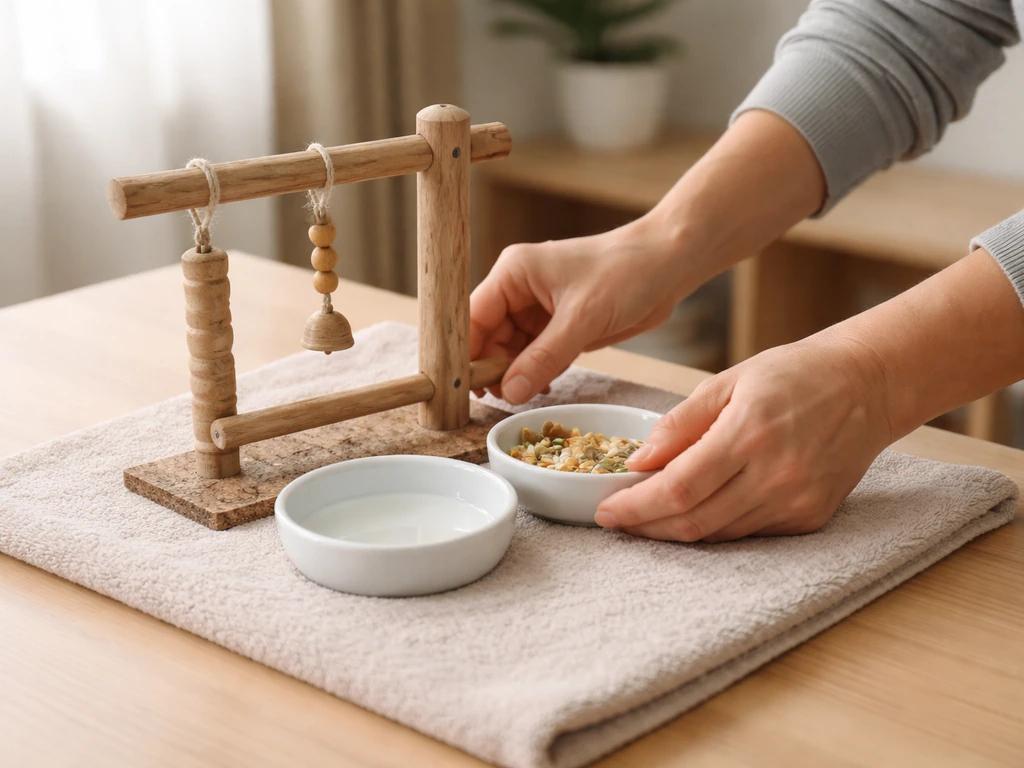
Consistency is the single biggest factor in making gym time work. Birds are creatures of routine, and a gym session at roughly the same time each day becomes something they actively anticipate. A practical structure: 30 to 60 minutes of supervised gym time once or twice a day, during periods when you're home and in the same room. Morning and late afternoon tend to work well since most birds are naturally more active at those times.
Never leave your bird on the gym and leave the room unattended. Parrots. org also advises never to leave a parrot out of its cage unattended unless the area is [100% bird-proofed](https://www. parrots.
org/wp-content/uploads/2024/02/HangingAndGymToys. pdf), and it recommends placing play stations and perches away from main foot-traffic and drafts. This isn't overcaution: it's the standard guidance from avian welfare organizations, and it's grounded in real risk. A bird can get a toe caught in a toy ring, fall off a perch, or encounter a household hazard (a ceiling fan, another pet, an open window) within minutes of being left alone outside the cage.
Out-of-cage time is supervised time, full stop. When you need to step out even briefly, put the bird back in its cage first.
Getting your bird comfortable with the gym
Some birds walk straight onto a new gym and start exploring. Most don't. If your bird is hesitant, start by placing the gym near the cage (but not touching it) for a few days so the bird can observe it from a safe distance. Then place a favorite treat on the gym's lowest perch and let the bird investigate on its own terms. Use step-up training to cue the bird onto the gym rather than placing it there by force. Once the bird steps up voluntarily a few times, it usually takes to the gym quickly. The whole acclimation process typically takes three to ten days depending on the bird's personality.
Cockatiels and budgies generally warm up to new furniture faster than lovebirds, which can be suspicious of new objects for longer. If you have a particularly cautious bird, putting a familiar perch or favorite toy from the cage onto the gym can help bridge the gap.
Maintenance, hygiene, and weekly safety inspection
Hygiene on the gym matters more than most people expect. blank" rel="noopener noreferrer">Change the gym's water or treat cup twice daily if you're using one, since contaminated water is a fast route to bacterial illness. Clean the gym base and any flat surfaces daily with a bird-safe disinfectant (diluted white vinegar works fine; avoid anything with phenols, chlorine at high concentrations, or heavy fragrance). Natural wood perches can be scrubbed with a stiff brush and hot water, then air-dried fully before the bird uses them again. Rope perches that can't be fully cleaned after visible soiling should be replaced.
Do a quick safety inspection before every gym session. It takes about two minutes and catches most hazards before they become problems.
- Check all perch connections: wiggle each perch to confirm it's secure and not loosening.
- Inspect rope and fabric toys for fraying or loose loops large enough for a toe to get caught in.
- Check metal hardware (hooks, rings, quick-links) to confirm they're fully closed.
- Look at the base: confirm the gym isn't wobbling or sitting unevenly on the table.
- Scan for anything new in the environment near the gym (a candle, a new cleaning product, a scented plug-in) that could off-gas fumes near the bird.
- Check that ceiling fans in the room are off.
- Confirm any other pets are secured in a separate space before letting the bird out.
When to retire the gym (or a component)
Replace any perch that shows deep cracks or splinters, any toy with broken or sharp edges, or any rope component that's fraying badly. If the base structure itself is cracked or the joints are permanently loose, it's time for a new gym rather than a patch job. A gym your bird has outgrown (literally too small to move around comfortably, or with perches now too thin for growing feet) should be upgraded rather than tolerated. The gym is doing its job only when the bird can genuinely move, explore, and play on it.
If you want to go deeper on specific perch types and what makes a good perch surface for different species, the topic of bird perches in general covers a lot of useful ground. And if you're thinking about expanding beyond the tabletop setup to a larger dedicated space, looking into proper bird stand options or even a dedicated outdoor porch or patio setup are natural next steps as your bird gets more confident out-of-cage time. If you want to take things further, a better bird deck porch patio setup can give your bird safe, enriching outdoor time while you keep control of the space outdoor porch or patio setup.
FAQ
Can I leave my bird’s table top bird play gym out all day instead of setting up only during supervised time?
It’s best to store or cover the gym when you’re not actively supervising. Birds will chew toys, explore attachments, and potentially catch a toe on loose rings even if the “out time” isn’t planned. If you do keep it out, remove dangling toys and anything the bird can shred, and do a safety check before every use.
What should I do if my bird won’t step up onto the table top bird play gym?
Start with the lowest perch treated as a “training target,” place a high-value treat there, and use step-up cues without forcing the bird onto higher sections. If the bird panics when it gets near the base, move the gym closer to the cage and shorten sessions to 2 to 5 minutes, then repeat later in the day.
Is it safe to add a swing or hammock to a table top bird play gym?
Yes in moderation, but prioritize stable attachment and safe clearance. Avoid swings with fabric that can trap claws, inspect zip ties or quick links for full closure, and test the swing by hand for wobble. Also ensure there is at least 12 inches of overhead clearance above the highest point after the swing moves.
How do I choose perch heights for a table top bird play gym if my bird is smaller or older?
Match heights to your bird’s ability to step up comfortably. For very young, older, or reluctant birds, keep the highest perch only slightly above the bird’s usual perching level and focus first on a safe “ladder” effect (gradual steps across arm perches). Increase height slowly only after your bird navigates all perches confidently.
Can I put water or a food bowl on a table top bird play gym?
You can, but use a secure cup holder and avoid letting the bird linger unsupervised. Use small, shallow containers that are easy to remove and clean, and never use porous dishes that are hard to sanitize. Change any water or treats twice daily, and remove food promptly after the session to reduce bacterial growth.
What’s the safest way to clean a table top bird play gym without harming the bird’s feet and beak?
Daily wipe flat surfaces and rinse wood thoroughly, then air-dry completely. If you use diluted white vinegar, rinse with plain water afterward to reduce residue, and keep birds away until fully dry. Replace rope perches that cannot be fully cleaned after visible soiling rather than trying to “spot clean” them.
How can I tell if my perch diameter or texture is causing foot problems?
Watch for repeated slipping, toes splaying, or the bird gripping hard for long periods. If you see redness, thickened areas, or a persistent “brace” posture on one perch, switch that perch immediately and reassess diameter and surface variation. Also check alignment so the perch is level and not angled upward in a way that forces extra gripping.
My tabletop base feels stable at first, but it wobbles when the bird hangs off one side. Is it usable?
If the base shifts when your bird hangs, it should not be used until corrected. Hanging creates a higher leverage force than landing, so the temporary stability test needs to include moderate off-center pressure. Add weight or switch to a wider base, then retest with the same pressure before returning the bird to it.
Are there any bird species limits for using a table top bird play gym?
Tabletop gyms are most practical for small birds, and you may need a floor-standing stand sooner for larger parrots. A key limitation is chew strength and grip leverage, larger birds can unbalance lightweight bases and shred softer parts faster. If your bird can reach and chew the hardware, choose only models with fully enclosed, high-durability attachments or build a sturdier setup.
How often should I rotate toys, and what if my bird gets stressed by new items?
Rotate on a weekly or every-other-week schedule, but introduce changes gradually. If the bird seems wary, keep one familiar core toy (a favorite chew or foraging item) and add only one new item at a time. Remove toys that cause frantic climbing or repeated toe catching during the first few sessions.
What are the most common safety mistakes with attachments like toy rings and cup hooks?
Loose or partially closed quick links, cup hooks not twisted fully closed, and rings that can snag toes are the big ones. After assembly, do a tug test on every attachment, then do a fast session-start inspection before each use. Recheck weekly because birds often loosen hardware through climbing and chewing.
How can I make foraging safer and less messy on a table top bird play gym?
Use enclosed or partially contained methods, like folded paper or wedging treats between natural wood textures, and keep a dedicated “cleaning zone” liner under the base. Avoid crumbly foods that fall in large quantities onto electronics or rugs. Limit foraging sessions to what you can clean immediately afterward, and wipe up spills the same day.
Next Articles
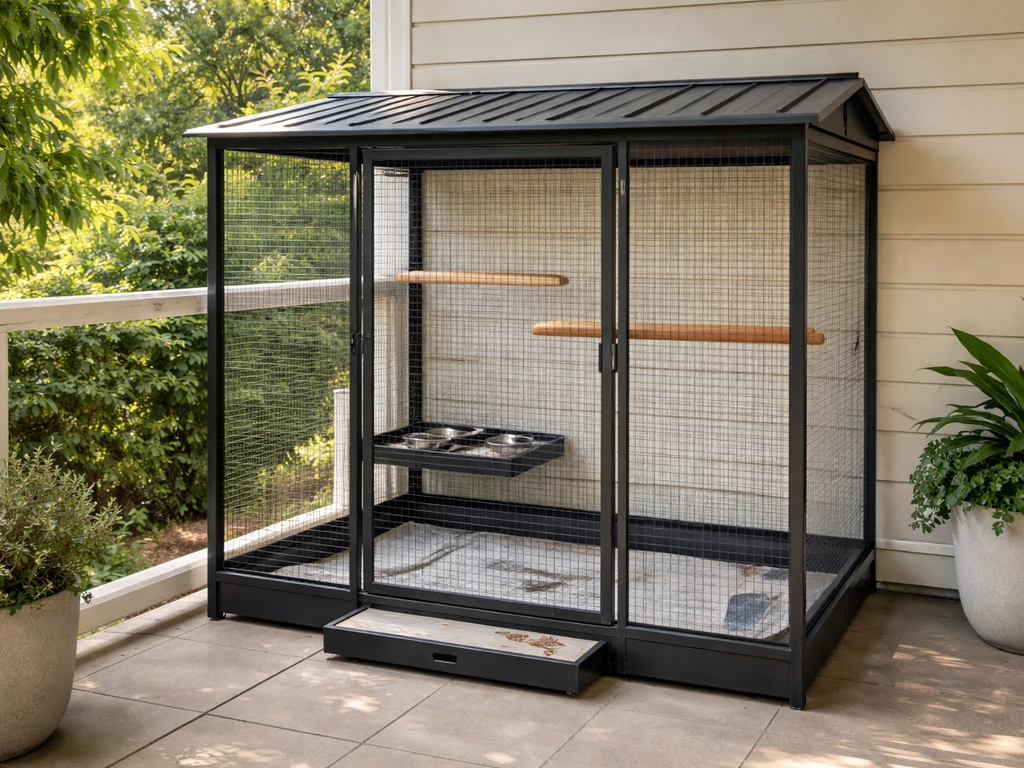
Better Bird Deck Porch Patio Setup: Beginner Guide
Step-by-step setup for a better bird deck porch patio: species choice, weatherproofing, predator-proofing, daily care, a
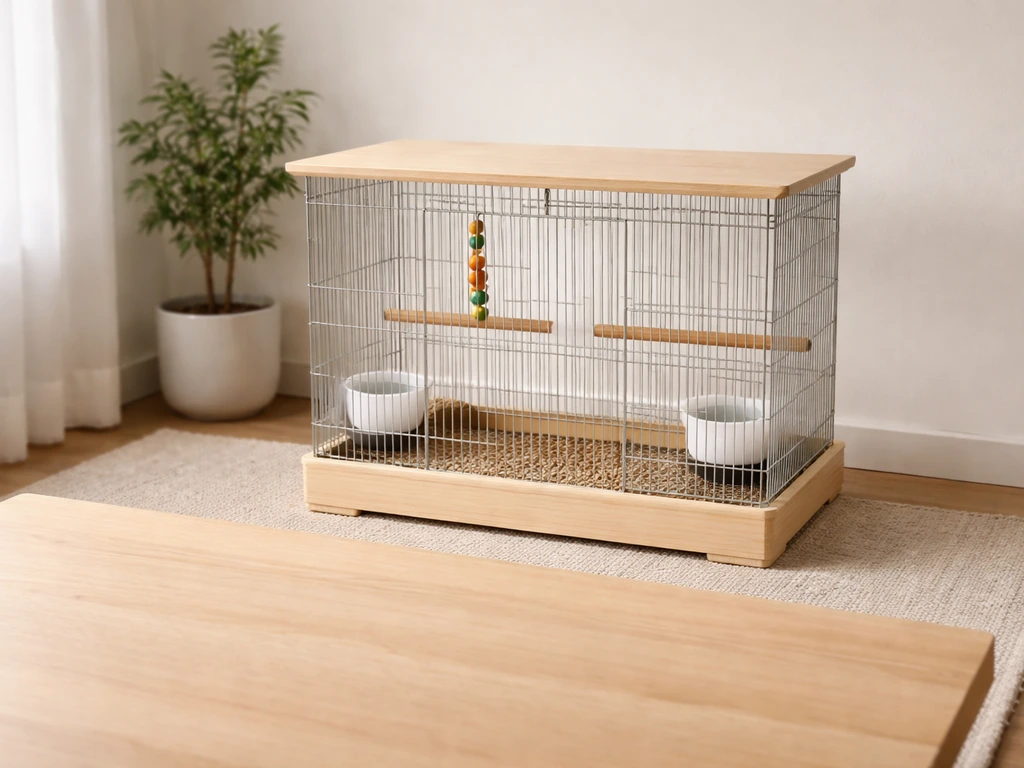
Flat Top Bird Table Guide: Buy, Set Up, and Care Safely
How to buy, place, and safely care for a flat top bird table, with setup tips, checklist, and cleaning guidance.
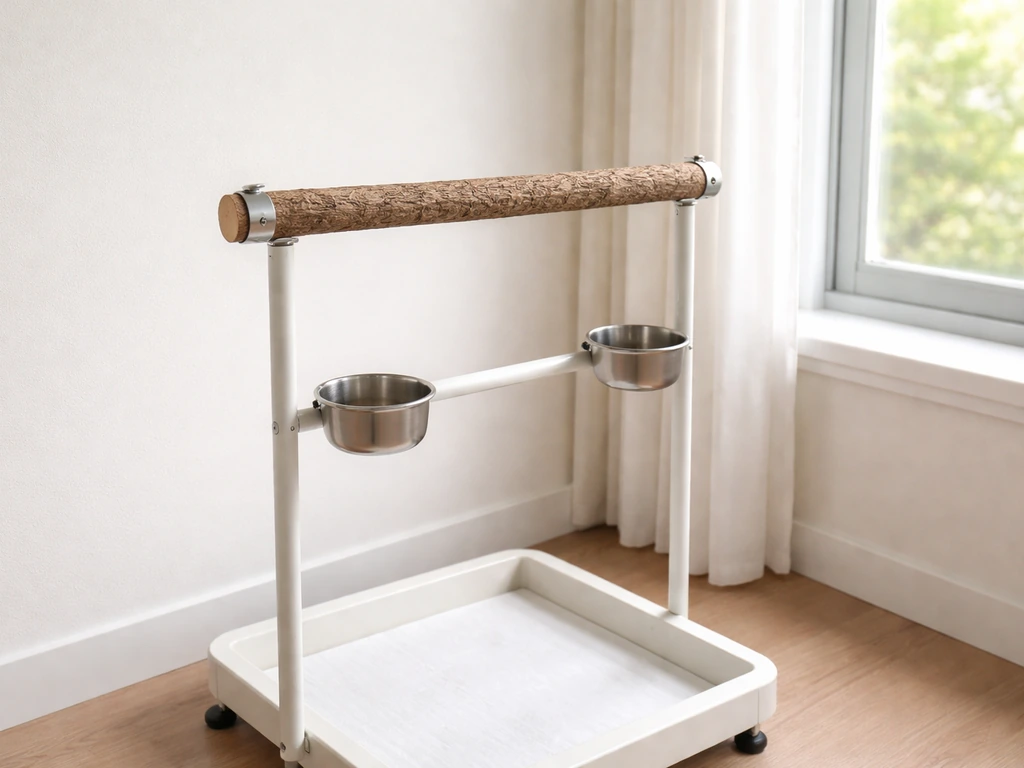
Best Bird Stands Guide for Beginners: Size, Setup, Perches
Beginner guide to choosing the best bird stands: size, placement, safe perches, mounting, and a simple setup checklist.