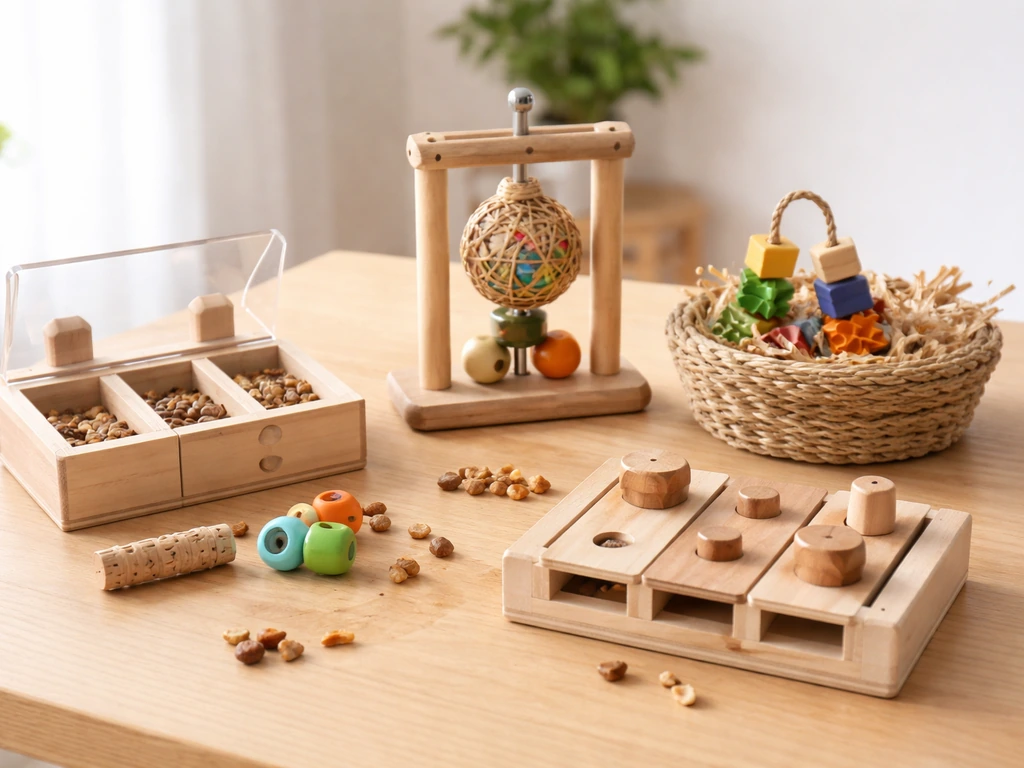
For pet birds, the best "puzzles" are foraging and activity toys that hide food or treats inside, requiring your bird to manipulate, slide, lift, or pry things open to get the reward. If you are shopping around, these same ideas are the core of many guides to the best bird toys. These are not jigsaw puzzles for humans with bird pictures on them. They're hands-on enrichment tools, and the right one depends on your bird's species, beak strength, and current confidence level. A good beginner pick for small birds like parakeets or cockatiels is a simple wooden foraging box with a sliding door or a cupcake-liner food cover. For larger parrots, a multi-compartment puzzle box with removable pegs or spinning wheels is a better challenge. Start easy, watch your bird closely the first few sessions, and level up from there.
Best Bird Puzzles: Choose Safe Enrichment for Your Bird
Jigsaw puzzles vs. bird puzzle toys: what we're actually talking about
If you searched "best bird puzzles" hoping to find a 500-piece jigsaw of a scarlet macaw, that exists, but it's not what bird owners typically mean by this term. In the pet bird world, a "puzzle" is any toy that makes your bird work for its food or reward. Think of it as the bird equivalent of a puzzle feeder for dogs. The goal is mental stimulation, problem-solving practice, and slowing down mealtime in a healthy way.
Retailers like Chewy categorize bird puzzle toys as a distinct enrichment type, separate from chew toys or exercise toys. The defining feature is that the bird has to figure something out, whether that's lifting a flap, unscrewing a cap, pulling a drawer, or pushing a ball out of a hole to access hidden food. Lafeber's foraging education materials group puzzle boxes, kabob skewers, and piñatas all under this umbrella. The World Parrot Trust refers to them as "foraging and puzzle toys" interchangeably, because foraging (searching for food) is the core behavior they all tap into. So for our purposes: bird puzzle toy equals foraging enrichment toy that requires problem-solving to access a reward.
Best puzzle types matched to your bird's species
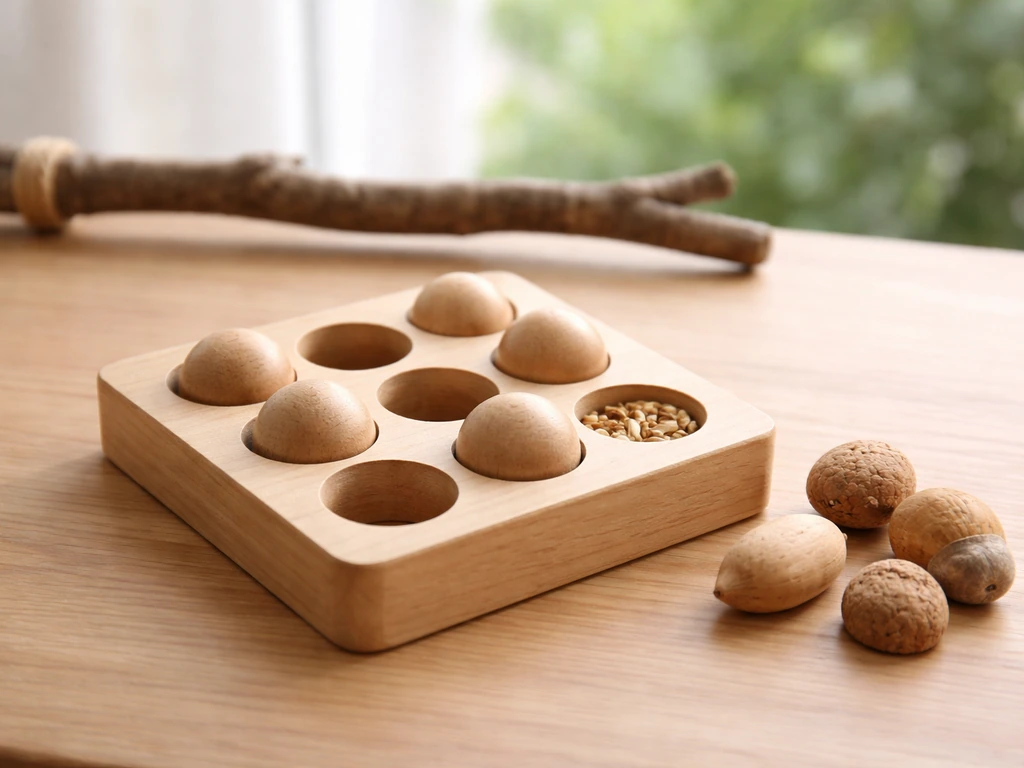
Not every puzzle toy works for every bird. A heavy-duty parrot puzzle built for a macaw will intimidate a small finch, and a delicate paper-based forager will get destroyed in about 30 seconds by a cockatoo. Here's how to match puzzle style to bird type.
Small songbirds and finches
Finches and small songbirds are naturally foragers, but they're easily spooked by novel objects. For these birds, skip the hardware-heavy puzzle toys entirely at first. The best starting option is something soft and familiar: a paper cupcake liner placed over their food dish so they have to move it to eat. You can also fold a small piece of paper around a seed cluster. These are genuinely effective, practically free, and low-stress. As they gain confidence, you can introduce small wooden foraging boxes with a single sliding panel. Keep everything bird-sized and lightweight.
Parakeets and budgies
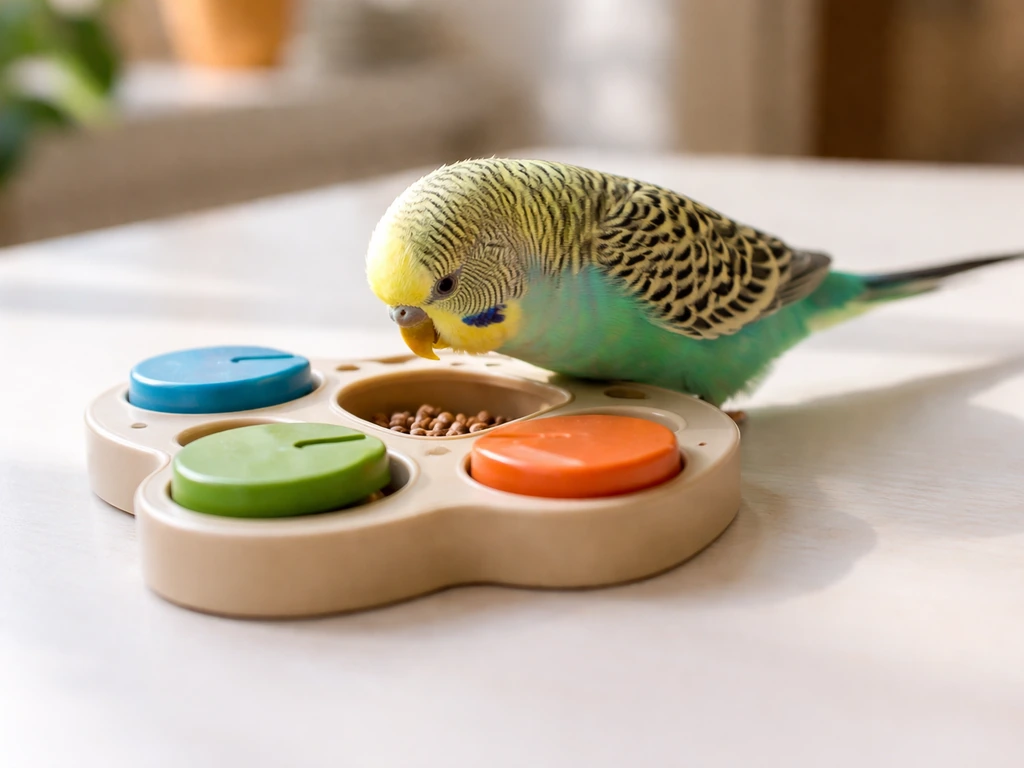
Parakeets are curious and nimble, which makes them great candidates for beginner puzzle toys. A simple foraging toy with small cups or compartments they can flip open works well. Look for toys where the bird interacts with one visible component at a time, nothing with too many moving parts simultaneously. Puzzle toys sized for budgies (about 4 to 6 inches) with wooden or acrylic sliding blocks are a solid step up from paper foragers. If you're already exploring other toy types for budgies, puzzle toys slot in naturally alongside chew toys and shreddable items in a rotation. If you want the best bird toys for budgies, focus on puzzle feeders that match your bird’s size and beak strength.
Cockatiels
Cockatiels sit in a sweet spot: smart enough to work through a multi-step puzzle, but not so powerful that they'll destroy it in a day. Wooden foraging boxes with two to three compartments, or toys with spinning dials covering hidden treats, tend to hold their interest. Because cockatiels like to use their feet as well as their beaks, foot toys with a treat pocket inside can double as puzzle enrichment. Cockatiels can share some puzzle formats with parakeets but can handle slightly larger components and more steps.
Conures and small to mid-size parrots
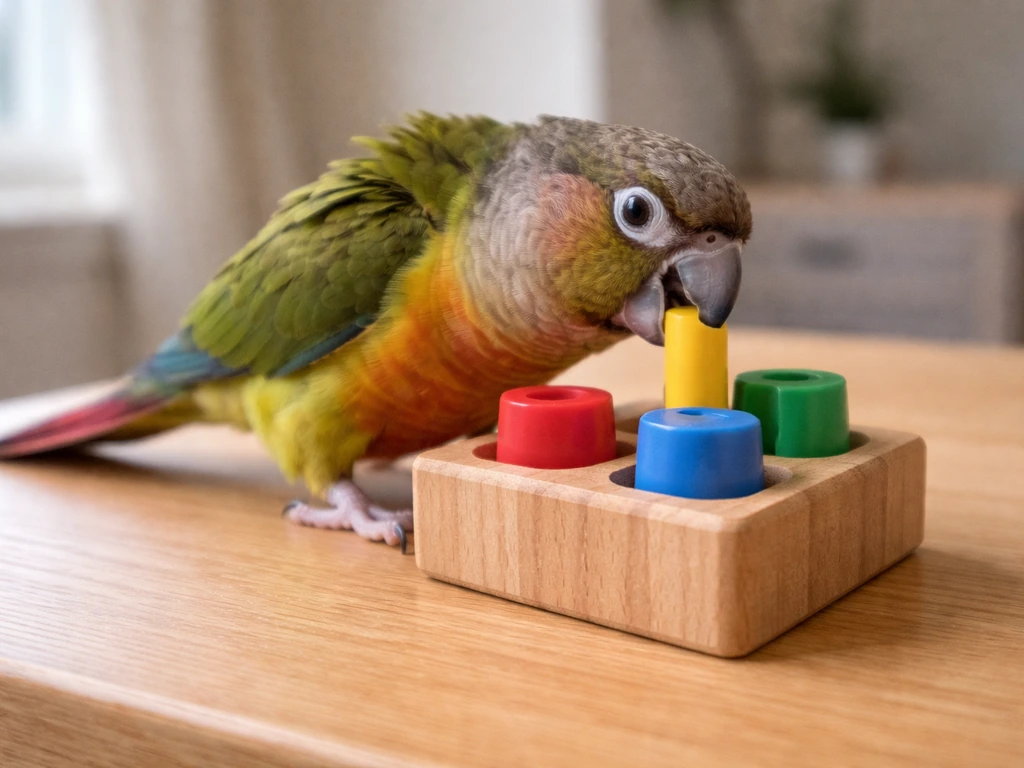
Conures are enthusiastic and can be rough with toys. They need puzzle toys made from tougher materials: thicker wood, heavy-duty acrylic, or stainless steel components. Multi-level foraging boxes where they pull drawers or unscrew plugs are great. Piñata-style puzzle toys (tightly wrapped treat bundles they have to disassemble) also work well for conures because destruction is part of the fun. If you're already picking out other enrichment items for conures, puzzle toys are a natural complement to the chew and shred toys that category tends to favor.
Larger parrots (African greys, amazons, macaws, cockatoos)
Large parrots need robust, complex puzzles. They can work through multiple steps: opening a latch, then sliding a drawer, then removing a cap. Look for puzzles marketed specifically for large parrots, built from thick hardwood or food-grade acrylic, with stainless steel hardware. These birds are smart enough to solve basic puzzles quickly, so you'll need to rotate and increase difficulty regularly. A puzzle that takes a cockatoo under two minutes to solve has already served its purpose and needs to be swapped out.
| Bird Type | Best Puzzle Style | Materials | Complexity Level |
|---|---|---|---|
| Finches / small songbirds | Paper foragers, single-step cover toys | Paper, soft wood | Level 1 (beginner) |
| Budgies / parakeets | Sliding block feeders, flip-cup toys | Light wood, safe acrylic | Level 1-2 |
| Cockatiels | Multi-compartment boxes, spinning dials | Wood, acrylic | Level 2 |
| Conures | Pull-drawer boxes, piñata wraps | Thick wood, heavy acrylic | Level 2-3 |
| Large parrots | Multi-step latch/screw puzzles, complex foragers | Hardwood, stainless steel, food-grade acrylic | Level 3-4 |
Picking the right difficulty and physical size
Difficulty and size are the two variables that beginner bird owners most often get wrong. Here's the honest version: almost everyone starts too hard and too big. When you buy a puzzle that's too complex for your bird's current skill level, they ignore it or get frustrated. When the toy is too large, it becomes physically intimidating, especially for smaller birds. Chewy's foraging category specifically calls out matching puzzle complexity to species and beak strength, and that's genuinely the right framework.
For difficulty, start one level below what you think your bird can handle. If you watch your bird figure out a new puzzle in under five minutes on day one, that's fine, it means they enjoyed a confidence-boosting win. You can increase the difficulty in the next session. If your bird doesn't interact with the puzzle at all after three to five sessions, it's likely too hard or too unfamiliar, not that they're uninterested in enrichment.
For size, a general rule is that the toy should not be larger than your bird's body length when hung or mounted. For foot toys and flat foragers, aim for something the bird can comfortably hold or stand near without it dominating their space. Gaps and openings in the puzzle should never be large enough for your bird's head or foot to slip through and get stuck, and the World Parrot Trust specifically flags checking all new toys for places where toes, legs, or heads can get caught before offering them to your bird. American Humane also emphasizes supervising pets when they play with new toys to reduce the risk of injury Gaps and openings in the puzzle should never be large enough for your bird's head or foot to slip through and get stuck.
Safety and quality checklist before you let your bird near it
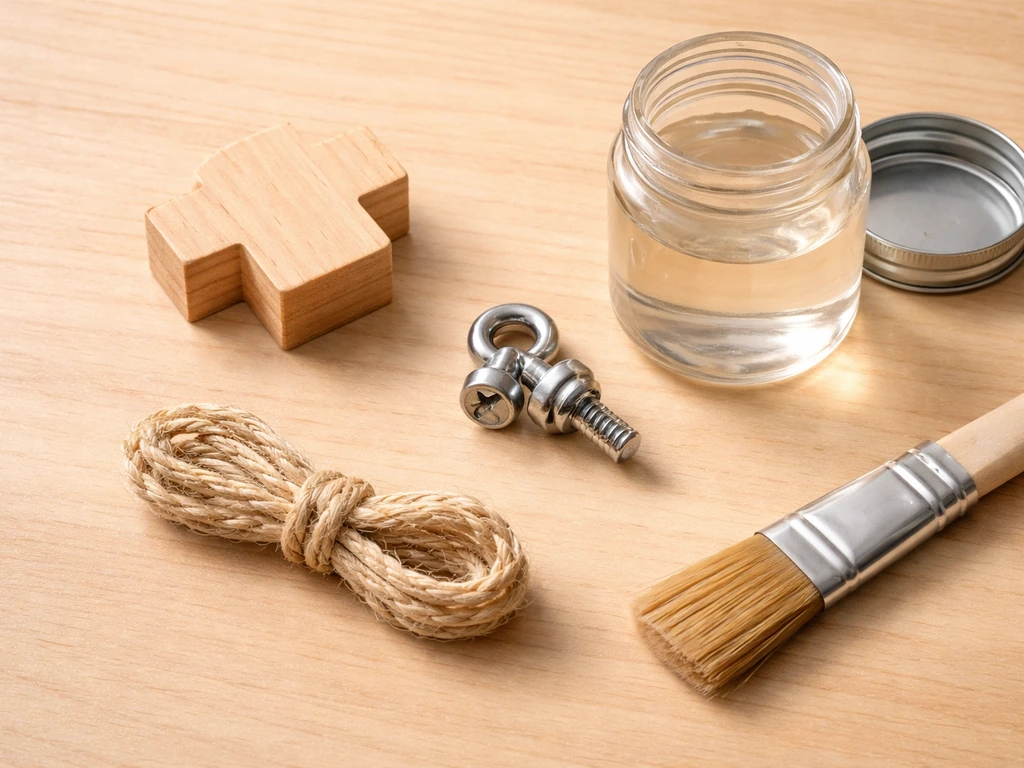
This is the part most beginners skip, and it's the part that matters most. Before any puzzle toy goes into your bird's space, run through this checklist. It takes two minutes and could prevent a serious injury or poisoning. Best Friends Animal Society also cautions to avoid bird toys with lots of small removable parts or metal attachments that could be twisted, tangled, or have toxic metals.
- Materials labeled bird-safe or non-toxic: Check that wood is untreated and unvarnished, or finished with bird-safe paint only. Acrylic should be food-grade. Avoid any toy where the coating looks like it could flake or chip.
- No toxic metals: All metal hardware (clips, chains, connectors) must be lead-free and zinc-free. This rules out most craft-store hardware and costume jewelry components. Stainless steel is the gold standard. Copper, galvanized steel, zinc, and chrome plating are all risks.
- No loose strings or fraying rope: If the toy has any rope or fabric element, inspect it before every use. VCA explicitly warns that loose strings from unraveling rope toys can wrap around toes or legs and cut off circulation. Remove rope toys the moment fraying begins.
- No parts small enough to swallow: Any piece your bird could pull free and swallow is a choking or poisoning hazard. If you can pull a component off with your hands, assume your bird can too, and that's a problem.
- No bell clappers or small ringing inserts: Many commercial bird bells have internal clappers that can be pulled out and swallowed. Check that any bell on or near the puzzle has a fixed, non-removable clapper or skip bells entirely.
- Gaps and openings checked: Confirm that no opening is large enough to trap a toe, foot, or head. This applies to rings, loops, chains, and any structural gap in the puzzle body.
- Attachment hardware is secure: If the toy hangs, use a stainless steel quick link with a screw-clasp closure. Avoid S-hooks, which birds can pry open. The World Parrot Trust specifically recommends screw-clasp quick links for safe hanging attachment.
- Supervise the first session: Regardless of how safe a toy looks, watch your bird interact with it for the first full session. You'll catch any unexpected risks and can intervene if something goes wrong.
How puzzle toys fit into a real daily care routine
The enrichment value of puzzle toys only shows up if you actually use them consistently. A puzzle toy sitting on a shelf does nothing. The goal is to use puzzle toys to replace or supplement part of your bird's regular feeding routine, so that at least some of their food requires problem-solving to access. Lafeber's foraging materials recommend letting your bird watch you hide food inside the puzzle at first, which activates their curiosity and teaches them the concept. This is a genuinely useful trick, especially for birds who ignore new toys initially.
A practical daily routine looks like this: in the morning, offer part of your bird's food in a puzzle toy rather than (or in addition to) their regular dish. Let the bird work on it while you're nearby. In the evening, swap to a different puzzle or reset the same one. VCA notes it may take hours for a bird to solve a puzzle toy, so don't expect instant engagement. The enrichment happens in the attempt, not just the success.
Rotate your puzzles. World Parrot Trust's foraging materials specifically recommend rotating varied enrichment rather than relying on a single puzzle type indefinitely. Three or four puzzle toys in rotation, swapped every few days, will keep your bird more engaged than one puzzle left in the same spot for weeks. As your bird's skills improve, increase the difficulty: more steps to access food, smaller food rewards per compartment, or combinations of puzzle types used together.
Where to buy bird puzzles and how to judge quality
Chewy is the most reliable starting point for finding puzzle and foraging toys specifically categorized for birds, with filters for bird size and toy type. Their foraging and puzzle toy categories are well-curated and include species-sizing guidance. Amazon has a wider selection but requires more diligence on safety vetting, since third-party listings don't always disclose materials clearly. Specialty bird stores (online or local) often carry higher-quality hardwood options that are harder to find in mass-market retail.
When judging quality, look for these signals. First, the product listing should explicitly state "bird-safe" or "non-toxic" materials, not just "natural." Second, look for stainless steel hardware in the product description, not just "metal." Third, check whether the brand has a consistent line of bird products: companies that specialize in bird enrichment generally build better and safer toys than generic pet toy manufacturers who also make dog and cat items. Fourth, read reviews for mentions of pieces breaking off or paint chipping, both are real failure modes in cheap puzzle toys.
If you want to test puzzle enrichment for free before buying anything, start with the paper-cupcake-liner-over-the-food-dish approach or wrap seeds in a small piece of unbleached paper. These work, birds have to forage to eat, and you'll find out quickly if your bird is even interested in the concept before you invest in a $30 hardwood puzzle box.
Common beginner mistakes and how to fix them
"My bird won't touch the puzzle at all"
This is the most common complaint, and it almost always has one of three causes: the puzzle is too hard, it's too unfamiliar, or the bird doesn't associate it with food yet. Fix it by going back to basics. Let your bird watch you place a favorite treat visibly on top of or inside the puzzle. Don't hide it yet, just place it so the bird can see and reach it without any problem-solving. Once they eat from the puzzle without hesitation, add one small step of difficulty. Lafeber's foraging Q&A is direct about this: some birds don't engage immediately, and patience plus easy-first formatting is the answer, not giving up.
"My bird figured it out in 30 seconds and then lost interest"
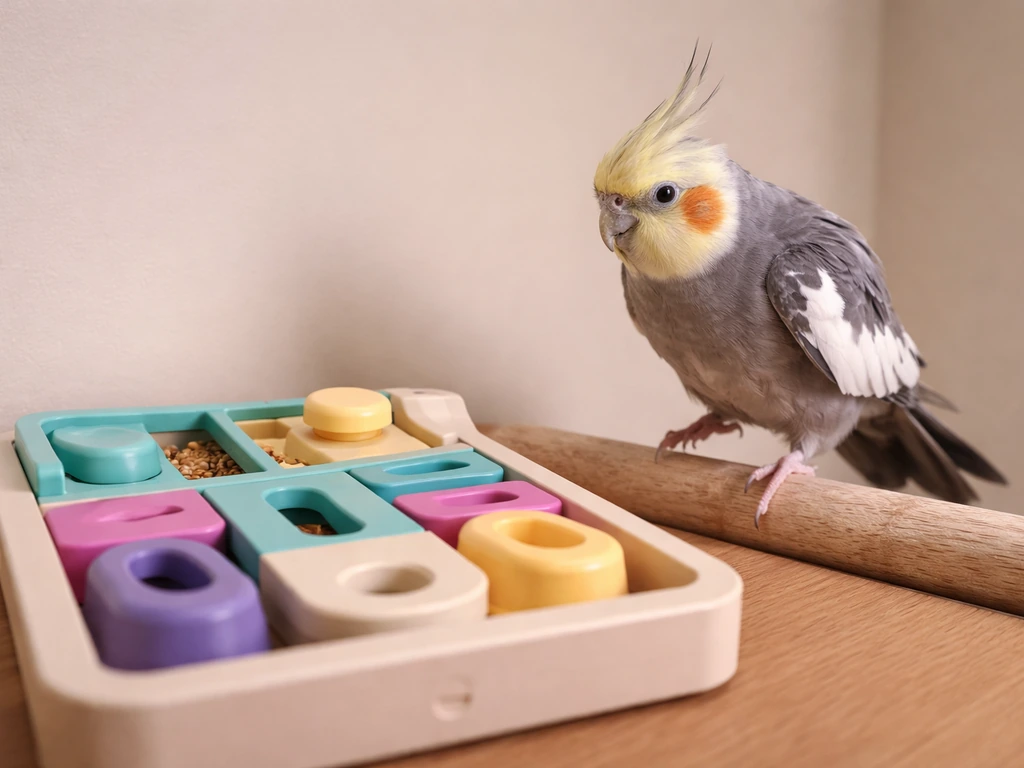
That means the puzzle is too easy. It's not a failure, it's data. Move up one difficulty level, or add a second puzzle type into the rotation so the bird has novelty. Also check how much food is in the puzzle: if the bird cleans it out immediately, there's no reason to keep engaging. Spread smaller amounts across more compartments, or use larger-sized treats that take more effort to manipulate and eat.
"My bird is screaming or agitated around the puzzle"
This is frustration, not excitement. The puzzle is too hard for where your bird is right now, or the bird is hungry and can't access food fast enough. Reduce the difficulty immediately. Never use puzzle toys as the only food source if your bird hasn't mastered that difficulty level yet. Purdue's bird husbandry materials flag stress as a serious welfare concern when routines or conditions are mismatched to the bird's needs, and this applies directly here. A puzzle that stresses your bird is not serving its purpose.
"My bird is destroying the puzzle, not solving it"
Destruction is normal for parrots and some other birds. The question is whether it's destructive in a way that creates safety risks. If your bird is shredding paper-based puzzle components, that's fine and expected. If they're prying off hardware, cracking acrylic into sharp pieces, or pulling rope apart, the toy is the wrong material for that bird's beak strength. Upgrade to a tougher puzzle construction, and remove any toy that's been compromised immediately.
Starting too many puzzles at once
Some new bird owners go overboard and flood the cage with enrichment all at once. More is not better here. Introduce one new puzzle at a time, watch how your bird responds over three to five sessions, and only add or swap once that puzzle is understood. This staged introduction is the approach recommended by animal enrichment specialists: introduce a new item when the bird is ready, and progress once performance is solid. Overwhelming a bird with novelty creates stress, not enrichment.
Bird puzzles are genuinely one of the best investments you can make in your bird's daily quality of life. They're cheap to start (paper and seeds), scalable as your bird gets smarter, and they address one of the biggest welfare gaps in typical pet bird care: boredom. Start simple, stay consistent, and rotate often. Your bird will be noticeably more engaged within a week.
FAQ
How long should I leave a bird puzzle out during each session?
Give short, supervised blocks first (about 10 to 20 minutes). If your bird is actively working, you can extend, but if they stop engaging or show clear frustration, remove it and adjust difficulty for the next session. Avoid leaving hard-to-clean puzzle toys in the cage all day, especially those holding moist or fresh foods.
What foods are best for bird puzzle toys, and what should I avoid?
Use dry, low-spoil foods first (seeds, small pellets, nuts in pieces, or veggie bits that can stay put). Skip anything that becomes sticky or turns runny quickly, like wet mash, fruit purees, or anything that can smear into hinges. If you do use softer foods, clean the toy promptly after each session and check for residues around openings.
Can I use bird puzzle toys for birds that are new to my home or not yet hand-tame?
Yes, but start with the lowest-pressure format that still requires movement, like a paper liner over the dish or a loosely covered seed cluster. Place it in the bird’s normal feeding area so it feels familiar, then let them discover it at their own pace. Avoid forcing interaction, and don’t increase difficulty until they reliably eat from the puzzle without stress signs.
My bird ignores the puzzle entirely. How do I troubleshoot without worsening their stress?
First, confirm the reward is something they already eat readily. Then place a visible portion on top or in an obvious entry point so they can get a win immediately, before you hide it. If there’s still no interest after a few supervised attempts, try a different puzzle style (sliding vs lifting vs disassembly) rather than making the same one harder.
How do I know whether a puzzle is too small, too big, or the wrong shape?
If the bird has to crouch unnaturally, gets their head or foot stuck near openings, or the toy dominates their body space, it is too large or poorly shaped. If the bird cannot comfortably hold, stand near, or manipulate the component, it may be too small or too awkward. Use bird-sized clearances and ensure gaps cannot trap toes or the head.
Are wooden puzzle toys safe if my bird chews or shreds them?
Wood can be safe, but only if the toy is built for bird use and the bird is not producing dangerous sharp fragments. If your bird starts splintering hardware-adjacent areas, cracking thick sections, or producing sharp debris, the puzzle is no longer safe. Replace the toy right away, and consider switching to sturdier food-grade acrylic or metal hardware designs.
How often should I rotate puzzle toys, and does “rotation” really matter?
Rotate three or four puzzle toys so your bird gets novelty while still practicing similar skills. Swap at least every few days, and increase the difficulty in small steps rather than leaving the same puzzle in place for weeks. Rotation is especially helpful if your bird learns a puzzle too quickly, since boredom shows up when success becomes effortless.
Is it okay to wash and sanitize bird puzzle toys, and how should I do it?
Yes, but follow the material requirements. Remove any leftover food and wash with bird-safe methods suitable for the toy’s construction, then dry fully before reuse. Pay extra attention to seams and around moving parts, since residue can attract bacteria and can also make puzzles feel sticky, reducing engagement.
What should I do if parts break off, paint chips, or hardware loosens?
Stop using the toy immediately. Even small broken pieces can become ingestion hazards, and loose hardware can cause cuts or pinch injuries. Inspect after each session for wear, and replace the toy if you notice cracking, chipping, or any exposed sharp edges.
Should puzzle toys replace my bird’s regular diet, or just supplement it?
Use puzzle toys to replace part of the food routine, not all of it until your bird is consistently successful at that difficulty level. If your bird cannot access food quickly, the puzzle can become stressful rather than enriching. Once the bird reliably solves it, you can increase how much of the daily food comes from puzzles.
How do I increase difficulty safely without making the toy frustrating?
Increase in one small change at a time, such as adding one extra step, reducing the visible reward slightly, or splitting food into fewer or smaller compartments. Monitor for signs of frustration (avoiding the toy, frantic biting, persistent vocal stress). If they struggle for multiple sessions, step back one level and rebuild success.
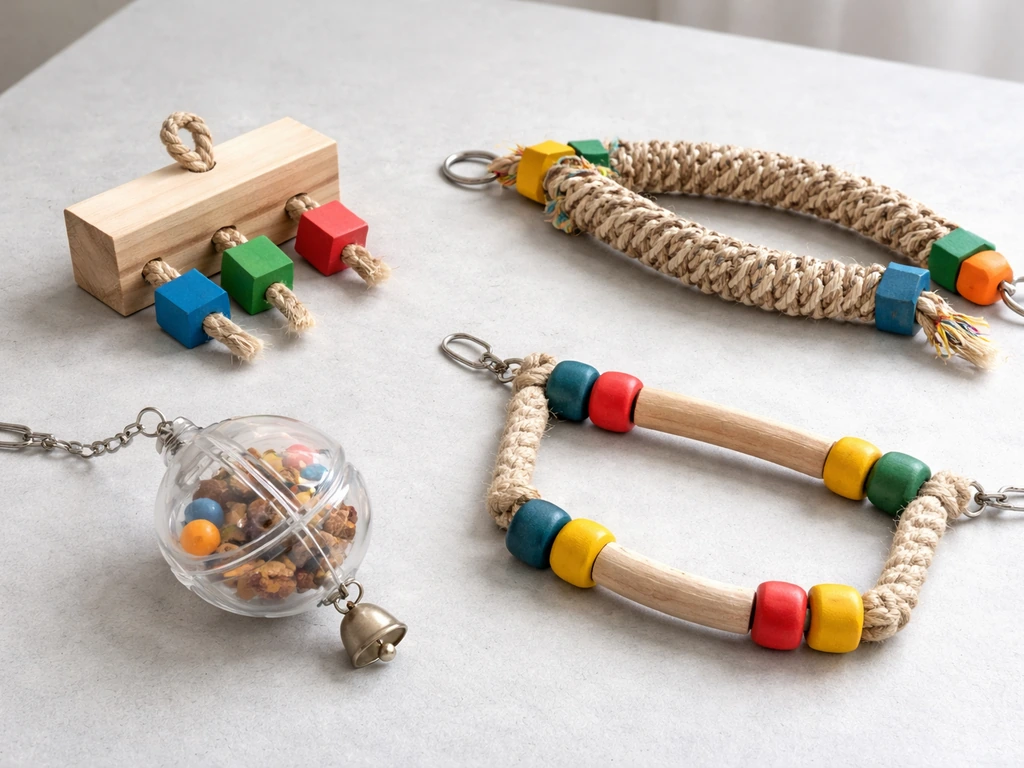
Top picks of safe conure toys for chewing, shredding, foraging and climbing, plus sizing and safety checklist.
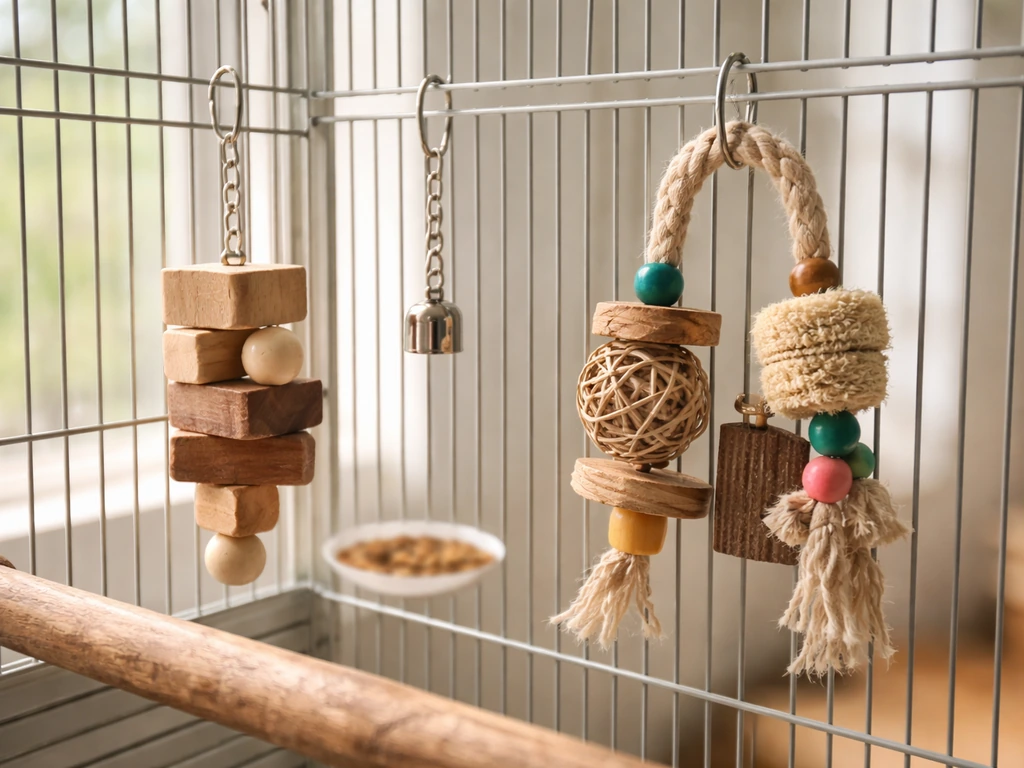
Best bird toys for beginners: safe materials, right sizing, toy placement, and easy cleaning plus how to introduce and r
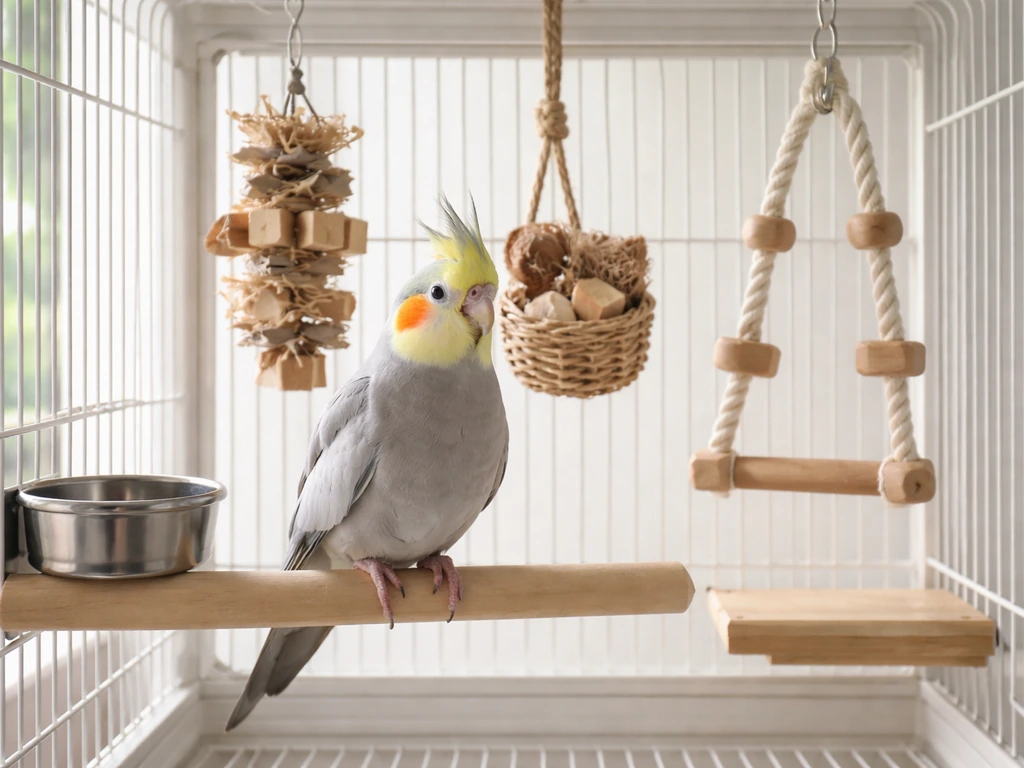
Safe, size-right cockatiel toy picks plus setup, rotation, cleaning and troubleshooting for happy enrichment.