For most pet birds, tightly braided natural cotton rope or sisal rope is the safest choice for toys. Cotton is soft enough for smaller birds like budgies and cockatiels, while sisal holds up better for medium and large parrots who chew hard. Both are natural, untreated, and digestible in small amounts, which matters because every bird will swallow some fiber eventually. What you want to avoid is loose, twisty synthetic rope that unravels fast and leaves long strands that can wrap around toes or legs.
Best Rope for Bird Toys: Safe Materials, Sizing, Care

Marcus Chen
8 Jun 2026
Choosing the right rope material for bird safety
The material question is the most important one to get right, and it's where a lot of first-time bird owners go wrong by grabbing whatever looks colorful at the craft store. The core rule: stick to natural, undyed, uncoated fibers. Synthetic ropes made from nylon, polyester, or polypropylene are not safe for bird toys. They don't break down safely if swallowed, they fray into sharp microfibers, and some are coated in chemicals that have no place near a bird's beak.
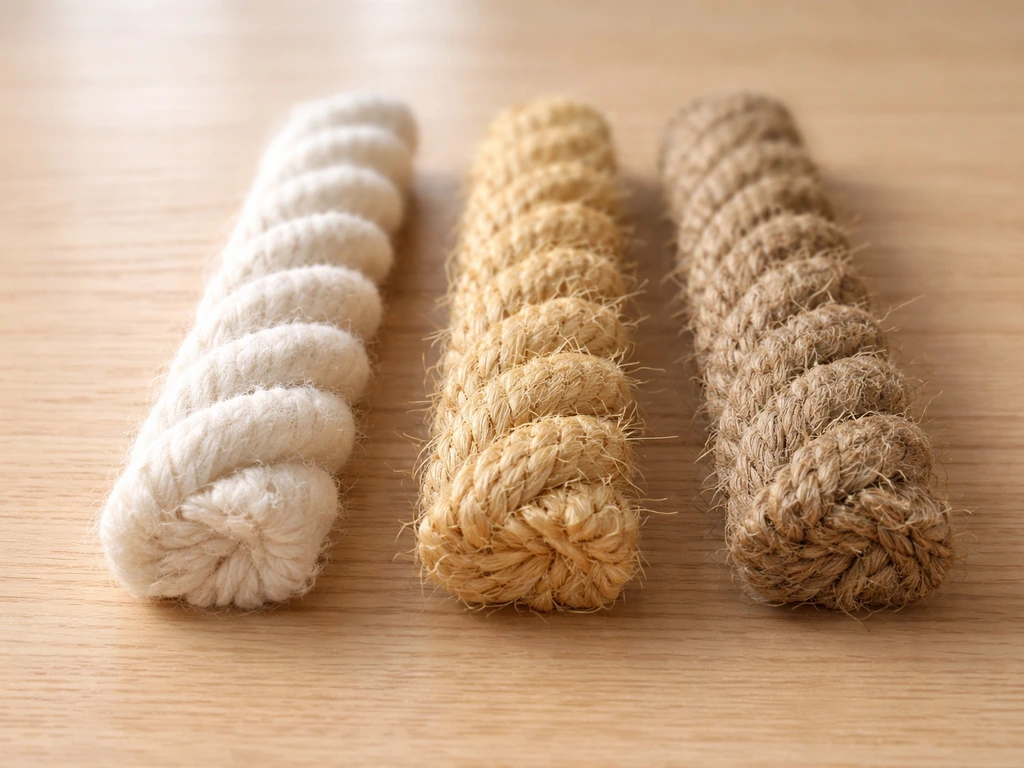
The three materials that consistently come up as safe in avian veterinary guidance are natural cotton, sisal, and hemp. Natural cotton is soft, flexible, and bird-safe when ingested in small quantities. Sisal (from the agave plant) is coarser and more durable, making it a better pick for aggressive chewers. Hemp sits in between, tougher than cotton but still digestible. All three need to be undyed or colored only with bird-safe, water-based dyes. If you see a rope with bold, saturated artificial colors and no information on the dye process, skip it.
Jute is sometimes sold as a safe option and it can be, but it's worth knowing that some jute is processed with oils that can be harmful. If you go with jute, buy from a bird-specific supplier who explicitly confirms food-safe processing. The same goes for anything labeled 'natural fiber' without specifics, that phrase covers a lot of ground.
- Safe: natural cotton (undyed or bird-safe dye), sisal, hemp
- Use with caution: jute (only from bird-specific, confirmed food-safe sources)
- Avoid: nylon, polyester, polypropylene, acrylic, synthetic blends
- Avoid: ropes with metallic threads, plastic coatings, or unknown dyes
- Avoid: yarn (knitted or crocheted construction unravels into long loops that trap toes — this is a serious and underappreciated hazard)
One thing worth saying plainly: if your bird is a dedicated chewer who actually eats rope rather than just mouthing it, rope toys may not be the right choice at all regardless of material. For rabbits specifically, the safest approach is to use toys designed for rabbit chewing rather than bird rope toys, because rabbit chewing and digestibility needs are different bird toys for rabbits. Lafeber's avian guidance makes this point directly. A bird that snips off and swallows chunks is at risk of crop or digestive impaction no matter how natural the fiber is. Watch your bird's behavior with any new rope toy closely in the first few sessions.
Best rope options by bird type and toy use (chewing vs climbing)
Not all birds interact with rope the same way, and matching the rope to the behavior matters as much as picking the right material. Rabbits should not be given bird toys, since the materials and fasteners are chosen for birds and can be unsafe for rabbits can rabbits play with bird toys. A budgie nibbling at a rope perch needs something very different from a macaw using a thick rope ladder to climb between platforms. If you're wondering about entertainment beyond toys, you might also be asking should i play bird sounds for my budgie.
Small birds (budgies, parrotlets, lovebirds, canaries)
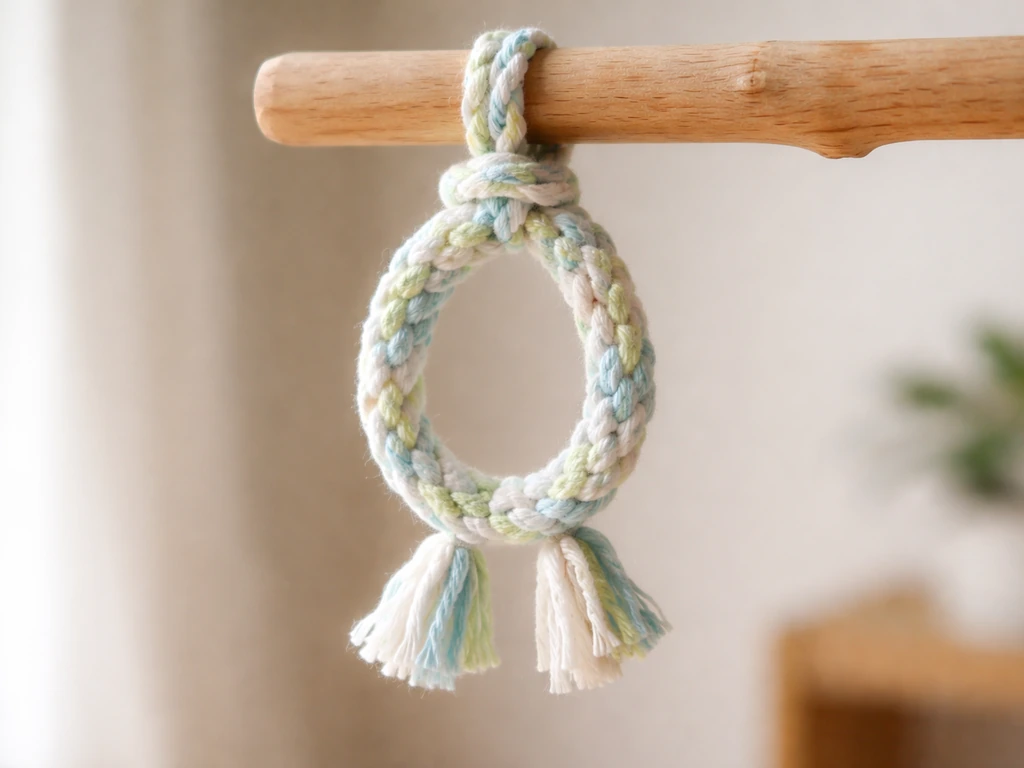
Soft, tightly braided cotton rope is the go-to for small birds. They aren't strong enough to unravel a well-made braid quickly, and the softness is easy on smaller beaks. For toys, thin cotton rope (about 3mm to 6mm diameter) is ideal for threading through wooden beads, hanging foraging toys, or making simple swings. These birds tend to chew lightly and enjoy the texture rather than destroying the toy, so a good cotton rope toy can last weeks with small birds.
Medium birds (cockatiels, conures, caiques, Quaker parrots)
Medium birds are a mixed bag because some (like conures) are surprisingly aggressive chewers for their size. Cotton still works, but you want a thicker braid and potentially a cotton-sisal blend for birds that lean toward destruction. Rope swings and perches in the 8mm to 12mm range give these birds enough to grip comfortably. If your conure or caique tends to shred everything, prioritize sisal over cotton, it holds up longer and gives them a more satisfying texture to work through.
Large birds (African greys, Amazons, cockatoos, macaws)
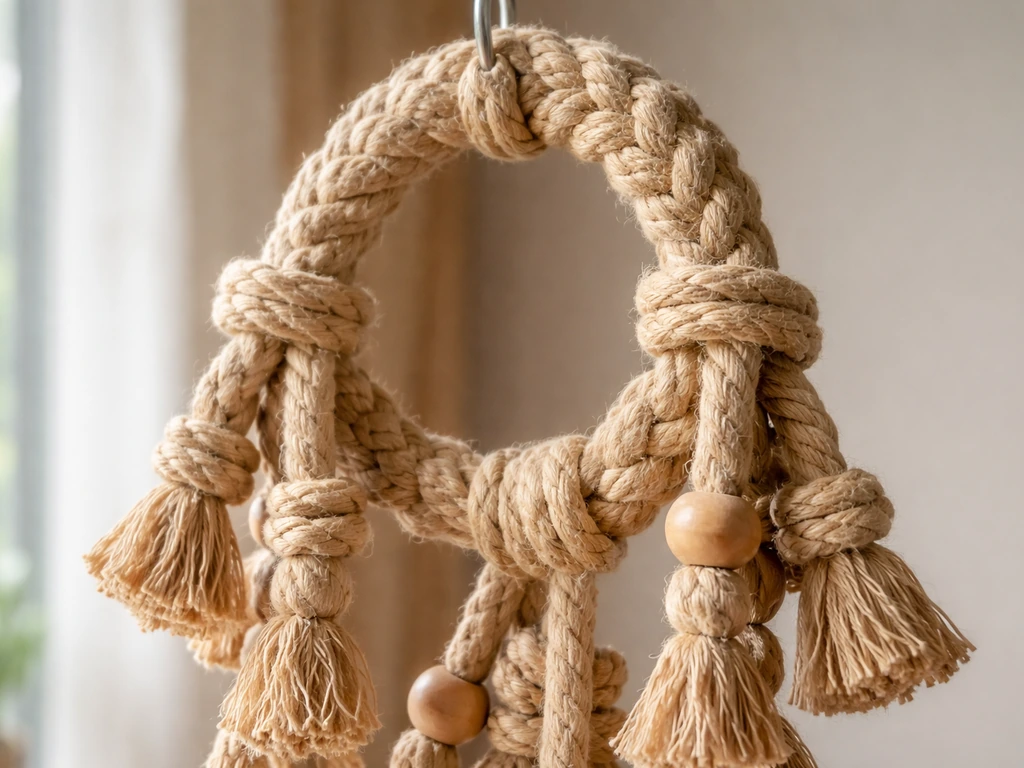
Large parrots need sisal or thick hemp rope, full stop. Cotton rope will be destroyed in short order, and the rapid unraveling creates more hazard than the toy is worth. For climbing toys and rope ladders, look for sisal rope in the 15mm to 25mm diameter range. Macaws especially use rope structures for climbing and swinging rather than chewing, which makes rope a great enrichment option for them as long as you size it correctly and inspect it frequently. A large macaw gripping a rope that's too thin risks toe entanglement just from normal climbing.
| Bird Size | Best Material | Best Diameter | Primary Use |
|---|---|---|---|
| Small (budgies, canaries, parrotlets) | Natural cotton (braided) | 3mm to 6mm | Chewing, perching, light swinging |
| Medium (cockatiels, conures, caiques) | Cotton or sisal blend | 8mm to 12mm | Chewing, swinging, climbing short distances |
| Large (African greys, Amazons, cockatoos) | Sisal or hemp | 15mm to 20mm | Climbing, swinging, heavy chewing |
| Extra large (macaws) | Sisal or thick hemp | 20mm to 25mm+ | Climbing, swinging, structural perches |
Rope length, thickness, and knot/braid considerations
Diameter is the sizing factor most people overlook. Too thin and the rope becomes a toe trap; too thick and the toy is awkward for smaller birds to grip or interact with. The table above gives a good starting range, but the practical test is whether your bird can wrap its foot comfortably around the rope without the toes overlapping in a way that could create a loop or snag.
For length, the general guidance is to keep individual rope segments under 6 inches (about 15cm) in a cage environment unless the rope is mounted taut between two fixed points (like a rope perch or ladder). Loose, dangling ropes longer than 6 inches have more potential to loop around a bird's neck or body during active play. If you're building a rope ladder or multi-level climbing structure, the individual rungs or spans should be short and tensioned, not floppy.
On construction: braided rope is almost always safer than twisted (also called 'laid' or 'stranded') rope for bird toys. Twisted rope unravels much faster when a beak gets into it, and the individual strands that come loose are longer and more hazardous. A tight braid holds together much longer, and even as it wears the fibers tend to stay shorter and closer to the core. If you're buying rope to make your own toys, look specifically for 3-strand or multi-strand tight braid, not a loose 3-ply twist.
Knots deserve their own mention. Any knot you tie in a bird toy should be pulled very tight, loose knots create loops that can trap toes or beaks. Simple overhand knots and figure-eight knots work well. After tying, trim any tail ends to under half an inch so there's nothing to grab and unravel. If a rope toy comes from a manufacturer with loose, decorative knot tails hanging off it, trim those before putting the toy in the cage.
How to inspect, clean, and replace rope toys
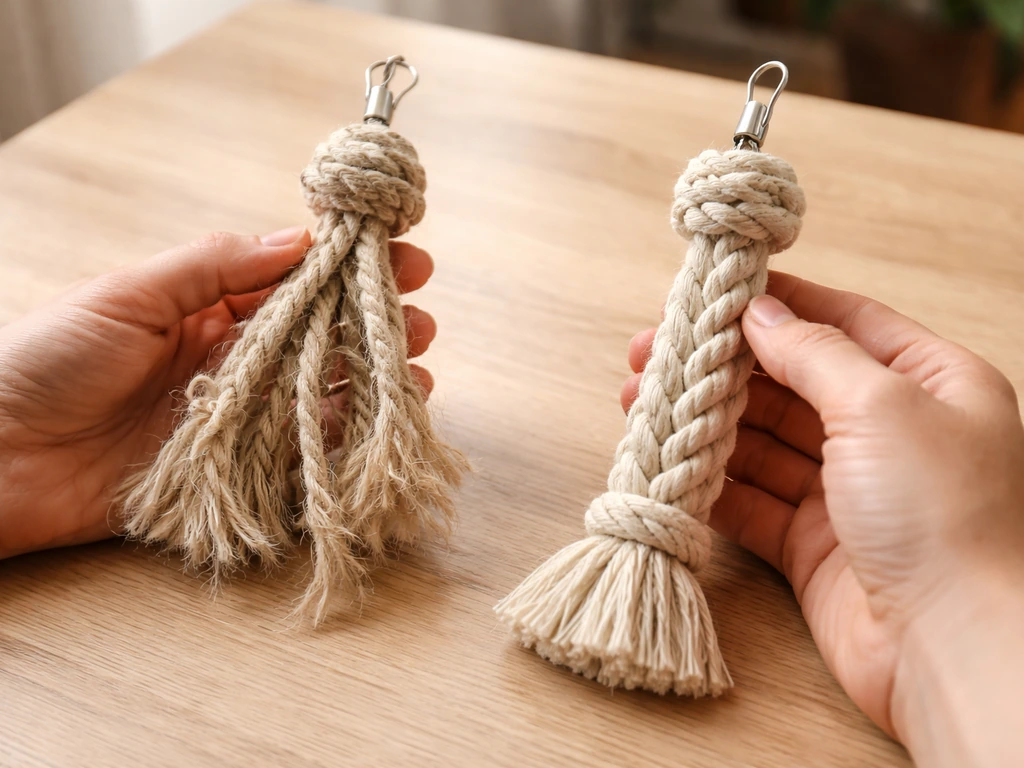
Rope toys need daily attention, that's not an exaggeration. Messy Beaks' bird toy safety guidance specifically recommends checking toys every single day for wear, fraying, and damage. A rope toy that looked fine yesterday can develop a dangerous loose section overnight if a determined parrot has been working on it. Daily inspection takes about 30 seconds per toy once you know what you're looking for.
What you're checking for: loose strands longer than about half an inch, any section where the braid has started to open up and create a loop, visible soiling or moisture buildup, and any discoloration that might indicate mold. Birds are messy and ropes collect food debris, droppings, and moisture that can harbor bacteria and mold quickly, especially in humid environments.
For cleaning, the simplest approach is to untie the rope from the toy hardware and hand-wash it in warm water with a bird-safe soap or just plain water if the soiling is light. You can also soak cotton or sisal rope in a dilute white vinegar solution (about one part vinegar to three parts water) for 15 to 20 minutes, then rinse thoroughly and hang to dry completely before returning it to the cage. Never put a damp rope back in the cage, moisture is where mold starts.
VCA Animal Hospitals is clear on replacement: once a rope starts to unravel or shred noticeably, take it out immediately. Strings and loose strands from unraveling rope can wrap around toes and legs and cut off circulation, which is a genuine veterinary emergency. The rule is simple, when in doubt, replace it. Rope is cheap compared to an avian vet visit.
- Check every rope toy daily for fraying, loose strands, or opened braid sections
- Trim any loose strand longer than half an inch immediately
- Wash rope toys weekly or sooner if visibly soiled
- Let rope dry completely before returning to cage
- Replace any rope that has begun actively unraveling, has visible mold, or smells off
- Replace rope toys every 4 to 6 weeks as a baseline even if they look okay
Safe mounting methods and placement in the cage
How you hang a rope toy matters almost as much as what it's made of. Birds can also be attracted to perches, so it's important to think about wire safety, including the question of why a bird can stand on an electric wire How you hang a rope toy matters almost as much as what it's made of.. The most common mistake is attaching ropes loosely to cage bars so they swing freely with long dangling sections. A bird that gets excited during play or startles can thrash and tangle itself in a loose rope very quickly.
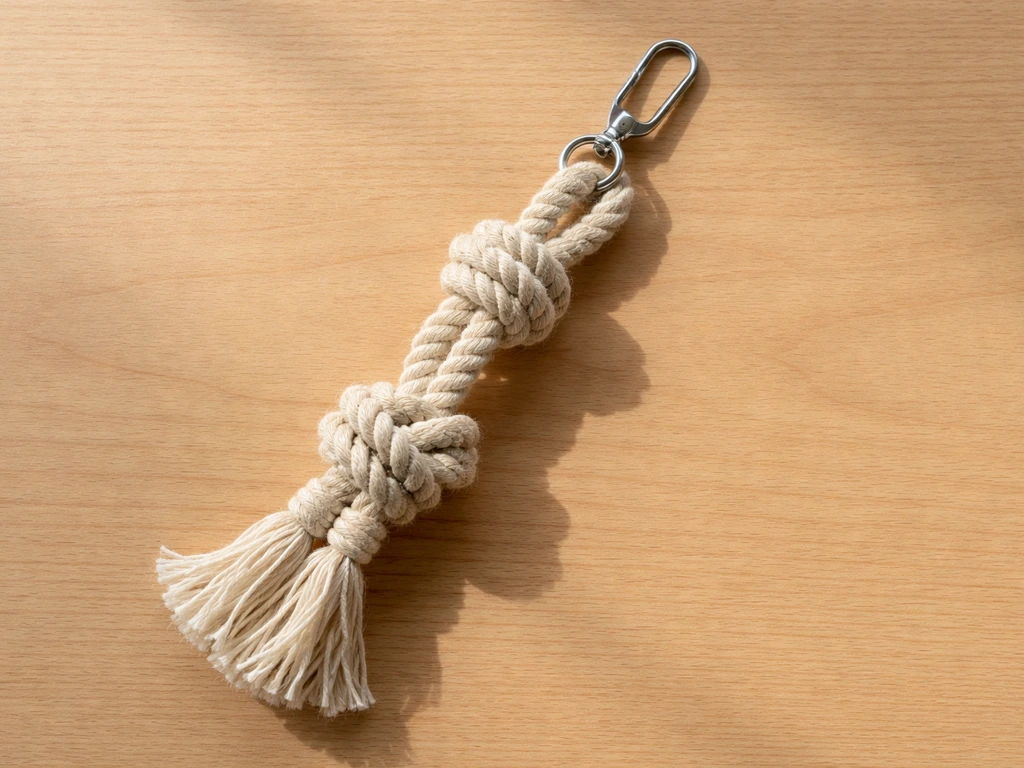
Attach rope toys using quick-link connectors or sturdy stainless steel rings rather than loose wire twists or string loops. Quick-links are bird-safe, easy to open for cleaning and inspection, and don't have sharp edges. Avoid any attachment hardware that has small movable parts a bird can pry open, or anything zinc or lead-plated, both metals are toxic to birds.
For placement, position rope toys away from food and water dishes so debris and droppings don't contaminate them as fast. Place climbing ropes between two fixed anchor points rather than hanging them from a single point if possible, a taut rope is much safer than a looping one. Keep rope toys away from the cage floor, where a bird could fall onto a coiled section and become tangled. At least 6 to 8 inches of clearance from the cage floor is a reasonable minimum.
If your bird sleeps near a rope toy (this happens a lot with birds that have a favorite perch near a toy), do a quick check before lights-out to make sure nothing is fraying or loose. Birds can chew and fidget overnight, and a strand that wasn't a problem in the evening can become a hazard by morning.
Avoiding common rope-toy hazards and banned materials
The biggest hazard categories from Bonka Bird Toys' rope safety guidance are: loose strands and heavy fraying, swallowed fibers, and trapped toes. Those three things cover the vast majority of rope-related injuries and health issues in pet birds. Most of them are preventable with the right material choice, correct sizing, and consistent inspection.
Beyond material choices, a few specific hazards are worth calling out explicitly. Zinc and galvanized metal hardware is a real issue with cheaper toy components, zinc toxicity in birds is serious and unfortunately common. Only use stainless steel or nickel-plated hardware. Avoid any rope with metallic threads woven through it, which are sometimes used for decorative shimmer in craft rope. Those metallic strands are indigestible and sharp.
Yarn is worth a specific warning here. Yarn might seem like a soft, bird-friendly material, but it's knitted or crocheted in a structure that creates open loops. Those loops are perfect toe traps, and yarn unravels into long continuous strands that can wrap around a neck or leg. If you've seen people on social media using yarn to decorate bird cages or make toys, that's one of those popular ideas that's actually worth ignoring. There's a reason avian vets consistently flag it.
Fishing line, zip ties, twist ties, and rubber bands are occasionally found in DIY bird toy tutorials online and all of them are genuinely dangerous. Fishing line in particular is nearly invisible and nearly impossible for a bird (or you) to detect once it's wound around a foot. Stick to materials specifically sold or confirmed safe for bird use.
- No synthetic rope: nylon, polyester, polypropylene, acrylic
- No yarn (open-loop construction creates serious toe-trap risk)
- No metallic or glitter threads woven into rope
- No zinc or galvanized hardware — stainless steel only
- No fishing line, rubber bands, zip ties, or twist ties anywhere in the toy
- No rope with unknown or artificial-chemical dyes
- No rope treated with fire retardants, mildew inhibitors, or other industrial coatings
Budget vs premium picks and what to look for in reviews
The honest answer here is that you don't need to spend a lot of money to get a safe, good rope for bird toys. A spool of natural cotton macrame rope or sisal twine from a bird-specific supplier will cost a few dollars and make dozens of toys. The premium price on branded bird toy rope usually buys you convenience (pre-cut lengths, pre-attached hardware, already-inspected quality) rather than meaningfully better safety.
That said, there are a couple of reasons to spend more. Reputable bird toy brands like Bonka Bird Toys, Super Bird Creations, and similar avian-focused companies source rope that's confirmed bird-safe and already attached to properly rated hardware. For a first-time bird owner who isn't sure what to look for in raw rope, buying a finished toy from a known bird brand is a reasonable safety shortcut. You're paying for the vetting as much as the product.
When reading reviews for rope toys (or raw rope for DIY use), here's what to actually look for: reviews that mention durability over time (not just out of the box), any mentions of fraying speed or loose strands appearing early, and whether the reviewer has a bird of similar size and chewing behavior to yours. A five-star review from someone with a budgie tells you almost nothing about how a rope will hold up for a cockatoo. Filter reviews by whether the reviewer describes their bird's behavior.
For a practical starting recommendation: tightly braided natural cotton rope in the right diameter for your bird size is the best overall pick. It's safe, affordable, widely available, and works for most toy applications. If your bird is a strong chewer, upgrade to sisal. If you want a single product recommendation style approach, look for rope sold specifically for bird toys by avian suppliers, not craft or hardware store rope, where you can't always verify the processing.
Quick checklist before you buy rope for bird toys
- Confirm the material is natural cotton, sisal, or hemp — not synthetic
- Check that any dye used is confirmed bird-safe or water-based
- Match diameter to your bird's size (3mm to 6mm for small birds, up to 25mm for large parrots)
- Choose braided construction over twisted/laid rope
- Verify hardware is stainless steel — no zinc or galvanized metal
- Plan to keep individual loose rope lengths under 6 inches in the cage
- Commit to daily inspection for fraying and weekly cleaning
- Have replacement rope on hand so you can swap immediately when a toy degrades
FAQ
Is pre-cut rope for bird toys safer than buying raw rope and cutting it myself?
It can be, mainly because reputable bird-toy brands often start with processing that is easier to verify and they usually trim and finish ends more consistently. If you DIY, double-check that the rope is tightly braided (not loosely twisted), trim tail fibers after cutting, and re-inspect the cut ends because fraying can start faster on fresh-cut sections.
My rope has a slight chemical smell from the store, should I use it?
No, not for a chewable toy. Odors can indicate residual sizing, finishes, or dye-related chemicals. Rinse and air out the rope outside the home first, then re-check if the smell persists. If it still smells strongly after rinsing and drying, treat it as unsuitable and choose a rope explicitly sold for bird use.
Can I use dyed rope if it looks natural and the dye is “plant-based”?
Only if the seller clearly states the dye is bird-safe and water-based, and the rope is otherwise uncoated. Even “natural” dyes can be unpredictable, and some dyes are still applied with resins or finishes. If the product listing does not specify the dye process or safety for ingestion, default to undyed rope.
What diameter should I choose if my bird is between sizes (for example, a small conure)?
When uncertain, err slightly thicker rather than thinner because thin rope increases the odds of a toe snag loop. Use the wrap test: your bird’s foot should grasp the rope without toes overlapping. If you cannot get a secure, non-overlapping grip, go up one diameter category and re-check comfort and climbing behavior.
How do I know if my rope is the “tight braid” type or a looser twist that can unravel?
Look for a consistently tight pattern with minimal visible gaps at the braid surface. Loose 3-ply twist or laid rope will show more individual strand movement, and you may notice the rope “springing open” slightly when bent. If you can pull or separate strands easily with finger pressure, it is not the right construction for bird toys.
Are knots always safe on rope toys, or can certain knots create problems anyway?
Knots can be safe if they are tightly set and kept simple, but avoid knots that create large bulky loops. After tying, pull the knot firmly, then trim ends to very short lengths so fibers cannot loosen. Periodically check the knot during daily inspections because wear can loosen even a good knot over time.
Should I replace the rope toy even if it only looks slightly fuzzy or has minor fraying?
If the fraying is localized and fibers remain short and bound, you may be able to monitor closely, but use strict criteria. Remove the toy if you see longer loose strands (around half an inch or more), braid separation that forms a loop, or any new snag point near areas the bird uses to perch, climb, or sleep. When in doubt, replace it immediately.
How should I clean rope that smells musty or shows discoloration?
Do not just wash and return it if discoloration or mustiness suggests mold or prolonged dampness. Wash first only if the discoloration is clearly from dirt and the rope dries completely the same day. If you cannot fully remove the smell, see spots returning quickly, or notice persistent dark patches, discard the rope to avoid exposing your bird to mold-contaminated fibers.
Can I use a rope toy while my bird is molting or has blood feathers?
Use caution. During molting, birds often chew more and may pick at fibers near the body. Prioritize ropes that hold up under chewing (sisal or thick hemp for strong chewers) and place toys away from the bird’s immediate resting spots to reduce accidental snagging. If you notice increased chewing intensity or fussiness, pause rope-toy access and reassess.
My cage has narrow spacing, can I still hang a rope toy safely?
Yes, but you need shorter, tensioned sections. Avoid long dangling spans in tight cages because a startle or thrash can cause tangling. Use quick-link connectors or properly rated stainless hardware, and ensure there is enough clearance from the cage floor and from the bird’s feed and water areas.
What’s the safest way to attach rope if I can’t find quick-links?
Use sturdy stainless steel rings or other bird-safe connectors with no sharp edges and no small movable parts a bird can pry open. Avoid wire twists, string loops, and anything with plated metal. If your attachment method leaves a dangling tail or creates a rotating joint, the bird may work it loose faster than you expect.
Is sisal always better than cotton for chewing birds?
Sisal is generally more durable for aggressive chewers, but it is also rougher, and some birds prefer softer textures. If your bird aggressively destroys toys, sisal is the safer bet for durability, but still confirm the rope diameter fits the foot wrap test and check more frequently during the first week because rougher rope can wear faster at anchor points.
My bird swallows small bits of fiber sometimes, should I stop using rope entirely?
Occasional swallowing can happen, but it should not be frequent chunk-snipping. If you observe consistent attempts to ingest or you find substantial fiber pieces in droppings regularly, stop the rope toy and switch to safer alternatives designed for your species’ chewing pattern. Rope is not ideal for dedicated chewers that actively eat chunks.
Are there any rope-related injuries that rope choice cannot fully prevent?
Yes. Even with the right material, injury can still happen from entanglement if the toy is hung too loosely, if sections are longer than recommended, or if knots become loose. Also, oversized rope that makes access easy to wrap around the neck is risky. Proper hanging, correct length, and daily inspection remain essential no matter how safe the fiber is.