
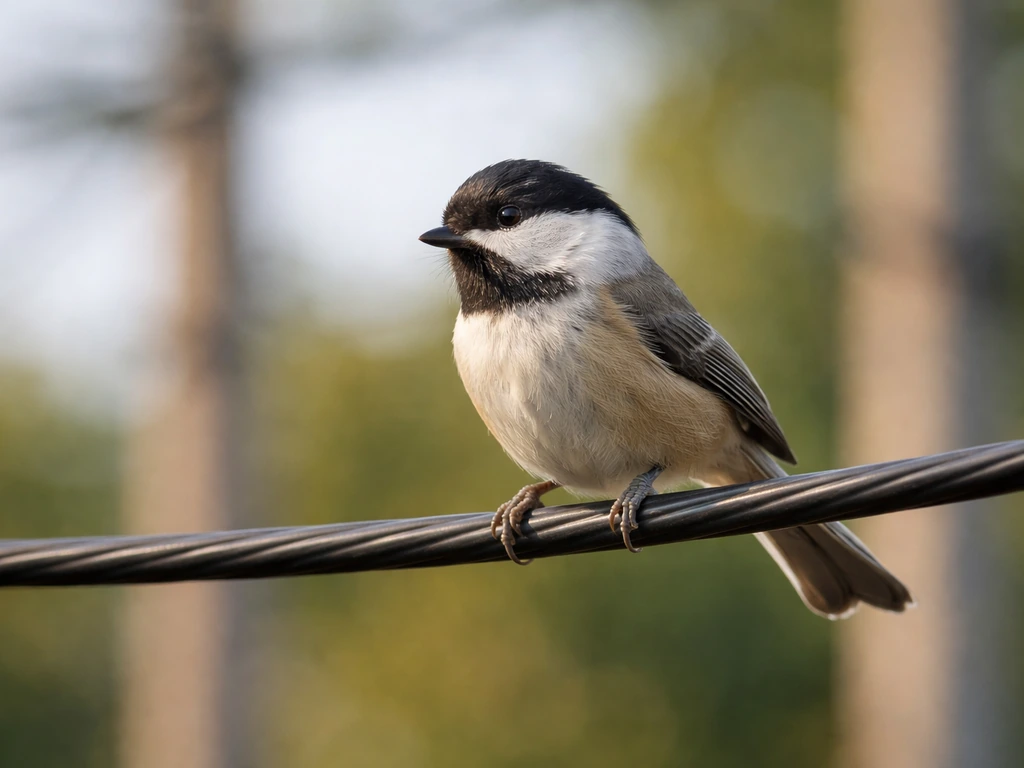
Birds can stand on electric wires without getting shocked because both feet are touching the same wire at nearly the same electrical potential, meaning there is no meaningful voltage difference across their body. No voltage difference means no current flows through them. It is not magic, it is not their feathers acting as insulation, and it has nothing to do with being small or light. The physics is genuinely simple once you understand what actually makes electricity dangerous.
Why Can a Bird Stand on an Electric Wire Without Shocking

Marcus Chen
30 May 2026
The simple physics: current needs a complete path

Electricity does not shock anything just by existing nearby. For current to flow through a body, two things must happen: there has to be a voltage difference between two contact points, and a complete circuit must exist between them. Think of it like water pressure in a hose. Voltage is the pressure pushing electrons along. If the pressure is the same at both ends of a section, nothing moves.
When a bird lands on a single power line, both feet are touching the same conductor a few inches apart. The wire runs at, say, 7,200 volts relative to the ground far below, but the voltage at the bird's left foot and the voltage at the bird's right foot are essentially identical. There is no voltage difference across the bird's body, so no current is pushed through it. The bird is simply sitting at high voltage, not experiencing it.
The critical word is 'complete.' For current to flow through the bird, electricity would need a path that goes: wire, into one foot, through the bird's body, out the other foot, and then continues on to somewhere at a different voltage. On a single wire in open air, that return path does not exist.
Why 'both feet on one wire' changes the risk
The reason 'both feet on the same wire' is so important comes down to potential difference. A bird with both feet on the same conductor is essentially a short piece of wire itself, and the voltage on either side of that short segment is the same. The resistance of the bird's body is irrelevant because the voltage pushing current through it is zero.
Contrast that with what would happen if a bird were large enough to touch two separate wires simultaneously, or if it grabbed one wire while its tail or wingtip brushed a grounded structure. Now there are two different potentials connected through the bird's body. Suddenly there is a voltage difference, a complete circuit, and current flows. This is why large birds of prey, particularly eagles and ospreys with wide wingspans, are disproportionately killed by power-line electrocution. A wing touching one wire and a foot touching a grounded transformer casing is all it takes.
What makes it dangerous: broken wires and grounded contact
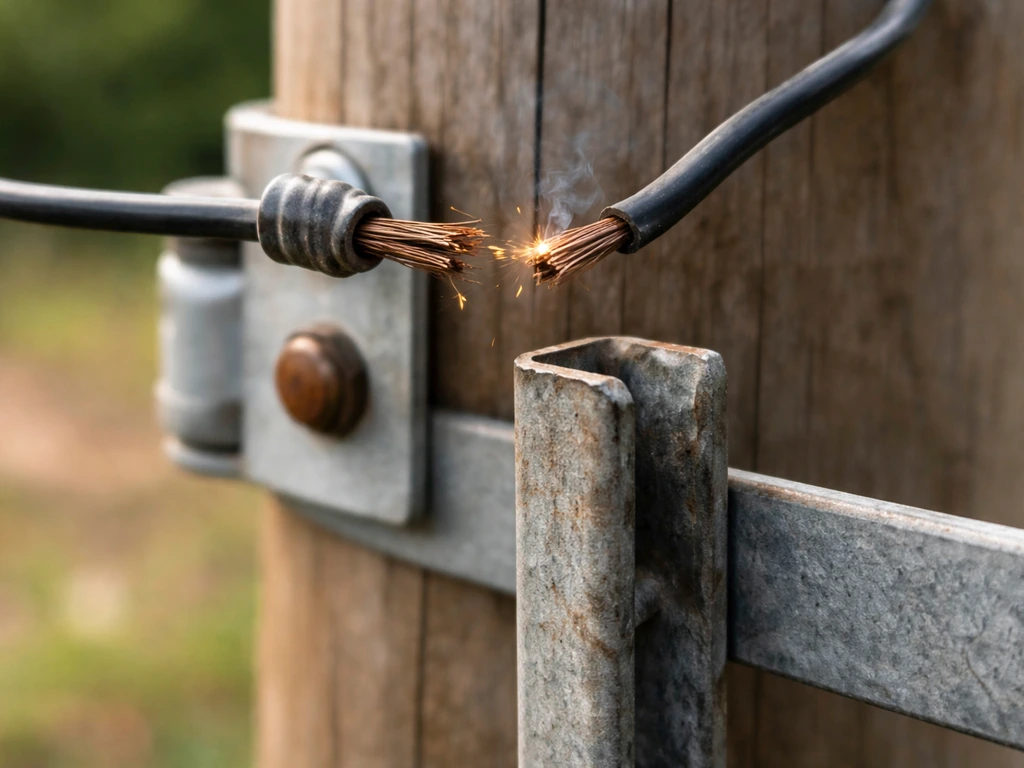
The 'safe perch' scenario breaks down quickly in a few real-world conditions, and understanding them matters whether you are watching wild birds or thinking about your pet bird's environment.
- Bridging two conductors: A bird that simultaneously contacts two wires at different voltages, or a wire and a grounded metal part like a transformer casing or pole hardware, completes a circuit through its body. Utilities document this as the primary electrocution mechanism for large birds.
- Downed or broken wires: A wire on the ground is no longer behaving predictably. It can energize the surrounding soil, nearby puddles, fences, and metal objects. A bird (or any animal) does not need to touch the wire directly; stepping into electrified wet ground is enough to complete a fatal circuit.
- Wet feathers: Dry feathers are indeed poor conductors, but wet feathers change the situation. Moisture creates conductive paths that would otherwise be absent, increasing the chance that contact with an energized surface results in current flow through the bird's body.
- Tangled or trapped birds: A bird that cannot lift off cleanly, like a raptor tangled in a line, may shift its body into contact with a second conductor or a grounded component. Edison International documented exactly this scenario with a falcon rescue involving a line carrying 1,200 volts.
The broader takeaway here is that the danger is not the voltage number printed on a warning sign. It is the difference in voltage between two points that a body happens to bridge. A downed residential line at 120 volts can kill just as surely as a transmission line, if it creates the right (wrong) contact path.
Common myths (and what's actually true)
| The myth | What's actually true |
|---|---|
| Birds are protected by their feathers acting as insulation | Dry feathers offer minimal resistance, not meaningful insulation. Wet feathers can actually enable conduction. The safety comes from equal voltage on both feet, not feather material. |
| Birds can't feel electricity at all | Birds have the same basic nervous system sensitivity as other vertebrates. If current were flowing through them, they would feel it and be injured. They simply avoid the conditions that allow current to flow. |
| Only high-voltage transmission lines are dangerous | Any energized line that completes a circuit through a bird's body is dangerous. Residential distribution lines at 7,200 volts or even household 120-volt wiring can be fatal depending on the contact scenario. |
| Small birds are safe because their feet are close together | Foot spacing is somewhat relevant (less voltage difference over a shorter length of wire), but this is not the primary safety factor. Both feet on the same conductor is what matters, not how far apart they are. |
| A downed wire is safe if it's not sparking | Absolutely not. A downed line can be fully energized and lethal without any visible sparks or arcing. The surrounding ground can be electrified in a radius around the wire. |
If you see a bird near power lines: safe next steps
Most of the time, birds perching on power lines need zero intervention. They are doing exactly what is safe. But there are a few scenarios where you should act, and one rule that applies in every situation: do not approach a downed or damaged wire yourself, ever.
When to call for help
- A bird is tangled in a power line or appears unable to fly free: Do not try to free it yourself. Call your local electric utility. They can de-energize the section of line safely before a rescue is attempted.
- A wire is downed or sagging low to the ground: Call 911 immediately, then your utility's outage or emergency line. Keep people, children, and pets at least 30 feet away. Do not assume it is de-energized.
- A bird is on the ground directly under or near a downed line and appears injured: Do not approach it or the wire. Contact a licensed wildlife rehabilitator or your local animal control. They can coordinate with the utility if needed.
- You see sparking, burning smell, or hear buzzing from a line or nearby equipment: Report it to the utility immediately. These are signs of equipment failure.
What not to do
- Do not try to move a downed wire with a stick or any object. Even non-metallic materials can conduct electricity under some conditions.
- Do not let children or pets approach any area where a wire is on or near the ground.
- Do not touch a bird that has been in contact with a wire without first confirming with the utility that the line is de-energized. The bird itself can be a conductive contact point.
- Do not assume a wire is safe because it is not labeled 'high voltage.' Residential distribution lines are fully capable of killing people and animals.
Home and pet-bird safety: preventing electrical hazards indoors
This is the part that directly applies to anyone with a pet bird at home. The same physics that protects a sparrow on a power line tells you exactly where the danger points are inside your house. Your bird needs to touch two things at different voltages, or touch one thing at voltage and be grounded, for current to flow. So your job is to eliminate every place that combination could happen.
Electrical cords are the biggest indoor threat
Birds chew. It is not bad behavior, it is just what parrots, budgies, and most pet birds do. If you are wondering about audio, it is generally better to focus on safe, enrichment choices rather than playing bird sounds around electrical hazards budgies. [An exposed copper wire inside a chewed cord carries household current](https://vet.
purdue. edu/hospital/small-animal/articles/general-husbandry-of-caged-birds. php), and biting through insulation can complete a circuit directly through a bird's beak and body. Choosing the best rope for bird toys also matters because sturdy, non-fraying materials help prevent accidental injuries if your bird chews or tugs on toys.
This is documented as a genuine cause of bird injury and death. When your bird is out of the cage, cords need to be physically inaccessible, not just pushed behind furniture. You can apply the same safety mindset to enrichment items, too, so it helps to ask whether are bird toys safe for rabbits before letting any rabbit chew or mouth them pet bird. If you are wondering whether is yarn safe for bird toys, treat yarn like any chewable material: offer only under supervision and avoid loose, fraying strands that could be ingested.
If you are also considering yarn for bird toys, choose materials carefully because loose fibers can be harmful if they become ingested or create another unsafe contact risk is yarn safe for bird toys. You can also look for safer enrichment, since can rabbits play with bird toys depends on materials and how the toys are handled. Always double-check whether can rabbits play with bird toys based on the specific materials and how the toy is cleaned and handled. Use cord covers, run cables through conduit, or remove them from the room entirely during free-flight time.
Cage placement and metal hardware
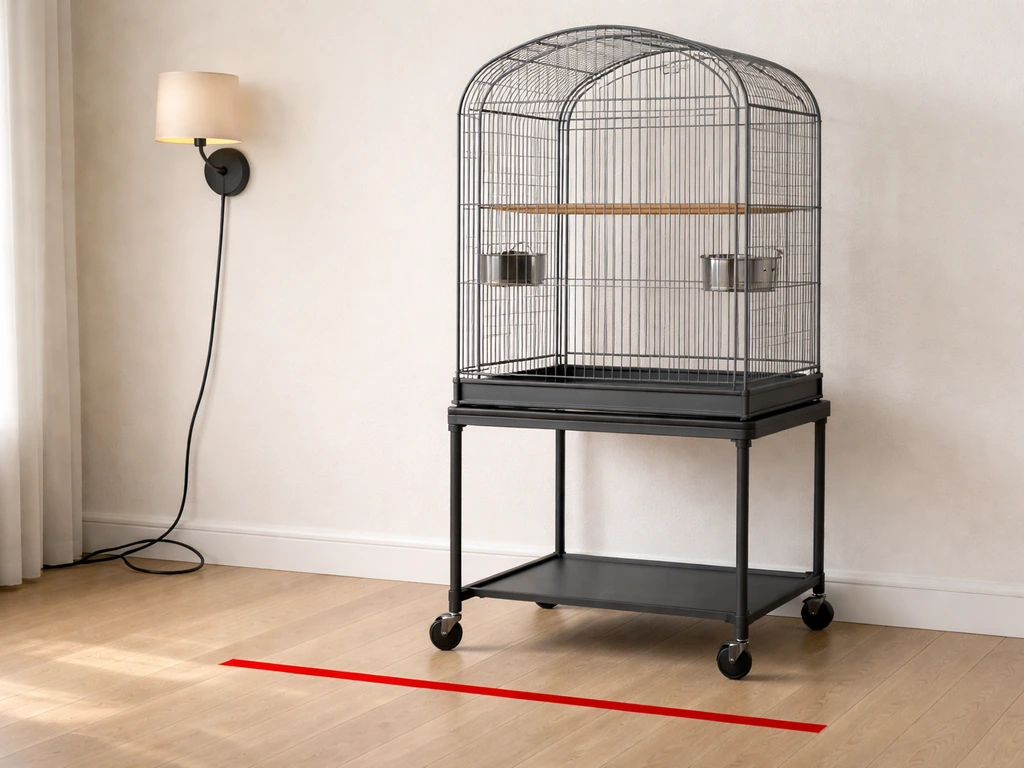
Metal cage stands conduct electricity if a grounded or energized surface is nearby. Do not position cages or metal stands where a bird could touch the cage and a nearby lamp, power strip, or appliance cord simultaneously. Cages should not be placed on or immediately adjacent to power strips. If you use a lot of devices near your bird's space (misters, humidifiers, lamps, heat lamps), use a power strip with built-in overload protection, and never daisy-chain power strips together. That last point is a real fire and shock hazard in any home, but especially relevant in setups with multiple bird-care devices.
Space heaters and fans
Space heaters should never be used near wet areas, and if your bird has a water dish or mister nearby, treat that as a wet-area situation. Inspect heater cords for damage before every use. Ceiling fans are a separate and serious hazard for any bird with free-flight time: a bird that flies into a moving fan blade can be killed instantly. Turn ceiling fans off whenever your bird is outside the cage.
GFCI outlets: worth using
Ground fault circuit interrupter (GFCI) outlets detect tiny imbalances in current flow and trip in a fraction of a second. They will not make every electrical hazard disappear, but in areas where water and electricity are both present (near sinks, misters, outdoor aviaries), they add a meaningful layer of protection. The US Consumer Product Safety Commission recommends them specifically in those environments.
A practical indoor safety checklist
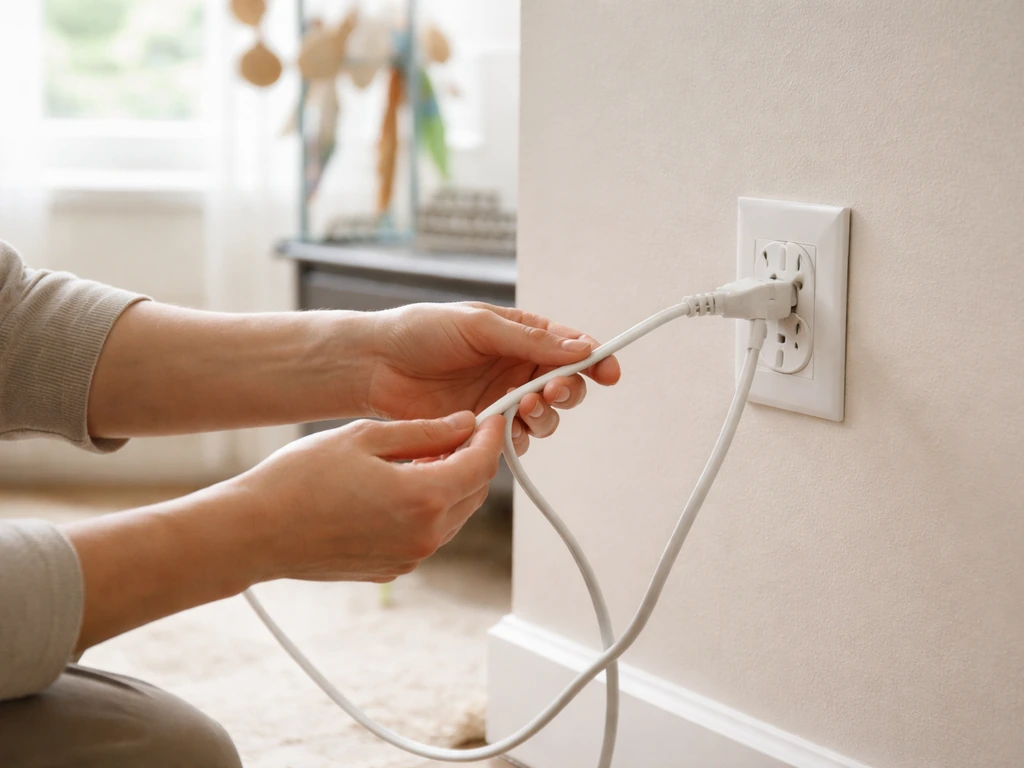
- Cover or remove all accessible electrical cords before letting your bird out of its cage
- Inspect cords monthly for chew marks, fraying, or cracked insulation, and replace damaged ones immediately
- Do not place the cage, stand, or any metal perch accessory in contact with or directly touching a power strip
- Use power strips with overload protection only; never connect one power strip to another
- Turn off ceiling fans before opening the cage
- Keep space heaters away from water sources and out of reach of curious birds
- Consider GFCI outlets in any room where birds are kept near water sources
- If you suspect a bird has chewed a live wire or been shocked, contact an avian vet immediately, even if the bird seems fine. Internal injuries from electrical shock are not always immediately visible.
The physics of why a wild bird survives a power line perch is genuinely reassuring once you understand it. It is not luck. But that same physics makes very clear where the real dangers are, both outside and in your home. For pet bird owners, the line between 'totally safe' and 'potentially fatal' is often just one chewed cord away. Keep those wires out of reach, inspect your setup regularly, and your bird's indoor world can be as safe as that sparrow on the wire outside your window.
FAQ
If a bird lands on one wire, is it always safe even if the bird’s feet are a few inches apart?
It is generally safe on a single conductor because the two contact points are at essentially the same potential. However, safety can break if the bird also touches something at a different potential at the same time, for example another wire, a grounded metal part, or a nearby pole or cage.
Can a bird be shocked by touching a single wire with one foot, while another body part touches something else?
Yes, that is one of the common edge cases. If any other part of the bird simultaneously contacts a grounded object or a different energized conductor, a complete circuit can form even though both feet are not on the wire.
Why does electrocution risk increase for large birds even if they also stand on “one” wire?
Large birds can bridge a voltage difference more easily because their body spans more space, so the chance of touching a second conductor, a grounded structure, or a second part of the network increases. Wide wingspans also raise the odds that a wing or tail reaches something at a different potential.
Would a bird survive if it touched two power lines at once?
Touching two energized conductors can create a voltage difference across the bird’s body, which enables current flow. Survival is not guaranteed, and the safest approach is to treat any bird on or near multiple lines as a life-threatening situation.
Does the voltage number printed on a power line matter as much as the article suggests?
The voltage number matters less than the potential difference between the points a body contacts. For example, a low-voltage outlet can still be dangerous if a bird can create a circuit between two different potentials through its body.
If my pet bird lands near an outlet or power strip, what specific setup mistakes create risk?
Common mistakes include letting the bird reach cords, placing cages on or next to power strips, and allowing the bird to touch a lamp body while also contacting a reachable cord or cage stand. Even if the bird does not “bite” a cord, brushing contacts can complete a circuit.
Are cord covers or rearranging furniture enough to prevent chewing-related shocks?
Physical inaccessibility is the goal. Cord covers and routing help, but chewed-through insulation can still expose conductors. Check for hidden reach points, use conduit or cable management where possible, and supervise during free-flight time.
Do GFCI outlets make everything safe around birds and water?
GFCI protection helps reduce shock risk by tripping quickly when imbalances are detected, but it does not remove all hazards. It can still leave risks related to direct contact, damaged cords, or contact between different energized points, so you still need cord management and safe placement.
What should I do if I find a pet bird near a sparking or downed wire?
Do not approach the wire or try to move the bird by grabbing it or the cage. Instead, power off the circuit if you can do so without approaching the hazard, then contact the appropriate utility or emergency services, and only provide care once the area is confirmed safe.
Can a ceiling fan or oscillating fan be an electrocution risk, or is it mainly a collision risk?
It is mainly a collision or impact risk for birds during free-flight time, because contact with moving blades can cause instant fatal injury. Even though fans are powered electrically, the immediate danger described here is the physical strike, so turn fans off while birds are out of the cage.
Does using a power strip with overload protection fully prevent electrical accidents for bird devices?
It reduces one class of risk related to overheating from overload, but it does not prevent shock from accessible wiring or from contact paths between conductors and grounded objects. Also avoid daisy-chaining power strips, since that can create both fire and shock hazards.
Is it safe to let birds play with toys made from string, yarn, or fraying rope near outlets?
The material can matter, but the key risk is any electrical contact path if the toy reaches cords or a charged device. Keep toys away from cord reach zones, and avoid loose fibers that can tangle or lead to the bird pulling cords closer.
Next Articles
Garden Bird Checklist: Wild Species, IDs, and Tracking Tips
Ready-to-use wild garden bird checklist with IDs, field marks, tracking tips, and a bird station setup for beginners.

Printable Backyard Bird Guide for Beginners and First IDs
Printable backyard bird guide for beginners: simple ID key, look-alikes, and a ready-to-fill checklist for backyard sigh

The Backyard Bird Lover’s Guide to Nesting and Feeding
Step by step guide to attract nesting birds with the right feeders, foods, water, safe placement, and beginner tips.