Yes, rabbits can play with some bird toys, but not all of them and not without checking them first. The ones that tend to work well are simple, single-material items: untreated wooden blocks or slices, natural-fiber foraging toys made with jute or sisal, and cardboard shredding pieces. The ones that can seriously hurt your rabbit are anything with synthetic rope, small detachable parts, zinc or painted metal hardware, soft plastic, or glued seams. The bird-toy aisle is not off-limits for rabbit enrichment, but it does require a bit of triage before you hand anything over.
Can Rabbits Play With Bird Toys? Safety Guide and Tips
Marcus Chen
3 Jun 2026
Is it actually safe? Here's the honest answer
The reason this question even comes up is practical: bird toys are cheap, widely available, and designed around chewing and shredding, which rabbits love. To answer the question fully, it helps to look at the specific hazards and how to vet materials before you offer any bird toys are bird toys safe for rabbits. The RSPCA's rabbit enrichment guidance even mentions sturdy rattling bird toys as an inexpensive enrichment option. So the category isn't nonsense. The problem is that bird toys are designed around a parrot's beak and digestive system, not a rabbit's gut. Rabbits chew differently, they ingest more material in the process, and their GI tract is genuinely fragile. A strand of synthetic rope that a parrot would just mouth for a minute can become a linear foreign body obstruction if a rabbit chews it apart and swallows the strands. The American College of Veterinary Surgeons describes linear gastrointestinal foreign body problems as string-like material that can become obstructive, even when it comes out at the anus, which is why unravelling or strand-forming toy materials are a major risk category blank" rel="noopener noreferrer">linear foreign body obstruction. That's a veterinary emergency, potentially surgical. So the safety framework here is: great idea in principle, but the individual toy has to pass a component-level check before it goes near your rabbit.
What to look for in toy materials (and what to avoid)
The baseline rule from rabbit-care sources is simple: if your rabbit is going to chew it, it needs to be safe to partially ingest. That's not a hypothetical. Rabbits chew things apart as a matter of course, and small amounts of chewed material will end up in their digestive system. So the material question isn't just 'is it non-toxic?' but 'is it digestible or at least passable in small amounts without causing a blockage?'
Untreated wood is the gold standard. Unfinished wooden bird toy pieces (beads, slices, blocks) made from safe wood species are genuinely fine for rabbits to chew. The caveat is the same one that applies to birds: you need to know the wood species is non-toxic and that it hasn't been treated with varnish, dye, or any kind of finish. Natural plant-based fibers like jute, hemp, and sisal are also considered safe because they are digestible in small quantities. Animallama also recommends keeping rabbit-safe chew toys simple, like paper or safe-to-ingest wood, as a baseline when translating materials from bird toys that may include treated or mixed components jute, hemp, and sisal are also considered safe because they are digestible in small quantities. These show up in many bird toys and are the same materials rabbit-specific toy makers use.
The materials to avoid are more of a list. Soft plastic, foam, vinyl, latex, and rubber are all problem materials because rabbits can bite chunks off and swallow them, and those chunks don't pass. Synthetic rope (polyester, nylon, cotton-poly blends) is risky because it unravels into strands that behave like string in the GI tract. Fabric that frays is in the same category. Anything with glued seams is a concern because the adhesive itself may be toxic and because glue points tend to fail when chewed, releasing whatever is attached. Hard plastic is safer than soft plastic but only if you're confident it doesn't contain lead-based pigments, which older or low-quality toys sometimes do.
| Material | Generally Safe for Rabbits | Notes |
|---|---|---|
| Untreated wood (safe species) | Yes | No varnish, stain, or dye; avoid unknown yard wood |
| Jute, hemp, sisal fiber | Yes, with supervision | Plant-based and digestible in small amounts; remove if fraying heavily |
| Cardboard/paper components | Yes | Plain, unbleached preferred; avoid glossy or printed surfaces |
| Hard plastic | Use caution | Avoid if painted with unknown pigments; older/cheap toys are higher risk |
| Synthetic rope (polyester, nylon) | No | Unravels into ingestible strands; serious obstruction risk |
| Soft plastic, foam, vinyl, latex, rubber | No | Can be bitten into chunks that cause GI blockage |
| Fabric that frays/unravels | No | Strands behave like string in the digestive tract |
| Zinc or plated metal hardware | No | Toxic if chewed; common in cheap bird-toy chains and clasps |
| Glued seams or attachment points | No | Adhesive may be toxic; glue points fail under chewing |
Risk check: choking, ingestion, and wire/paint safety
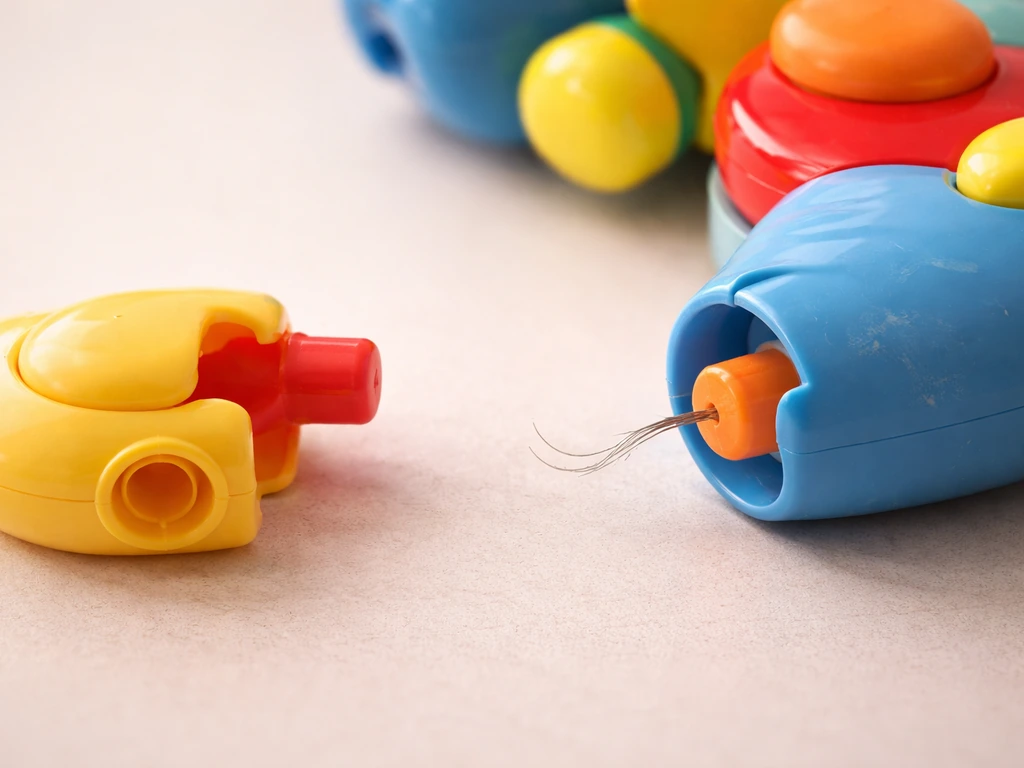
Choking and entrapment are the two physical hazards to check for before any toy goes to a rabbit. If you're curious about the science behind that odd safety, it also helps to understand why a bird can stand on an electric wire why can a bird stand on an electric wire. The Wisconsin House Rabbit Society puts it plainly: the rabbit shouldn't be able to get its head or paw stuck, and it shouldn't be able to choke on small pieces. For bird toys, this means checking ring diameters (many bird toy rings are sized for a parrot's foot, not a rabbit's head, but some smaller ones could trap a rabbit's jaw), bell openings (a small bell with a narrow slot is an entrapment hazard), and any small bead or fastener that could detach and be swallowed.
The ingestion risk is more insidious because it doesn't look dangerous until it is. Rabbits have a GI tract that can go into stasis when it encounters foreign material. Stasis is life-threatening if not treated quickly, and a foreign body obstruction may require surgery to resolve. The practical implication is that any material that sheds, unravels, or breaks into small pieces under chewing is a genuine medical risk, not just a theoretical one. Rope strands, frayed fabric fibers, and chunks of soft plastic are the main culprits in bird toys.
On the metal and paint front: check every metal component on a bird toy before giving it to a rabbit. Many bird toys use zinc-plated quick links, chains, or bells. Zinc is toxic to rabbits when ingested. The same applies to painted parts. Lead-based pigments have appeared in low-quality pet products, including older bird toys and imported items. If you can't confirm the hardware is stainless steel or the paint is food-safe, the toy shouldn't go to your rabbit. Scented or air-freshener-style toys are a separate concern: anything with added fragrance, essential oils, or chemical treatments creates air-quality and ingestion risks in an animal-care home, particularly relevant in households that also keep birds, which are even more sensitive to airborne chemicals.
Bird toy types that usually work vs. ones to leave for the birds
If you already have a collection of bird toys and you're wondering what your rabbit can safely interact with, here's how the main categories sort out.
Usually fine for rabbits
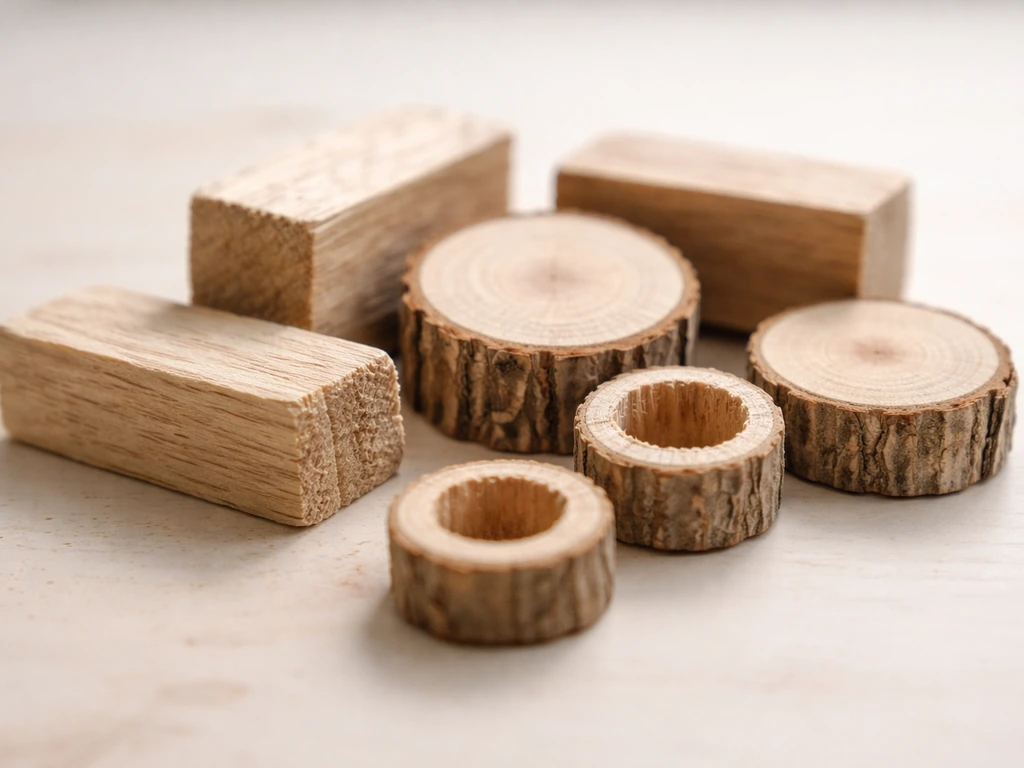
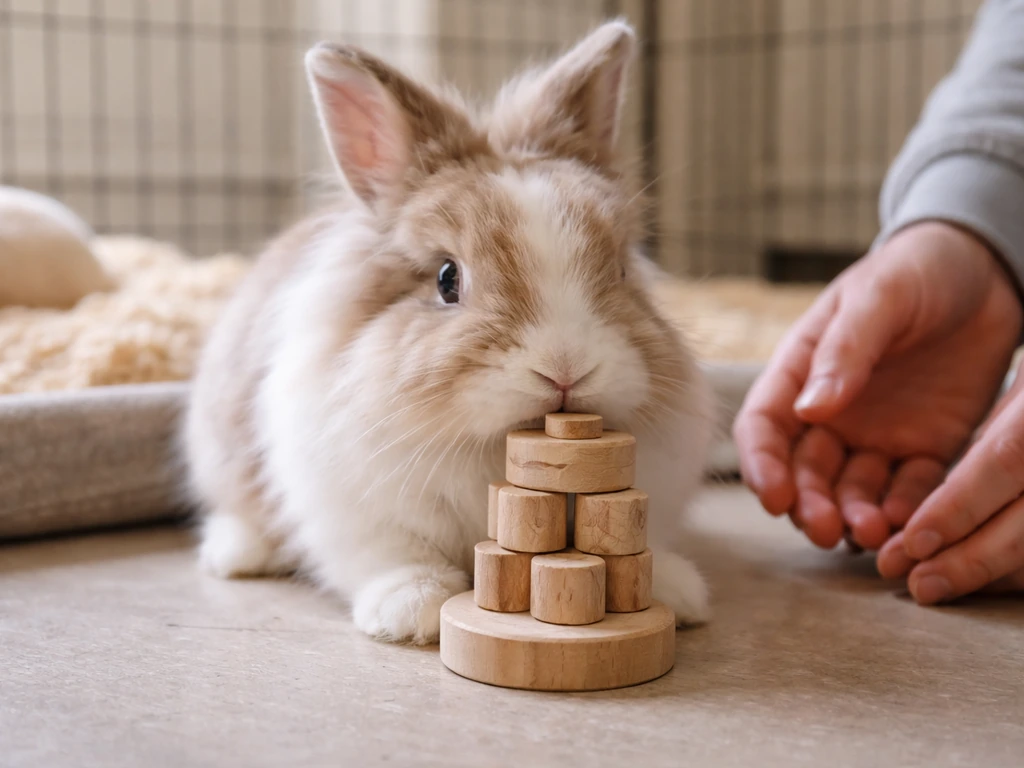
- Untreated wooden chew pieces: blocks, slices, or rings made from safe wood species (apple, willow, birch, pine are common safe options) with no finish or dye. These are essentially the same as dedicated rabbit chew toys.
- Natural-fiber foraging toys: bird foraging toys made entirely from jute, sisal, or hemp, especially if they contain hidden food. Check that there are no synthetic components mixed in.
- Cardboard shredding toys: plain cardboard components designed to be shredded are excellent rabbit enrichment and very low risk.
- Rattling toys with safe enclosures: a hard, solid rattle where nothing can be extracted from inside can work well, as long as the casing is sturdy hard plastic or untreated wood with no detachable parts.
Proceed with caution
- Ladders and flat wooden structures: wooden ladders can be fine if every connecting element is safe (check the rungs are tied with natural fiber, not synthetic cord, and that no metal staples or wire are used).
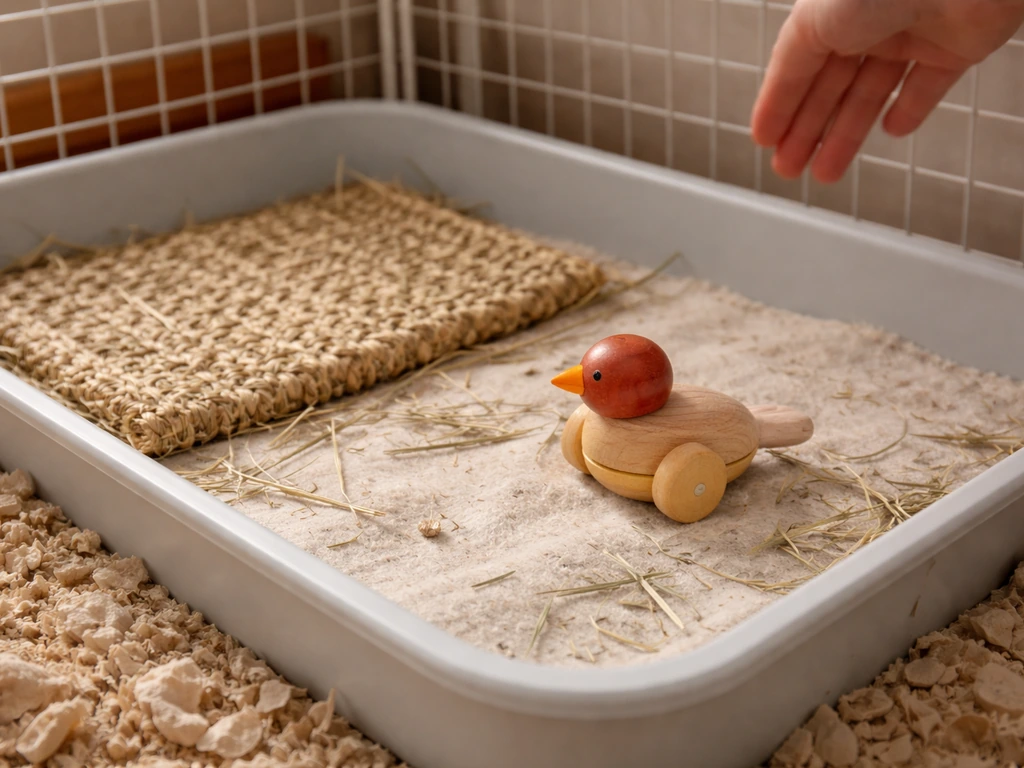
- Woven seagrass or palm leaf mats: these show up in bird and rabbit toys alike, and the material is generally safe, but check that the binding is not synthetic and that the weave doesn't unravel into long strands quickly.
- Hard plastic foraging toys: if the plastic is thick, hard, and free of questionable pigments, many rabbits will push these around without managing to chew them apart. Watch closely.
Leave these for the birds only
- Rope toys and knot toys of any kind made with synthetic or cotton-blend fibers: the strand-ingestion risk is too high.
- Swings: the hanging mechanism (usually metal hooks, quick links, or synthetic cord) combined with the movement can be stressful or physically unsafe for a rabbit. The entrapment risk is real.
- Bells with narrow openings or small clappers that can be extracted: direct entrapment and choking hazard.
- Acrylic or painted bead strings: small detachable parts plus unknown pigments is a double risk.
- Multi-material novelty toys with squeakers, gel inserts, foam padding, or fabric coverings: too many problematic components combined.
It's worth noting that the same caution around rope applies when thinking about bird toy materials more broadly. Whether a rope component is safe depends on whether it sheds strands when chewed, not just what fiber it's made from. This is the same consideration that comes up when evaluating rope for bird toys: construction and behavior under stress matter as much as the base material.
How to introduce a bird toy to your rabbit safely
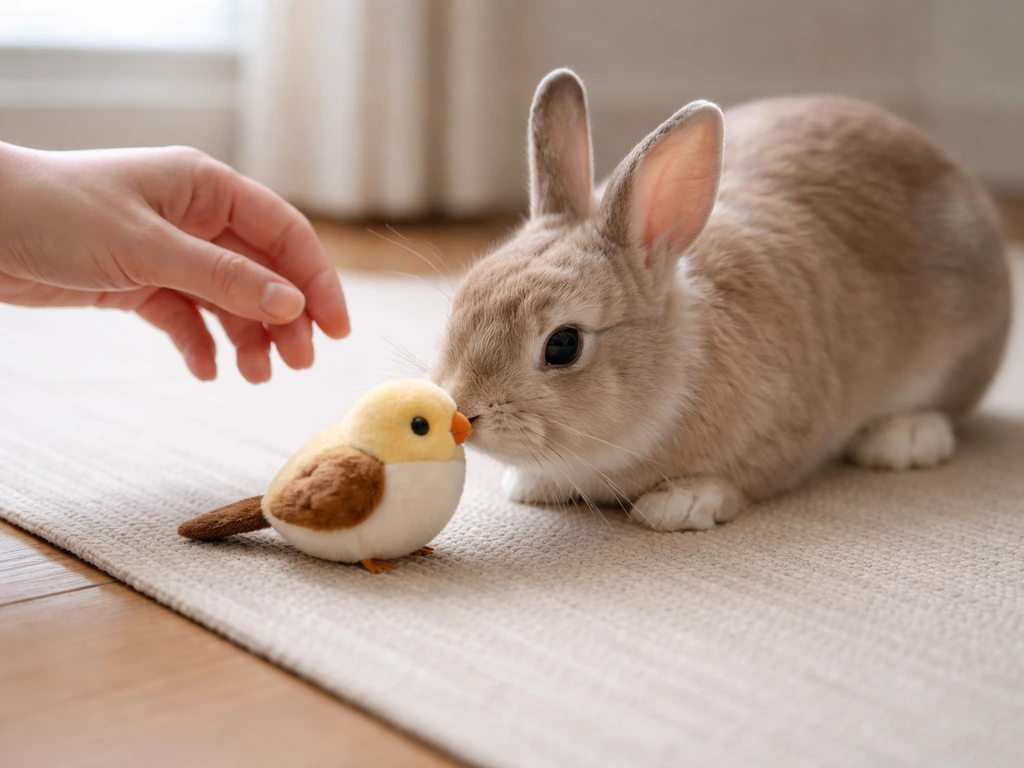
Don't just drop a new toy in the enclosure and walk away. The first session with any new toy should be supervised, especially if you haven't seen your rabbit interact with that specific material before. If you're thinking about bird sounds specifically, the safest approach is to start with very low volume and only short sessions, since sound and stress can affect your budgie's behavior. Here's a practical sequence that works well.
- Inspect the toy before anything else. Run your hands over every component. Check for metal parts (tap them, look up the material if you can), test knots to see if they loosen easily, tug on any fiber elements to see if they shed. If anything loosens, sheds, or feels risky, remove it or don't offer the toy at all.
- Offer the toy in a neutral space during a dedicated 15 to 20 minute supervised session. Sit with your rabbit and watch how they interact with it. You're specifically looking for whether they're chewing it apart, whether any pieces are detaching, and whether they're actually swallowing material.
- If the rabbit chews aggressively and pieces start coming off, remove the toy immediately. This isn't a failure. It just means that particular toy isn't right for that particular rabbit. Some rabbits are more destructive chewers than others.
- If the session goes fine, you can allow access for longer periods, but check the toy each time before giving it back. A toy that was intact yesterday may have a loose end or fraying fiber today.
- Watch your rabbit's behavior and gut health in the 24 hours after any new toy introduction. Changes in appetite, reduced droppings, or signs of discomfort are reasons to contact your vet, not reasons to wait and see.
One thing that catches people off guard: a rabbit that seems fine with a toy for the first few sessions can start chewing it differently once it becomes familiar. The novelty wears off and they start treating it more aggressively. Keep supervising periodically even after a toy has passed the initial test.
Cleaning, rotating, and keeping enrichment fresh
Rabbit toys, including repurposed bird toys, need regular inspection and cleaning. Wooden and natural-fiber items absorb moisture and can grow mold if they get wet and aren't dried properly. If a toy gets soaked with water or urine, either dry it thoroughly in a warm spot (not a chemical dryer sheet situation, obviously) or replace it. Soggy or heavily soiled toys are a hygiene risk and a signal to discard, especially for natural materials that can't be fully sanitized.
For cleaning, plain hot water works for most hard components. Avoid chemical disinfectants, scented cleaners, or anything with residue that could be ingested. If a wooden piece has absorbed odors or is visibly stained beyond surface dirt, replace it. The cost of a bird toy chew piece is not worth the risk of a vet visit.
Rotation is genuinely important for rabbits. A toy that gets ignored after a week isn't useless: put it away for two weeks and bring it back, and many rabbits will engage with it again like it's new. The House Rabbit Society recommends a rotation of bunny-safe toys for exactly this reason. It also means you don't need to buy enormous quantities of toys at once. A small collection that rotates through regularly is better enrichment than a pile of toys that get ignored.
Check every toy at each rotation for damage. Frayed fibers, loose knots, exposed hardware, cracks in hard plastic, or any piece that has become small enough to swallow should all trigger removal. The RSPCA's guidance on rabbit housing specifically calls out regular inspection for damage and potential injury points as a core responsibility, and that applies to toys as much as habitat structure.
Better rabbit enrichment alternatives to keep in the rotation
Not every enrichment need has to be filled by a bird toy. Some categories are purpose-built for rabbits and carry far less inspection overhead. Cardboard boxes and tunnels, untreated wicker balls, willow sticks, plain paper bags stuffed with hay, and cardboard toilet paper rolls filled with herbs are all low-risk, genuinely engaging options that don't require the same level of material scrutiny. If you find yourself spending a lot of time trying to make a complicated bird toy safe for your rabbit, that's usually a sign to just grab a piece of untreated willow instead.
The bird-toy crossover is most useful for foraging enrichment, where the interaction is exploratory rather than destructive. A foraging toy that your rabbit noses around to find a treat is lower risk than one they're going to systematically dismantle. Keep the destructible chew enrichment simple and species-appropriate, and use the more complex bird-toy-style items for foraging challenges where you can watch and control the interaction.
FAQ
Can rabbits play with hanging bird toys, or are they a head or paw entrapment risk?
Hanging toys can be used only if you prevent access to the suspension hardware. Remove or cover rings, hooks, and cords, then confirm your rabbit cannot get its head or paw into any opening. Also check that a bell or moving part cannot be bitten off and that the toy cannot swing into the rabbit’s face.
What’s the safest way to test a bird toy for my rabbit if I’m not sure about the material?
Start with a single small piece (the part you expect them to chew), supervise for short sessions, and inspect after each session for fraying, unraveling, new loose hardware, or sticky residue. If you cannot confirm the toy has no treated finish or hidden metal hardware, skip it rather than “trying a bit.”
Are bird toys with bells safe for rabbits?
Only if the bell is securely attached with non-chewable hardware and the opening is not narrow enough to trap a jaw or paw. Many rabbits will eventually attack detachable bits, so if the bell can be loosened by chewing, it should be removed.
Can rabbits eat any of the pieces that come off a bird foraging toy?
Small, chewed material is acceptable only when the toy is made from safe, digestible items like untreated wood or natural fibers. If any component sheds as string, flakes, foam, or soft plastic chunks, assume the rabbit will ingest it and treat that toy as unsafe.
Is hard plastic from the bird toy aisle always safe?
Not necessarily. Even hard plastic can contain pigments or additives that are hard to verify, especially with low-quality or older imports. If you cannot confirm it is lead-free and not softening or cracking under chewing stress, it’s safer to avoid it.
My rabbit already chewed a bird toy for a few days. Should I worry if they seem normal?
Monitor closely for GI upset signs, reduced appetite, smaller or fewer droppings, and hunching. Foreign body problems can become obvious only after worsening, so if the toy has any rope-like strands, glued parts, or soft plastic pieces, contact a rabbit-savvy vet even if behavior looks mostly normal.
How do I handle rope-style bird toys specifically, since they’re common in the aisle?
Do not rely on “natural-looking” fibers alone. The key issue is whether chewing produces long strands that behave like string in the gut. If the rope can be unraveled, frays easily, or has braided sections that separate, remove it immediately.
Can I disinfect bird toys for rabbit use, and what should I avoid?
Use plain hot water for cleaning most hard parts, then dry thoroughly. Avoid scented cleaners and chemical disinfectants, because residues or fumes can be ingested or cause irritation. If a wooden or natural-fiber piece smells “off,” is sticky, or shows mold, replace it rather than trying to salvage it.
How often should I rotate and inspect bird toys used by rabbits?
Rotate them rather than leaving the same toy out continuously, and re-check at each rotation for cracks, loose fasteners, frayed fibers, and newly detached small parts. Also inspect after the first few sessions with any new material, since rabbits can change their chewing once the novelty wears off.
What are lower-risk alternatives if I’m hesitant about bird toys?
If you want enrichment with less material vetting, use untreated willow sticks, wicker balls made for chewing, cardboard tunnels and boxes, or paper bags filled with hay. Foraging enrichment can also be done with rabbit-safe foraging puzzles using paper and hay, rather than dismantle-prone bird toys.
Next Articles
Why Can a Bird Stand on an Electric Wire Without Shocking
Learn why birds perch on power lines safely, the circuit physics, warning signs, and how to protect pet birds.
Garden Bird Checklist: Wild Species, IDs, and Tracking Tips
Ready-to-use wild garden bird checklist with IDs, field marks, tracking tips, and a bird station setup for beginners.
Printable Backyard Bird Guide for Beginners and First IDs
Printable backyard bird guide for beginners: simple ID key, look-alikes, and a ready-to-fill checklist for backyard sigh