Yes, you can play bird sounds for your budgie, and it can be a genuinely useful enrichment tool. But the honest answer is: it depends almost entirely on how you do it. Short sessions of calm budgie flock sounds at low volume can stimulate natural vocalizations, reduce boredom, and give a solo bird some acoustic company. Play the wrong sounds, crank the volume, or leave it running all day, and you can tip a happy little bird straight into stress mode. The good news is that getting it right is simple once you know what to watch for.
Should I Play Bird Sounds for My Budgie? Safe Guide
Marcus Chen
17 Jun 2026
Why people use bird sounds for budgies in the first place
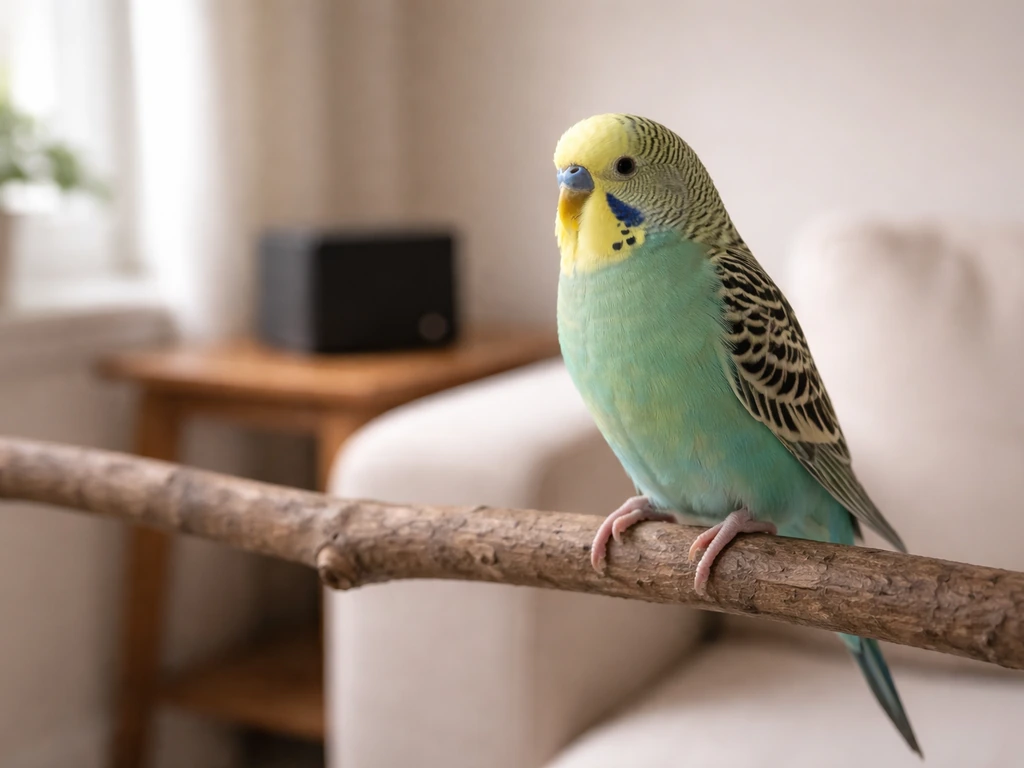
Budgies are flock birds by nature. In the wild, they live in large groups and rely on constant contact calls to stay connected to the flock. When you have a solo budgie at home, that bird is essentially missing the auditory backdrop it evolved to expect. Playing recorded budgie sounds tries to fill that gap, and there is actual science behind why it works. Research on budgerigar vocal behavior shows that auditory cues from other birds directly influence how much and how loudly a budgie vocalizes. Hearing flock calls can prompt a bird to respond with its own contact calls, which is a healthy, normal expression of budgie communication. Owners also report that budgies become noticeably more active and engaged during playback of familiar budgie sounds, which is useful enrichment in a species that needs mental stimulation throughout the day.
There is also a practical reason: life gets busy. There will be stretches of the day when your budgie is alone and you cannot provide direct interaction. A carefully chosen audio session is not a replacement for that interaction, but it can bridge the gap in a way that mirrors something natural for the bird.
When bird sounds help vs when they can backfire
This is where most first-time owners get tripped up, because the same idea that sounds beneficial can go sideways fast depending on context.
Situations where playback genuinely helps
- A solo budgie that gets quiet and withdrawn during long periods alone
- A bird that is settling into a new home and needs familiar acoustic cues to feel less isolated
- Short morning or afternoon sessions to encourage natural vocalization and activity
- Pairing sounds with calm, positive moments so the bird builds a positive association
Situations where it can cause problems
- Playing sounds at high volume, which can startle or overwhelm a bird that has nowhere to retreat
- Running playback continuously or all day, which prevents the bird from getting the mental rest it needs
- Using calls from unfamiliar or large/aggressive bird species, which can trigger alarm responses rather than relaxed contact calling
- Playing sounds at night or during sleep hours, which disrupts the 10 to 12 hours of rest a budgie needs for immune health
- Using audio as a substitute for actual interaction and training, which can mask loneliness without addressing it
- Playing territorial or mating calls, which can trigger hormonal or aggressive behavior instead of calm enrichment
First-hand reports from budgie owners confirm the mixed results: some birds respond with enthusiastic chirping and visible engagement, while others become frantic and keep up repetitive alarm-style calling long after the audio stops. The difference usually comes down to the type of sound and the individual bird's temperament. Some budgies are bold and curious; others are sensitive. You will not know which camp your bird falls into until you try, which is exactly why the introduction process matters.
Choosing the right sounds: type, volume, and duration
What to actually play
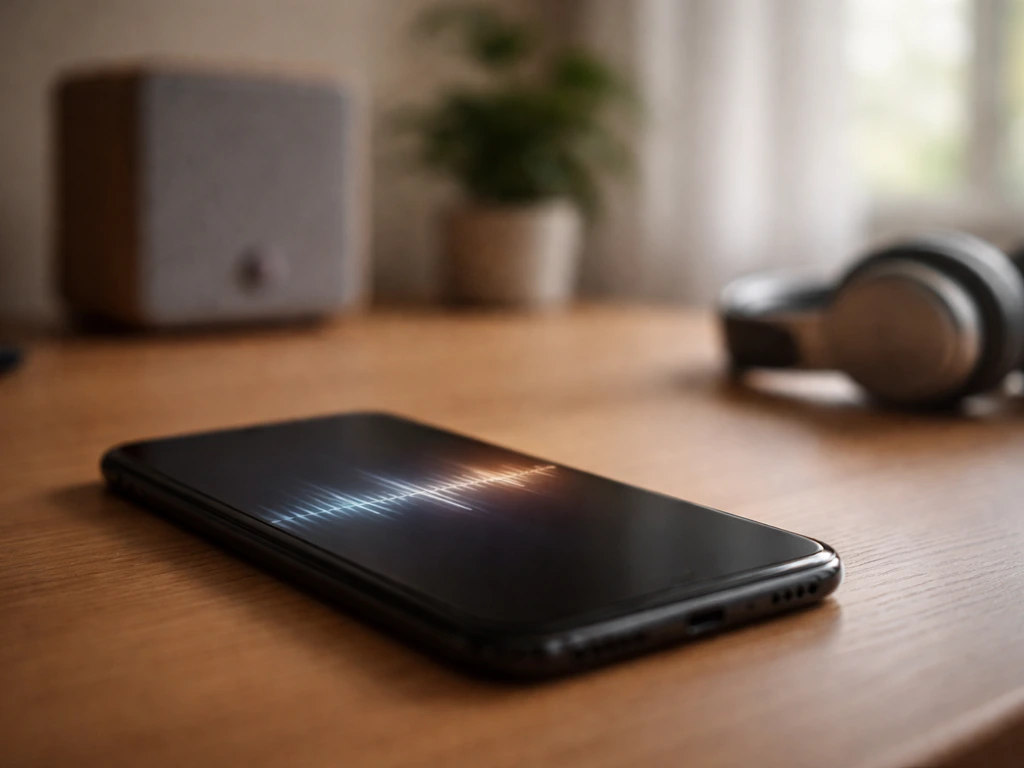
Stick to calm budgie flock recordings or gentle contact call compilations. Search specifically for budgerigar flock sounds or budgie chatter, not generic birdsong compilations that might mix in large parrots, birds of prey, or species with dramatically different call types. The goal is something your bird could plausibly interpret as a distant, relaxed flock, not an alarm or territorial dispute. Avoid anything with sudden loud calls, aggressive vocalizations, or sounds from raptors and other predator species, which are baked into a budgie's instinct to recognize as danger.
Volume
Keep it quiet. A useful rule of thumb: if you have to raise your voice to talk over the audio, it is already too loud for your budgie. Aim for something that would be comfortable background noise in a room where you were trying to have a calm conversation. Research on bird noise puts a 10 dB increase at roughly double the perceived loudness, so the difference between a sensible volume and an overwhelming one can feel gradual to you and dramatic to a bird with much more acute hearing. If your phone or speaker has a volume scale of 0 to 100, starting around 20 to 25 percent is a reasonable anchor.
Duration
Start with sessions of just one to three minutes and watch closely. Some owners report that even a minute of playback prompts clear engagement. Once you know your bird tolerates it well, you can extend to sessions of 10 to 20 minutes, two or three times a day. Do not run it continuously as background noise for hours. Budgies need periods of quiet to rest their nervous systems, and prolonged auditory stimulation without breaks is a form of stress even if the bird does not show obvious distress signals immediately. And never play bird sounds after your budgie's cage is covered for the night.
How to introduce sounds without stressing your budgie
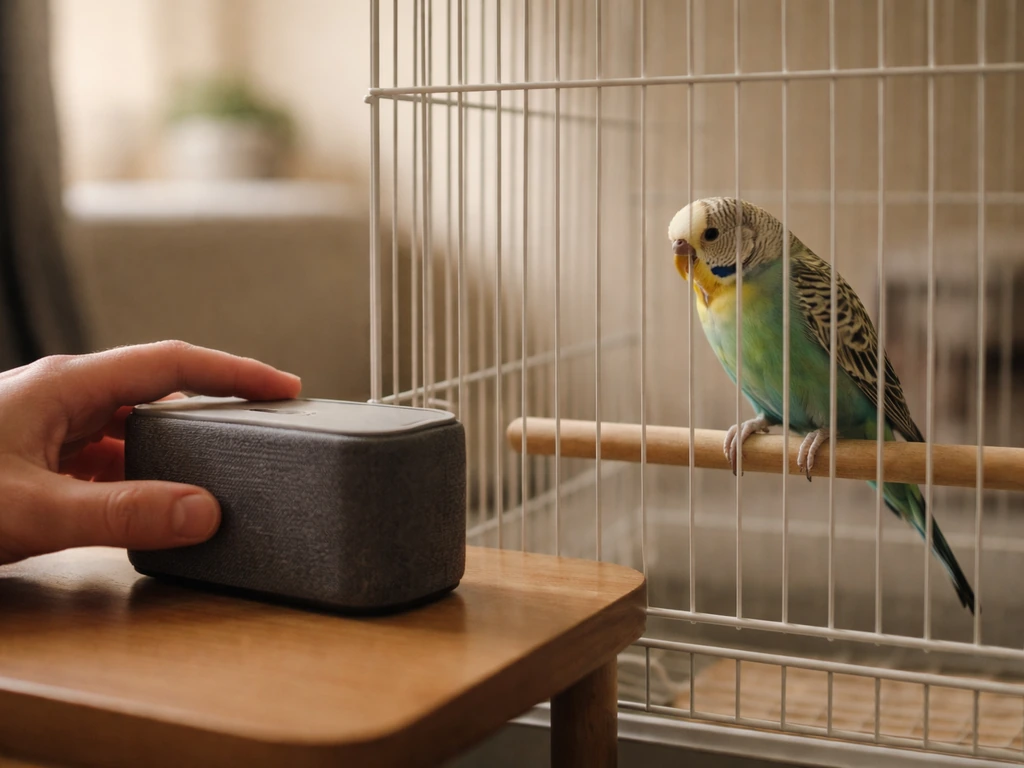
The introduction protocol matters more than people expect. Throwing a new sound into the room without context can startle a bird that would otherwise warm up to it fine over a few days. Here is a step-by-step process that works:
- Choose a time of day when your budgie is already calm and active, ideally mid-morning after it has eaten and had some time to settle. Avoid first thing in the morning or right before sleep.
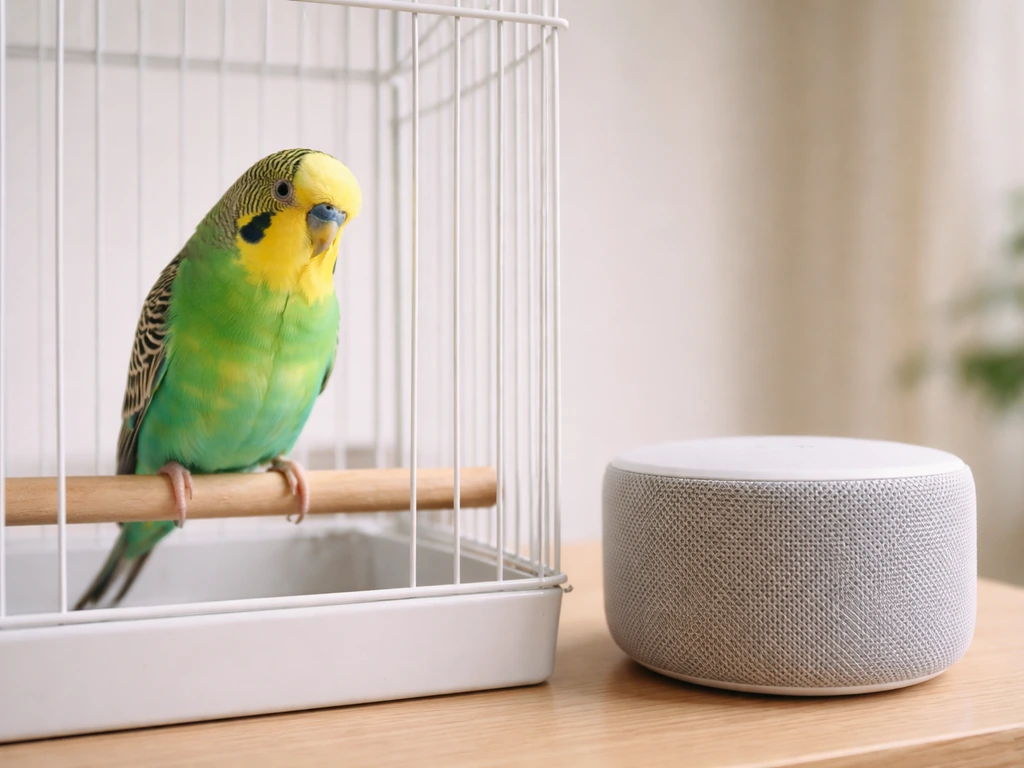
- Position the speaker across the room from the cage, not right next to it. The bird should be able to hear the sounds without feeling surrounded by them.
- Play the recording at very low volume for about one to two minutes. Stay in the room and watch your bird's body language throughout.
- If the bird chirps back, moves toward the sound, or continues normal activities like preening and eating, that is a positive sign. Praise it calmly and end the session on that positive note.
- Repeat for two to three days at the same low volume and short duration before increasing either variable.
- Gradually increase session length by a few minutes every couple of days, only if the bird continues to show relaxed, engaged responses.
- Once the bird is comfortable, you can try moving the speaker slightly closer or increasing volume slightly. Raise one variable at a time, never both together.
- If at any point the bird shows stress signals (see below), stop immediately, go back to the shorter/quieter starting point, and wait a few days before trying again.
How to monitor your budgie's reaction and adjust
Reading your bird's response is the single most important skill here. Budgies are good at hiding discomfort, so you need to know exactly what to look for rather than assuming silence means everything is fine.
Signs the playback is going well
- Chirping, chattering, or singing along with the recording
- Moving toward the sound source with alert, curious posture
- Continuing to eat, drink, and preen normally during or after playback
- Relaxed feathers sitting flat against the body (not puffed)
- Normal activity level after the session ends
Signs of stress to stop for immediately
- Frantic, repetitive alarm-style calling that continues after you stop the audio
- Hiding in a corner of the cage or pressing against the back wall
- Pacing, rocking, or repetitive head movements
- Feathers fluffed up while the bird sits still and hunched
- Open-mouth breathing or panting at rest (this is serious and warrants a vet call, not just stopping the audio)
- Decreased appetite or reduced droppings after sessions
- Increased feather picking or self-directed aggression in the days following playback
A note on open-mouth breathing specifically: this is a red flag that goes beyond audio stress. Birds hide illness well, and if you notice labored or open-mouth breathing at rest, that could indicate a respiratory problem that was already present. Do not assume the audio caused it and move on. Get an avian vet involved. The same applies if appetite drops and stays down, or if feather picking escalates. These can be signs of underlying medical issues that need professional assessment, not just a tweak to your enrichment routine.
Adjustments to make if the reaction is mixed
If your bird seems vaguely unsettled but not in full stress mode, the most common fixes are: lower the volume, shorten the session, move the speaker farther away, or try a different recording with calmer/quieter budgie sounds. Some birds that react poorly to full flock calls do much better with very soft recordings of a single budgie quietly chattering. Give at least two to three days between attempts so you are not layering stress on top of stress.
Alternatives to audio enrichment (and a full-day enrichment plan)
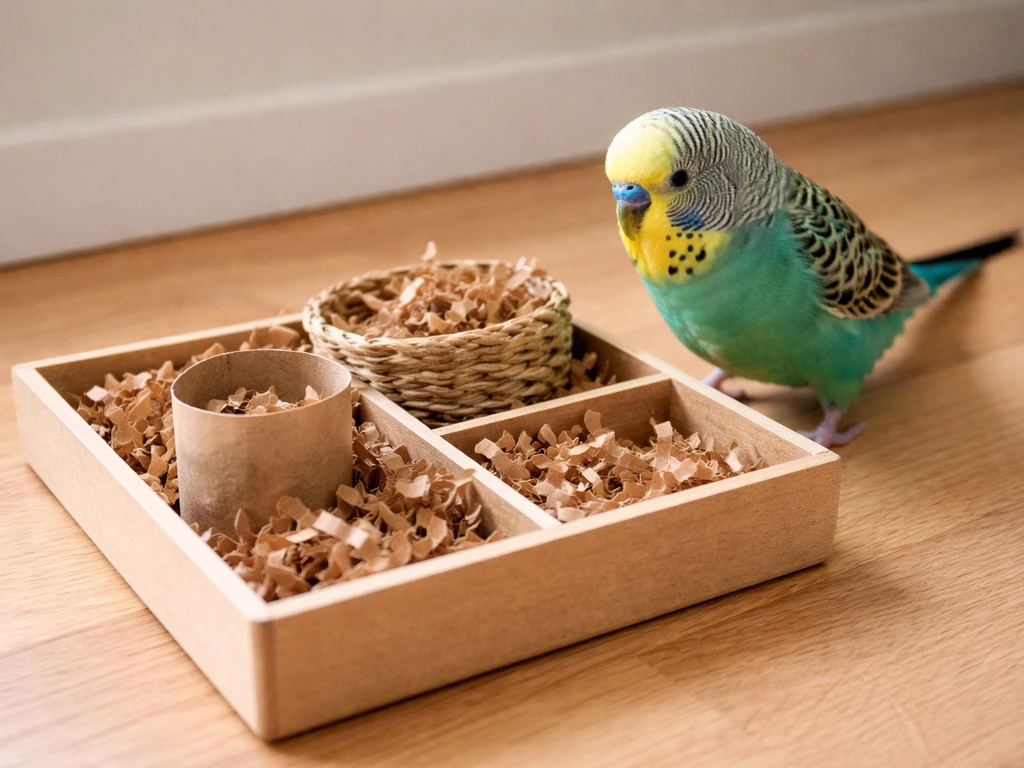
Even if bird sounds work great for your budgie, they should be one component of enrichment, not the whole plan. The Association of Avian Veterinarians specifically frames budgie welfare around toys, social interaction, and foraging as the core pillars. If you want toy enrichment too, pick the best rope for bird toys that is safe for chewing and play. Here is how to build a full day of enrichment that does not rely on audio at all, or uses it as one small piece.
Foraging opportunities
Foraging is probably the single most underused enrichment tool for budgies. Hiding seeds or small treats in foraging toys, wrapping them in plain paper, or scattering them in a shallow tray on the cage floor engages the same problem-solving instincts a budgie would use in the wild. In a budgie owner discussion on Reddit, people also suggest bottom-of-cage foraging items as hands-on enrichment to keep birds busy and engaged blank" rel="noopener noreferrer">scattering them in a shallow tray on the cage floor. It also extends eating time from 30 seconds to several minutes, which matters for mental stimulation. Rotating a small set of foraging toys keeps novelty high without overwhelming the bird. However, you can also offer rabbit-appropriate enrichment by checking whether the toys you plan to use are safe for rabbits to interact with. Look for toys made from untreated natural wood, stainless steel hardware, and non-toxic plant fibers when choosing materials.
Toy rotation
Keep three to five toys in the cage at a time and swap one or two out every week. When choosing toys, it is also important to confirm that the materials are safe for your bird, including whether yarn is safe for bird toys is yarn safe for bird toys. Budgies habituate quickly to static environments, and a new toy in a familiar spot is genuinely exciting for them. You do not need to buy new toys constantly: pulling out something that has been in storage for two weeks often gets the same reaction as brand new.
Training and direct interaction
Short daily training sessions of five to ten minutes are one of the most effective enrichment strategies you have. Teaching a budgie to step up, recall to your hand, or target a stick with its beak builds trust, stimulates problem-solving, and provides social interaction that no audio recording can replicate. Training with positive reinforcement (offering a small millet reward for correct behavior) also gives you an activity your bird can look forward to reliably, which reduces stress-related behaviors across the board.
Flight time and environment changes
Safe, supervised out-of-cage time in a bird-proofed room is irreplaceable for a species that evolved to cover large distances. Even 20 to 30 minutes of free flight daily makes a significant difference to a budgie's mood and physical health. If your bird is not yet comfortable leaving the cage, you can start enrichment by rearranging perches and toys within the cage every week or two to change the physical environment without requiring the bird to be out. If you are thinking about using toys or enrichment items designed for other birds, make sure you choose rabbit-safe options, because “bird toys” are not automatically safe for rabbits.
A note on mirrors
Mirror toys are popular with budgie owners but worth thinking through carefully. A mirror can provide some visual stimulation, but a solo bird may become overly focused on its reflection as a substitute companion, which can interfere with bonding with you and sometimes triggers obsessive behavior. If you are using audio playback and mirrors at the same time and your bird seems increasingly hormonal or blank" rel="noopener noreferrer">territorial, remove the mirror first and see if behavior settles.
Sample daily enrichment schedule
| Time of Day | Enrichment Activity | Duration |
|---|---|---|
| Morning (after uncovering cage) | Fresh food, foraging tray or hidden treats, interactive chat from you | 15-20 min |
| Mid-morning | Bird sounds playback session (if using) | 10-15 min |
| Midday | Foraging toy, rotate one toy in cage | Passive (bird-led) |
| Afternoon | Out-of-cage flight time in safe room | 20-30 min |
| Late afternoon | Short training session with step-up or targeting | 5-10 min |
| Evening | Calm interaction, wind-down chatter, no audio | 10-15 min |
| Night | Cage covered, no audio, full sleep | 10-12 hours |
The bottom line is that bird sounds can be a useful, science-backed enrichment tool for your budgie as long as you treat them the way you would any new stimulus: introduce slowly, keep sessions short, watch the bird closely, and be ready to stop if the reaction tells you to. But audio is never a substitute for the things that actually matter most: time, foraging challenges, safe flight space, and regular training that builds trust between you and your bird. It is also important to understand bird safety around electricity, because birds can sometimes stand on wires without knowing the danger audio is never a substitute. Get those right first, and anything else, including playback, becomes a bonus rather than a workaround.
FAQ
Can I leave bird sounds playing in the background while I’m away all day?
It’s best not to. Even if your budgie looks calm, continuous playback can still keep the nervous system “on” and lead to stress or repetitive alarm-style calling. Use short sessions, then provide a quiet break, and never treat the audio as a substitute for normal day-to-day interaction and routines.
What volume is safest to start with, and how can I judge it if I don’t have a dB meter?
Start low enough that it would feel comfortable for you as background noise in the same room. A practical approach is beginning around 20 to 25 percent on a phone or speaker scale, then adjust only if your budgie clearly engages or clearly unsettles. If you notice you have to raise your voice to talk over it, it’s too loud.
My budgie gets louder during playback. Does that mean the sound is working?
Not automatically. Some budgies respond with healthy contact calls and normal activity. Watch the pattern instead of the volume: brief, responsive chirping during the session can be positive, but persistent, frantic, alarm-like calling that continues after the audio ends is a sign to stop or switch to a calmer, quieter recording.
How do I tell the difference between normal curiosity and stress from bird sounds?
Normal interest usually looks like relaxed body posture, appropriate vocalizing that matches the session, and steady behavior. Stress often shows sustained agitation, frantic pacing, tail flicking with continued alarm calls, or “can’t settle” behavior that worsens over days. If you see any escalation, lower volume, shorten the session, or stop and reassess the recording choice.
Are some types of budgie recordings riskier than others?
Yes. Avoid mixes that include predators, raptors, or sudden loud calls, and be cautious with videos that sound like territorial disputes or aggressive flocking. Prefer calm budgerigar flock contact calls or soft chatter from budgies, ideally with no sharp peaks.
Should I play the same recording every time, or rotate tracks?
For most budgies, using one familiar calm track is a good starting point, because novelty can itself be stimulating. If your budgie habituates quickly and stops responding, you can rotate recordings after a few sessions, but change gradually and only if behavior stays calm.
How far should the speaker be from the cage?
Place it farther away rather than right next to the cage so the sound feels like distant flock contact, not a presence inside the bird’s space. If your budgie reacts strongly at your current distance, increase distance or reduce volume before switching to a different recording.
What if my budgie’s first reaction is poor, then improves later? Should I keep pushing?
No. Improvement can happen, but you should not “force” repeated sessions that trigger stress. If reactions were unsettling, wait at least two to three days between attempts, then reintroduce at lower volume and with a calmer recording. Stop if the next attempt recreates the distress pattern.
Is open-mouth breathing always related to the bird sounds?
Open-mouth breathing at rest is a medical red flag, and it should not be assumed the playback caused it. Birds can hide illness well, so if you notice labored breathing, appetite drop that persists, or increased feather picking, contact an avian vet promptly rather than adjusting audio.
Is it okay to use bird sounds if my budgie is covered at night?
No, don’t play recordings after the cage is covered for the night. Use playback only during your normal daytime window, then let the bird have quiet, predictable periods for rest.
Will bird sounds help if my budgie is already bonded with me?
It can, but it’s not guaranteed and it may add stimulation your bird does not need. Even bonded budgies can benefit from enrichment, but if your bird becomes more territorial, hormonal, or fixated on the audio, reduce the frequency or stop and focus on foraging, toys, and training that strengthens your bond.
Can bird sounds replace foraging toys or training?
No. Audio is enrichment, not a full substitute. Foraging and short positive-reinforcement training provide problem-solving, rewards, and social interaction that recordings cannot replicate. Treat playback as optional and secondary to those core activities.
Should I use bird sounds together with a mirror?
Be careful. A mirror can increase visual stimulation, and some solo budgies may become overly focused on themselves, leading to obsessive or hormonal behavior. If you are using both and you notice increasing territorial or hormonal signs, remove the mirror first and reassess behavior.
What’s the safest way to introduce bird sounds for the first time?
Start with very short sessions (about one to three minutes), keep volume low, and observe closely during and after playback. Introduce only when the bird is otherwise healthy and settled. If you see stress signals, shorten further, lower volume, increase speaker distance, and try a different calm recording after a few days.