The best bird aviary designs share four non-negotiable traits: safe bar or mesh spacing for the species, enough horizontal space for real movement, ventilation that keeps air clean without creating drafts, and a layout you can actually clean without disassembling everything. Get those four right and you have a good aviary. Miss even one, and you risk injury, illness, or a stressed bird that's miserable no matter how pretty the enclosure looks.
Best Bird Aviary Designs: Layout, Safety, and Build Guide

Marcus Chen
13 Jun 2026
What 'best' actually means for a pet-bird aviary
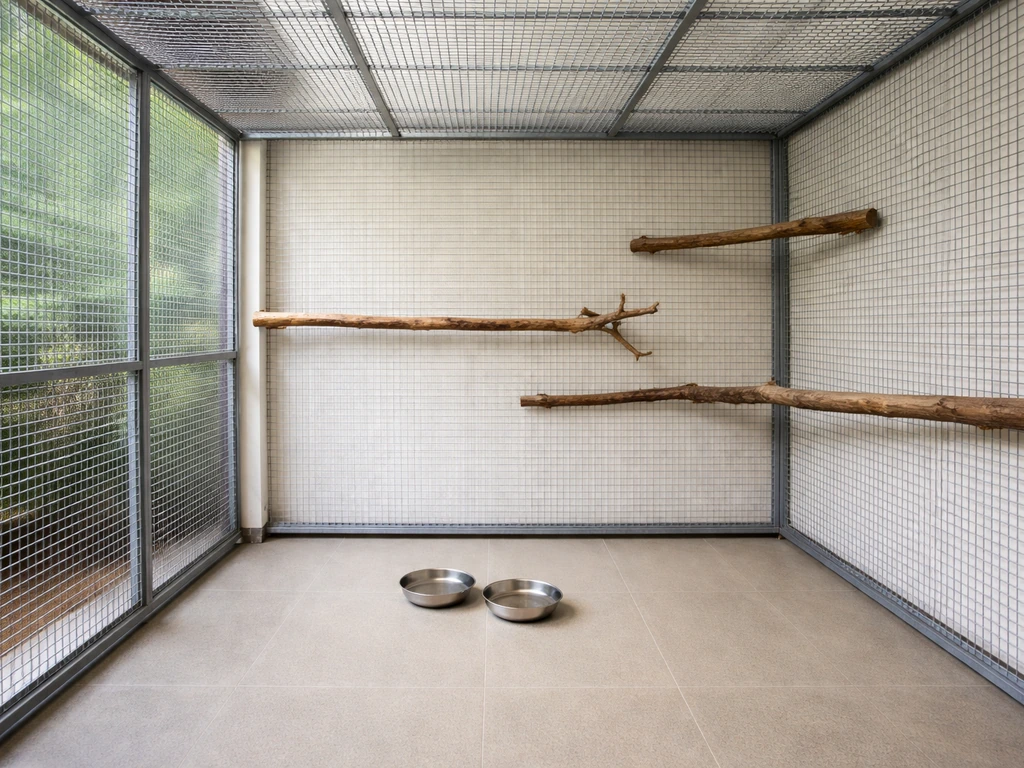
People fixate on aesthetics when they should be thinking about safety, species fit, and size. A gorgeous powder-coated walk-in aviary is worthless if the bar spacing lets your budgie poke its head through and get stuck, or if it's so tall and narrow that your cockatiel can't actually fly horizontally from one perch to another. 'Best' is always relative to the bird you're keeping.
Bar spacing is the single most species-specific variable. According to Merck Veterinary Manual guidelines, budgerigars, cockatiels, lovebirds, and parrotlets need spacing no wider than 0. 5 inches to prevent escape and head entrapment. The Edmonton Humane Society's housing guidance puts cockatiel spacing at 0.
5 to 0. 625 inches and is clear that tail feathers should not press against the bars. Larger parrots obviously need more room overall, but the bar spacing still has to match the bird's head size. The rule is simple: if the bird can get its head through the gap, the gap is too wide.
An avian welfare housing guide from the Avian Welfare Coalition says bar spacing should not exceed 1/2 inch so birds do not poke their heads through if the bird can get its head through the gap.
Size is the second non-negotiable. RSPCA housing guidance is direct about this: cages with lots of vertical height but not enough horizontal length are one of the most common mistakes people make. Birds don't fly up and down, they fly across. The World Parrot Trust specifically calls out 'air space' as the critical measure, noting that in a well-designed large aviary, flight from one end to the other should be possible. If your design doesn't allow that, you need a safe free-flight room, not just a taller enclosure.
| Bird Type | Minimum Cage Size (starter) | Bar/Mesh Spacing | Key Design Priority |
|---|---|---|---|
| Budgerigar | 20 × 20 × 30 in | 0.5 in | Horizontal flight space |
| Cockatiel | 20 × 20 × 30 in (bigger is better) | 0.5–0.625 in | Tail clearance, horizontal length |
| Lovebird / Parrotlet | 20 × 20 × 30 in | 0.5 in | Escape-proofing, chew resistance |
| Small-medium parrot (conure, caique) | Wider + taller than minimum | 0.5–0.75 in | Horizontal flight, enrichment space |
| Large parrot (African grey, amazon, macaw) | Species-specific, much larger | 0.75–1.5 in depending on species | Structural strength, predator resistance |
Indoor vs outdoor: how to think about location and air quality
Where you put the aviary changes almost every design decision. Indoor aviaries give you climate control and predator protection, but they also concentrate dust, dander, and fumes in a smaller space. Outdoor aviaries give birds natural light and fresh air, but they expose them to weather extremes, wild birds carrying disease, and nighttime predators that can cause fatal fright stress even through the mesh. These same safety and species-fit principles are what you should use to choose the best plants for bird aviary setups.
Indoor air quality is a bigger deal than most beginners expect
Birds have extremely sensitive respiratory systems. VCA Animal Hospitals flags PTFE-coated (Teflon-type) cookware as a serious hazard, but the list doesn't stop there: cleaning product fumes, aerosol sprays, air fresheners, paint and varnish fumes, scented candles, fireplace smoke, and dirty HVAC ducts all pose real respiratory risks. PetMD notes that birds exposed to aerosol sources can develop breathing difficulty and neurological symptoms. If your aviary is in or near the kitchen, rethink that location entirely.
For indoor setups, ventilation means cross-airflow without drafts, not just an open window. Place the aviary away from exterior doors and AC vents that blast directly on the bird. A room with a HEPA air purifier running nearby makes a meaningful difference for both bird health and controlling the fine dust that cockatiel and cockatoo owners know all too well.
Outdoor aviary design priorities
Outdoor designs need a covered 'shelter' section, roughly one-third of the total aviary footprint, where birds can get completely out of wind and rain. That section should face away from the prevailing wind direction in your area. In hot climates, partial shade cloth over the wire mesh prevents heat stress during peak afternoon hours. In cold climates, a solid wall on the north or northwest side cuts wind chill dramatically.
Wild birds landing on or near the aviary can transmit disease through droppings, which means your outdoor mesh needs to be tight enough that wild birds can't reach through. A double-door 'safety porch' entry is a common design feature that prevents both escapes and wild bird contact during entry and exit. If you're also thinking about what plants to put in or near the aviary, stick to species confirmed as non-toxic to birds, since some popular garden plants are harmful.
Core design rules: spacing, ventilation, escape-proofing, and predator safety
This is where design decisions have the highest safety stakes, so I'll be specific rather than vague.
Mesh and bar materials
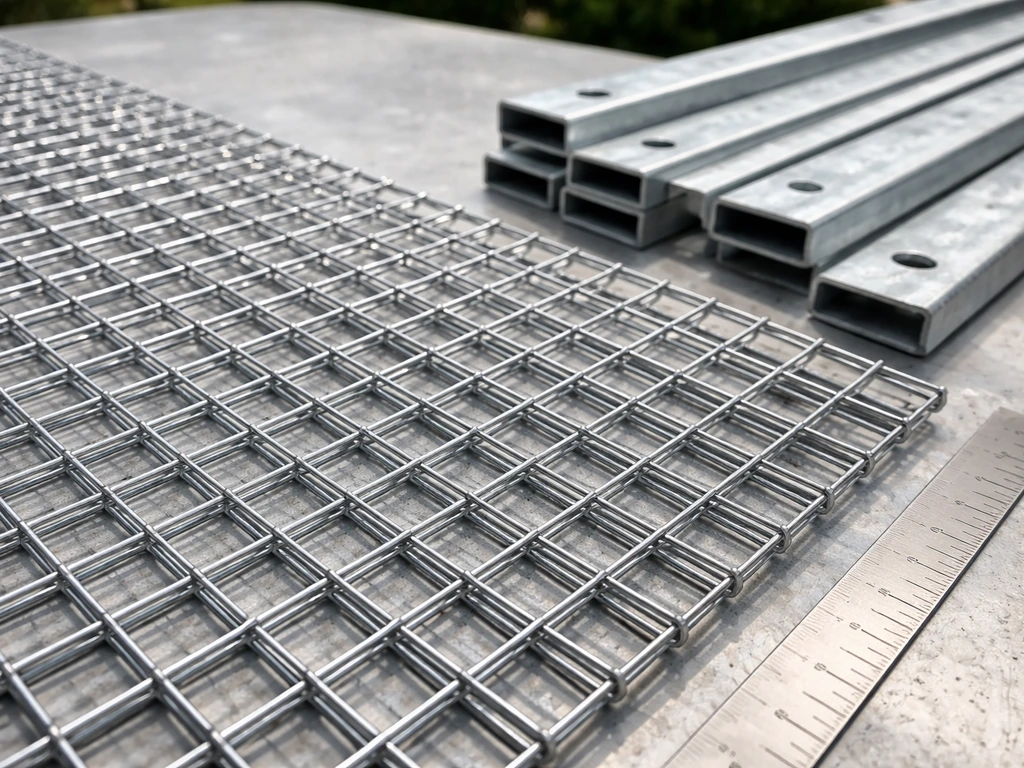
For outdoor aviaries or any design where predator protection matters, the National Park Service rodent exclusion guidance recommends 16- to 19-gauge galvanized-after-welding hardware cloth with 0.5 × 0.5-inch mesh, welded at each joint. The 'galvanized after welding' part matters because wire that's welded after galvanizing has exposed raw metal at the joints, which can cause zinc toxicity if birds chew on it. Birdline Parrot Rescue's aviary construction guidance similarly emphasizes durable, thick mesh scaled to species size. For small birds like finches or budgies, 0.5-inch mesh is ideal. For larger parrots that can cut through lighter gauge wire, step up to 14 or 12 gauge.
Avoid any wire or cage coating you can't verify as bird-safe. Zinc and lead in cheap powder coatings or galvanized wire are a real poisoning risk. When in doubt, stainless steel is the safest option, even though it costs significantly more upfront.
Escape-proofing and predator protection
- Use a double-door entry (safety porch) on any outdoor aviary so a loose bird can't escape when you open the main door
- All latches should require two separate movements to open, since parrots are smart enough to work simple slide latches
- Bury hardware cloth 12 inches underground around the perimeter, bent outward at 90 degrees, to block digging predators
- Roof the entire structure with mesh or solid roofing, since raccoons, owls, and hawks can reach through open tops
- Check for any gap wider than the bar spacing tolerance for your species, including at corners and door frames where mesh tends to pull away from framing
Ventilation without drafts
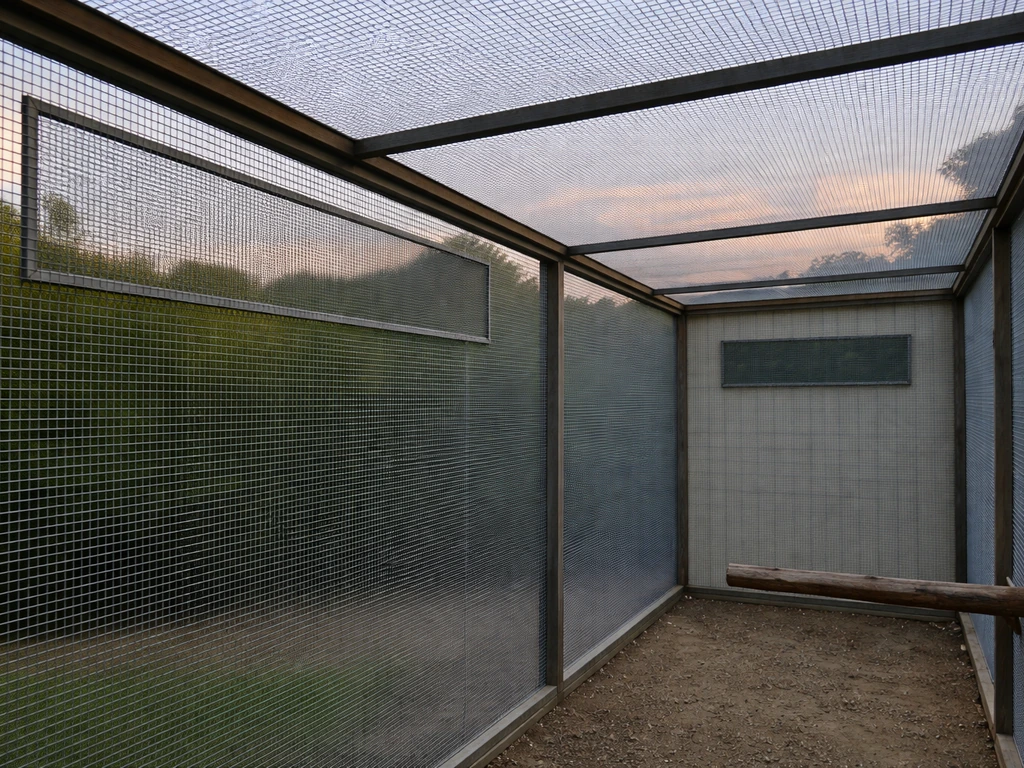
Good ventilation means fresh air moves through the space without a direct cold stream hitting the birds. In outdoor walk-in aviaries, wire mesh panels on at least two non-adjacent sides create passive cross-ventilation. In indoor enclosures, avoid placing the aviary directly in front of an AC vent or under a ceiling fan running at high speed. If you're building or buying an indoor cabinet-style aviary, look for designs where the back panel has ventilation gaps rather than solid walls on all four sides.
Layout for daily life: perches, feeders, water, cleaning, and traffic flow
The design that looks great in a photo often fails in daily use. I've seen aviaries where the water dish is positioned directly under a favorite perch (constant contamination), feeders placed so close together that birds fight for access, and no way to clean the floor without moving every perch and accessory first. Good layout planning prevents all of that.
Perch placement
Perches should be at multiple heights, with the highest perches reserved as the prime sleeping spots. Never place a lower perch directly below a higher one, since droppings will contaminate the lower perch constantly. Use perches of varying diameter and texture (natural wood branches are ideal) so feet get real exercise. Sandpaper perches and sandpaper cage liners are both a bad idea: LafeberVet's caging education materials explicitly say to avoid sandpaper perches entirely because they're too abrasive for feet, and VCA warns that sandpaper liners can be picked apart and ingested, potentially causing GI obstruction.
Feeders and water placement
Position food and water stations away from perches above them, ideally mounted on the side walls with drip guards. For multi-bird aviaries, provide at least one extra feeding station beyond the number of birds to reduce competition. Water changes daily (minimum) so placement needs to make that easy, not an obstacle course.
Cleaning access
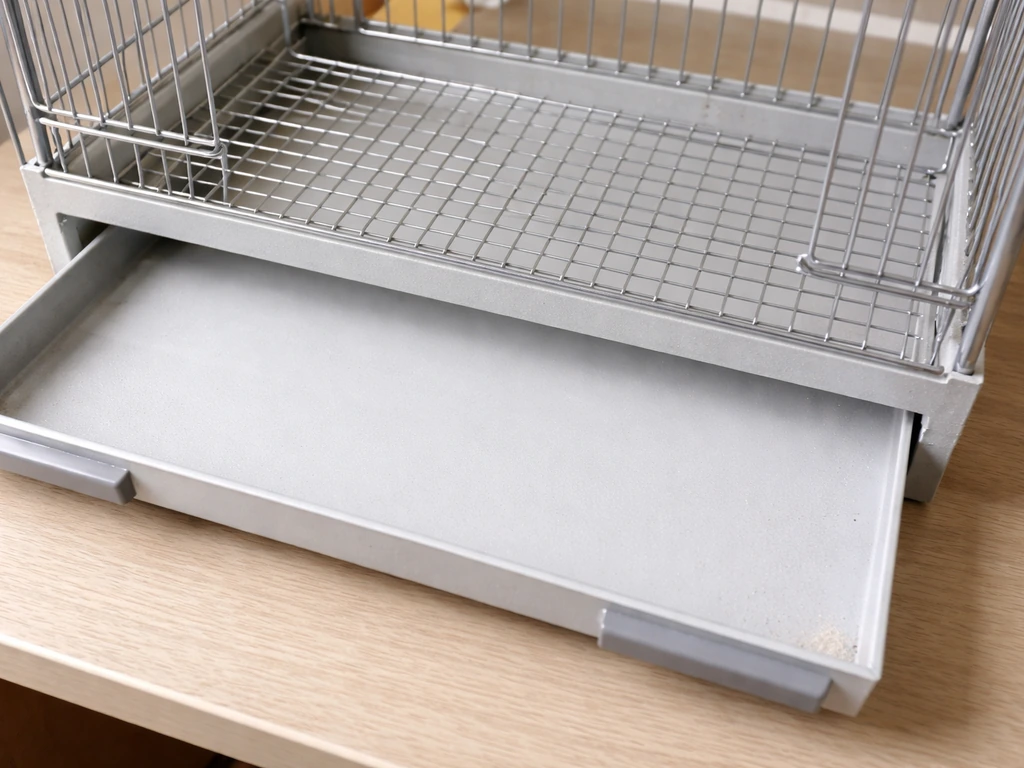
VCA's cage hygiene guidance points out that dirt, fecal matter, food debris, and feather dander accumulate on every surface. Design for this reality: a slide-out tray at the bottom is almost mandatory. If you're building a walk-in aviary, smooth, sealed concrete or heavy-gauge vinyl flooring cleans far faster than bare earth or rough surfaces. Every component (perches, dishes, toys) should be removable without tools. Round cages, as the Edmonton Humane Society notes, are harder to clean and have narrowing bar gaps near the top that can pinch birds, so skip the round cage trend entirely.
Enrichment and where to put it
Enrichment isn't decoration. It's a welfare requirement. RSPCA guidance names foraging as a core enrichment tool, specifically because it makes birds work for food the way they would in the wild. A bird that solves a foraging puzzle is a bird that's mentally occupied and behaviorally healthy.
Foraging enrichment placement
Foraging items work best when placed at multiple points in the aviary at different heights, not all clustered in one corner. Scatter food in paper, roll it in cardboard tubes, or use foraging boxes that require the bird to dig and search. RSPCA recommends positioning these so they encourage natural food-searching behavior without creating soiling hot spots directly over food or water stations. Rotate foraging setups every few days to keep the challenge fresh.
Safe chew zones
Parrots need to chew. Design a zone with replaceable chew items (untreated softwood branches, palm fronds, natural cork) that you expect to be destroyed and can swap out easily. Keep chew items away from any coated metal components since the chewing behavior extends to anything nearby. LafeberVet toy safety guidance warns against fabric loops or threads that can cause entanglement or strangulation, and Best Friends Animal Society recommends avoiding open loops in any hanging toys. Inspect all hanging enrichment weekly for fraying, broken parts, or gaps that could trap a foot or neck.
Social setup for multi-bird aviaries
If you're housing multiple birds together, the aviary needs to be large enough that each bird can claim a territory. Dominant birds will monopolize the highest perch and the most coveted feeder. Build in visual barriers (a mounted piece of cork board, a cluster of hanging toys, a branch that blocks line of sight) so a lower-status bird can eat without being constantly harassed. For birds being newly introduced, a divided aviary with a see-through mesh partition lets them get used to each other before being put in shared space.
Mistakes beginners almost always make
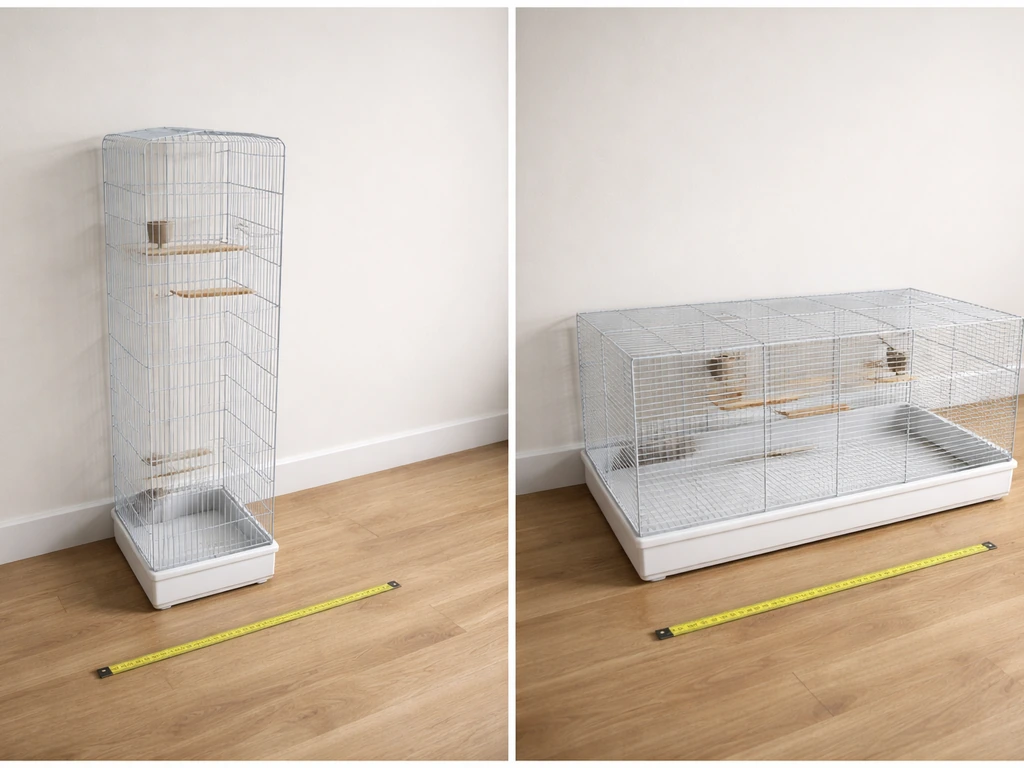
I'll be honest: most of these are understandable because the wrong advice is surprisingly common online. Here's what to watch out for.
- Buying tall instead of wide. A cage that's 60 inches tall but only 18 inches wide gives a bird almost no useful horizontal flight space. Height feels impressive; width is what matters for birds.
- Wrong bar spacing for the species. This is how birds get their heads stuck and panic or injure themselves overnight. Check the exact spacing spec for your species before any purchase.
- Placing the aviary near the kitchen. PTFE fumes from overheated non-stick pans, cooking smoke, and aerosol cleaning sprays are all concentrated near the kitchen and all pose real respiratory risks to birds.
- Using cheap or unverified wire. Galvanized wire that isn't 'galvanized after welding' can leach zinc. Painted or coated wire with unknown coatings can cause heavy metal toxicity.
- No slide-out tray or easy floor access. If cleaning the bottom requires removing every perch and accessory, it won't get cleaned often enough, and disease risk rises quickly.
- Clustering all enrichment in one spot. Birds need reasons to move around the whole aviary. Spreading perches, foraging items, and chew zones across the full length encourages movement and reduces boredom-driven feather destruction.
- Sandpaper anything. No sandpaper liners, no sandpaper perches. Both cause harm and are unnecessary.
- Round cages. Harder to clean, narrowing bar gaps near the top, and no safe corners for birds that want to feel secure. Rectangular is almost always better.
- Skipping the safety porch on outdoor builds. One distraction while you're entering and a bird can be gone in seconds. A double-door entry is not optional for outdoor aviaries.
Your practical build and upgrade checklist
Use this before you buy anything or commit to a build. If you can check every box, you have a solid aviary design. If you can't check a box, that's the thing to fix first before spending money on enrichment accessories.
- Bar or mesh spacing confirmed correct for your species (0.5 in for budgies, 0.5–0.625 in for cockatiels, scaled up appropriately for larger birds)
- Horizontal interior length allows the bird to fly or glide at least a few wingspans from perch to perch
- All wire or bar material is verified bird-safe (stainless steel, or galvanized-after-welding hardware cloth at 16–19 gauge minimum)
- No round cage design; rectangular with accessible floor panel
- Slide-out or easy-clean tray at the base
- Double-door safety entry if outdoors
- Predator exclusion: buried perimeter mesh, roof mesh or solid cover, two-step latches on all doors
- Ventilation on at least two non-adjacent sides, not directed as a direct draft onto birds
- No sandpaper perches or liners; natural wood perches of varying diameters
- Food and water stations positioned away from perches above them
- At least one extra feeding station per group of birds
- Foraging enrichment distributed at multiple heights throughout the aviary
- Designated chew zone with replaceable natural wood items
- No hanging toys with open loops, loose threads, or fraying parts
- Aviary location is away from kitchen fumes, aerosol products, and direct AC vent blast
- If indoors: HEPA air purifier nearby, no PTFE-coated cookware used in the same room
- All enrichment and accessories removable without tools for cleaning and rotation
Next steps for new owners
If you're starting from scratch, nail the species-appropriate size and bar spacing first, then focus on location and ventilation, and only then worry about enrichment layout. If you're upgrading an existing setup, use the checklist above and fix the highest-risk items first: wrong bar spacing, unsafe materials, and poor cleaning access cause the most harm. From there, improving the enrichment setup and adding foraging elements is a relatively low-cost, high-impact upgrade.
It's also worth thinking about what you put inside the aviary and what plants (if any) you want to include, since toxic plants are a real hazard. To attract more birds naturally, choose bird-friendly plants suited to your climate and place them where birds can access them safely.
The question of cost is also worth thinking through honestly, because a well-built aviary is a meaningful investment, but corners cut on materials often mean rebuilding sooner and paying more in vet bills. You can use size, materials, and whether it's indoor or outdoor to estimate how much is a bird aviary will cost before you start shopping. Getting the design right the first time is almost always cheaper than fixing it later.
FAQ
How do I confirm bar or mesh spacing is safe for my specific bird, not just “about the right size”?
Measure the bird’s head width, not its body, and compare it to the maximum gap. Then do a one-time check by holding a spacer or rigid gauge up to the gap from both sides. If you can fit the spacer so the bird’s head could pass, plan for narrower mesh, or add an inner barrier panel where the bird spends time (near favorite perches and food areas).
Can I use standard garden wire or hardware cloth if I plan to keep birds from chewing?
Don’t rely on behavior. If birds can reach it, treat it as chewable and choose bird-safe materials. The article notes “galvanized after welding” to avoid raw metal at joints, but also avoid any coating you cannot verify as bird-safe, since even light chewing over time can expose toxic elements.
What’s the simplest way to prevent drafts while still getting good airflow indoors?
Create cross-airflow by positioning the aviary so air moves across the enclosure, not straight at the birds. Avoid direct lines to AC vents and ceiling fans, and if possible use a purifier to reduce fine dust while maintaining stable airflow. If you feel cold air on your hand at the perch level, the birds will feel it too.
How should I design the shelter section for outdoor aviaries so it actually works during bad weather?
Build the shelter so birds can fully move inside away from wind and rain, aim it away from the prevailing wind, and use it as the primary “refuge zone,” not a half-cover. In hot climates, add shade over the wire mesh area to cut peak afternoon heat stress, while in cold areas use a solid wall on the north or northwest side to block wind chill.
Do I need a double-door safety porch every time, or is it only for wild bird risk?
It’s mainly for two failure modes: escape risk during entry and reducing wild bird contact. If you open the aviary without a buffer space, you increase both accidental escapes and the chance that wild birds land or reach through while you’re handling doors, cleaning, or adding food.
Where should I place the water dish if my birds perch and poop everywhere?
Don’t place it under the highest perch. Mount water on side walls or use drip-guard mounting so droppings and feed debris do not fall directly into the bowl. Also plan for daily water changes by positioning the station so you can reach it without moving perches and toys.
What’s a good rule for feeding station spacing in a multi-bird aviary?
Add feeding points to reduce guarding, aim for at least one extra station beyond the number of birds, and spread them so dominant birds cannot “own” every access point. Use side-wall mounting and stagger heights to reduce fighting and to limit contamination when multiple birds feed at once.
Why are sandpaper perches and liners such a problem even if they “grind nails”?
They can be abrasive enough to injure or stress feet, and sandpaper liners can be picked apart and swallowed, creating risk of gastrointestinal obstruction. If you need foot conditioning, use natural branches of varying diameter and texture instead, since they also provide more realistic grip and exercise.
How can I clean a walk-in aviary daily without rearranging everything?
Plan for removable components and a slide-out bottom tray. The article emphasizes tool-free removal of perches, dishes, and toys, plus smooth sealed flooring (concrete or heavy-gauge vinyl) for faster cleaning than bare or rough ground. If any perch or dish is hard to reach in normal cleaning, you will eventually skip cleaning, which defeats the design.
Is visual separation enough to stop bullying in a shared aviary, or do I need physical separation?
Visual barriers help reduce constant harassment and let lower-status birds access resources, but they do not change size and airflow safety needs. For new birds or high-aggression setups, use a divided aviary with a see-through partition so birds can acclimate before sharing space fully.
How often should I rotate foraging enrichment, and what’s the goal of rotating?
Rotate every few days to keep the challenge novel. The goal is to prevent boredom and reduce the formation of soiling hot spots by changing locations and puzzle types, especially so foraging items do not accumulate directly over food or water stations.
What should I watch for with hanging toys and chew items, especially for parrots?
Inspect hanging items weekly for fraying, broken parts, and gaps that can trap feet or neck. Avoid open loops and fabric threads that can entangle. For chew zones, provide replaceable natural materials and keep them away from coated metal components, since parrots can extend chewing to nearby surfaces.
When upgrading an existing aviary, what changes should be prioritized first for safety?
Start with the highest-risk items: incorrect bar or mesh spacing, unsafe materials or coatings that you cannot verify, and poor cleaning access that leads to buildup. After those are fixed, then improve ventilation placement and only afterward upgrade enrichment, because a safe, clean baseline matters more than add-on toys.
Next Article
Best Bird Attracting Plants: A Practical Guide for Your Yard
Pick the best bird attracting plants for your climate: nectar, seeds, berries, insects, cover, plus seasonal setup tips.