Most bird table problems come down to three root causes: bad placement, poor hygiene, or a bird that's stressed, bored, or sick. The good news is that the first two are completely fixable today, and the third gives you clear warning signs you can learn to spot.
Bird Table Problems: Troubleshooting and Fixes for Pet Birds
Marcus Chen
29 May 2026
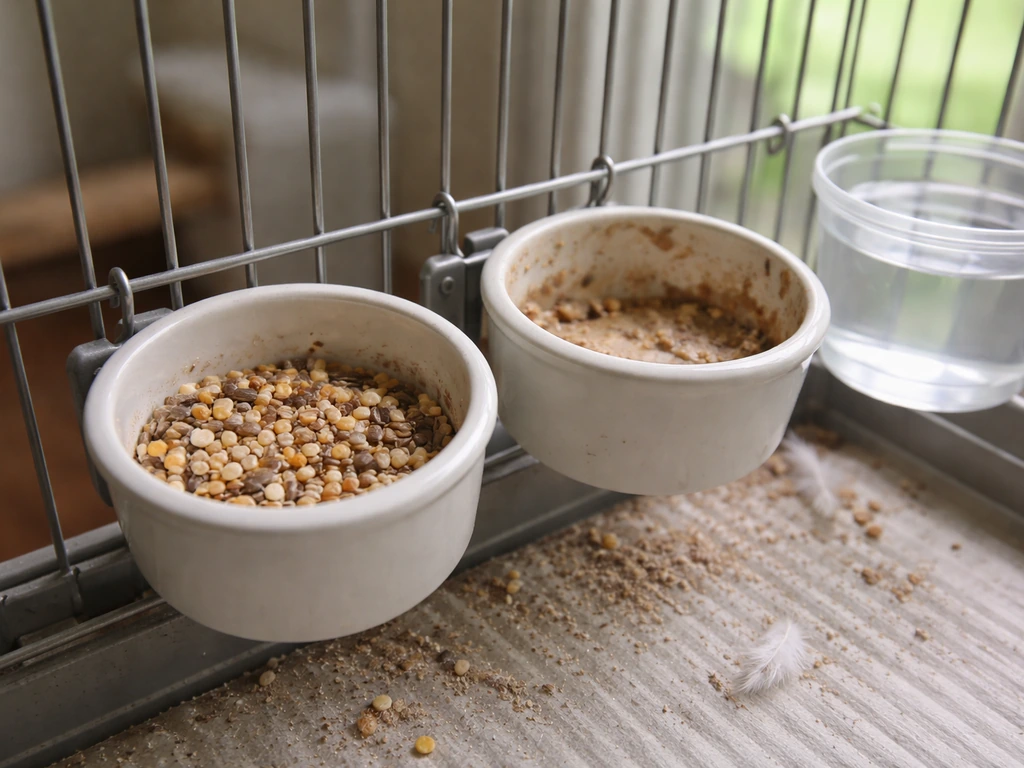
Whether your bird is refusing food, flinging seeds everywhere, getting aggressive at the bowl, or you're dealing with mold and mystery smells, this guide walks you through diagnosing what's actually going wrong and fixing it step by step. If you are also learning craft skills, this bird taxidermy for beginners guide can help you understand safe, respectful handling and preparation before you start.
If you also want to prevent these issues long term, check out love bird care tips for diet, enrichment, and habitat routines tailored to lovebirds. If you want long-term improvements beyond troubleshooting, use love bird care tips to fine-tune diet, enrichment, and habitat routines.
What 'bird table problems' actually means in a home setup
When people search for bird table problems in a pet bird context, they usually mean one of a handful of things: their bird won't eat at the designated spot, food is being wasted or contaminated, the area is becoming a hygiene nightmare, or something about the setup is causing stress or unwanted behavior. The 'bird table' in this case is whatever feeding station you've set up inside the cage or in the bird's living area, including feeding perches, food bowls, dish holders, or flat platform feeders attached to the cage bars.
It's worth being honest here: a lot of beginners set up their feeding area based on whatever came in the starter kit or whatever looked convenient at the pet store. That setup is often wrong in multiple ways at once, and the problems stack up quickly. A bowl in the wrong position, a perch that's too wobbly, or a feeding spot under an air vent can all contribute to a bird that seems 'difficult' when it's actually just reacting sensibly to a bad environment.
Common symptoms: birds won't eat, pickiness, or aggression at the feeding spot
The most common complaint I hear from new bird owners is some version of 'my bird just won't eat' or 'it only eats one thing and throws everything else on the floor.' Both are real problems, but they have different causes and different fixes.
When a bird refuses to eat at the table
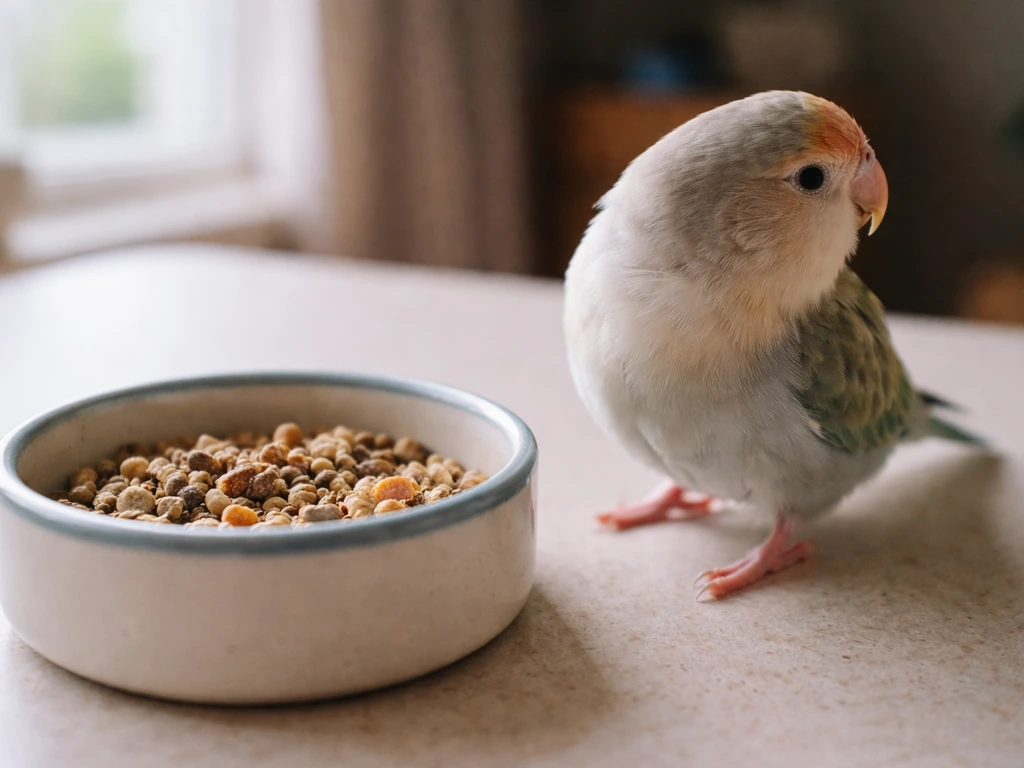
If your bird is approaching the bowl, sniffing it, and walking away, the food itself is usually the culprit. Stale pellets, spoiled fresh food left too long, or a seed mix that's been sitting open and gone rancid will all trigger avoidance. Birds have a strong sense of smell and are cautious by nature. They will not eat something that smells wrong to them. The fix is almost always to replace the food entirely, clean the bowl, and offer something fresh.
If the bird is avoiding the feeding area altogether, not just the food, that points to placement or stress issues. A bowl that wobbles, a perch that doesn't let the bird sit stably while eating, or a feeding station that's too close to a high-traffic area can all make a bird unwilling to commit to eating. Birds are prey animals and won't comfortably eat somewhere they feel exposed or unsteady.
Selective eating and food waste
Seed-heavy diets are the biggest driver of selective eating. A bird that gets a loose seed mix will almost always learn to pick out its favorite seeds, usually sunflower or millet, and toss everything else. This isn't misbehavior, it's a rational strategy. The answer isn't scolding the bird; it's switching to a pelleted base diet and offering variety in a controlled way. When the food options are more uniform, selective tossing drops significantly.
Aggression and competition at the food bowl
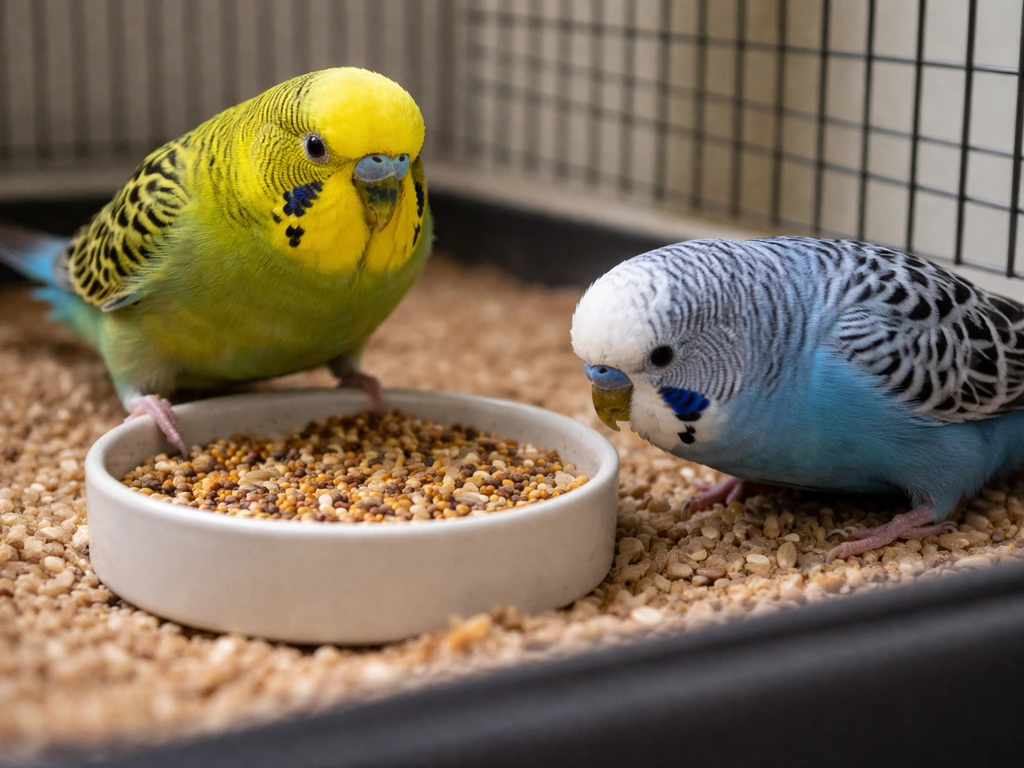
If you have multiple birds sharing a cage, aggression at the feeding station is one of the most common and most underestimated problems. The dominant bird will often guard the primary bowl, blocking the subordinate bird from eating enough. The fix is almost always to add a second feeding station on the opposite side of the cage, out of direct sightline from the first. You want two birds to be able to eat at the same time without one being able to see and react to the other. This single change resolves a huge proportion of multi-bird feeding conflicts.
Mess, hygiene, and contamination: mold, smell, bacteria, and pests
Bird feeding areas get dirty fast, much faster than most new owners expect. Fresh food like fruit and vegetables left in a warm cage can start growing mold in as little as two to four hours. Seed hulls pile up and look like uneaten food, masking how empty the bowl actually is. Droppings land in water bowls. It compounds quickly.
Mold and bacterial contamination
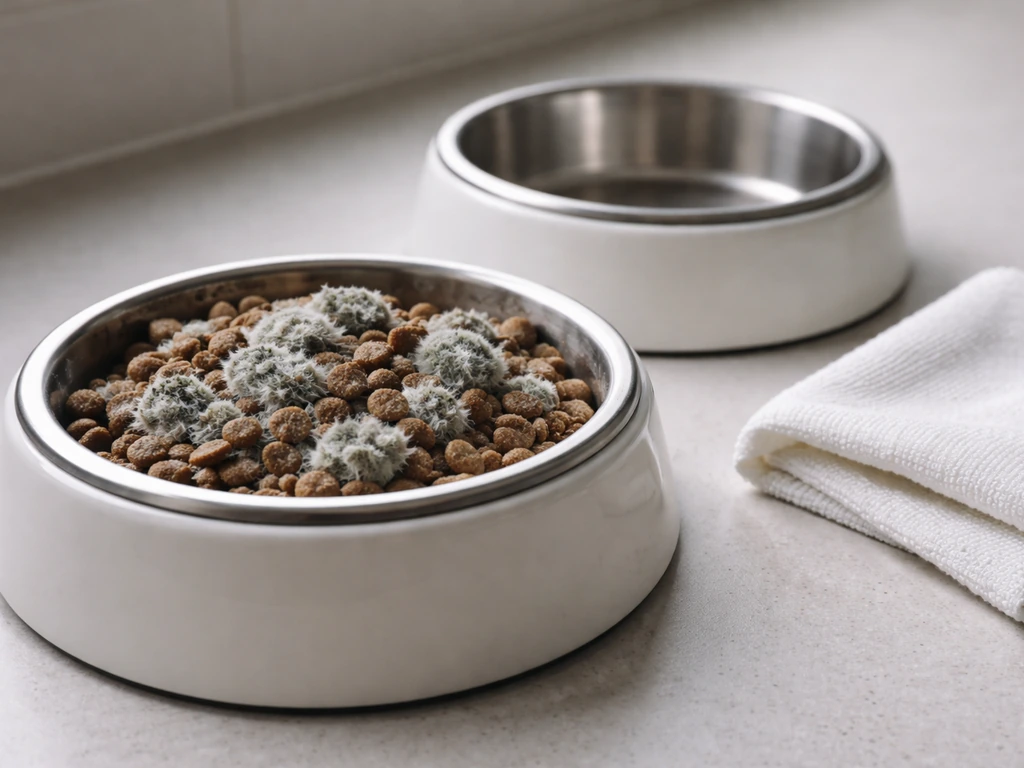
Mold in the food bowl is a serious hazard. Aspergillus, the most common mold species in bird environments, can cause a respiratory disease called aspergillosis that is very difficult to treat. If you're seeing fuzzy growth in the bowl, a sour or musty smell coming from the feeding area, or food that's clumping together, those are all contamination red flags. Remove and discard the food immediately, wash the bowl with hot water and a bird-safe disinfectant, and let it dry completely before refilling. Do not just remove the visible mold and put fresh food on top.
Pests at the feeding station
Fruit flies appear almost instantly around fresh food, especially soft fruits. Grain mites can colonize seed mixes that are stored improperly. Ants will find a feeding station quickly in warm months. The core prevention strategy is the same for all of them: remove uneaten fresh food within two hours, store seeds and pellets in sealed, airtight containers, and don't let food accumulate on cage liner or flooring beneath the feeding station. If you already have fruit flies, a small apple cider vinegar trap near (not inside) the cage handles most infestations within a few days.
Water bowl contamination
Water bowls are the fastest-contaminating item in any cage. A bird will step in the bowl, drop food in it, and perch over it. Change water at least once daily, and rinse the bowl with hot water each time. A bottle-style water dispenser reduces contamination significantly but still needs to be scrubbed weekly since bacterial biofilm builds up on the inside of the tube.
Setting up the feeding area correctly: bowls, placement, safety, and airflow
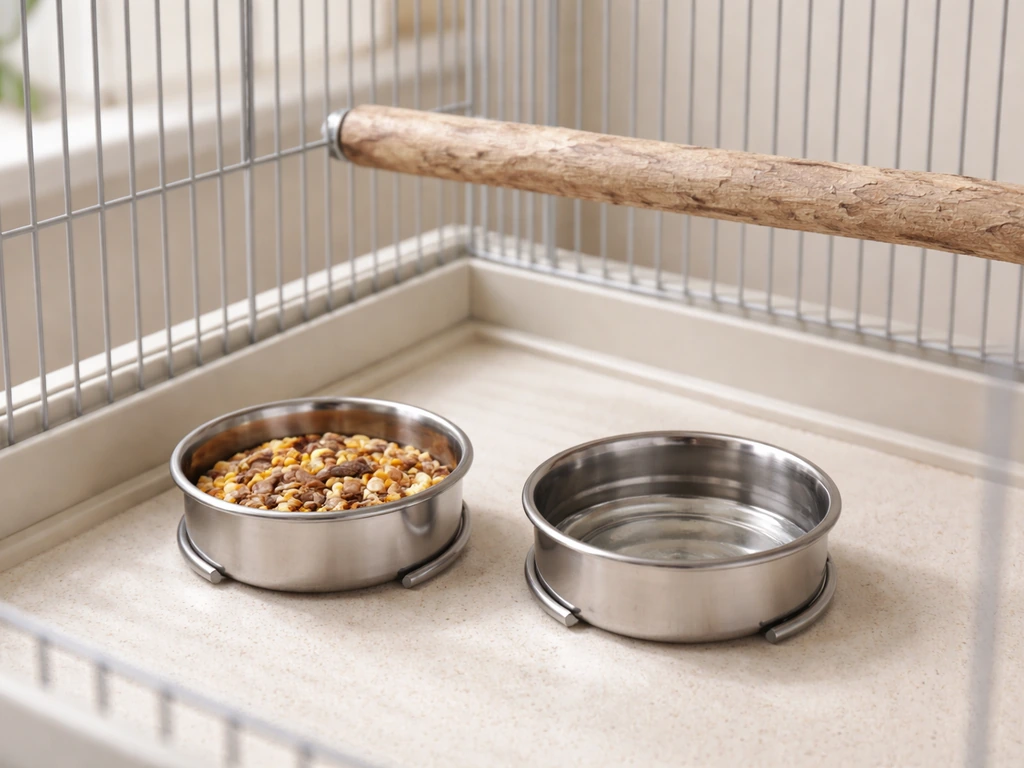
Getting the physical setup right is probably the most impactful thing you can do, and it's a one-time investment that prevents a long list of recurring problems.
Choosing the right bowls and dishes
Stainless steel bowls are the gold standard. They don't harbor bacteria in surface scratches the way plastic does, they're dishwasher safe, and they hold up to repeated disinfection. Ceramic bowls with a food-safe glaze are also good. Avoid cheap plastic bowls entirely, especially colored ones, since some dyes are not bird-safe and the scratched surface becomes a bacterial reservoir within weeks. Bowl size matters too: a bowl that's too large relative to the bird's portion size makes it hard to tell how much food has been eaten and encourages contamination from droppings landing in excess space.
Where to position the feeding station in the cage and room
Bowls should be positioned at mid-to-upper cage height, away from perches that sit directly above them. Droppings falling into food and water is one of the most easily preventable contamination sources, and it happens constantly when perches are directly overhead. Mount the bowl holder at roughly the bird's standing height on a nearby perch so the bird feels stable and secure while eating.
Room-level placement matters just as much. Keep the cage away from the kitchen, particularly away from any cookware coated with PTFE (commonly known as Teflon). Overheated non-stick coatings release fumes that are lethal to birds at levels undetectable to humans. Air quality near the feeding station needs to be stable and clean. Drafts from air conditioning vents or windows positioned directly over the cage cause temperature swings that stress birds and suppress their appetite. A spot against an interior wall, at eye level or slightly above, with natural light but out of direct sun, is usually the best position.
Safe materials checklist for the feeding area
- Stainless steel or food-safe glazed ceramic bowls only
- No galvanized metal hardware near food areas (zinc toxicity risk)
- Natural wood perches near the feeding station (avoid treated or painted wood)
- Bird-safe disinfectants for cleaning (diluted white vinegar or commercially labeled avian-safe products)
- No scented sprays, candles, or air fresheners within the bird's airspace
- No non-stick cookware in nearby rooms during cooking
The cleaning and food storage routine that stops problems before they start
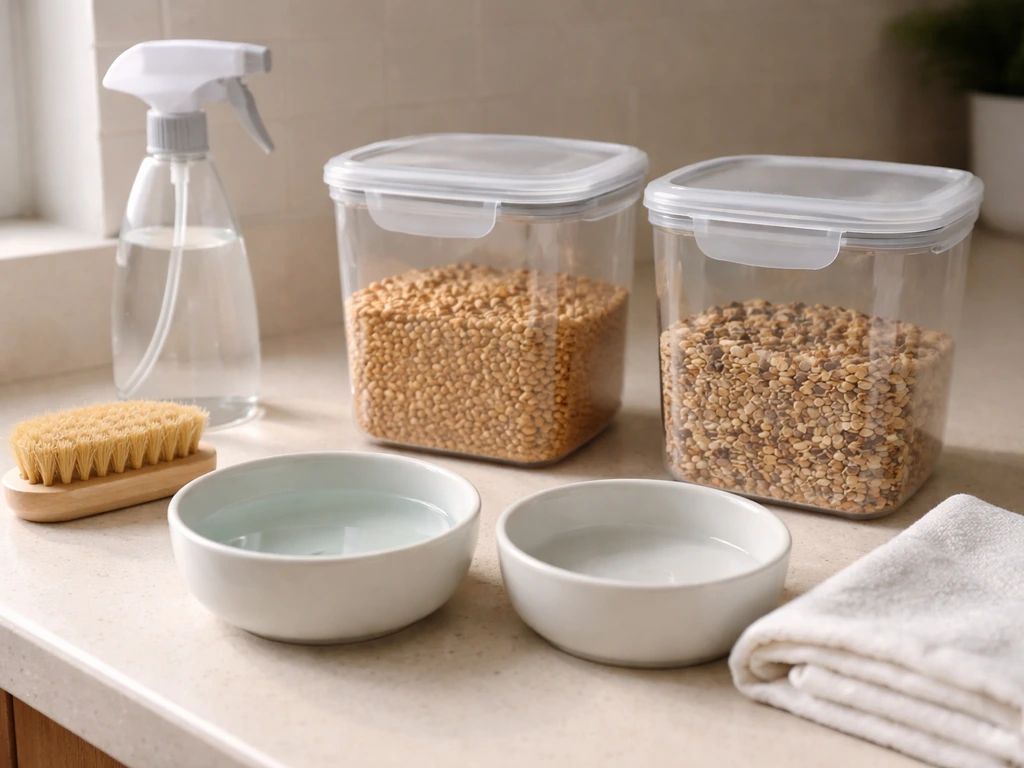
Consistency beats perfection here. A simple daily routine done reliably prevents about 90 percent of hygiene-related feeding problems.
Daily and weekly cleaning schedule
| Task | Frequency | Why it matters |
|---|---|---|
| Remove and replace fresh food (fruit, veg, cooked items) | Every 2 hours / at least twice daily | Fresh food grows mold and bacteria quickly in warm environments |
| Rinse and refill water bowl | At least once daily | Prevents bacterial biofilm and contamination from droppings/food debris |
| Remove seed hulls from dry food bowl | Daily | Hulls make the bowl look full when it's actually nearly empty |
| Wipe feeding station perch and surrounding bars | Daily | Droppings accumulate fast and attract insects |
| Full bowl wash with hot water and bird-safe disinfectant | Every 2 to 3 days | Removes bacterial buildup not addressed by rinsing alone |
| Deep clean of entire feeding area including cage liner beneath | Weekly | Eliminates mold spores, mite eggs, and dried food residue |
Food storage basics
Pellets and seeds should be stored in airtight containers, away from heat and humidity. A kitchen cabinet near the stove is a bad choice because of temperature swings and cooking fumes. A pantry or cool shelf works well. Check expiration dates on pellets seriously: rancid fat in old pellets is a real health risk, and birds often won't tell you the food tastes off by refusing it outright. They'll just eat less over time. Buy pellets in quantities you'll use within six to eight weeks of opening. For seeds, the sniff test works: fresh seeds smell neutral; rancid seeds smell faintly musty or oily. If in doubt, throw it out.
Reduce stress and improve eating behavior with simple feeding and enrichment tweaks
A lot of what looks like a feeding problem is actually a boredom or stress problem showing up at the food bowl. Birds are intelligent animals that need mental engagement, and when they don't get it, they develop repetitive or destructive behaviors, including food fussiness and throwing food for entertainment rather than out of selectivity.
Foraging: the single best fix for feeding table chaos
In the wild, birds spend most of their waking hours foraging. Putting all their food in one open bowl removes that entire behavioral drive and creates boredom. Foraging feeders, puzzle feeders, or simply hiding small amounts of food in foraging toys around the cage gives the bird something to do and dramatically reduces food-flinging behavior. Start simple: a commercially available foraging box with a few pellets or treats inside is enough to introduce the concept. Once your bird understands that working for food is possible and rewarding, you can scale up complexity.
Handling, noise, and routine around feeding time
Birds eat more confidently when their environment is predictable. Feeding at the same times each day reduces anxiety and helps the bird anticipate and prepare for meals. Avoid loud music, sudden movements, or lots of household activity right at feeding time. If you have children or other pets in the home, try to create a brief calm window around meals. A bird that's on high alert because a dog is barking nearby will often refuse to drop its guard enough to eat properly.
Expanding a picky bird's diet without a battle
Introducing new foods works best when you place the unfamiliar item next to a food the bird already loves, rather than replacing the familiar food entirely. The bird's natural curiosity and comfort with the food context does most of the work. Eating in front of your bird (what avian behaviorists call social facilitation) is genuinely effective: birds are flock animals and eating is a social signal. If you pretend to eat a piece of broccoli enthusiastically near the cage, many birds will try it within minutes. It sounds silly but it works.
When the feeding table problem is actually a health problem
This is the most important section, and I want to be direct: a bird that suddenly stops eating, or whose eating behavior changes significantly without an obvious environmental cause, may be sick. Birds are prey animals and they hide illness well. By the time symptoms are obvious, the problem is often already serious. Catching it early at the feeding table level can make a real difference.
Red flag signs to watch for at feeding time
- Sudden, unexplained drop in food consumption with no change to setup or food type
- Fluffed or ruffled feathers while sitting near the food bowl (a classic sign of chills, fever, or illness)
- Tail bobbing rhythmically at rest, which indicates labored breathing and is always a veterinary emergency
- Open-mouthed breathing or wheezing near or away from the feeding area
- Regurgitation that's different from normal courtship regurgitation: undigested food, sour odor, or a crop that feels full and doughy hours after eating
- Droppings that have changed significantly in color, consistency, or volume alongside reduced food intake
- Lethargy, reduced movement, or disinterest in food even when the bird approaches the bowl
What to do right now if you're seeing these signs
If your bird is showing any of the above signs, especially tail bobbing at rest, open-mouthed breathing, or a crop that won't empty, contact an avian veterinarian the same day. VCA Animal Hospitals also flags tail bobbing, along with fluffed feathers and labored or open-mouth breathing, as subtle signs of illness in pet birds [tail bobbing at rest](https://vcahospitals.
com/know-your-pet/recognizing-the-signs-of-illness-in-pet-birds). These are not wait-and-see situations. While you're waiting for the appointment, keep the bird warm (around 85 to 90 degrees Fahrenheit using a heating pad on one side of the cage or a ceramic heat emitter), offer water and easily digestible food, and reduce handling and stress as much as possible. Do not try to treat crop stasis or respiratory symptoms at home with over-the-counter products.
For less acute symptoms, like gradual weight loss, persistent pickiness, or slowly worsening droppings over a week or more, schedule a wellness exam rather than waiting for a crisis. An avian vet can do a physical exam and basic bloodwork to rule out infection, nutritional deficiency, or organ issues that would never show up on a visual check.
Many of the feeding problems new owners struggle with for months turn out to have a subtle health component that changes everything once it's addressed. The broader topic of bird health, common care mistakes, and what to watch for daily overlaps significantly with what experienced owners share in bird keeping and care resources, and building that baseline knowledge early saves a lot of stress later.
For more practical bird keeping tips that support healthy eating routines, check the broader bird care guidance and common mistakes to watch for bird keeping and care resources.
The bottom line: if the feeding table problem started gradually and has a clear environmental cause you can identify and fix, work through the steps in this guide. If it appeared suddenly, is getting worse despite your changes, or comes with any of the physical symptoms above, get an avian vet involved. The feeding station is just the first place the problem shows up. Your job is to figure out whether the problem lives there or somewhere deeper. If you want the quick checklist version, review the 12 common mistakes that bird owners make so you can spot issues fast.
FAQ
How long can I leave fresh fruit or vegetables in the cage before it becomes a bird table problem?
Use a strict short window, remove leftovers within about two hours, especially in warm rooms. Even if the food still looks fine, soft produce attracts fruit flies quickly and can start microbial growth, which then contaminates bowls and nearby perches.
My bird smells fine and looks normal, but it suddenly won’t eat at the feeding station. What should I check first?
Before assuming the food is the issue, check for subtle setup triggers like drafts over the cage, a wobbly perch causing hesitation, or the bowl being positioned under an air vent. Also confirm the food bowl was fully cleaned and refilled, because residues and disinfectant film can change the smell.
Can I fix food refusal by switching from pellets to seed only for now?
It usually makes selective eating worse long term. If you must adjust temporarily, keep a strong base of pellets and introduce changes gradually, for example mixing a small amount of the favored item next to the pellet option rather than removing pellets entirely.
What if my bird is throwing food, but the bowl hygiene is already good?
Throwing can be a foraging and engagement issue, not just selectivity. Add a foraging feeder or hide small portions around the cage, then reduce loose bulk feeding so the bird has to “work” for food instead of flinging from a single open bowl.
How do I prevent droppings from falling into the bowl when my cage has limited mounting options?
Raise the feeding station to a position that is not directly underneath any perches, and shift the bowl holder sideways if possible so it sits outside the main drop zone. If needed, use a feeding perch setup that places the bird slightly forward of the bowl rather than directly above it.
How can I tell if the problem is rancid pellets or just my bird being picky?
Rancid pellets often smell faintly musty or oily and may be rejected even when they are fresh-looking. Do a quick smell check on a small portion from the open bag, compare with an unopened bag, and replace the stored food before troubleshooting behavior.
What should I do if I see mold only in one corner of the bowl?
Discard the entire portion in that bowl, not just the visible section. Mold contamination can spread through wet residue and biofilm that is not obvious, then “re-seeding” fresh food with small residues can restart the problem.
Are plastic bowls always unsafe, or is it only scratched ones?
Scratched plastic is a major concern because bacteria and residues collect in micro-grooves, but colored plastics can also be problematic if dyes are not bird-safe. If you have plastic, replace it with stainless steel or properly glazed ceramic and be consistent with disinfection and drying.
How often should I deep clean the water bowl compared with just rinsing it?
Rinse daily, and scrub more thoroughly at least weekly with hot water and a bird-safe disinfectant. Water contamination is fast, and bacterial biofilm builds up on surfaces even when the water looks clear.
Do I really need two feeding stations for multiple birds?
Two stations are the best solution when one bird blocks access or guards the primary bowl. Place the second station on the opposite side of the cage and aim for stations that are not within the same direct sightline, so subordinate birds can eat without triggering a guard response.
My bird is eating from the bowl but not finishing. When should I worry?
If leftovers are present, measure both the amount eaten and the time food remains. If the bird consistently leaves food after a healthy placement change, then consider diet composition and storage age, and if there is gradual weight loss or worsening droppings, book an avian wellness exam.
What temperature is safest to use if I’m keeping a sick bird warm at the feeding table?
Aim for roughly 85 to 90 degrees Fahrenheit using a heat source on one side so the bird can move away if needed. Warmth should support comfort only, not replace urgent vet care when eating behavior changes suddenly.
If my bird won’t eat, can I force-feed to prevent starvation?
Do not attempt home force-feeding or use over-the-counter remedies for crop or respiratory signs without an avian vet plan. Instead, focus on minimizing stress, offering easily digestible food and water, and arranging same-day guidance if eating stops abruptly or comes with physical warning signs.