If you searched 'best out of waste bird' and landed here, you probably want one of two things: either the lowest-mess, easiest-cleanup pet bird you can own, or you stumbled across that phrase somewhere specific (a product, a school activity, a TikTok) and you're trying to figure out what it means in a bird context. The honest answer is that 'best out of waste' isn't a standard pet-bird term at all, so let's nail down what you actually need and then get into the real, practical answer. For most first-time bird owners, the goal comes down to this: a budgie or a cockatiel, set up correctly, with a pellet-forward diet and a simple daily routine, gives you the most rewarding bird ownership experience with the least daily mess. In many bird-owning setups, people use a head-covering “bird dish” (like a dome or shield) to reduce mess and help keep the bird calm.
Best Out of Waste Bird: Low-Mess Picks and Setup Tips

What 'Out of Waste Bird' Usually Means (and the Confusion Around It)
When you search 'best out of waste bird,' you're most likely hitting a phrase that comes from a completely different corner of the internet. Online, 'best out of waste' is a popular theme for school craft competitions and recycling activities, particularly in South Asian school communities, where kids make models or art projects from recycled materials. A 'best out of waste bird' in that context is literally a bird figure made from old newspaper, bottle caps, or egg cartons.
A glass jar with a bird on top can be a fun, visible example of how bird-themed decor often draws from the same “bird” imagery people use in crafts and products bird figure. It's a school project, not a pet category.
There's also a product angle. Some bird seed brands and TikTok shops market 'no waste' bird seed blends where every seed in the mix gets eaten, with no husks piling up. These products sometimes use 'best out of waste' wording. So before going further, do a quick gut check: are you looking for a live pet bird that's naturally easy to clean up after, a school craft project, or a specific no-waste birdseed product?
This article is for the first group, but it's worth naming the confusion so you're not wasting time in the wrong place. If you also came across the product-style phrase "chirpy top bird wine pourer," it helps to double-check whether you're looking for a no-waste birdseed blend, a craft project, or a live pet bird recommendation.
Beginner-Friendly Birds for Low-Mess Living
If your goal is minimum mess, minimum odor, and a bird that won't turn your apartment into a disaster zone, the field narrows pretty quickly. Larger parrots like macaws or cockatoos are out of the running for this goal. You want something small, manageable, and forgiving of beginner mistakes.
Budgies (Parakeets)
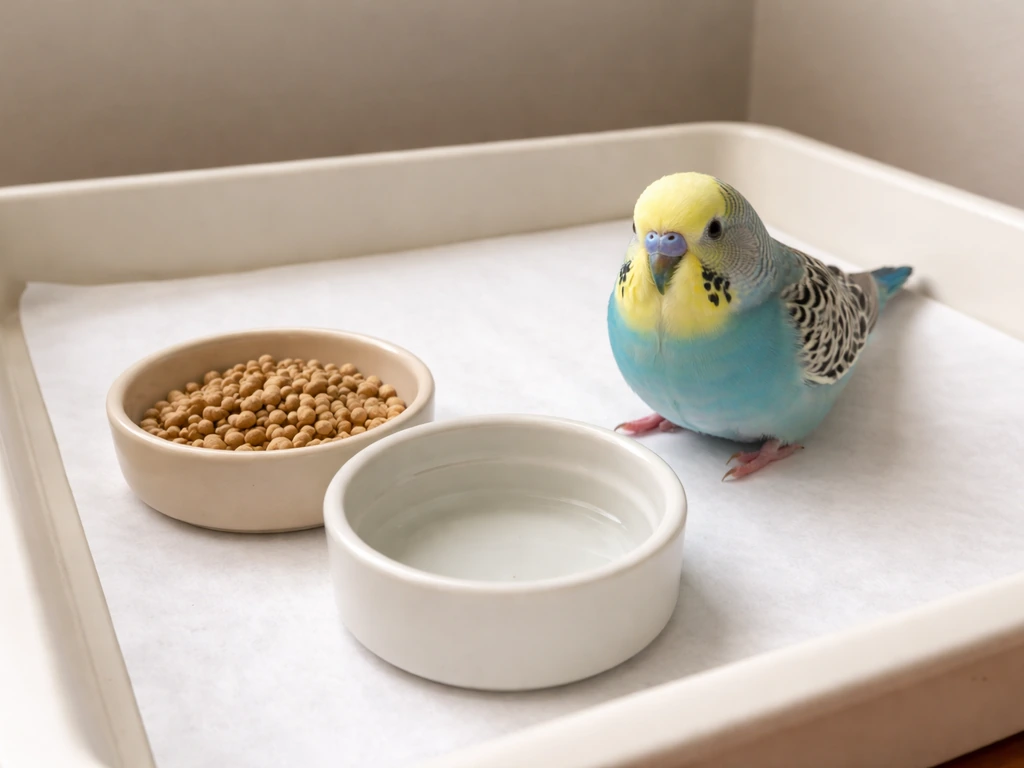
Budgies are probably the most common first bird in the world for good reason. They're small (around 7 inches), so waste volume is low. They can be talkative and playful without being destructive on a large scale. The main complaint from new budgie owners is that poop gets everywhere outside the cage because budgies fly freely and aren't choosy about where they go. The fix is simple: limit out-of-cage time to a defined play area with easy-clean surfaces, and line those surfaces with newspaper. One Reddit community thread summed it up well: most owners say the mess is very manageable once you stop pretending the bird will stay in one spot.
Cockatiels
Cockatiels are the other top pick, and they're slightly larger (around 12 inches) with a gentle, trainable personality. They do produce a fine white dust from their feathers, which is worth knowing upfront if you have asthma or dust sensitivities. That said, they're still considered one of the most manageable mid-sized birds for beginners. They're less frantic than budgies, easier to hand-tame, and their droppings are larger but more predictable in placement. PetMD lists them as a beginner-appropriate species for good reason.
Lovebirds and Parrotlets
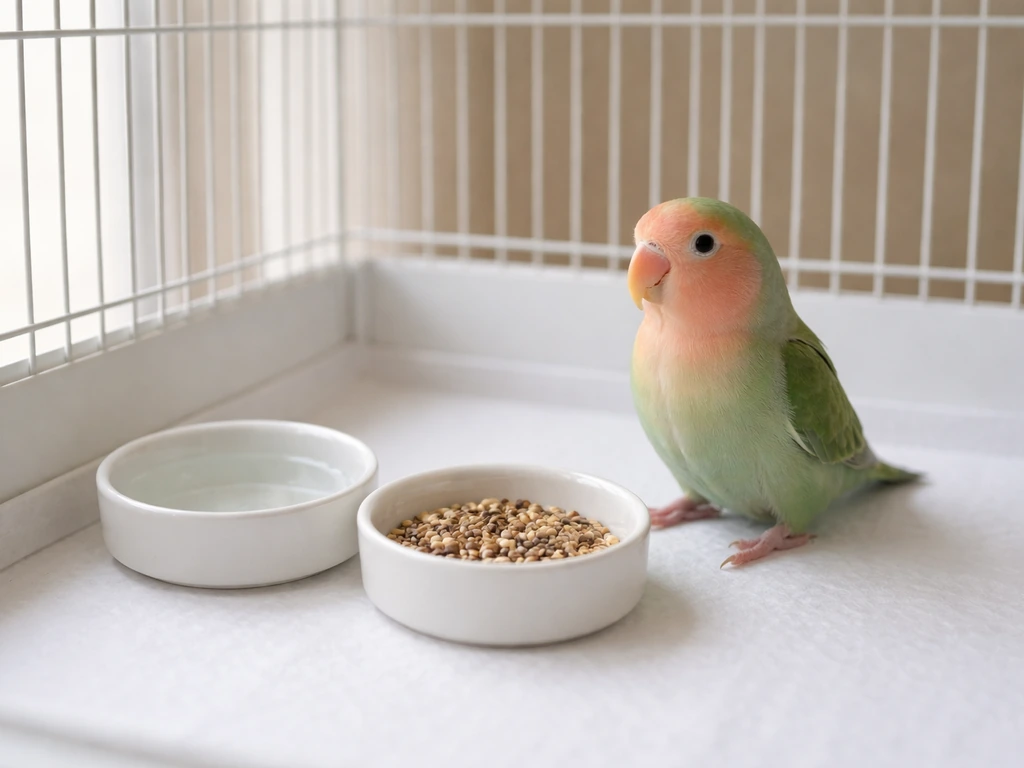
Lovebirds and parrotlets are compact and produce less mess than cockatiels in terms of dust. However, they have bigger personalities than their size suggests and can be nippy if not socialized well. They're a solid option if you're willing to put in taming time, but they're a slight step up in difficulty compared to a hand-raised budgie or cockatiel.
| Species | Size | Mess Level | Feather Dust | Beginner Ease | Best For |
|---|---|---|---|---|---|
| Budgie | ~7 in | Low to moderate | Low | Very high | Tiny spaces, first-time owners |
| Cockatiel | ~12 in | Moderate | Moderate to high | High | Those wanting a calmer, trainable bird |
| Lovebird | ~6 in | Low to moderate | Low | Moderate | Compact spaces, more hands-on owners |
| Parrotlet | ~5 in | Low | Low | Moderate | Minimal space, strong personality acceptable |
For most first-timers with a low-mess goal, start with a budgie or a cockatiel. Buy a hand-tamed bird from a reputable breeder or rescue if you can. A bird that's already comfortable with people is the single biggest shortcut to a smooth first ownership experience. Cage Hygiene in Birds | VCA Animal Hospitals notes that vCA Animal Hospitals notes a thorough scrub schedule for cage hygiene (at least monthly for a full cage scrub) and emphasizes fully rinsing the cage after using soap/disinfectant.
Setting Up Housing to Keep Mess Under Control
The cage setup is where most beginners either win or lose the mess battle. Get this right from day one and your daily cleanup drops to five minutes.
Cage Size and Bar Spacing
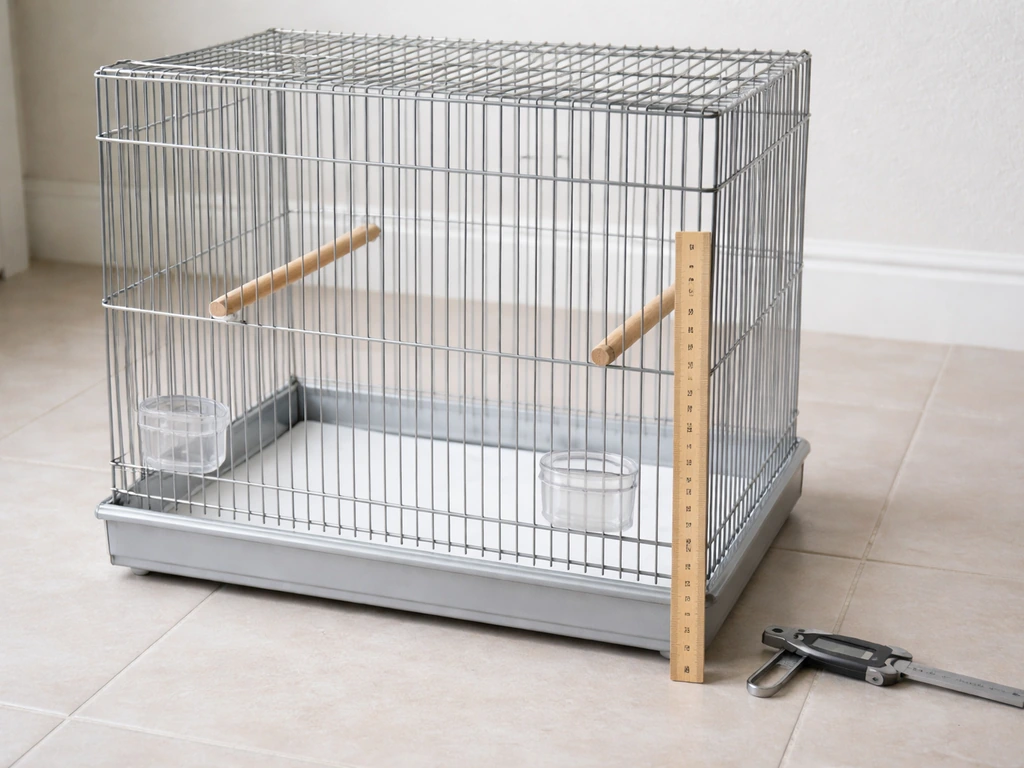
For a single cockatiel, the minimum cage size recommended by PetMD is 24 inches long by 24 inches wide by 30 inches high. Go bigger if your budget allows. For budgies, lovebirds, and parrotlets, apply the Edmonton Humane Society's practical rule: the cage should be at least twice the full length and wingspan of your bird in every horizontal direction. Bar spacing for all of these small species should be 1/2 inch, with cockatiels tolerating up to 5/8 inch. Wider bars are a safety hazard and a mess problem because birds can squeeze through or get stuck.
Cage Placement and Waste Containment
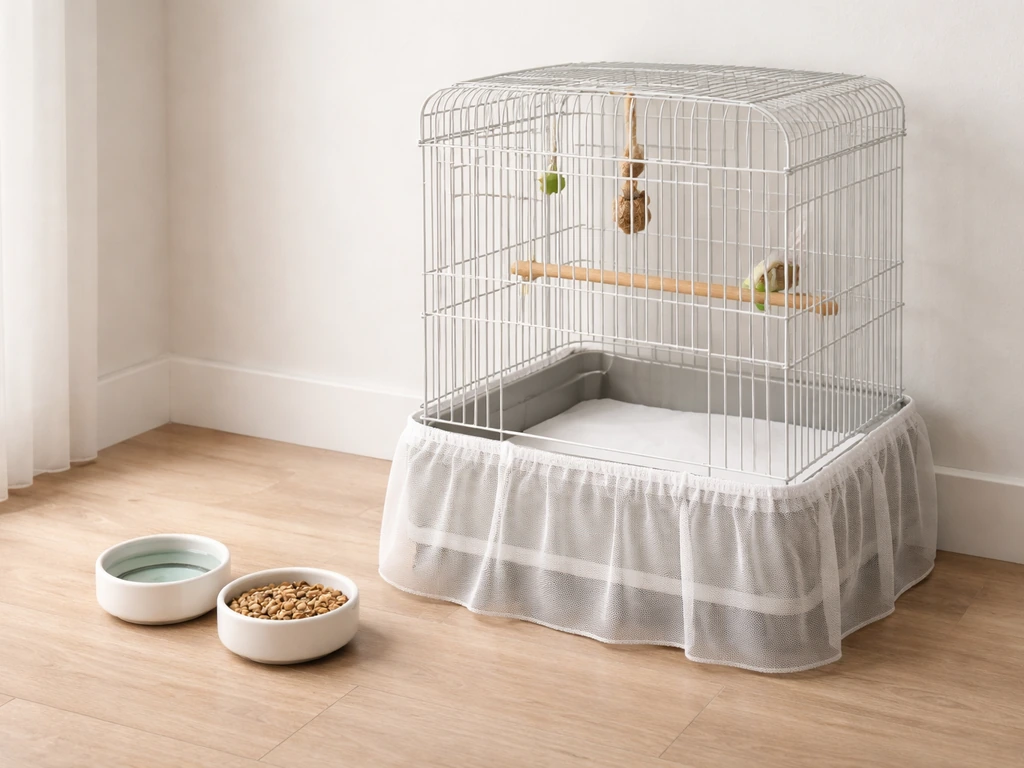
Place the cage on a hard, wipeable floor surface. Avoid carpet directly underneath. A cage apron (a fabric or plastic skirt around the lower cage rails) catches flung food and feathers before they hit the floor, which is genuinely one of the most underrated accessories for managing daily scatter. A pull-out tray at the base is non-negotiable. It lets you swap the liner in under 60 seconds.
Liners and Bedding: Keep It Simple
Plain unprinted newspaper or paper cage liners are the best choice for the tray. They're cheap, easy to monitor (you can actually see the droppings and check bird health), and there's no dust or particulate getting kicked up. Avoid corn cob bedding or sand because they can harbor bacteria and mask droppings until buildup is significant. Always keep the liner in the tray, not loose on the cage bars or floor grating. Replace the liner at least every other day, or daily with multiple birds.
Feeding the Right Way to Cut Down Waste
Overfeeding is one of the biggest waste contributors most new owners don't see coming. Here's how to feed smart.
Start with a Pellet Base
A nutritionally complete pelleted diet should form the base of your bird's food. Pellets produce far less waste than seed mixes because there are no husks left behind. Seeds look natural and satisfying to offer, but they generate a pile of shells daily and are nutritionally incomplete on their own. Brands like Harrison's Bird Foods offer formulated pellets designed to cover all nutritional needs.
If you're using Harrison's, don't add extra vitamins or minerals on top, as their guidance is explicit that supplementing on top of a complete formulated diet creates nutrient conflicts. Fruits and Vegetables in Bird Diets | VCA Canada Animal Hospitals notes that vCA Canada recommends a pellet-base approach with fresh produce: it notes small parrots should have commercially available nutritionally complete pellets as a base and includes specific tactics like cutting pellets/seeds to entice vegetable acceptance (e. g.
, reducing to about a quarter of the bowl).
Fresh Foods: Small Portions, Predictable Timing
Fresh vegetables are healthy but are also a leading cause of food waste and bacterial buildup if you over-serve. VCA Canada recommends that fresh produce supplements a pellet base rather than replacing it, and suggests reducing the fresh food portion to roughly a quarter of the bowl if the bird is reluctant to accept vegetables. The practical rule: offer fresh food in the morning, remove anything uneaten within two to four hours, and wash the dish immediately. Never leave fresh food sitting in the cage into the evening. Fruit should be an occasional treat, not a daily staple, because of the high sugar content and rapid spoilage.
Water and Dish Hygiene
Water dishes need to be washed every single day, as do food bowls. Pay particular attention to corners of bowls because Purdue University's bird husbandry guidance flags bowl corners as bacterial hotspots that most owners miss during a quick rinse. A soft brush that gets into those corners is worth keeping next to the sink.
A Realistic Daily and Weekly Cleanup Routine
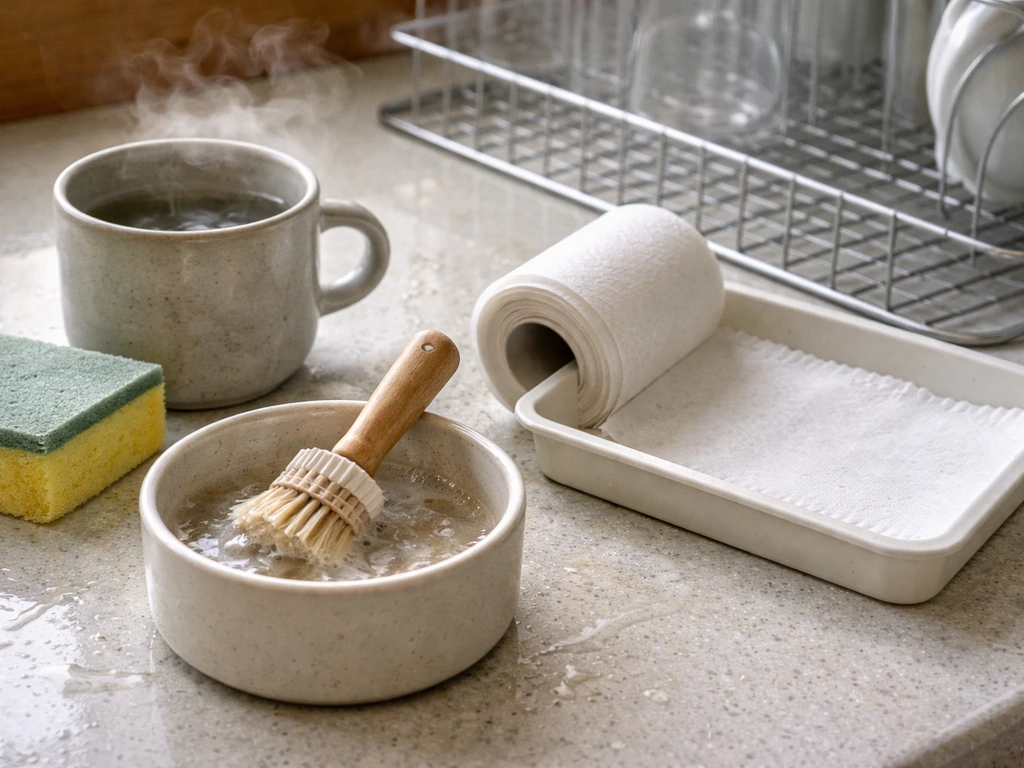
This is where everything comes together. A consistent routine is what separates birds that feel manageable from birds that feel overwhelming. The key insight: do a little every day instead of letting things build up.
- Every morning: Wash food and water bowls with hot water and a brush. Refill with fresh food and water.
- Every morning: Check the tray liner. If it's heavily soiled, swap it out. Otherwise, check again in the evening.
- Every day (spot clean): Use a damp paper towel to wipe down any perches or cage bars with visible droppings. This takes two minutes and prevents crust buildup.
- Every week: Replace the tray liner fully regardless of appearance. Wipe down the entire cage interior with a bird-safe cleaner. Rinse thoroughly and let it air dry before the bird goes back in.
- Every month: A full cage scrub with non-toxic disinfectant and hot water, including all bars, perches, and toys. Rinse completely. VCA recommends at least monthly for this deeper clean. Let everything dry fully before reassembling.
For cleaning products, only use formulas made specifically for bird cages or plain hot water and dish soap with thorough rinsing. Never use aerosol sprays anywhere near your bird. PetMD and VCA both flag aerosols as a genuine health hazard for birds. Birds' respiratory systems are extremely sensitive, and aerosolized fumes, including spray disinfectants, air fresheners, perfume, and scented candles, can cause serious harm.
If you're deep-cleaning the cage, move the bird to a separate, well-ventilated room first. The same applies to cooking with nonstick pans. PTFE (Teflon) fumes produced when nonstick cookware overheats can be fatal to birds. To get the best bird safe cookware for your home, focus on nonstick risks and choose bird-safe alternatives for any cooking space where your bird can be exposed nonstick cookware.
This is not a minor caveat.
Enrichment and Training to Prevent Behavioral Waste
A bored bird is a destructive and messy bird. Boredom leads to excessive chewing, feather plucking, and frantic flapping that spreads mess far beyond the cage. Enrichment isn't optional for bird welfare, and it's also a direct mess-management tool.
Foraging and Puzzle Toys
Foraging toys that make the bird work for food are among the most effective enrichment tools. Parrots. org's guidance on enrichment emphasizes that puzzle and foraging items support species-typical behavior and keep birds mentally occupied. For small birds like budgies and cockatiels, you don't need expensive setups.
Wrapping a small piece of food in untreated paper, or using a simple foraging toy where pellets are hidden inside, is enough. Paper-based shredder toys (like the kind marketed for parakeets, cockatiels, and lovebirds) channel the natural shredding urge toward a controlled object rather than cage bars, perches, or anything else within beak range. These are a genuinely smart investment for reducing random chewed-up debris.
If you want a visual example of an orange bird watering can as a gift or decoration, choose something easy to keep clean and safe to place away from the cage.
Target Training
Target training, where you teach your bird to touch a small stick or target with its beak in exchange for a treat, is the foundation of most beginner bird training. It builds trust, teaches the bird to follow direction, and dramatically reduces stress-related behaviors. A calmer, more confident bird is a tidier bird. Parrots.org describes a stepwise approach: introduce the target, reward any interest in it, gradually shape the behavior until the bird reliably touches the target on cue. Start with five-minute daily sessions and build from there.
Common Beginner Mistakes and How to Fix Them Fast
- Using seed-only diets: Seeds create husk waste constantly and are nutritionally incomplete. Switch to a pelleted base with seeds as occasional treats. The transition takes patience but is worth it.
- Choosing the wrong liner: Corn cob and sand bedding hide droppings and breed bacteria. Switch to plain paper liners immediately. You'll actually be able to see what's happening health-wise, too.
- Skipping daily spot cleaning and doing a giant weekly clean instead: Buildup between cleanings leads to bacterial growth, odor, and a much harder scrub session. Two minutes daily beats 45 minutes weekly.
- Leaving fresh food in the cage for hours: Food spoils fast in a warm cage. Two to four hours maximum, then remove it and wash the dish.
- Using aerosol sprays anywhere near the cage: Air fresheners, scented sprays, and even scented candles in the same room are hazardous. Never use them in the bird's space.
- Buying a wild-caught or untamed bird to save money: This one creates weeks of stress for both you and the bird, far more mess from a panicking bird, and a harder bonding process. Pay more for a hand-tamed bird from the start.
- Underestimating feather dander from cockatiels: If dust is a problem for your household, run a HEPA air purifier near the cage. This addresses air quality concerns before they become a problem.
- Positioning the cage in high-traffic or kitchen areas: Birds should not be in kitchens due to cooking fumes and the PTFE risk. A living room or bedroom (away from drafts) is better. Avoid direct sunlight and air conditioning vents.
Choosing the Best Bird for Your Home
The right bird depends on your specific situation. Here's how to make the call.
If air quality is a concern
Budgies, lovebirds, and parrotlets produce significantly less feather dust than cockatiels. If someone in your home has asthma, allergies, or respiratory sensitivities, start with a budgie and add a HEPA air purifier to the room. Avoid cockatiels until you've assessed tolerance. Keep the bird away from the kitchen at all times, and never use nonstick cookware in a home with any bird.
If space is tight
A budgie or parrotlet in a properly sized cage fits comfortably in a studio apartment. A cockatiel needs a bit more floor space for the cage and out-of-cage time. Whatever you choose, the cage should be in a room where the bird can be part of household activity, not tucked in a corner.
If budget is the main factor
Budgies are the most affordable entry point from purchase price through ongoing food costs. A single budgie, a properly sized cage, a paper liner system, and a pellet-based diet is genuinely achievable on a tight budget. The hidden cost most new owners miss is vet care. Find an avian vet in your area before you bring any bird home, because exotic animal vets are not universally available and emergency visits without a prior relationship get expensive fast.
One final thought: the mess from bird ownership is almost always a setup and routine problem, not a species problem. The owners who find birds 'too messy' usually haven't nailed the liner system, the feeding portion control, or the daily spot-clean habit. Get those three things right from day one and you'll wonder what everyone was complaining about. Bird ownership done right is genuinely low-effort once the systems are in place, and the payoff in personality and companionship is completely worth it.
FAQ
How can I tell if “best out of waste bird” is a craft idea versus something for buying a pet bird?
A good “out-of-waste” (craft) bird project should not be confused with a live pet-bird recommendation. If your results mention recycled paper, bottle caps, egg cartons, jars, or a school competition theme, it is almost certainly a craft item, not a species to buy. For pet intent, look for terms like “cage size,” “pellets,” “bar spacing,” or “avian vet,” since those are practical care topics.
What should I do if my bird is still making a lot of mess even though I bought a proper tray liner?
If your bird is scattering poop outside the tray, the first adjustment is often the “out-of-cage” plan. Set a defined play area with a washable floor and supervise rather than allowing free roaming. Then check the tray liner routine, if the liner is loose or not changed on schedule, droppings can bounce and smear beyond the cage base.
My bird won’t eat vegetables, so how do I avoid food waste and bacteria buildup?
For fresh produce, portion size is the biggest lever. Start smaller than you think, offer in the morning, and remove uneaten food within the 2 to 4 hour window, then wash the dish. If your bird ignores vegetables, reduce vegetables toward the low end of the “about a quarter bowl” guideline instead of increasing, and keep pellets as the reliable base.
If I feed pellets, is it still okay to add vitamins or “bird supplements” to reduce waste?
Even with pellets, you can unintentionally create waste by adding extras, especially if you use a “complete” pellet plus a vitamin mix. If your chosen pellet brand already specifies it is nutritionally complete, avoid stacking additional vitamins or mineral supplements unless an avian vet directs it, because nutrient imbalances can also affect droppings and overall digestion.
What’s the best way to clean food and water bowls so mess does not build up?
Bowl corners are where rinse water misses. Use a small soft brush dedicated to the bird bowls and clean corners every day, not just a quick wipe. If you skip corner cleaning, residue can build up and you may see smell or pasty droppings, which then increases the mess you have to deal with later.
Do I really need a cage apron if I already have a tray liner?
A cage apron helps with flung debris, but only if it overlaps the cage base correctly and you still keep the pull-out tray liner in place. If the apron is too small or sitting too high, feathers and food can still fall behind or under it. Also confirm the floor underneath the apron is washable, since carpet still holds odors and stains.
What household products are most likely to make things worse, in terms of bird safety and mess?
Avoid scented products around birds, that includes aerosol cleaners, air fresheners, and scented candles, but also be careful with “nonstick” and overheating risks. If you deep clean, move the bird to a separate well-ventilated space and only return it after the room is fully aired out and the cage area is thoroughly rinsed and dry.
How can target training reduce daily mess, not just improve behavior?
Training helps with mess indirectly by reducing stress behaviors like frantic flapping and frantic chewing. Start with short target sessions (around 5 minutes), reward immediately, and keep sessions calm and consistent. A bird that is not stressed is usually easier to predict, and that makes cleanup simpler even if it does not eliminate all droppings.
I have asthma or allergies, what practical steps should I take before choosing a species?
If you share a home and someone has asthma or allergies, start with a smaller, typically lower-dust species and manage air quality. Use a HEPA air purifier in the bird room, assess tolerance before switching species, and keep the bird away from the kitchen and cooking odors. If symptoms worsen, reassess the species choice and consult an avian-experienced clinician or vet.
What daily routine actually keeps cleanup to a few minutes?
If you are worried about cleanup time, the highest-impact schedule is daily spot-clean plus immediate removal of uneaten fresh food. Don’t wait for a “big clean,” since buildup increases odor and makes droppings harder to remove. Keep a simple routine: swap tray liner on schedule, wash bowls daily, and do a quick floor and perch wipe during spot-clean.
What’s the most important pre-purchase checklist item people forget besides the cage and food?
Before buying, arrange a relationship with an avian vet and confirm they handle the species you want. Also ask about emergency availability, since exotic vet access varies by region. This reduces the most expensive “mistake cost,” which is paying more for urgent care because you do not have a prior medical history.