Yes, legitimate coupon codes for bird toys do exist, but they are almost never labeled 'make your own bird toys coupon code' anywhere a retailer would publish them. If you searched that phrase, you were probably after one of two things: a discount on commercially sold bird toys, or a genuinely cheap way to enrich your bird without spending much at all. Both are totally solvable, and this guide walks you through both paths.
Make Your Own Bird Toys Coupon Code: Legit Deals and Safe DIY Toys

Marcus Chen
9 Jun 2026
What you were probably actually looking for
The phrase 'make your own bird toys coupon code' is a bit of a mashup, and that is fine because it captures a real problem: bird toys are surprisingly expensive for what they are, and when you are just starting out you are already spending on a cage, food, perches, and vet visits. So the search makes total sense.
You either want a coupon so store-bought toys are cheaper, or you want to skip the store entirely and make toys yourself. The honest answer is that DIY bird toys made from safe household materials cost almost nothing and are often better enrichment than generic store toys anyway. But if you want real discount codes too, those exist and there is a right way to find them without wasting your time on expired or fake codes.
How to actually find working coupon codes for bird toys
The biggest mistake I see new bird owners make is Googling 'coupon code' and clicking the first affiliate coupon site that appears. Most of those codes are months or years old, and you will hit the exact errors Google's own promo documentation describes: 'promo code was already used' or 'code entered is not a valid promo code.' Here is a smarter, faster approach that actually works today.
Go straight to the retailer's loyalty program
Petco's Perks program lets members earn points on eligible purchases and redeem them toward future orders. Points expire 365 days after issuance and can be forfeited if your account is inactive for that same period, so sign up and actually use it. Chewy structures a lot of their best discounts around first-time or new-customer orders, so if you have never ordered from Chewy before, that first-order promo is the single best discount available to you right now.
If you want to save money beyond DIY, use the retailer loyalty programs and first-time promos to find real what to give bird ds3 options for discounts first-order promo. Both programs are free to join and their terms are clearly spelled out on their deals pages.
Where to look for codes that are actually live
- Check the retailer's own 'Today's Deals' or promotions page before searching anywhere else. Chewy and Petco both surface current offers there.
- Subscribe to the retailer's email list. First-order and welcome discounts are almost always delivered via email, not posted publicly.
- Look for loyalty or rewards program 'package codes,' which are often printed on physical packaging or sent in post-purchase emails. These are program-specific, not universal, so a code from one program will not work on another site.
- Browser extensions like Honey or Capital One Shopping will auto-test codes at checkout. Not every code they find will work, but it takes two seconds.
- Check the retailer's app directly. App-exclusive discounts are common and rarely appear on third-party coupon aggregator sites.
How to spot a coupon scam or a dead code
If a site asks you to complete a survey, download anything, or enter personal information before revealing a code, leave immediately. Legitimate retailers publish codes or send them directly. Also, promotions for bird supplies are governed by specific eligibility terms and conditions, so a code you found on a random forum post is almost certainly tied to a promotion that has ended or an account that has already used it.
Make-your-own bird toy ideas that are cheaper (and often better) than store toys
Here is the thing nobody tells you: a lot of what your bird actually wants to do is shred, forage, and solve a small puzzle. You do not need a $15 toy for that. You need a cardboard paper towel roll and a handful of pellets. I have watched a cockatiel spend 45 minutes dismantling a folded piece of plain paper. The enrichment value is real, the cost is zero, and you can make five of these in the time it takes to find a working coupon code. If you also want the most budget-friendly option, pair homemade toy ideas with the best bird dog puppy toys deals you can find online.
Materials that are safe to use
- Plain white or unbleached paper (no ink, no glossy coating)
- Cardboard tubes from paper towels or toilet paper (no adhesives, no inks on the inside)
- Untreated, unfinished softwoods like balsa or willow (never cedar, red cherry, plywood, or oak)
- Plain paper bags (no handles with metal crimps)
- Vegetable-tanned leather strips (not chrome-tanned or dyed leather)
- Stainless steel quick-links or C-clips (stainless only; avoid zinc, galvanized, or plated metals)
- Natural sisal rope in short lengths (more on length limits in the safety section)
- Fresh, bird-safe branches that have been baked at low temperature to kill pathogens (willow, apple, maple)
Materials to avoid completely
- Any wood that is painted, stained, varnished, or pressure-treated
- Cedar, oak, red cherry, plywood (toxic or contain harmful resins/glues)
- Galvanized, zinc-plated, or lead-weighted metals. Lead and zinc are among the most dangerous contaminants for pet birds.
- Chrome-tanned or artificially dyed leather
- Breakable hard plastic, especially thin pieces that can shatter into sharp edges
- Split rings and dog-clip style attachments where a beak or toe can get stuck
- Ink or dye from newspaper, magazines, or colored craft paper
Safety rules you need to follow for any homemade bird toy
DIY toys are great, but they carry a different kind of risk than store-bought toys: you are the quality control department now. The good news is that if you follow these rules, homemade toys are genuinely safe. Skip them and you can seriously hurt your bird.
Size the toy to your bird
A toy that is fine for a large Amazon parrot can be a strangulation hazard for a parakeet. Rope loops, ring openings, and chain links all need to be either small enough that a bird's head cannot enter at all, or large enough that they can always exit freely. There is no safe middle ground. Rope length should also be shorter for smaller birds. A long rope strand that a macaw plays with safely can wrap around a small bird's body.
The entanglement risk with rope and string
This one catches a lot of new owners off guard. Unraveled rope strands can entangle a bird's toes, sometimes so severely that a bird cannot free itself without help. Check any rope toy every single day. The moment you see fraying, loose strands, or any unraveling, remove it. Soiled rope should also come out immediately because it cannot be reliably cleaned, and damp rope promotes mold. blank" rel="noopener noreferrer">Birds can and do eat bits of rope, which can cause serious internal problems.
Build in 'planned obsolescence'
Purdue's veterinary guidance uses the term 'planned obsolescence' for bird toys, and it is exactly the right frame. Your bird is going to destroy the toy. That is the point. Design your DIY toys so that when they are destroyed, nothing dangerous remains: no swallowable parts, no exposed sharp edges, no loops or openings that appear as the toy falls apart. If a toy is getting chewed down to its connector hardware, retire it before the hardware is exposed and inspected daily.
Washing and drying
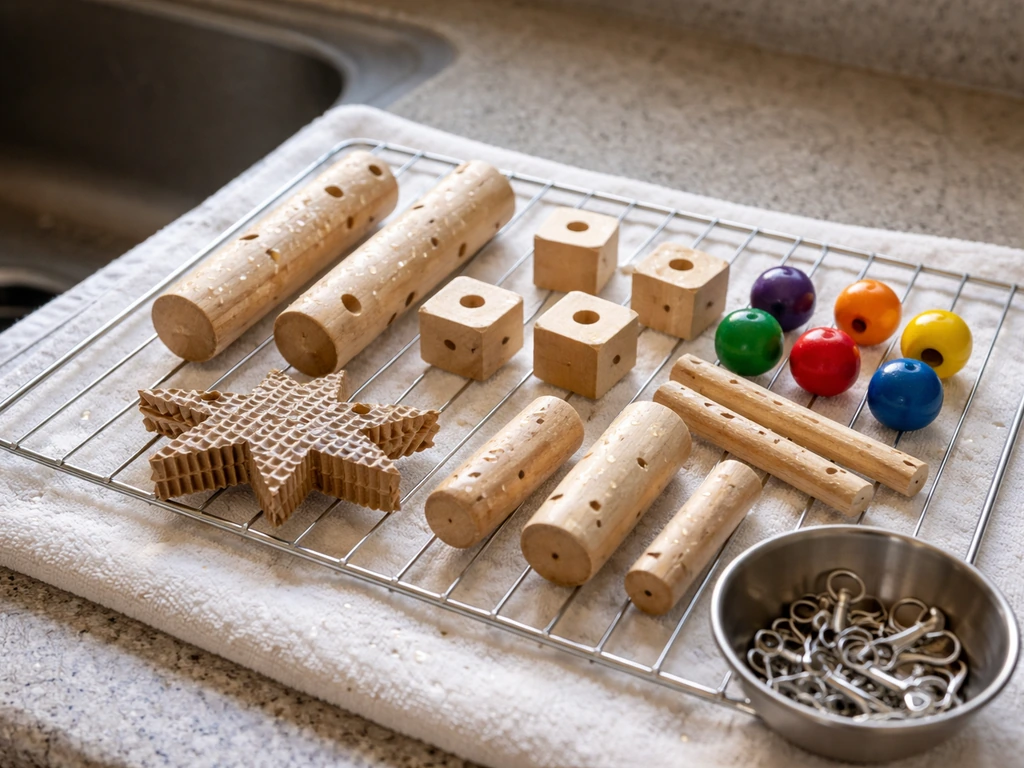
Hard toys made from untreated wood, stainless hardware, or food-safe plastic can often go through a dishwasher cycle, but always check whether the materials are dishwasher-compatible first. The most important rule is complete dryness before returning a toy to the cage. If you are wondering whether you can put bird toys in the dryer, stick to materials that can handle heat and always confirm they are fully dry afterward can you put bird dogs in the dryer. Damp wood or rope molds quickly, and mold is a real respiratory hazard for birds. Paper-based toys are single-use by design, so just toss and replace them.
Inspection and retirement schedule
- Check every toy daily for missing parts, fraying, sharp edges, or wear
- Remove any toy that does not come fully clean when washed
- Retire broken, frayed, or structurally compromised toys immediately. Do not wait until the next cleaning day.
- Replace paper or cardboard toys after each use or as soon as they are soiled
Simple DIY bird toy plans you can make today
1. The paper tube foraging toy
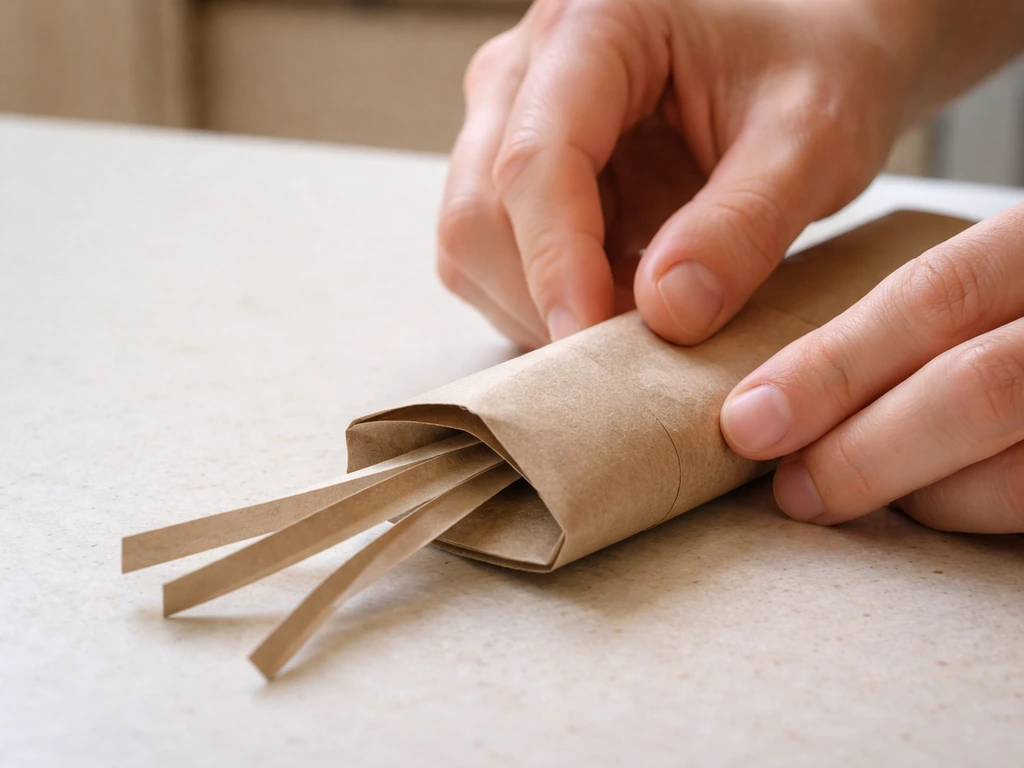
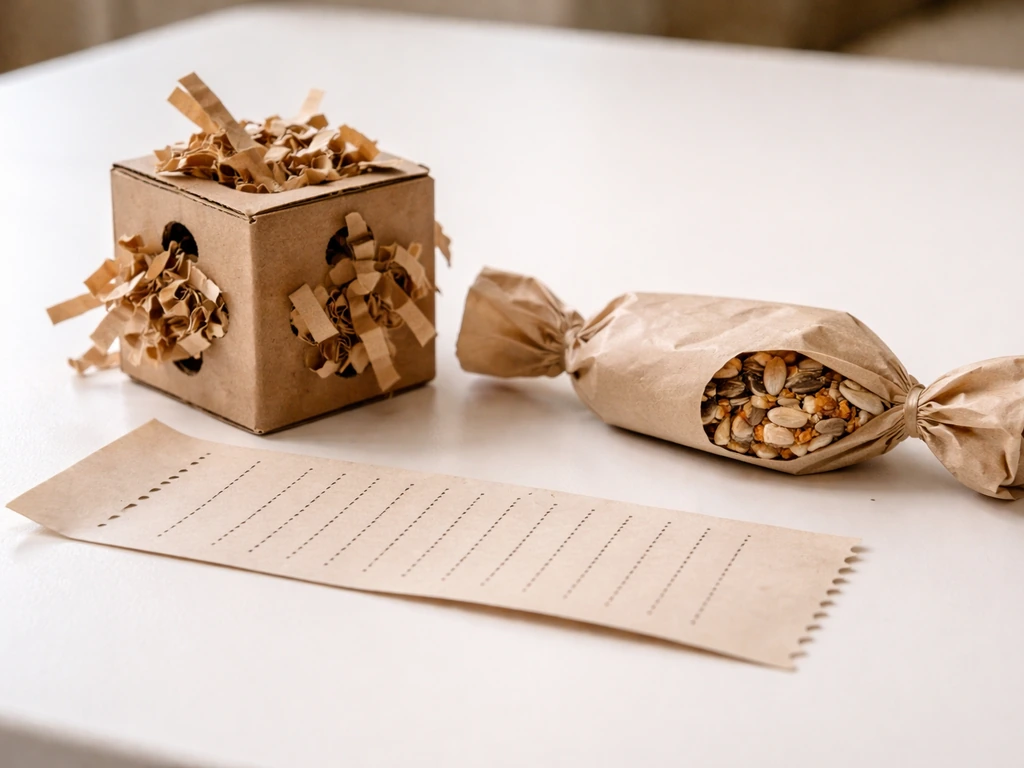
This is the easiest foraging toy you can make and it works for birds from parakeets to medium-sized parrots. The University of Florida recommends introducing foraging by wrapping food in paper while the bird watches, and this toy is exactly that principle in action.
- Take a cardboard paper towel tube and flatten one end by folding it over twice and creasing it firmly.
- Drop a few pellets, a small piece of dried fruit, or a seed mix into the open end.
- Fold and crease the open end closed the same way.
- Hang it from a stainless steel quick-link through a small hole punched in the top, or simply place it on the cage floor for floor-foraging birds.
- Let your bird figure out how to open it. If they ignore it at first, open one end slightly so the reward is visible.
2. The shredder bundle
This is pure destruction enrichment and birds love it. It works especially well for cockatiels, conures, and small parrots who are heavy chewers.
- Cut plain unbleached paper into strips roughly 1 inch wide and 8 to 10 inches long. For small birds, make them narrower.
- Stack 10 to 15 strips together and fold them in half.
- Tie the folded center with a short strip of the same paper twisted into a loose knot. No metal wire, no rubber bands.
- Hang the bundle from a stainless quick-link or wedge it between cage bars where your bird can reach it easily.
- Replace when it is fully shredded or soiled.
3. The balsa chew block
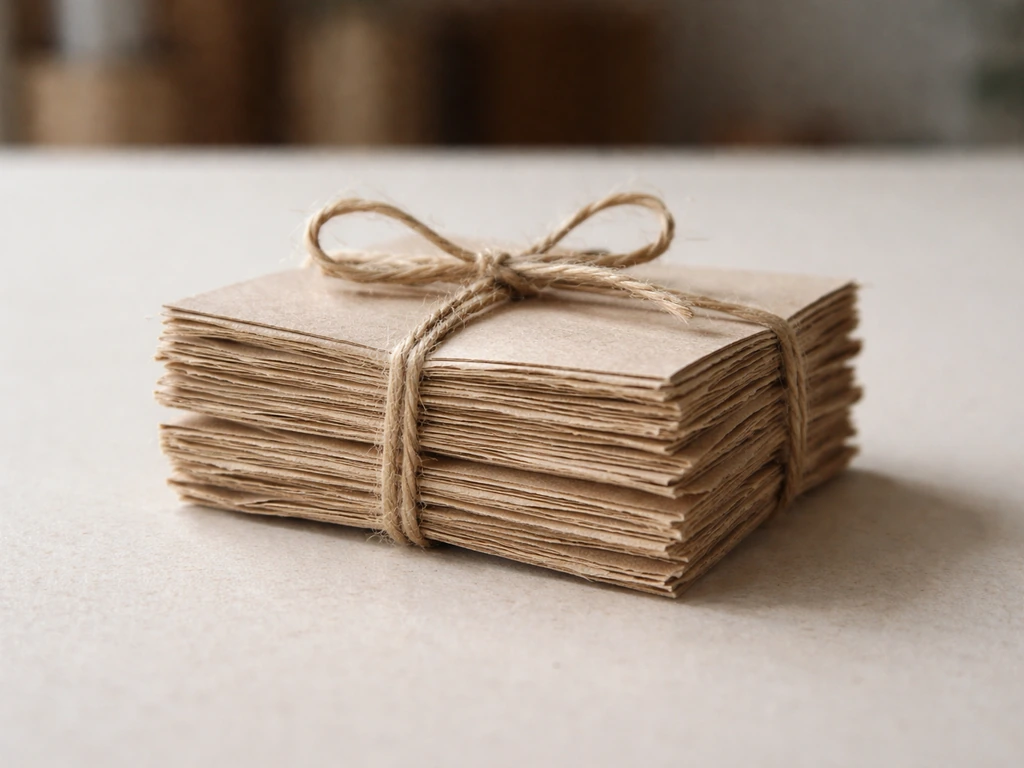
Balsa is soft enough for even small beaks and is one of the safest wood options available. P rohibited or risky materials include cedar, red cherry, plywood, and oak, and treated wood should be avoided Balsa is soft enough for even small beaks and is one of the safest wood options available.. This is a good one for birds that ignore foraging toys but love to chew.
- Buy a block of untreated, unfinished balsa wood from a craft store. Check that it has no sealant, paint, or stain.
- Cut or snap it into pieces sized appropriately for your bird. Nothing should be small enough to swallow whole.
- Drill or use a skewer to create a hole through the center.
- Thread a short length of natural sisal rope (no more than 4 to 5 inches for small birds) through the hole and tie a knot at each end to hold the block.
- Attach to the cage with a stainless quick-link. Inspect the rope daily.
4. The paper bag foraging station
Parrots.org describes using cups and cones to hide food for foraging enrichment. A plain paper lunch bag does the same job at zero cost.
- Take a small plain paper bag (no ink logos, no metal handle crimps).
- Place a few pieces of favorite food or treats inside.
- Fold the top over twice to close it loosely, not sealed tight.
- Place it on the cage floor or hang it from a low bar so the bird can interact with it from a perch.
- Supervise the first session to make sure your bird is engaging with it confidently rather than being frightened by it.
Matching the right toy to your bird's actual behavior
Not every bird wants the same enrichment, and buying or making the wrong toy type is one of the most common beginner mistakes. Here is a quick reference to help you match toy types to what your bird actually does.
| Bird behavior | Best toy type | DIY option to try |
|---|---|---|
| Heavy chewer: destroys everything | Balsa or softwood chew blocks, thick cardboard | Balsa chew block (plan 3 above) |
| Forager: investigates everything | Puzzle feeders, wrapped food, foraging cups | Paper tube forager or paper bag station (plans 1 and 4) |
| Shredder: pulls things apart | Paper bundles, palm fronds, cardboard strips | Shredder bundle (plan 2 above) |
| Nervous or cautious bird | Familiar-looking items introduced gradually | Start with a single paper strip near the food bowl before hanging anything new |
| Inactive or bored bird: feather plucking, excess vocalizing | High-engagement foraging + rotation of toys every few days | Rotate all four DIY toy types on a weekly schedule |
Boredom signs like feather plucking, excessive vocalization, or aggression are signals that your enrichment routine is not working, not that your bird has a behavior problem. If you see those signs, the fix is usually more varied, more frequent toy rotation rather than a single new toy. For cockatiels especially, introducing new toys too quickly can backfire. Bring one new item in at a time and let them adjust before adding another.
Building a simple toy rotation routine
The number of toys in the cage at any one time matters less than the rotation. A bird with five identical toys will be less enriched than a bird with three toys that change every few days. A workable starting routine looks like this: keep two or three toys active in the cage at a time, swap one out every three to four days, and cycle retired toys back in after a couple of weeks so they feel novel again. If you are making DIY paper toys, make a batch of five or six at once and rotate through them. That way you always have a fresh one ready without making a new one every day.
If you are thinking about how many toys your bird should have at once, that is worth looking into separately because the answer varies by species and cage size. The same goes for the cost side of things: if you want a baseline on what commercial bird toys actually run before deciding how much to DIY, that context is useful to have so you know exactly what you are saving. If you are wondering how much are bird toys on average, this baseline can help you compare store pricing to DIY options. If you want a quick baseline for choosing what to buy, check our guide to the best toys for bird dogs so you can compare options before you decide bird toys.
Quick action checklist
- Sign up for Petco Perks or Chewy's email list today if you have not already. Use the new-customer discount on Chewy if this is your first order.
- Check the retailer's own deals page before using any third-party coupon site.
- Skip any coupon site that asks for a survey, download, or personal info before showing you a code.
- Make one paper tube foraging toy today using a cardboard tube and a few pellets. It takes two minutes.
- Write down three materials in your house right now that are on the safe list: plain paper, cardboard tubes, plain paper bags.
- Check every rope or string toy in your bird's cage for fraying. Remove anything that is frayed or soiled.
- Set a calendar reminder to rotate one toy in three days.
- Never use cedar, oak, plywood, galvanized metal, or painted wood in any DIY toy.
FAQ
How can I tell whether a “coupon code” for bird supplies is actually valid right now, not expired?
After you copy the code, test it immediately in checkout on the exact retailer and cart category it claims to apply to. If the cart total does not change and you see no error, double-check the code is eligible for the specific brand, item type (food vs. toys), and any minimum purchase requirement, then try the same code on a second eligible item to confirm it is not a one-product promotion.
What if a code works on one product but fails on another item in the same order?
Many promotions are SKU-specific or category-specific. Split your cart mentally into eligible (toy/accessory) and non-eligible (seed, cages, clearance, shipping, or bundles). If the code only discounts eligible items, apply it to a cart containing only toy and enrichment items that meet the promo terms.
Is it safe to buy bird toys using a third-party “coupon” website or influencer code?
Avoid sites that require surveys, app downloads, or payment-like “offers” before revealing the code. Even when codes are real, third-party pages sometimes route through redirects or present changed terms, so stick to the retailer’s own account offers (loyalty, first-time orders, or email promotions).
Can I use retailer points in place of a coupon code, or are they mutually exclusive?
Often they can be combined, but sometimes points redemption replaces the discount. Check the deals page during checkout for wording like “cannot be combined” or “one offer per order,” then try points first if the promo is smaller, because points sometimes apply broadly while coupon codes are restricted.
What should I do if the “promo code already used” error keeps happening?
That error usually means the code is tied to a specific account or is single-use. Sign in, then look for a “new customer” or “welcome” offer inside your account. If you are already signed in, try logging out and back in (session refresh), then confirm you are using the code exactly, including capitalization and hyphens.
Is DIY always cheaper than store-bought, once you factor in supplies and safety time?
DIY is usually cheapest when you use truly low-cost items (paper towel rolls, plain paper, cardboard) and run a batch for rotation. If you choose expensive materials like specialized hardware or balsa plus repeated replacement, your cost advantage shrinks. A practical way to decide is to total your first batch cost and divide by how many toys are safely usable after inspection.
What are the most common DIY materials that should be avoided for birds?
Avoid rope that unravels, chain links with gaps that can trap toes, and any twine or string that frays easily. Also skip unknown woods, treated or painted materials, and anything with coatings you cannot confirm as food-safe and non-toxic for the species in your household.
Can I use normal household cleaning to wash DIY toys, or should I replace them?
Replace or retire paper-based toys after use since they cannot be reliably cleaned and can degrade. For materials like wood or stainless hardware, you can wash if the specific material is appropriate, but always ensure complete dryness before returning to the cage because dampness increases mold and respiratory risk.
How often should I inspect a DIY toy, and what exact signs mean “remove it now”?
Inspect daily, especially rope, paper, and anything that your bird can chew apart. Remove immediately if you see loose strands, fraying, unraveling, trapped bits the bird can swallow, exposed sharp edges, or any part that loosens and creates new openings as the toy breaks down.
What DIY toy types should I choose first if I am not sure what my bird prefers?
Start with one foraging option (food hidden in plain paper or a simple wrapper) and one shredding option (folded or rolled paper/cardboard). Observe whether your bird forages, chews, or ignores it for a few sessions, then rotate to a new type one at a time rather than introducing multiple new toys simultaneously.
If my bird shows boredom signs, does that mean I should buy one more expensive toy?
Not necessarily. Boredom signals usually improve with more frequent rotation and more variety in function (forage, shred, problem-solve) rather than a single high-cost item. If you are adding new items too quickly, especially with cockatiels, introduce one new toy at a time and give it a few adjustment days.
How do I match toy design to bird size so it does not become a strangulation or entanglement risk?
Use openings and rope length rules based on head and toe safety. For smaller birds, any rope length and loop geometry must prevent wrapping around the body, or allow easy exit at all times. If you cannot confirm the bird cannot get its head through, do not use that design, even if it worked for another species.
Are there situations where I should not rely on DIY toys at all?
Yes. If you cannot commit to daily inspection, if you lack safe materials you can verify as non-toxic, or if your bird is a heavy shredder that reaches connector parts quickly, prioritize simpler single-use paper foraging and swap toys frequently instead of keeping DIY items “in circulation” too long.
Next Article
What to Give Bird DS3: Safe Feeding Guide Today
Get safe, step-by-step feeding help for “bird DS3”: clarify the meaning, choose food, routine, and avoid dangerous mista