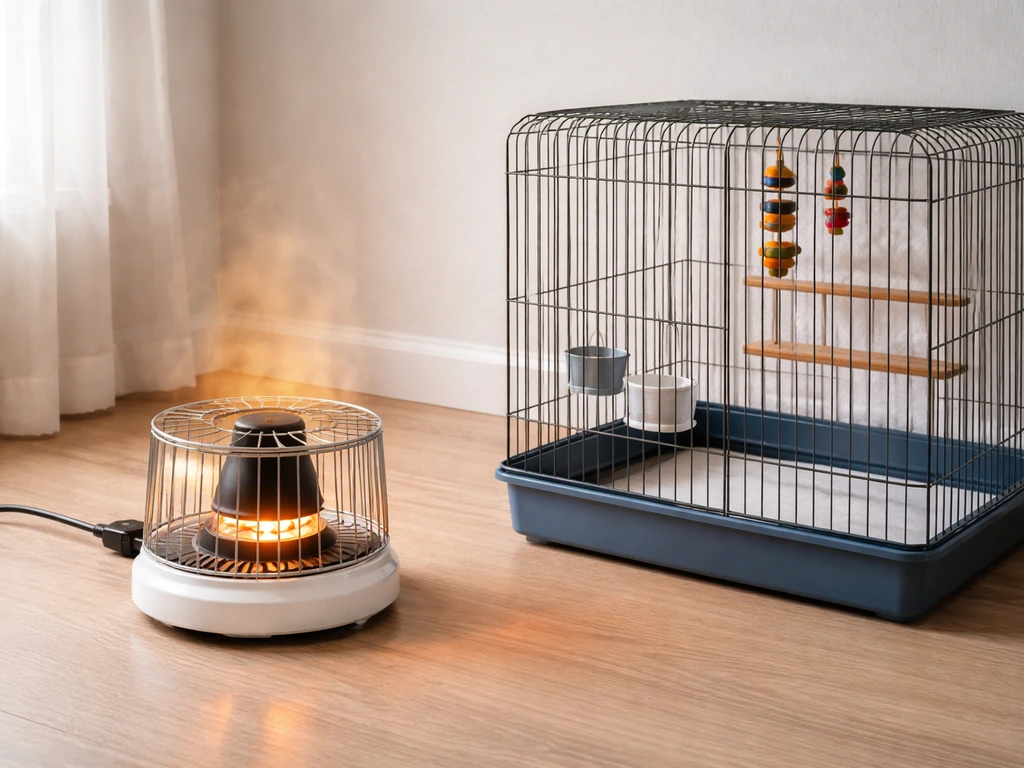
For most bird rooms, an evaporative humidifier with a built-in humidistat is the safest, most practical choice. Aim to keep humidity between 40 and 60 percent, that range covers the needs of nearly every common pet bird, from budgies to African greys to Amazon parrots, and use a standalone hygrometer to verify what your humidifier's sensor actually reads.
Best Humidifier for Bird Room: How to Choose Safely

Marcus Chen
9 Jun 2026
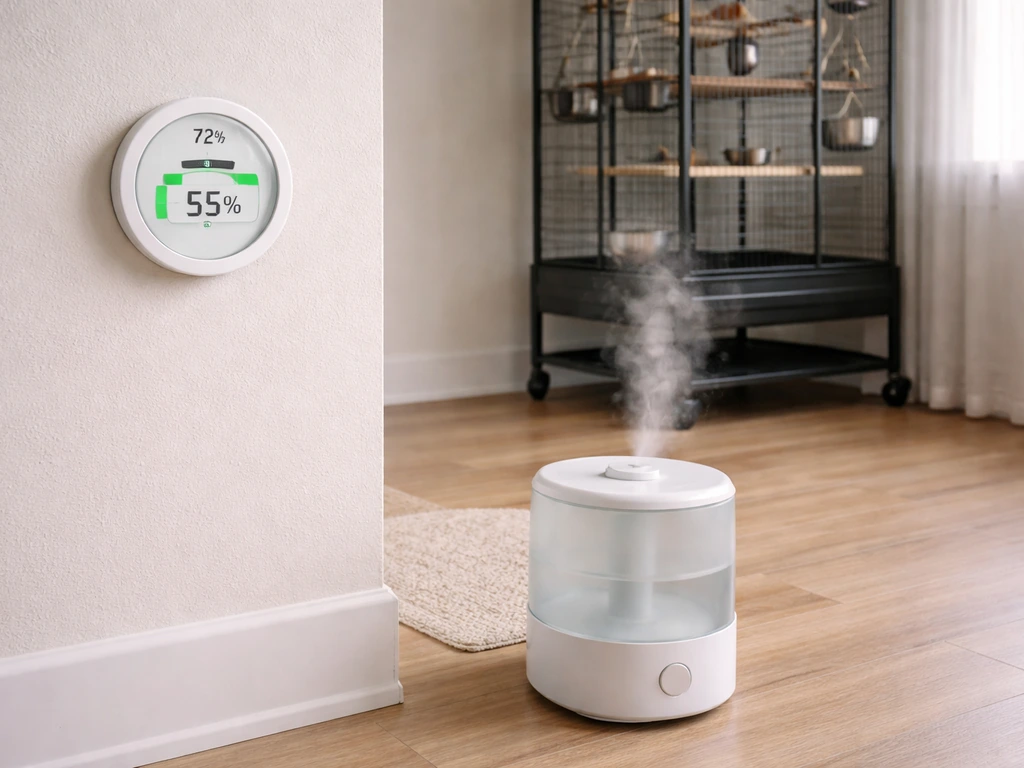
If I had to pick one unit right now for a small-to-medium bird room, I'd go with a quiet evaporative model like the Levoit Oasis 450S or the Honeywell HCM-350 for larger spaces. But which is right for you depends on your room size, your bird species, and how much maintenance you're willing to do consistently.
If you want a quick starting point, look for the best vacuum for bird owners that can handle dander and fine dust without blowing it back into the air.
Why humidity matters so much in a bird room
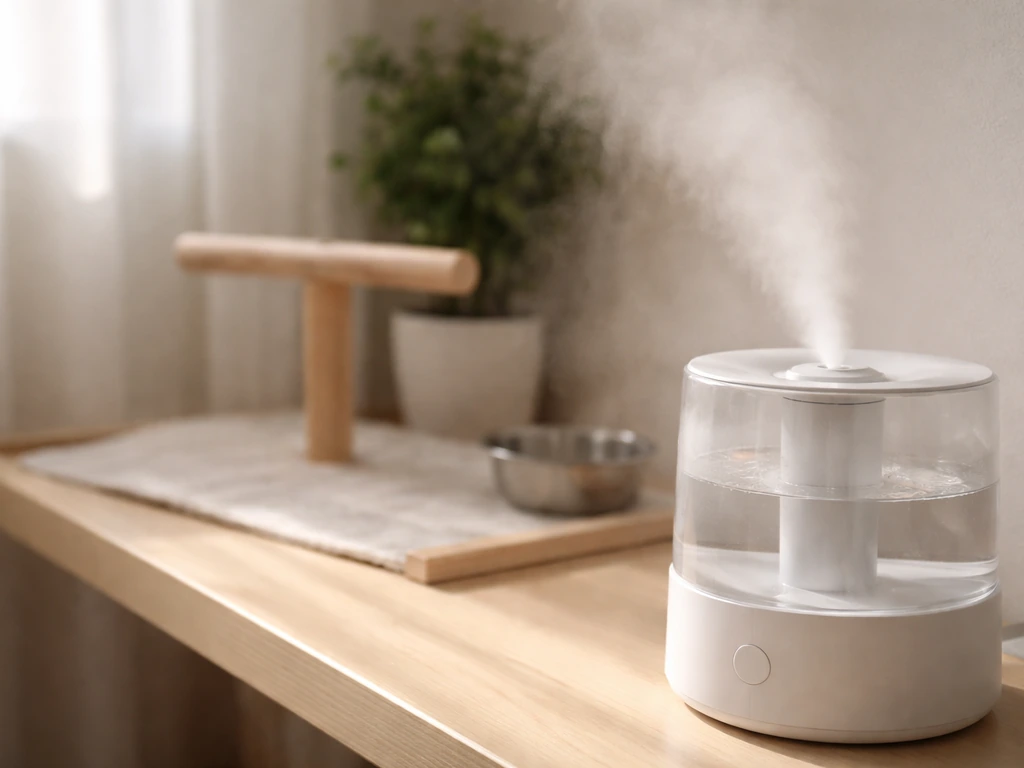
Birds have a respiratory system unlike any other pet you'll own. The avian lung is extremely efficient, which is exactly why it's so vulnerable to airborne particles, dry air, and pathogens. Low humidity dries out mucous membranes, makes it harder for birds to clear dust and dander from their airways, and can contribute to dry, flaky skin and feather quality issues during molts. High humidity creates the opposite problem: mold, bacterial growth, and wet feathers that stress birds out and invite respiratory infections.
Multiple avian veterinary sources, including guidance from UC Davis's exotic animal care team and Bowmanville Veterinary Clinic, consistently point to blank" rel="noopener noreferrer">40 to 60 percent relative humidity as the target range for pet birds. Bowmanville specifically recommends blank" rel="noopener noreferrer">40 to 50 percent as ideal. I'd treat 45 to 55 percent as a practical sweet spot, comfortable for most species and easy to maintain without constantly fighting the extremes.
Species does matter here, though not as dramatically as some online forums suggest. Tropical birds like conures, caiques, and eclectus parrots naturally come from humid environments and tend to appreciate the higher end of that range (50 to 60 percent). Desert-origin birds like cockatiels and budgies are more tolerant of the 40 to 50 percent range. African greys are notoriously prone to feather-destructive behavior and dry skin when humidity drops too low, so if you keep a grey, keeping the room solidly above 45 percent is genuinely important.
How to measure what's actually happening in your bird room
Never trust the humidity reading on your humidifier alone. The sensors built into budget and mid-range humidifiers are notoriously inaccurate, I've seen units read 50 percent when a calibrated hygrometer sitting two feet away showed 34 percent. A dedicated digital hygrometer (also called a hygrometer/thermometer combo) is a $10 to $20 investment that will save you a lot of guesswork. Place it at cage height, not on a shelf near the ceiling or on the floor, because humidity stratifies in a room.
Give the hygrometer 30 minutes to acclimate before reading it. If you want to check accuracy, the salt test works well: seal the hygrometer in a bag with a small container of damp table salt for 6 hours, it should read 75 percent. Most cheap units read within a few percentage points of that, which is close enough for bird care.
Signs your bird room is too dry
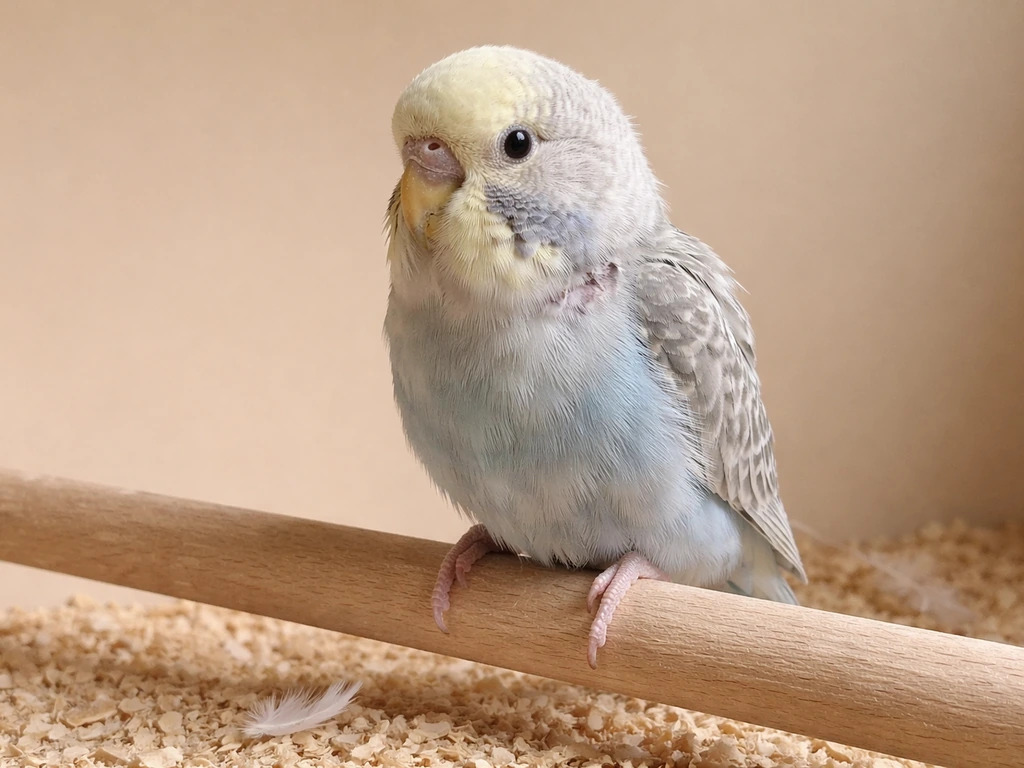
- Bird is scratching more than usual, especially around the face and vent area
- Visible dry, flaky skin or dull, brittle-looking feathers
- Sneezing more frequently (occasional sneezing is normal; persistent dry sneezing is not)
- Static electricity when you handle your bird
- Your own skin and nasal passages feel dry in the room
- Hygrometer reads consistently below 40 percent
Signs your bird room is too humid
- Musty or earthy smell in the room
- Visible condensation on windows, cage bars, or walls
- Mold or mildew forming on cage surfaces, perches, or food dishes
- Bird's feathers look damp or clumped
- Hygrometer reads consistently above 65 percent
- Respiratory sounds (clicking, wheezing) — this needs a vet visit regardless of humidity
Humidifier types: which ones are actually safe for birds
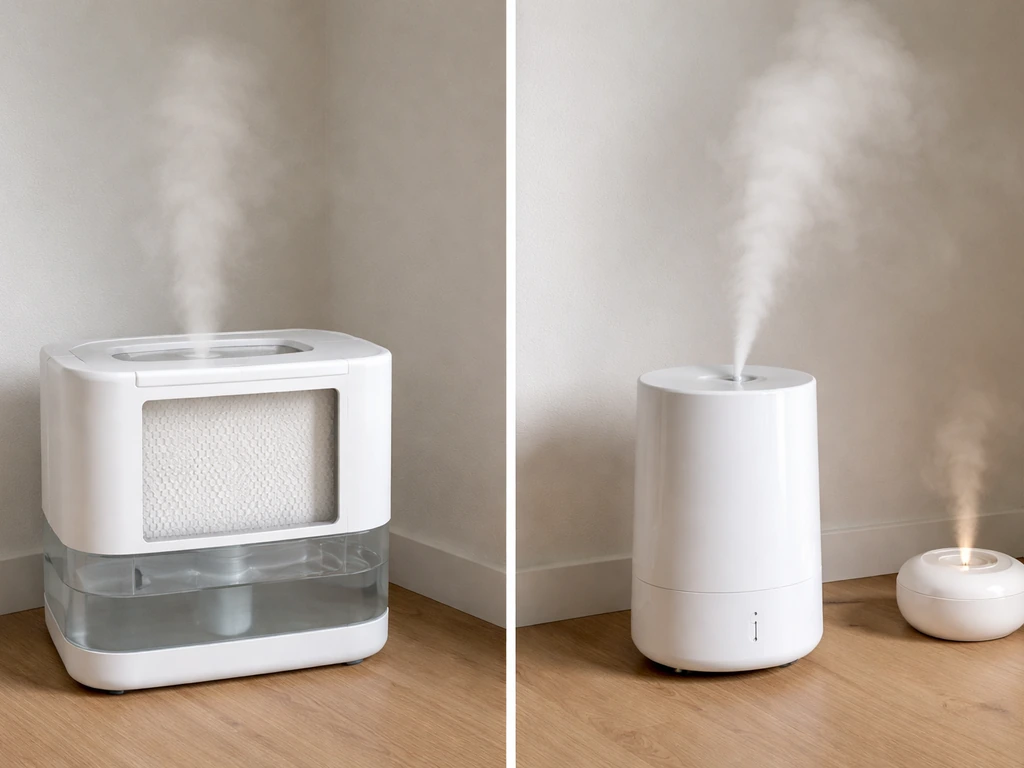
This is where a lot of bird owners get tripped up. Not all humidifier technologies are equal when birds are involved, and one popular type has a real safety downside that's worth understanding before you buy.
| Type | How It Works | Bird Safety | Maintenance Load | Best For |
|---|---|---|---|---|
| Evaporative (wick) | Fan blows air through a wet wick filter, releasing cool vapor | High — self-regulating, won't over-humidify, no mineral mist | Medium — wick needs regular replacement (every 1-3 months) | Most bird rooms, especially those with dusty species like cockatiels |
| Ultrasonic | Vibrating plate creates a fine cool mist from water | Medium — safe if used with distilled water; mineral-laden 'white dust' is a respiratory concern with tap water | Medium — requires distilled water and frequent tank cleaning to prevent biofilm | Smaller rooms, quiet environments, owners committed to using distilled water |
| Warm steam / vaporizer | Boils water to release steam | Lower — heat creates burn risk near cage, and steam can spike humidity quickly | Low cleaning load (boiling kills germs), but risky placement near birds | Not recommended near bird cages |
| Impeller (cool mist) | Spinning disk flings water to create droplets | Medium — similar white dust concern as ultrasonic with tap water | Medium | Budget option if distilled water is used consistently |
My honest take: evaporative is the default recommendation for bird rooms, full stop. The self-regulating nature of evaporative technology means it physically cannot add more moisture to the air than it can hold at that temperature, which makes over-humidification much less likely. If you go with an ultrasonic unit, use only distilled water, the fine mineral particles it disperses with tap water are the same kind of fine particulate matter that stresses bird airways. This isn't a theoretical concern.
It's the same reason bird owners are cautious about air quality in general, which connects directly to why air purifiers are also a common topic for bird rooms. A quality air purifier can further reduce airborne dust and dander so your bird room stays cleaner between cleanings air purifiers. Air purifiers can help remove airborne particles that trigger respiratory stress in pet birds.
Choosing the best air purifiers for bird dander can further reduce airborne particles that irritate avian airways.
One hard rule regardless of humidifier type: never use essential oils, fragrance additives, or anything that goes into the water tank or the mist path. Birds lack the detoxifying enzymes that humans and dogs use to process many volatile organic compounds, and what smells pleasant to you can cause serious respiratory distress or worse in a bird. This applies to eucalyptus, tea tree, lavender, all of it.
Features that actually matter for a bird room
When you're shopping, here's what I'd actually prioritize versus what's marketing fluff.
- Built-in humidistat with auto shutoff: This is the single most important feature. It lets you set a target humidity level (set it to 50 percent) and the unit cycles on and off to maintain it rather than running continuously. Without this, you're guessing.
- Tank size matched to room size: A 1-gallon tank on a unit rated for 250 sq ft will run 12 to 24 hours between refills in dry conditions. For larger rooms (400+ sq ft), look for 1.5 to 2 gallon tanks or units designed for larger coverage.
- Wide-mouth tank opening: This sounds trivial until you've tried to clean a narrow-neck tank. Biofilm and mold grow inside tanks, and if you can't reach every surface with a brush, you're not actually cleaning it.
- Quiet operation: Birds are sensitive to sound, and a loud unit can stress them. Evaporative units vary widely — look for under 35 dB at low fan speed.
- Dishwasher-safe components: The wick tray, tank cap, and water tray should all be dishwasher-safe or at minimum easy to soak and scrub. Non-negotiable for staying on top of maintenance.
- No heated components near the mist output: Warm steam units produce hot steam near the output nozzle. Keep those away from bird cages entirely.
- Filter indicator or filter-free design: Know when your wick needs replacing. A dirty wick grows mold and bacteria and pumps them into your bird's air.
Best humidifier picks for a bird room
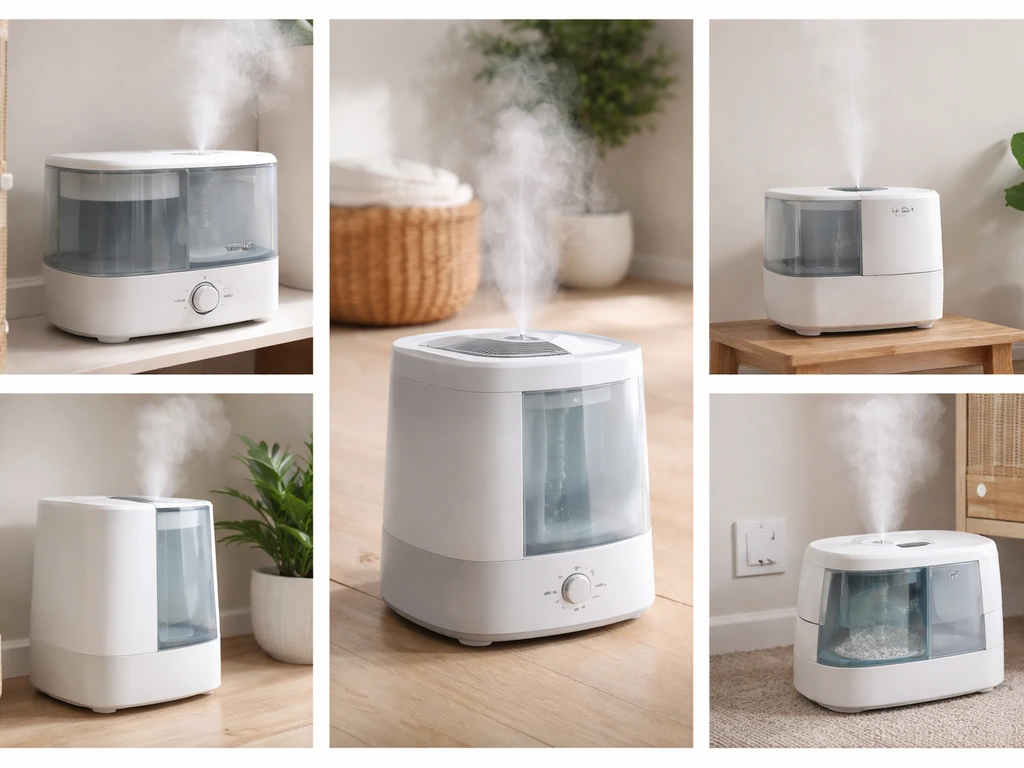
These recommendations are based on matching real-world performance to bird-room priorities: safety, reliable humidity control, cleanability, and low noise. I've organized them by use case rather than a rigid ranking, because the right pick genuinely depends on your situation.
Best overall: Levoit Oasis 450S
The OAS450S is an evaporative humidifier with a built-in humidistat, app control, a wide-mouth 4.5L tank, and a quiet fan that runs under 30 dB on low. It covers up to about 500 sq ft, which handles most single bird rooms. The top-fill design makes refilling easy, and the wick filter is replaceable. Tradeoff: replacement wicks cost around $12 to $15 each, and you'll need them every 2 to 3 months with regular use. But for a bird room, this is a reasonable cost of doing things right.
Best for larger rooms (600–1000 sq ft): Honeywell HCM-350 or HCM-6009
The Honeywell HCM-350 is a workhorse evaporative unit that's been around for years and has a strong track record for reliability. The HCM-6009 is the larger-room version, covering up to about 1,000 sq ft. Both use UV technology to kill bacteria in the water before it's dispersed, a genuinely useful feature for a bird room. The tanks are easy to clean, replacement filters are cheap and widely available, and the units are quiet. The downside is they lack a precise digital humidistat; you set a range rather than a specific percentage, so pair them with your standalone hygrometer and check periodically.
Best quiet option: Canopy Bedside Humidifier
If you have a small bird room (under 200 sq ft) or a single cage in a bedroom setup, the Canopy is worth considering. It's an evaporative unit with a paper wick that's genuinely dishwasher-safe, runs nearly silent, and uses a replaceable filter cartridge that prevents mold from growing inside the tank. It doesn't have a humidity sensor, so again, use your standalone hygrometer. It's best for smaller spaces, it won't keep up with a large or dry room in winter.
Best for sensitive birds (African grey, eclectus): Levoit Classic 300S (ultrasonic, with distilled water)
If you keep an African grey or another species with notoriously sensitive respiratory systems, the precision of an ultrasonic unit with a good humidistat can be appealing. The Levoit Classic 300S has accurate humidity sensing, app control, and is very quiet. The critical requirement: use distilled water only, every time. No exceptions. The fine mist from ultrasonic units with tap water creates white mineral dust that accumulates on surfaces, and in bird lungs. If committing to buying distilled water regularly sounds like a hassle, choose evaporative instead.
Best budget pick: Pure Enrichment MistAire Ultrasonic
For under $35, the MistAire is a reliable ultrasonic option for a small room. It has an auto shutoff when the tank empties and runs quietly. It lacks a humidistat, so you'll rely entirely on your hygrometer to manage levels manually. Use distilled water, clean the tank every 3 days, and it works fine. If you're in a larger or very dry room, it won't keep up, but for a compact space with one small bird, it's a reasonable starting point.
How to set up your humidifier in a bird room
Where you place the humidifier matters almost as much as which one you buy. The goal is even, stable humidity distribution, not a localized damp zone around the cage.
- Place the humidifier at least 3 feet from the cage. Direct mist aimed at a bird or cage can wet feathers, create condensation on perches, and make food and bedding damp — all bad outcomes. You want the mist to disperse into the room air before it reaches the cage.
- Position it at mid-height if possible (a table or stand) rather than on the floor. Humidity disperses upward and outward more effectively from a raised position, and floor placement can create moisture pockets that encourage mold under cages.
- Aim the output toward open room space, not at walls or furniture. Moisture against walls and upholstery creates mold over time.
- Place your hygrometer at cage height, roughly in the center of the room or near where your bird spends most of its time. This tells you what your bird is actually experiencing.
- Set the humidistat to 50 percent and let the unit cycle naturally. Don't try to jump from 30 percent humidity to 55 percent in one session — gradual increases are easier on the bird and the room.
- Run the humidifier during waking hours first and monitor. Once you've confirmed your levels are stable and your hygrometer reads accurately, you can run it overnight if needed.
- If using an ultrasonic unit, fill with distilled water only before every use. Don't top off with tap water over leftover distilled water.
Maintenance routine that actually keeps birds safe
This is where most people fall down, and it's honestly the most important part of owning a humidifier near a bird. A neglected humidifier doesn't just stop working well, it actively pumps mold spores, bacteria, and biofilm into the air. That's worse than not running one at all.
Daily
- Empty any remaining water from the tank before refilling — don't just top off. Stagnant water grows biofilm fast.
- Rinse the tank with clean water and refill fresh.
- Wipe down the outside of the unit if mist has condensed on it.
- Check your hygrometer reading and compare to humidistat setting.
Every 3 days
- Disassemble the tank and water tray and wash with dish soap and warm water.
- For ultrasonic units: wipe the vibrating disk with a soft cloth dampened with white vinegar, then rinse thoroughly before reassembling.
- For evaporative units: rinse the wick under running water (do not use soap on the wick — it degrades the fibers and can leave residue).
- Check for any pink or orange slime (Serratia marcescens bacteria) or black mold spots. If present, use a diluted white vinegar soak (1:1 with water) for 30 minutes, scrub, and rinse completely.
Weekly
- Full descaling soak: fill the tank with undiluted white vinegar, let sit 30 to 60 minutes, shake, and rinse thoroughly until you cannot smell vinegar.
- Inspect the wick or filter for discoloration, mineral buildup, or smell. Replace if it looks gray-brown or smells musty — not just when the indicator light says so.
- Clean the base water reservoir and any nooks the brush can reach.
- Never use bleach, hydrogen peroxide, or commercial disinfectants inside the water tank of a humidifier used near birds. Residual fumes and off-gassing from these products are dangerous. White vinegar is the safe cleaning agent here.
Troubleshooting common humidifier problems in a bird room
Humidity won't rise above 40 percent
First check whether your humidifier is sized for the room. A unit rated for 250 sq ft in a 600 sq ft space will run constantly and still underperform. Second, check for air leaks, a room with poor sealing loses moisture quickly to the rest of the house. Third, in winter, forced-air heating systems pull humidity down fast; you may need to run the unit longer or go up a size. Also check the wick: a heavily mineralized wick doesn't absorb or evaporate water efficiently, replace it even if it looks physically intact.
Humidity spikes above 65 percent
Turn off the humidifier and ventilate the room. Check whether the humidistat is accurate (compare against your standalone hygrometer). If the humidistat was reading too low and kept the unit running past target, that's a sensor calibration issue, some units allow adjustment, or you can offset the setting manually. In a sealed room in summer, humidity builds quickly; consider running the humidifier for shorter cycles and checking levels more often. If humidity spikes consistently, a unit with a more accurate sensor is worth the upgrade.
You notice condensation on windows, cage bars, or walls
This is a sign you've exceeded the room's capacity to hold moisture, either the room is too cold, you're running the humidifier too long, or both. Lower the target humidity setting by 5 percent and check again after 24 hours. Condensation on cage bars is a particular concern because it creates mold directly in your bird's environment. Wipe down bars and check perches for moisture immediately.
Musty smell from the humidifier
Stop the unit immediately. A musty smell means mold or bacteria are growing inside and being dispersed into your bird room. Disassemble everything, do a full white vinegar soak, scrub every surface, replace the wick, and rinse until there's no smell before running it again. If the smell returns within a day or two after cleaning, the unit likely has mold inside components you can't reach, replace it. A cheap humidifier is not worth the respiratory risk to your bird.
When to stop using the humidifier entirely
Pause or stop humidifier use if your bird shows any new respiratory symptoms (clicking sounds, tail bobbing, open-mouth breathing, discharge from nares), high humidity can worsen bacterial and fungal respiratory infections, and you need a vet diagnosis before continuing. Also stop if your hygrometer consistently reads above 60 percent without the humidifier running; your room may be naturally humid enough, and adding more moisture will cause more problems than it solves. In summer months particularly, monitor your baseline humidity before assuming you need to add any at all.
Pulling it all together
The best humidifier for a bird room is an evaporative model with a built-in humidistat, sized appropriately for your space, kept rigorously clean. If you want a quick answer, the best bird heater approach is to keep humidity controlled and avoid unsafe additives in the water path best humidifier. For most people, the Levoit Oasis 450S or Honeywell HCM-350 covers the bases.
Pair it with a $15 digital hygrometer, set your target to 50 percent, and build the cleaning routine into your weekly bird care schedule. The goal isn't perfect humidity, it's stable humidity in the 40 to 60 percent range, maintained consistently over time. Birds adapt fine to that range, and you won't be fighting mold or respiratory problems at either extreme.
Air quality is a broader topic in bird rooms, and a humidifier is just one piece of it, air purification and filtration matter too, especially if you keep dusty species like cockatiels or cockatoos. If you also want to handle airborne dander and dust, pairing your humidifier setup with the best vacuum for bird owners can make a noticeable difference air purification and filtration matter too.
- Target humidity: 40 to 60 percent (aim for 45 to 55 percent as your practical sweet spot)
- Buy a separate digital hygrometer — don't trust the humidifier's built-in sensor alone
- Evaporative humidifiers are the safest default for bird rooms; ultrasonic is fine only with distilled water
- Never add essential oils, fragrances, or additives to the tank
- Place the unit at least 3 feet from the cage, at mid-height, output aimed away from the bird
- Empty and refill the tank daily; deep clean with white vinegar weekly
- Replace evaporative wicks every 1 to 3 months — a dirty wick is a biofilm factory
- If you smell anything musty from the unit, stop it and clean or replace before running again
- Pause humidifier use and see a vet if your bird develops any respiratory symptoms
FAQ
Can I use a “cool mist” or warm mist humidifier instead of an evaporative one for my birds?
For bird rooms, cool mist and warm mist are not automatically safer. The deciding factors are how the unit generates moisture and what goes into the water or mist path. If it is ultrasonic, you must use distilled water to prevent mineral dust. If it is evaporative, it is generally easier to avoid over-humidifying and you still need strict cleaning to prevent biofilm.
How do I keep humidity stable if my bird room has multiple cages in different areas?
Aim for even distribution, not a targeted bubble of humidity. Place the humidifier where airflow helps it mix with room air (often near a return path or an open area), and verify with your hygrometer at cage height. If humidity varies widely across the room, consider a larger-capacity unit or better room sealing rather than repeatedly turning a small humidifier on and off.
What should I do if my humidity target is 45 to 55% but my room naturally sits above 60%?
First, confirm you are not relying on an inaccurate built-in sensor by checking your standalone hygrometer at cage height. If it is truly above 60% without the humidifier running, stop adding moisture. Reduce indoor humidity with ventilation, dehumidification, and addressing sources (wet laundry areas, aquariums, leaky plumbing) rather than trying to “balance” with more humidifier time.
Is it normal for condensation to appear on cage bars or nearby windows?
Light condensation can happen, but persistent wetness is a warning sign that the room is exceeding what it can comfortably hold at your current temperature. Lower the humidifier setpoint by about 5%, check again after 24 hours, and dry cage bars and perches immediately. If condensation keeps returning, your room conditions (temperature, airflow, humidifier output) need adjustment.
How often should I clean the humidifier, beyond regular refilling?
Refilling alone is not enough. Follow the type-specific cleaning approach: evaporative units require regular wick replacement and tank scrubbing, ultrasonic units typically need frequent tank cleaning because residue builds faster in a system that disperses fine mist. If you ever notice a musty smell, treat it as an emergency clean event even if you are “within schedule.”
What is the safest way to handle water quality in the tank?
Avoid anything that changes what is in the water or mist path. For evaporative models, tap water is often usable, but you still need cleaning to prevent scale and biofilm. For ultrasonic units, use distilled water only every time. Never add fragrance, essential oils, or additives even if they claim to be “pet safe.”
Can I use tap water in an ultrasonic humidifier if I wipe down surfaces regularly?
Regular wiping does not solve the problem. Ultrasonic mist can carry fine mineral particles that accumulate on surfaces and also become airborne particulate the bird breathes. Distilled water is the only practical way to prevent that ongoing exposure. If you cannot commit to distilled water, choose evaporative.
My humidifier has a built-in humidistat, can I trust it?
Usually not on its own. Sensors in many humidifiers can drift or read differently than the air around the cages. Compare the built-in reading to a calibrated standalone digital hygrometer (placed at cage height) and adjust your humidifier strategy based on the mismatch, not the humidifier’s display.
How do I tell if I should stop using the humidifier because my bird is getting sick?
Stop humidifier use and seek a vet diagnosis if you notice new respiratory signs such as clicking, tail bobbing, open-mouth breathing, or nasal discharge. High humidity can worsen bacterial or fungal respiratory issues, so do not “push through” while troubleshooting. Also pause if your hygrometer shows rising humidity above 60% without clear benefit.
What if I run the humidifier and humidity still doesn’t rise enough in winter?
This usually points to room capacity or airflow losses. Check for air leaks, confirm the humidifier is sized for the real square footage and ceiling height, and consider that forced-air heating can drop humidity quickly. In some cases, improving room sealing or using a higher-capacity unit works better than extending run time indefinitely.
Is there a target humidity difference between budgies, greys, and tropical parrots I should use?
Use the overall safe band as your baseline, 40 to 60%. Then fine-tune: desert-origin species often do fine at the lower end, tropical species often prefer the upper end, and African greys tend to do better when you stay above roughly 45%. Confirm your bird’s skin and molt condition, and keep using cage-height measurements rather than trusting the unit display.
Do I need an air purifier too, or is humidity control enough?
Humidity control helps, but it is not the whole air-quality picture. A humidifier can increase moisture-related comfort, while an air purifier helps manage airborne dust and dander that can irritate avian airways. If your birds create a lot of dust or you have floor-to-ceiling lint issues, pairing both is often more effective than humidity alone.
Next Article
Best Bird Heater Guide: Choose, Size, and Use Safely
Find the best bird heater: choose type, size for your room, set up safely, and troubleshoot hot, cold, drafts, and dry a