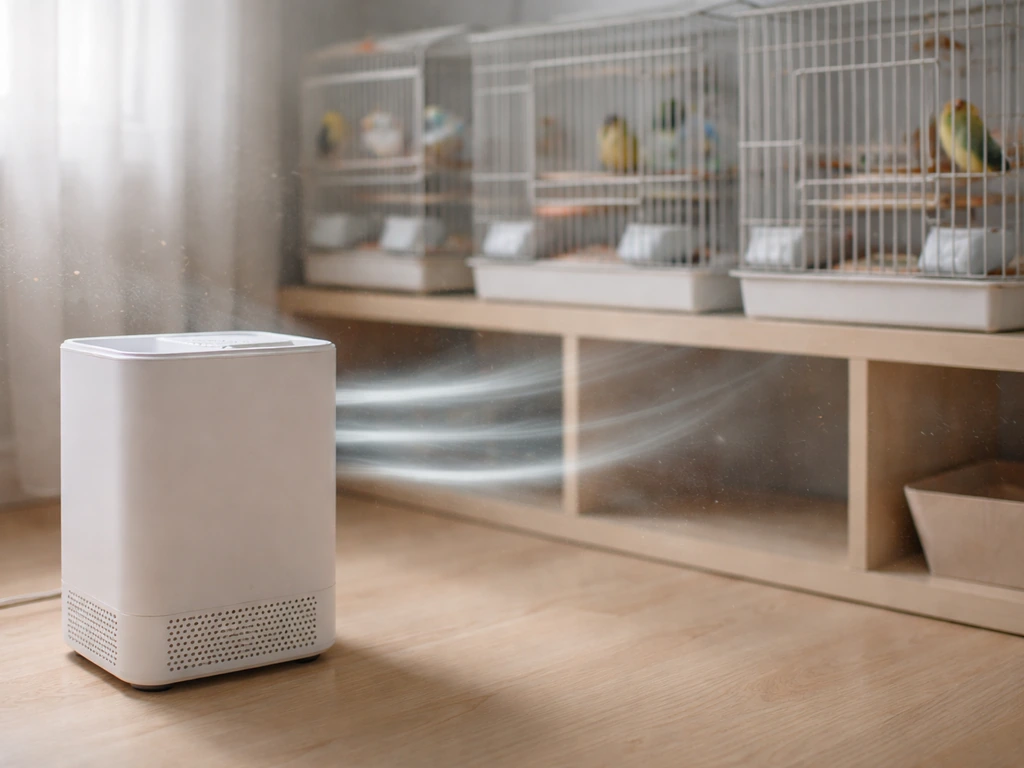
For a bird room, you want a true HEPA air purifier with an activated carbon pre-filter, sized to turn the room's air over at least 4 to 5 times per hour. That combination tackles the two real problems: ultra-fine particulates from dander, powder down, feather dust, and dried droppings aerosol, plus the ammonia and organic odors that build up fast in any enclosed space where birds live. If you only buy one thing, make it a hybrid unit (HEPA plus carbon) rated for 1.5 to 2 times your actual room square footage, run it on a medium setting continuously, and place it across the room from the cage, not directly beside it.
The Best Air Filters for Bird Rooms: Buyer Guide

Marcus Chen
17 Jun 2026
Why air filtration matters more in bird rooms than almost anywhere else
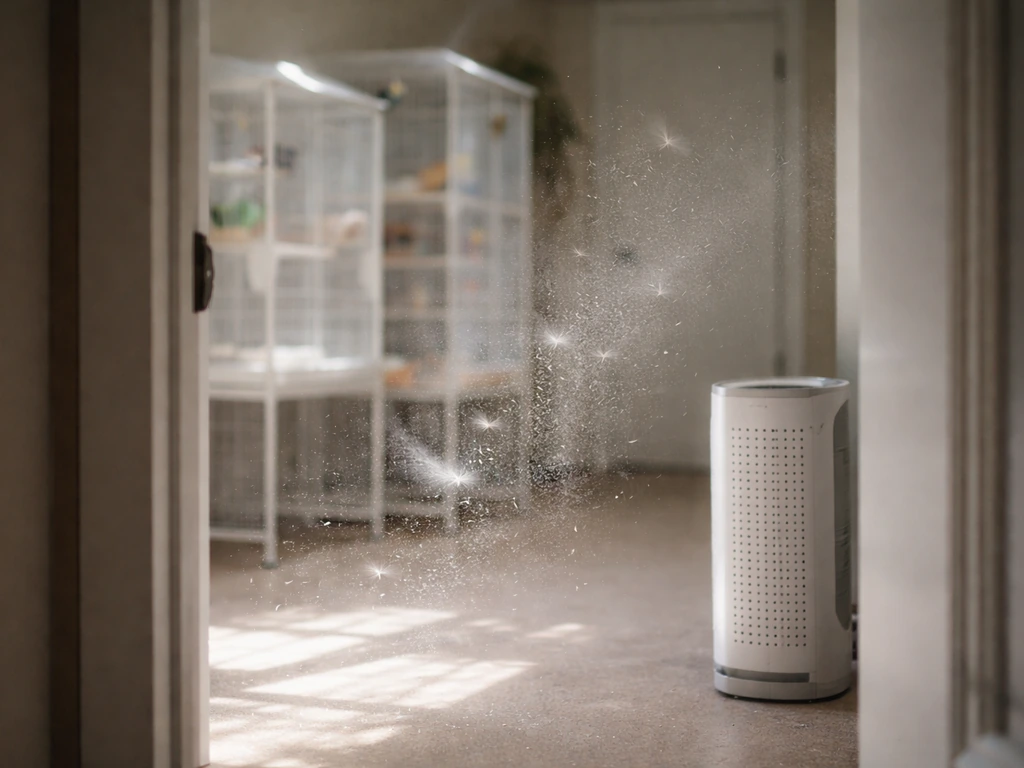
Bird rooms generate a very specific and genuinely hazardous mix of airborne particles. Dry dust from droppings, shed feathers, and especially the fine powder down produced by species like cockatoos and African greys becomes a persistent, almost talc-like cloud in enclosed spaces. Bird fancier’s lung is triggered by repeated inhalation of avian proteins present in dry dust from droppings and feathers and can cause symptoms such as shortness of breath and dry cough blank" rel="noopener noreferrer">Dry dust from droppings, shed feathers, and especially the fine powder down produced by species like cockatoos and African greys becomes a persistent, almost talc-like cloud in enclosed spaces.. That powder down is not just an annoyance: it is small enough to stay suspended for hours, and repeated inhalation of avian proteins from droppings and feathers can blank" rel="noopener noreferrer">trigger bird fancier's lung, a form of hypersensitivity pneumonitis that causes shortness of breath, dry cough, and in chronic cases, serious lung damage. Prevalence estimates in regularly exposed populations range from roughly 0.5 to 7.5 percent, which is not a fringe risk.
The hazard runs in both directions, too. Your birds are breathing this air constantly, and their respiratory systems are far more sensitive than yours. The same poorly ventilated environment that builds up dust and ammonia from uric acid breakdown in droppings can cause upper respiratory irritation, inflammation, and mucociliary damage in birds. University research on ammonia exposure found detectable tracheal tissue changes in birds at concentrations as low as 10 µL/L, which is a level easily reached in a small, under-ventilated bird room. A decent air filtration setup protects both you and your flock, not just one or the other.
The three filter types you'll actually encounter while shopping
True HEPA: the non-negotiable baseline
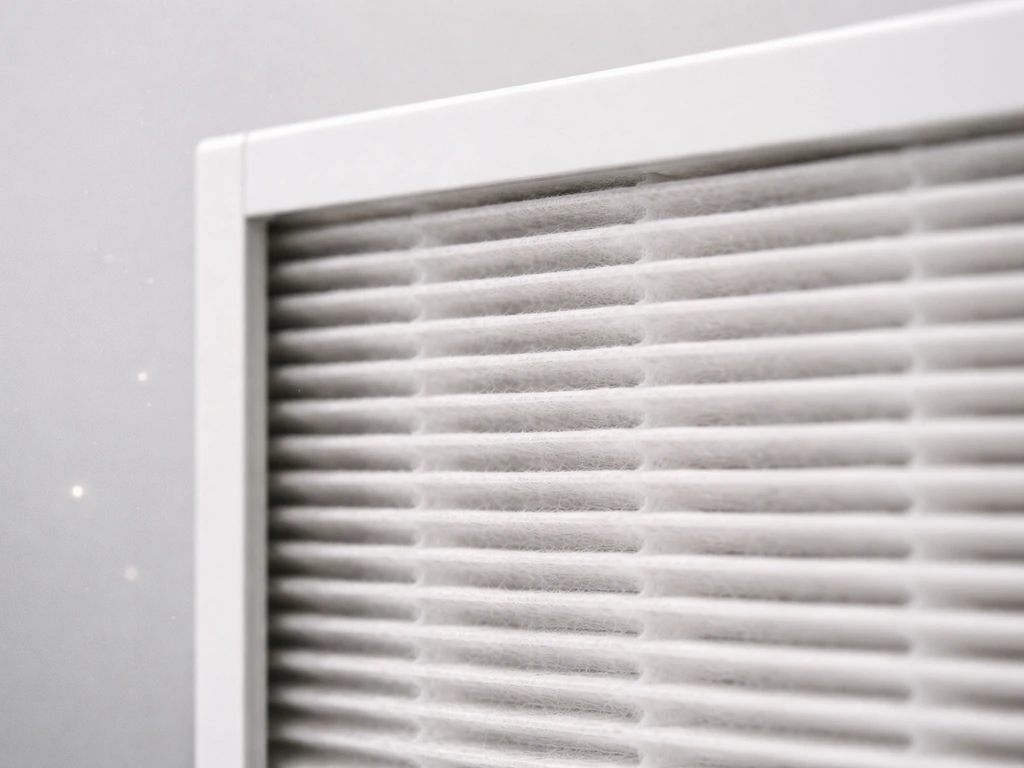
True HEPA filters capture 99.97 percent of particles 0.3 microns and larger. That threshold matters because bird powder down, dried fecal aerosol, and dander all fall in this size range. When you see the word 'HEPA' on a box without the word 'true' in front of it, or when the marketing says 'HEPA-type' or 'HEPA-like,' treat it as a red flag. Those filters may capture 85 to 95 percent of particles at best, which sounds close but leaves a meaningful amount of the worst stuff cycling back into the air. Only buy a unit that specifies true HEPA or meets the H13 or H14 standard. It costs a bit more but it is the whole point of the purchase.
Activated carbon: handling odor and gases
HEPA filters do nothing for gaseous pollutants. Ammonia, volatile organic compounds from droppings, and odors from food and feathers pass right through them. Activated carbon filters work by adsorption, trapping gas molecules in a porous carbon matrix. The key variable here is weight: a thin carbon mesh sheet with a few grams of carbon does almost nothing for a real bird room. You want a unit with at least 1 to 2 pounds of granular activated carbon, and ideally more. Thin carbon pre-filters are fine as a first-stage particle catcher, but they will not meaningfully reduce ammonia or persistent organic odors on their own. If odor control is a priority (and it should be), prioritize units with a substantial carbon stage, not a token layer.
Hybrid units: the practical choice for most bird owners
A hybrid unit combines a true HEPA stage with a real activated carbon stage in a single appliance. For a bird room, this is almost always the right call. For a quick guide to shopping today, look at the best air purifiers for bird dander and compare them by true HEPA performance and real activated carbon capacity. You get particle capture and gas/odor control without running two separate machines. Brands like IQAir, Austin Air, Rabbit Air, Winix, and Levoit all make hybrid units in various price brackets. The Austin Air HealthMate and IQAir HealthPro are often cited in bird communities specifically because of their large carbon beds, but they come at a premium. For a smaller room or a tighter budget, a Winix 5500-2 or a Levoit Core 400S gives solid true HEPA performance with an adequate carbon layer at a much lower entry price. The right answer depends on room size and how dusty your species situation actually is.
| Filter Type | Best For | Limitation | Bird Room Verdict |
|---|---|---|---|
| True HEPA only | Fine particulates, dander, powder down, dust | Does not capture gases or odors | Good start, not enough on its own |
| Activated carbon only | Ammonia, odors, VOCs | Does not capture particulate matter | Supplement only, never primary |
| Hybrid (HEPA + carbon) | Particulates AND gases/odors in one unit | More expensive; carbon bed quality varies widely | Best all-around choice for bird rooms |
| HEPA-type / HEPA-like | Marketing label, not a performance standard | Captures significantly fewer fine particles | Avoid; does not meet the standard you need |
Sizing it correctly: room size, CADR, and air changes per hour
The biggest mistake I see new bird owners make is buying a unit rated for their room size and calling it done. Manufacturers test CADR (Clean Air Delivery Rate) under ideal lab conditions, and a bird room is not an ideal lab condition. Powder down from a single cockatoo can coat every surface in a room in a few days. The right approach is to size up aggressively: buy a unit rated for 1.5 to 2 times your actual room square footage. If your bird room is 150 square feet, shop for units rated for 250 to 300 square feet.
CADR is measured in cubic feet per minute (CFM) and is the most useful single number when comparing units. To figure out what you need, multiply your room's square footage by its ceiling height to get cubic footage, then divide by 12 to get the minimum CADR for 5 air changes per hour. A 150 sq ft room with 8-foot ceilings is 1,200 cubic feet. Divide by 12 and you need a CADR of at least 100 CFM, but again, for a heavy-dust bird room, aim for 150 to 200 CFM to give yourself real headroom. Most quality mid-range units list separate CADR ratings for dust, pollen, and smoke: the smoke rating is the most relevant for fine bird particulates because smoke particles are closest in size to the worst of what birds produce.
Where to put it, how to angle it, and what to do about noise
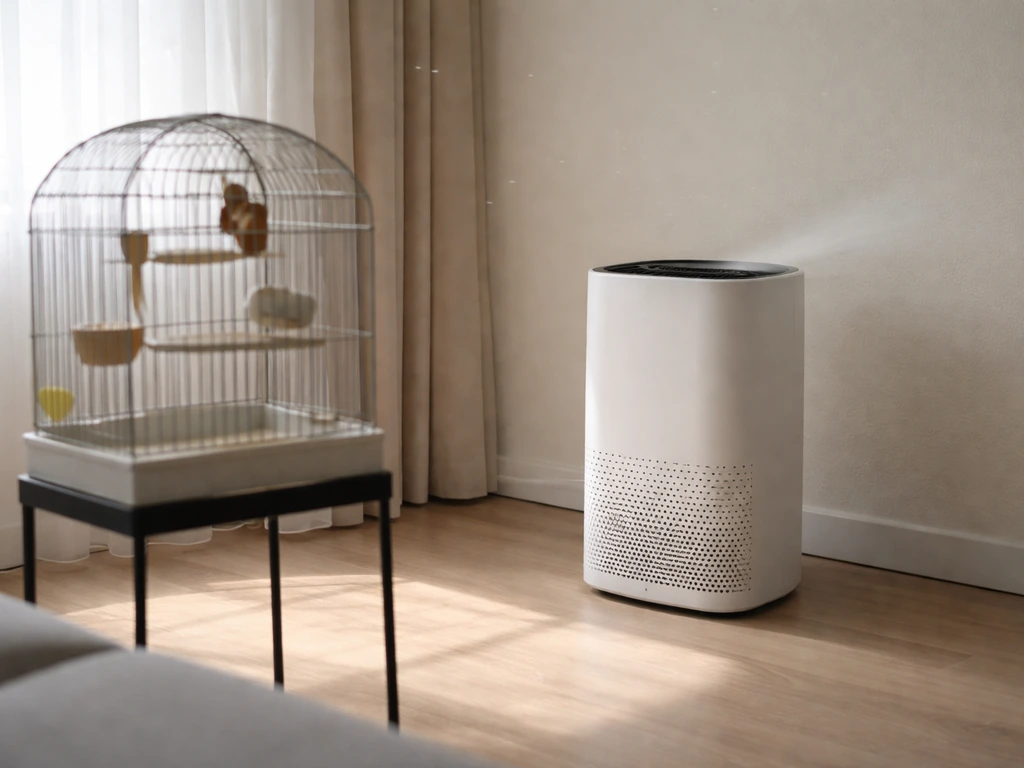
Placement matters more than most people realize. The goal is to draw contaminated air through the unit without creating a direct draft across the cage. Birds are sensitive to drafts, and a cold or erratic airflow can stress them and suppress their immune response. The ideal position is on the opposite side of the room from the cage, placed at least 6 to 8 feet away, pulling air from the direction of the cage toward the filter. Most tower or box-style purifiers pull air in from the sides or back and exhaust clean air upward or forward, so position the intake side facing the cage's general direction. Do not aim the exhaust directly at the birds.
Height matters too. Because fine particulates, especially from powder down, tend to distribute broadly through a room rather than settling immediately, floor placement or low-shelf placement (6 to 18 inches off the floor) is actually quite effective for pulling in the freshly disturbed dust. Avoid tucking the unit into corners or against a wall on all sides: it needs at least 12 to 18 inches of clearance on its intake side to pull air freely.
Noise is a real concern, especially for birds that are light sleepers or stress-reactive. Most quality purifiers list their noise output in decibels at each fan speed. Anything under 45 dB on medium is generally fine for a bird room during daytime. At night, dropping to a low setting keeps white noise present (birds often tolerate steady white noise better than intermittent sounds) while reducing airflow slightly. Avoid units with loud variable-speed motors that surge and drop unpredictably: that kind of irregular noise is more disruptive than steady, consistent fan noise. If you have a particularly anxious species, test the unit in the room at all speed settings before committing to placement near the cage.
Keeping it working: filter changes, bypass, and what degrades over time
A clogged or degraded filter is almost worse than no filter because it gives you false confidence while actually circulating dirty air. In a bird room with powder-down species like cockatiels, cockatoos, or African greys, expect to replace or clean pre-filters every 4 to 6 weeks and true HEPA filters every 6 to 12 months, not the 12 to 24 months listed on the packaging. Those estimates assume normal household dust loads, and a cockatoo's room is not a normal household dust load. Check the pre-filter monthly: if it is visibly coated and gray, clean or replace it. A dirty pre-filter makes your HEPA stage work exponentially harder.
Bypass is an underappreciated failure mode. Bypass happens when air finds a path around the filter media rather than through it: loose filter seating, worn gaskets, or units where the filter panel does not seal completely against the housing. With HEPA filters, even a tiny gap can allow a disproportionate percentage of the finest particles to slip through, because those particles are the ones most eager to follow any available airflow path. When you install a new filter, press firmly on all edges to confirm it seats fully. If the housing has a foam gasket and it looks compressed or cracked, replace it. Some budget units have notoriously poor filter-to-housing fits: read reviews specifically for mentions of bypass or poor sealing before buying.
Carbon filters have a finite adsorption capacity and do not give you obvious visual cues when they are spent. If you notice odor returning to the room despite the unit running, the carbon bed is likely saturated. In a heavily occupied bird room, carbon filters may need replacement every 4 to 6 months rather than annually. Running the unit at a continuously high speed burns through both HEPA and carbon capacity faster, so medium speed continuous is a better long-term strategy than max speed part-time.
Odor, fumes, and the things a filter alone cannot fix
This is the section I wish someone had given me early on, because a good air purifier handles a lot but it is not a substitute for source control. Ammonia from droppings builds up fast in small, closed rooms. A filter with a real carbon bed reduces ambient ammonia, but frequent cage cleaning reduces it at the source, which is far more effective. If you are smelling ammonia regularly, the answer is more frequent cage liner changes and tray cleaning, not a bigger filter. The filter is the backup system, not the primary defense.
Chemical fumes are a separate and more acute hazard. Birds have extremely efficient respiratory systems that make them far more vulnerable than humans to inhaled toxins. Non-stick cookware (PTFE/Teflon) off-gassing, scented candles, air fresheners, aerosol sprays, cleaning products, and paint fumes can kill birds quickly, sometimes within minutes of exposure. An activated carbon filter provides some protection against low-level VOC exposure, but it is not rated as personal protective equipment and it will not save a bird from an acute PTFE event or a room that was just painted. Keep birds physically separated from any fume-generating activity and ventilate aggressively with fresh outdoor air, not just recycled filtered air, during and after any such situation.
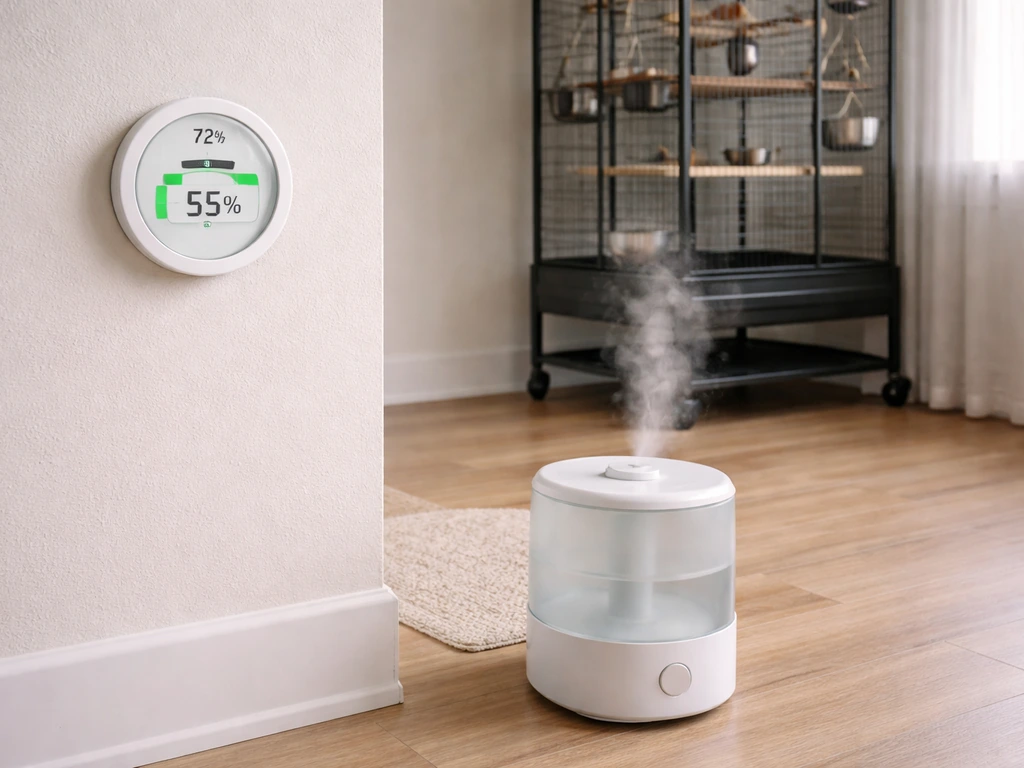
Humidity interacts with air quality in ways a filter does not control. Dry air causes feather dust and dander to stay airborne longer and increases respiratory irritation for birds. Overly humid air encourages mold and bacteria in cage substrate. If your bird room air feels bone dry (below about 40 percent relative humidity), adding a humidifier alongside your air purifier makes the filtration more effective by making particles heavier and more likely to fall or be caught. A humidifier for a bird room is a companion tool worth considering alongside your filter setup, especially in dry climates or during winter heating season. A good best bird heater can also help maintain comfort in the room without disrupting airflow and air quality.
How to pick what to buy today: decision path and setup checklist
Start by identifying your primary problem. Most bird rooms need both particle control and odor control, but the priority shapes which unit you reach for first. If you are comparing models, look for the best air purifier for bird owners that combines true HEPA filtration with a meaningful activated carbon stage.
- Primary problem is dust and dander (cockatiels, cockatoos, African greys, or multiple birds): Prioritize a unit with the highest true HEPA CADR you can fit in the budget, with at least a basic carbon stage. IQAir HealthPro Plus and Austin Air HealthMate are the gold standard for powder-down heavy situations. Rabbit Air MinusA2 and Winix 5500-2 are strong mid-range options.
- Primary problem is odor and ammonia (smaller or fewer birds, less powder-down species like budgies, conures, or lovebirds): Prioritize a unit with a substantial activated carbon bed (1 lb or more of granular carbon). Austin Air HealthMate and Blueair units with carbon filters perform well here.
- Need both particle and odor control (most bird rooms): A hybrid unit rated for 1.5 to 2 times your room size is the right answer. Levoit Core 400S or 600S for budget, Rabbit Air MinusA2 for mid-range, IQAir HealthPro for heavy duty.
- Already noticing symptoms in yourself (sneezing, wheezing, coughing around birds): Start the air purifier immediately, increase cage cleaning frequency, and consult a doctor. Bird fancier's lung is a real condition and early intervention matters.
Bird-room air quality setup checklist
- Measure your room: square footage times ceiling height equals cubic footage. Divide by 12 to find your minimum CADR target for 5 air changes per hour.
- Buy a true HEPA unit (not HEPA-type) rated for 1.5 to 2 times your room's square footage.
- Confirm the unit has a real activated carbon stage with at least 1 lb of granular carbon, not just a thin mesh sheet.
- Position the unit 6 to 8 feet from the cage with the air intake facing the cage and the exhaust aimed away from birds.
- Run it on medium speed continuously rather than high speed intermittently.
- Check and clean the pre-filter every 4 to 6 weeks.
- Plan to replace the HEPA filter every 6 to 12 months and the carbon filter every 4 to 6 months in a bird room.
- Press-fit new filters firmly and confirm they seat against the housing with no gaps.
- Eliminate aerosol sprays, scented candles, and non-stick cookware use near the bird room.
- Clean cage liners and trays frequently to control ammonia at the source.
- Monitor humidity: keep the room between 40 and 60 percent relative humidity.
- If anyone in the household is experiencing respiratory symptoms around the birds, see a doctor and do not wait for symptoms to resolve on their own.
Getting the air filtration right in a bird room is genuinely one of the highest-impact things you can do for both your birds and yourself. From there, you can compare models to find the best vacuum for bird owners based on your room size and odor needs. It does not need to be complicated or expensive to be effective. A correctly sized hybrid unit, placed well and maintained consistently, will make a noticeable difference within days. Start there, build the habit of monthly pre-filter checks, and layer in source control with regular cleaning. That combination will handle the vast majority of what a bird room throws at your air quality.
FAQ
Is a HEPA-only air purifier enough for a bird room?
Usually not if odor or ammonia is a concern. True HEPA captures particles, but ammonia and most VOCs responsible for “bird smell” are gases that pass through. If you also want odor reduction, choose a hybrid unit with a substantial activated carbon bed.
How do I know whether the carbon stage on a purifier is “real” and not just marketing?
Look for the stated carbon type and an actual carbon mass (often listed as pounds or kilograms) or clear specifications for granular activated carbon. Thin carbon foils or cartridges described only as “odor absorbing” without quantity rarely handle sustained ammonia and organic odors in a bird room.
Should I run the purifier 24/7 on the same fan speed?
Medium continuous is the safer long-term strategy. High speeds burn through carbon faster and can also overwork your HEPA stage, leading to more frequent filter changes. If noise limits you at night, use the lowest steady setting that still maintains circulation.
Do I need multiple air purifiers for a large bird room, or is one powerful unit enough?
Multiple smaller units can be better than one oversized unit if they are placed to cover the whole room volume and avoid dead zones. If you choose more than one, split them so their intake sides draw air from where the birds are, and keep the same true HEPA plus carbon approach in each unit.
What ceiling height assumption should I use when calculating CADR needs?
Use your actual average ceiling height, not a generic number. If your room has an open loft or cathedral ceiling, the required CADR rises quickly because you are filtering more air volume, and you may need either higher total CADR or additional units.
The purifier’s CADR is high, but my bird room still smells. What should I check first?
First check source control (tray and liner changes, cage cleaning schedule). Next, inspect and replace the pre-filter if it is coated, because heavy dust loads can reduce airflow and carbon performance. Finally, if the HEPA is clean and the unit still struggles with odor, the carbon capacity may be saturated for your occupancy level.
How often should I replace true HEPA filters versus pre-filters in a bird room?
Pre-filters often need attention every 4 to 6 weeks in heavy powder-down environments, while true HEPA filters typically last about 6 to 12 months. Packaging life can be much longer under normal household dust, so use airflow and visible loading as your real indicators.
What is bypass and how can I tell if my purifier is leaking particles around the filter?
Bypass is when air escapes through gaps or imperfect sealing rather than through the filter media. A practical check is to confirm the filter seats fully at all edges during installation, ensure any foam gasket is intact (not cracked or compressed), and watch for persistent “dirty air” behavior even with a new filter.
Where should I place the purifier if I cannot put it 6 to 8 feet from the cage?
If space is tight, prioritize intake orientation toward the general cage airflow path and avoid aiming exhaust directly at the birds. Use the highest practical clearance on the intake side (more is better, typically 12 to 18 inches), even if distance to the cage is shorter.
Is it better to place the purifier on the floor or higher up?
For powder-down and fine particulates that stay suspended, low or mid-level placement (for example 6 to 18 inches off the floor) can help draw in newly disturbed particles. Avoid hiding it in tight corners on multiple sides, since restricted intake reduces capture.
Should I use a purifier in addition to ventilation, or can filtration replace ventilation?
Filtration and ventilation do different jobs. Filters help remove particles and reduce some gas buildup, but they do not replace fresh outdoor air for acute or strongly fume-producing events. If you notice chemical odors, paint, aerosol sprays, or non-stick off-gassing, ventilate aggressively and physically separate birds from the source.
Can a humidifier make bird dust and dander worse?
It can, if you overshoot and push humidity too high. The sweet spot is to prevent very dry conditions that keep particles airborne and irritate airways. Pair humidification with monitoring, and avoid conditions that encourage mold in cage substrate.
What noise level is acceptable for bird rooms, and how should I choose at night?
Steady fan noise under about 45 dB on medium is generally more tolerable than loud motors that surge unpredictably. At night, use the lowest steady setting that maintains circulation, since intermittent sounds and variable-speed surging can be more stressful to light sleepers.
If I’m dealing with cockatoo or African grey powder down, what filter features matter most?
Sizing and sealing matter as much as brand. Choose true HEPA plus a large granular carbon stage, size for about 1.5 to 2 times your room area, and commit to frequent pre-filter checks because powder-down can clog pre-filters faster than typical household dust.
Does using a “HEPA-type” filter risk hurting air quality even if it seems to work?
It can. HEPA-type or HEPA-like units may leave more of the smallest high-risk particles cycling in the air, which is exactly what bird powder down and fine droplet aerosols tend to produce. If the product does not specify true HEPA, H13, or H14, it is safer to keep shopping.
Next Article
Best Humidifier for Bird Room: How to Choose Safely
Choose the best humidifier for bird rooms with safe humidity ranges, type comparisons, setup, maintenance, and troublesh