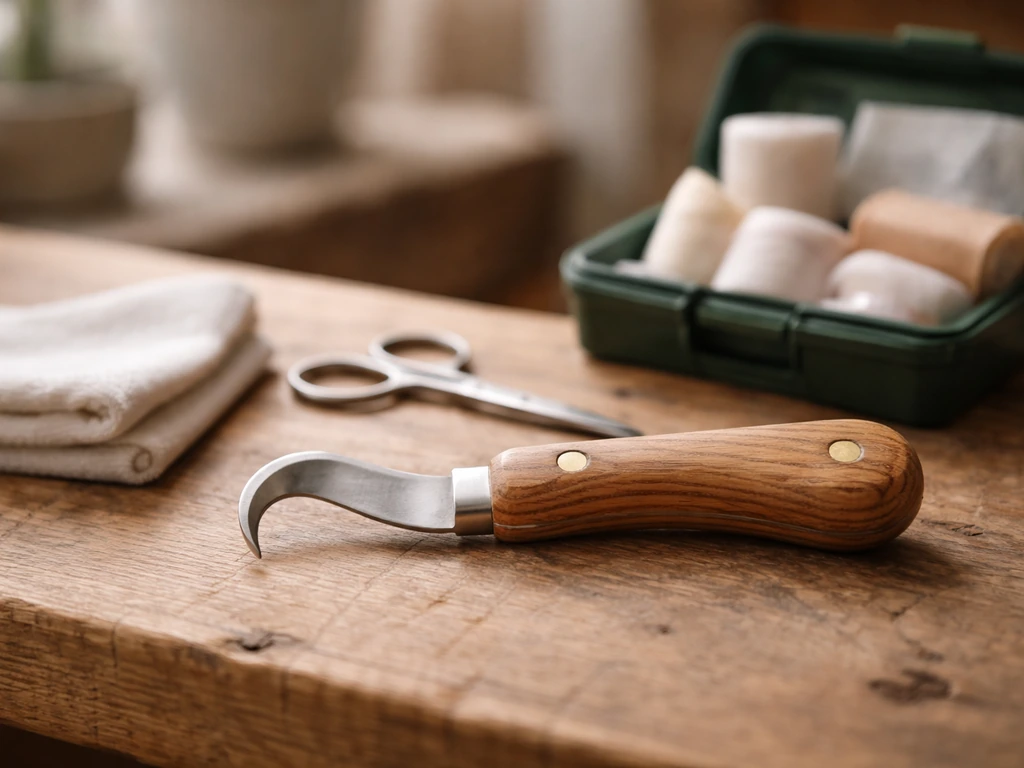
A bird hook knife is not a pet-care tool. It is a curved, hooked-blade knife designed for wood carving or hunting tasks like skinning game birds. If you searched this term as a first-time pet bird owner trying to deal with a tangle, a mess, or something stuck in your bird's cage or feathers, the short version is: you almost certainly don't need one, and using one near a live bird is genuinely dangerous. What you probably need is a pair of blunt-tipped scissors, some tweezers, or a hemostat from a basic bird first-aid kit.
What a Bird Hook Knife Is Used for and Safety Tips

Marcus Chen
28 May 2026
What a bird hook knife is (and what it isn't)
The term 'bird hook knife' shows up in two very specific non-pet contexts. First, carving tool brands like Morakniv make hook knives with tightly curved blades, around 55 mm long, made from stainless steel and sold with leather sheaths. These are for carving spoons and bowls out of wood. Second, knife brands like Case Knives list a 'Bird Hook' as a blade style on folding hunting knives, used for field dressing and skinning game birds during hunting. If your goal is to understand how the “liver bird” building is used, it helps to look at what it’s meant for in its specific context, rather than mixing it up with unrelated hunting-knife terminology used for field dressing and skinning game birds. Neither of these has anything to do with keeping a parakeet, cockatiel, or any other pet bird. If someone on a forum told you to use a hook knife for bird-owner tasks, they were almost certainly talking about hunting, not pet care. If you meant a bird suet basket instead of a hook knife, it is a different type of feeder used to offer suet to birds.
So why does the search come up in a pet-bird context at all? Probably because owners run into situations where they need to cut or remove something near or around their bird, and they're Googling whatever sounds like it might help. That's a completely reasonable instinct. A bird habitat is the natural or designed environment where a bird lives and gets food, shelter, and safe space to roost and nest. But reaching for a double-edged hooked blade near a small, fragile, often panicking animal is how injuries happen.
Common bird-owner jobs where you might think you need a hook knife
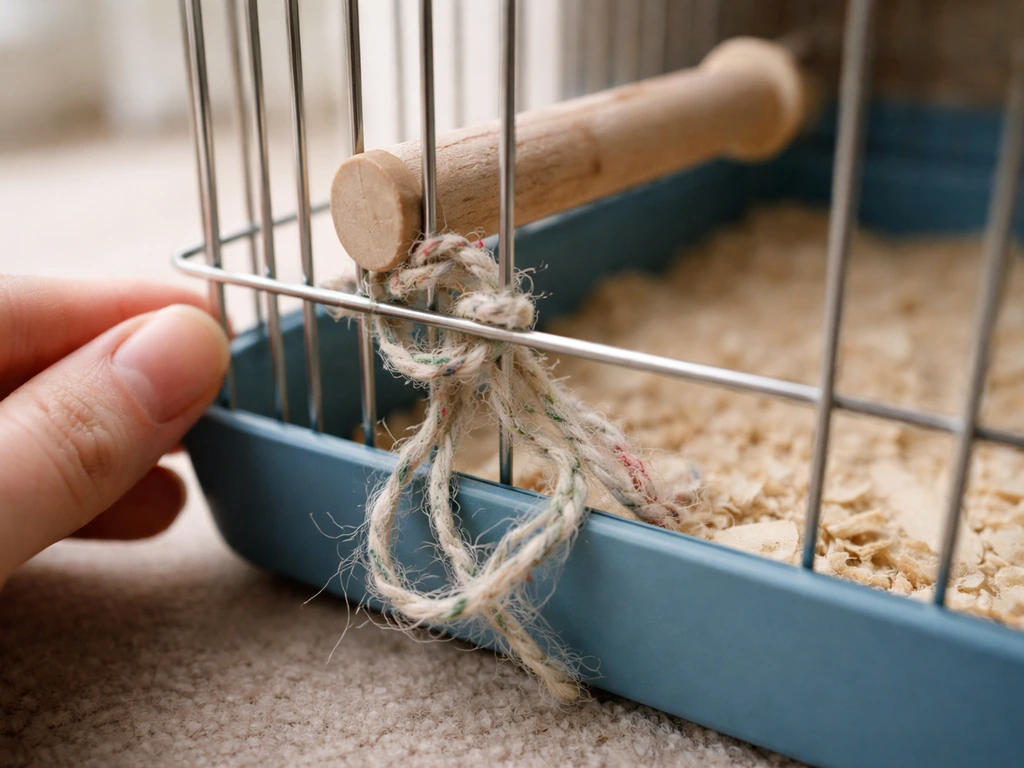
Here are the real situations that probably brought you here, and what's actually going on in each one:
- String or thread tangled around toes or legs: This is one of the most common cage emergencies. A piece of frayed rope toy, loose thread from a fabric perch cover, or even a loose fiber from a basket-style toy wraps around a toe and cuts off circulation.
- Tape or adhesive residue on a cage bar or perch: Sometimes owners use tape to hold things in place inside the habitat, and the adhesive attracts debris or, worse, a bird lands on it. Removing stuck material from a surface (not from the bird directly) is where a hook-style tool might seem useful.
- Removing debris from feathers or around the body: Food, sticky substances, or cage material that gets matted into feathers makes owners want to reach for something sharp enough to separate or cut it free.
- Cutting zip ties, cage wire, or packaging material: When setting up or modifying a bird enclosure, owners sometimes need to cut through tough materials quickly. This is one of the few cases where a sturdy cutting tool makes sense, but you do it away from the bird, not in the cage while it's occupied.
In almost every one of these situations, a hook knife is the wrong tool. These tools are mainly used for cutting small materials and removing string or tape safely, not for “bird hook knife” tasks. The right tools are already on the Merck Veterinary Manual's recommended list for bird owners: blank" rel="noopener noreferrer">scissors for cutting tape and bandages, and tweezers or hemostats for untangling string around toes. PetMD's suggested bird first-aid kit adds wire cutters and nail clippers. Notice what's not on either list: a hooked carving blade.
Safety considerations for using any cutting or hooking tool near birds
Birds are small, they panic, and they move in completely unpredictable ways when stressed. Even the calmest, most hand-tamed bird can throw itself sideways the moment it feels restrained or scared. That unpredictability is exactly why a curved, double-edged blade is dangerous in this context. A hook knife has no safety tip, and even a small flinch from your bird during handling can cause a serious laceration.
- Always use the dullest, most controlled tool that will get the job done. Rounded safety-tip grooming shears exist specifically because sharp pointed tips cause accidents near sensitive, moving animals.
- Never use any sharp cutting tool with one hand while trying to hold a bird with the other unless you have specific avian handling training. You need both hands, or a second person.
- Work as far from the bird's body as possible. If you're cutting string from a toe, use blunt scissors or a hemostat to loosen it, not a blade designed to slice through material under tension.
- If the bird is injured, bleeding, or in visible distress, stop and call a vet immediately. An avian emergency vet line or after-hours guidance from a clinic is more valuable than any tool.
- Know what a blood feather looks like before you cut anything near a bird's wings or body. Blood feathers have an active blood supply in the shaft, and cutting one causes significant bleeding. Merck's guidance is explicit: scissors are for trimming mature feathers only, and Purdue University's vet resources specifically warn against trimming blood feathers at all.
When not to use a hook knife (or any cutting tool): risks and beginner mistakes
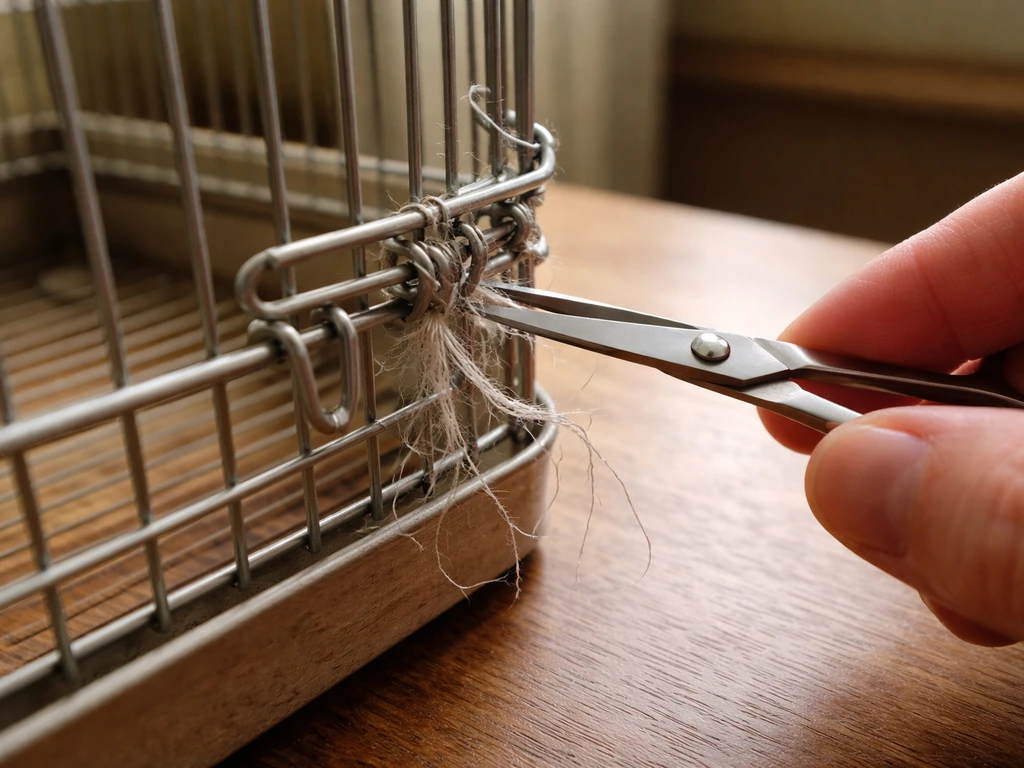
This is the section I really want first-time bird owners to read carefully, because these are the situations where improvising with a cutting tool goes from bad idea to genuine emergency. For entangled birds, birdmonitors notes that if entangling material is embedded or wrapped very tightly, owners should not attempt removal themselves and the bird needs evaluation by a wildlife rehabilitation center or a veterinarian.
- Do not cut string or thread that appears embedded in skin or flesh: If entangling material has been on a bird's toe long enough to cause swelling, it may be embedded. Cutting only part of it can free the bird to escape with the rest still attached, continuing to cause damage. Chicago Bird Collision Monitors specifically warns that this scenario can be fatal. This needs a vet, not a DIY fix.
- Do not attempt to remove anything your bird has swallowed: If your bird has swallowed string, thread, or any material, do not pull it out. Merck's manual is clear that the material may be lodged in the intestines, and pulling it can cause intestinal tears. Emergency vet, immediately.
- Do not use any blade near the face, eyes, or beak: The risk of catastrophic injury from a single flinch is too high.
- Do not use a hook knife to remove adhesive from feathers: Adhesives can and should be removed with safe solvents (vet-approved adhesive removers are used in clinical avian settings, followed by washing with soap and water). A blade near matted feathers risks cutting skin.
- Do not assume 'getting it mostly off' is good enough: Partial fixes in entanglement situations are a common and dangerous beginner mistake. A bird that looks free may still have material looped around a limb in a way that tightens during movement.
Safer alternatives for everyday bird messes and entanglements
The good news is that the tools you actually need for virtually every real bird-owner cutting or removal task are inexpensive, widely available, and much safer than any hook knife. Here's what actually belongs in your bird first-aid kit:
| Tool | What it's for | Why it's safer than a hook knife |
|---|---|---|
| Blunt-tipped scissors | Cutting tape, bandages, rope toy fibers, packaging | No sharp point; low risk of puncture if the bird moves |
| Tweezers or hemostats | Untangling string around toes, removing small debris | Gives precise grip with no cutting edge; hemostats lock in place |
| Wire cutters or nail clippers | Cutting cage wire, zip ties, hard materials | Designed for specific materials; used away from the bird |
| Rounded safety-tip grooming shears | Trimming feathers (mature only, not blood feathers) | Blunt tip prevents puncture near skin and sensitive tissue |
| Vet-approved adhesive remover | Dissolving tape residue or sticky substances from surfaces or feathers | Chemical removal without any blade risk near delicate tissue |
For anything more serious than a loose fiber or a small piece of tape, the right alternative is a phone call. Avian and exotic animal clinics offer emergency guidance lines, and most wildlife rehabilitation centers can advise you on entanglement situations even if your bird is a pet rather than a wild bird. Don't underestimate how quickly a toe entanglement can become a circulation emergency.
How to choose, store, and use a hook knife correctly (if you buy one for non-bird tasks)
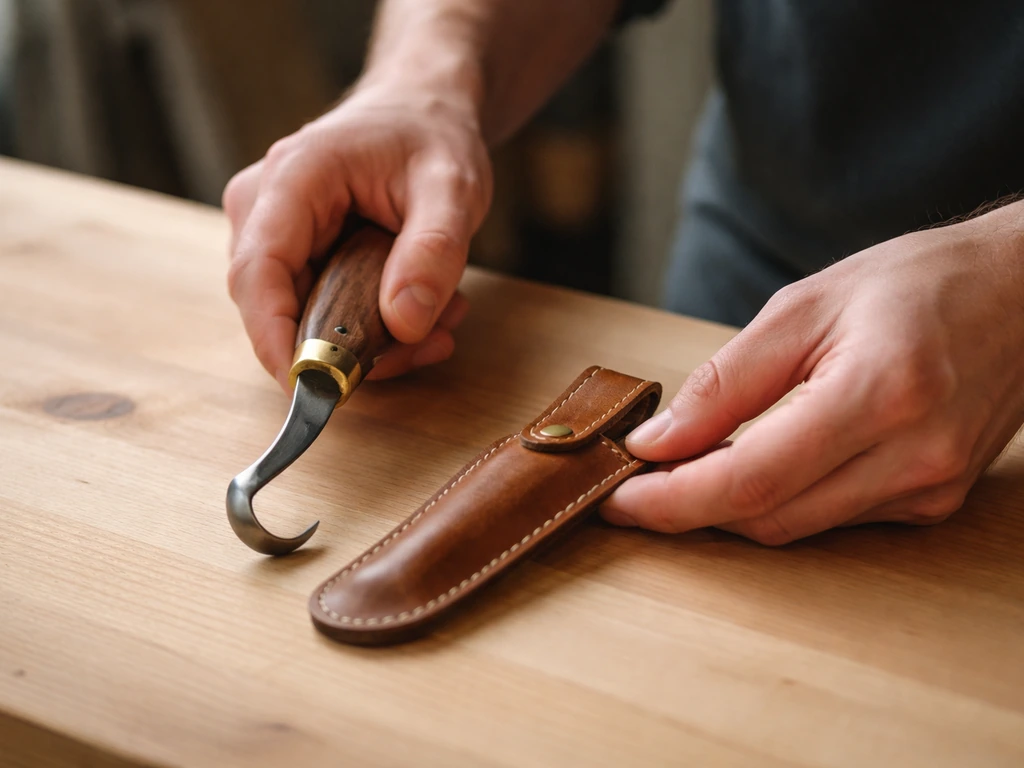
Maybe you're a woodworker or hunter who also keeps pet birds and you're curious whether a hook knife you already own has any safe application in your bird setup. Here's my honest advice: keep it completely separate from your bird's space. That's it. The practical guidelines below apply to general ownership, not to use near birds.
Do's
- Always store a hook knife in its sheath (Morakniv's Hook Knife 162, for example, includes a leather sheath for exactly this reason). An exposed hooked blade in a drawer or on a workbench is a hazard to you, children, and curious birds that escape their enclosure.
- Use it only for its intended purpose: wood carving or hunting field prep, away from your bird area.
- Keep all sharp tools in a locked cabinet or a room your bird cannot access, especially if your bird is free-flighted or spends time outside its enclosure.
- Clean and dry the blade after use and return it to its sheath immediately. A hook blade left wet or exposed dulls faster and presents ongoing handling risk.
Don'ts
- Don't use a hook knife to cut anything inside or directly on a bird enclosure, even when the bird is temporarily removed. Residual blade debris or edge nicks on cage wire can injure a bird later.
- Don't leave it on a table or countertop accessible to your bird during out-of-cage time.
- Don't use it as a substitute for proper bird first-aid tools. The tool set recommended by Merck and PetMD exists because those tools are sized, shaped, and controlled appropriately for avian situations.
- Don't assume that because a hook knife handles delicate carving tasks well, it translates to delicate animal-handling tasks. Those are completely different skill and equipment contexts.
Next steps for first-time bird owners: what to buy and what to prioritize
If you're just getting started with a pet bird, here's how I'd approach building your toolkit and reducing the situations where you'd ever feel tempted to improvise with something like a hook knife in the first place. If instead you meant a bird gift basket, focus on safe, quality items and avoid anything that could harm a pet bird bird gift baskets. An aviary can be a helpful way to house and enrich pet birds safely, so it's worth knowing what a bird aviary is before planning your setup what is a bird aviary.
- Build a proper bird first-aid kit first. At minimum: blunt-tipped scissors, tweezers or hemostats, disposable gloves, a penlight, wire cutters, nail clippers, and your avian vet's emergency contact number. PetMD's list is a solid starting point.
- Audit your bird's habitat for entanglement risks before they become emergencies. Frayed rope toys, loose threads in fabric perches, and string-based toys are the most common sources of toe entanglement. Checking the bird enclosure and accessories regularly is a much better use of your time than having a cutting tool on standby.
- Learn to recognize blood feathers before you ever need to trim anything. Ask your avian vet to show you during your bird's first wellness visit. This single piece of knowledge prevents one of the most common DIY grooming injuries.
- Find an avian vet now, not after an emergency. Most first-time bird owners don't realize that cats and dogs share a vet but birds often don't. You want an avian or exotic animal specialist identified and their after-hours line saved in your phone before you need it.
- Skip the hook knife entirely. There is no routine bird-owner situation where a hook knife is the right tool. Spend that budget on a quality hemostat, a pair of safety-tip shears, and a vet visit.
- Reduce mess and entanglement risks proactively through good habitat design. Choosing appropriate toys, safe perch materials, and well-constructed enclosures dramatically reduces the situations where any cutting tool becomes necessary. The time you spend optimizing the habitat upfront is time you won't spend in a panic at midnight trying to free a tangled toe.
The bottom line: a bird hook knife is a woodworking or hunting tool that has no practical place in a pet bird care routine. The situations it might seem useful for are handled more safely, more precisely, and with far less risk by the tools already on veterinarian-recommended bird first-aid lists. Buy the hemostat. Build the kit. Find the vet. That's the actual answer to what most people searching this question really need. A common term for a bird enclosure is an aviary what is a bird enclosure called.
FAQ
Can I use a bird hook knife to remove a stuck feather or dried debris from my pet bird?
In general, no. For loose debris or a stuck feather, use small blunt-tipped scissors to trim only what you can clearly see, or use tweezers to gently lift without pulling the skin. A hooked blade has no protective tip and can slice skin if your bird jerks.
What if my bird is tangled in string, tape, or elastic, and I cannot tell how deep it is?
Treat it as a potential circulation emergency and start with restraint-free tools. Use tweezers or a hemostat to separate slack from the toes, and if the material is tight, cut the cord only on the outside of the loop (so you do not cut the skin). If you are unsure or your bird looks stressed or swelling starts, contact an avian or exotic emergency line immediately.
Are there any circumstances where a hooked knife is acceptable around pet birds?
Only if it is never brought into the bird area and you keep it stored securely. Do not use it for in-bird tasks, even if you think you are careful, because small flinches are common when birds feel restrained or surprised.
How do I tell the difference between a “bird hook knife” and a feeder item people might mean?
A feeder is for nutrition, like a suet basket, and it sits in the enclosure. A hook knife is a blade tool for cutting materials, often sold with a sheath and used for woodworking or field dressing. If the item is not described as a cutting blade with a sheath, assume it is not the same thing.
My knife is single-edged or has a smaller curve, is it safer than the typical bird hook knife?
Blade shape and edge exposure matter less than the hazard of bringing any sharp edged tool close to a panicking animal. Even a “smaller” hooked blade can lacerate if the bird turns or you lose momentary alignment.
What should be in my bird first-aid kit so I do not reach for a kitchen or workshop knife?
Include blunt-tipped bandage scissors, tweezers, and a hemostat, plus wire cutters or nail clippers as appropriate. Also add a small gauze pad and a way to wrap lightly (without constricting), and keep your avian clinic’s emergency number accessible.
What is the safest way to handle my bird during removal or cutting tasks?
Minimize the chance of sideways movement. Use gentle, calm handling, reduce time with tools, and have a second person assist if possible. Avoid grabbing the bird’s legs or feet abruptly, and stop if the bird’s stress escalates quickly.
If a toe is entangled, when should I stop trying and call for help?
Call immediately if you cannot free the toe within a short time, if you see color change (pale, blue, or dark), if swelling increases, or if the bird seems to be in worsening distress. Circulation problems can worsen faster than many owners expect.
Where should I store my hooked knife if I own one for woodworking or hunting?
Store it in a closed case or locked cabinet, away from the bird’s room. Keep it out of reach during any time you are cleaning, because birds and debris often appear at the worst times for safe tool handling.
Next Articles
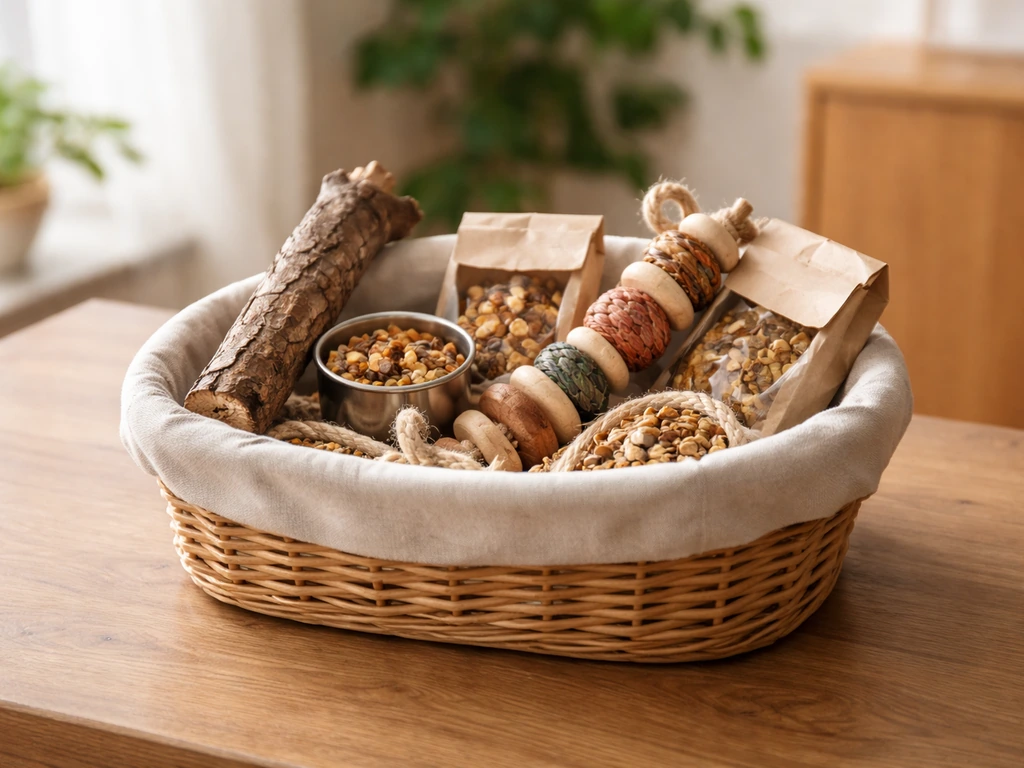
What Is a Bird Basket Gift? Starter Ideas and Tips
Learn what a bird basket gift means, what items fit it, and how to choose or build one for a new bird lover.
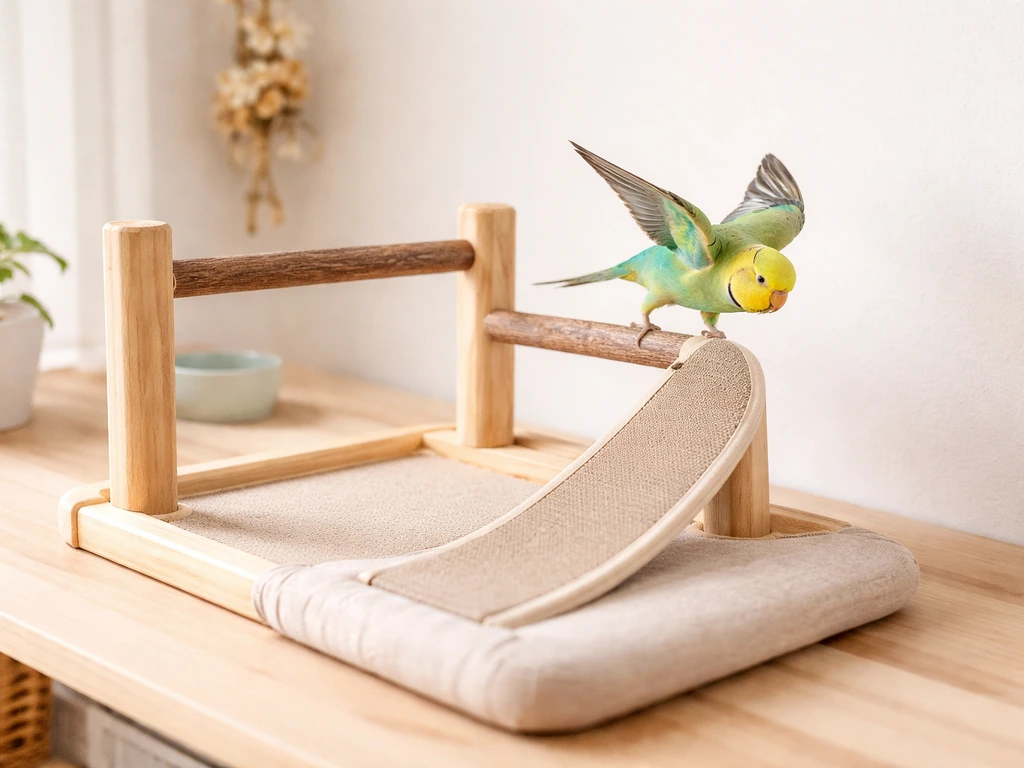
What Are Bird Launchers Used For in Pet Bird Care
Learn what bird launchers do for pet birds: safe training, enrichment, and movement with beginner-friendly placement tip

What Is the Liver Bird Building Used For in Bird Keeping
Learn what the liver bird building is, what it’s for, and how to set up and equip it safely for pet birds.