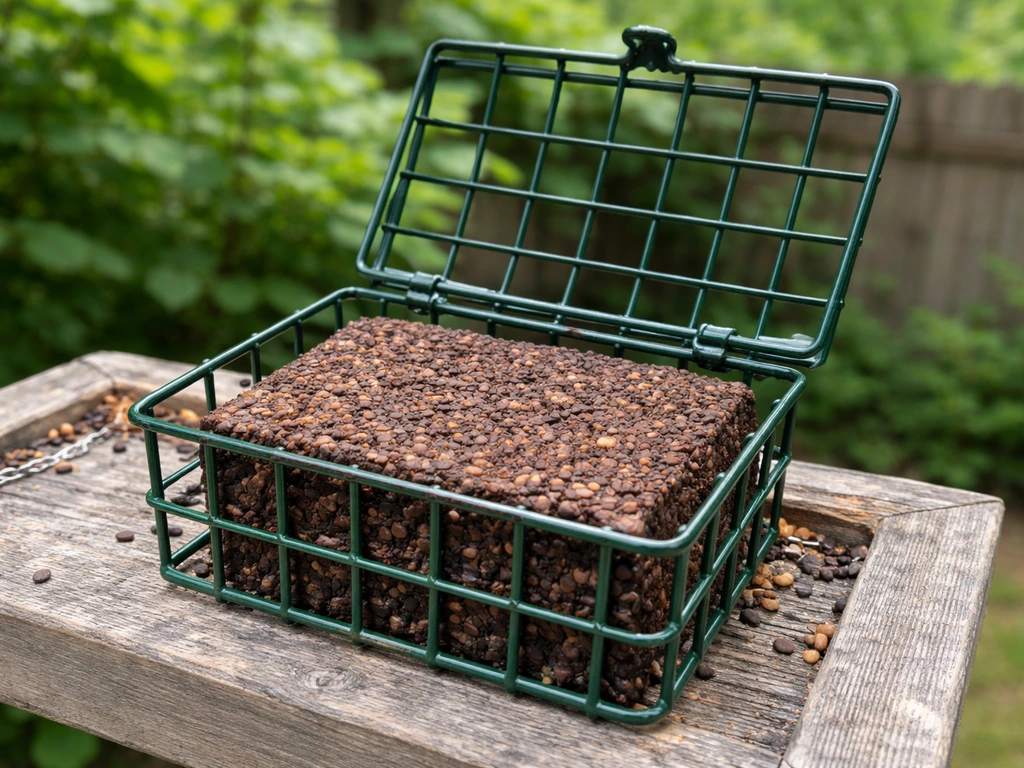
A bird suet basket is a small, cage-like wire or metal mesh feeder designed to hold a suet cake or suet block so that backyard birds can cling to it and peck away at the fat. It's one of the simplest feeders you can buy: drop a pre-formed suet cake inside, latch it shut, hang it up, and you're feeding birds. Virginia DWR describes a blank" rel="noopener noreferrer">suet feeder as a screened square or plastic design intended to hold suet for birds to feed from. Woodpeckers, nuthatches, chickadees, and wrens are the classic visitors, and once they find it, they come back reliably.
What Is a Bird Suet Basket? How to Use It Safely

Marcus Chen
17 Jun 2026
What a suet basket actually is and how it works
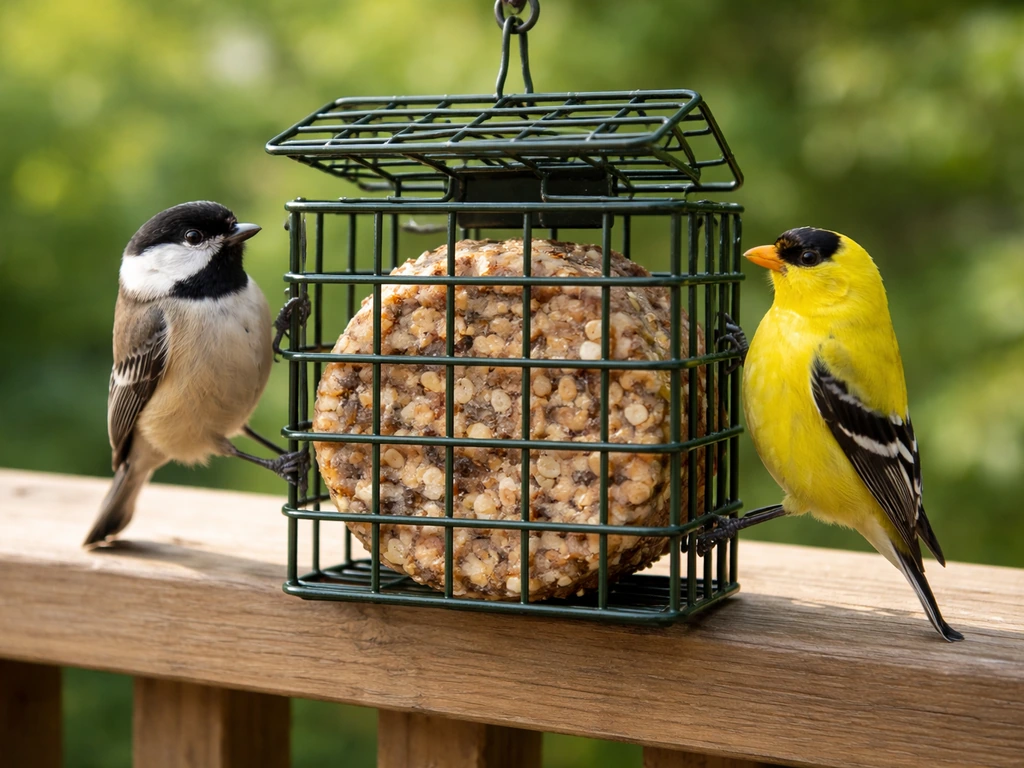
The basic design is a hinged wire cage, usually around 4.5 by 4.5 inches, built to fit a standard suet cake snugly. Birds land on the outside of the mesh, grip the wire with their feet, and peck through the openings to get at the suet inside. The mesh does two jobs at once: it holds the cake in place so it doesn't fall or get knocked out, and it forces birds to work in small bites rather than hauling the whole thing away.
Most baskets are made from coated steel wire, though you'll also find plastic-coated versions and heavier all-metal designs marketed as squirrel-resistant. A hinged door or swinging panel on one side lets you reload the cake without tools. Some models include a wooden or metal tail prop below the main cage, which gives woodpeckers (especially larger ones like Pileated woodpeckers) a place to brace their tail while feeding. That's a small detail that makes a real difference if large woodpeckers are part of your local bird community.
The term 'suet basket' is used interchangeably with 'suet cage' and 'suet feeder' in most stores and product listings. They're all describing the same basic concept. If you see a product described as an 'easy-fill suet basket feeder,' that just means the door mechanism is especially quick to open and close, which matters more than you'd think when you're refilling it in the cold.
How a suet basket differs from other feeder types
A tube feeder holds loose seed in a vertical cylinder with perches and small ports. A hopper feeder is a box-style feeder with a reservoir that dispenses seed onto a tray. A platform feeder is basically an open tray. None of these are designed to hold a block of fat. A suet basket is purpose-built for that job, which is why it looks so different from everything else you might hang in a yard.
| Feeder Type | What Goes In It | Main Visitors | Key Difference |
|---|---|---|---|
| Suet Basket | Suet cakes or blocks | Woodpeckers, nuthatches, chickadees, wrens | Holds solid fat blocks; birds cling to mesh |
| Tube Feeder | Loose seed (sunflower, nyjer, etc.) | Finches, sparrows, titmice | Gravity-fed seed through small ports |
| Hopper Feeder | Loose seed mix | Cardinals, jays, sparrows | Open perch; seed dispensed from a reservoir |
| Platform Feeder | Seed, fruit, mealworms | Bluebirds, thrushes, robins | Flat open surface; no containment |
| Suet Log/Plug Feeder | Suet plugs | Woodpeckers | Horizontal holes rather than a cage format |
The caged design is actually what sets the suet basket apart from even other suet-specific feeders. Bird launchers are another style of outdoor feeder device people use to get birds to feed, though a suet basket works differently. A suet log, for example, has pre-drilled holes that you press suet plugs into, which suits clinging birds but doesn't accommodate a standard 11-ounce suet cake. The basket format is more universal because it works with whatever commercially available suet cake you pick up at your local hardware or pet store.
What to load into it: suet types and what they actually contain
Most suet cakes sold for birds are made from rendered beef kidney fat, molded into a roughly 4.25 by 4.25 inch block. That base fat is energy-dense and attractive to birds year-round, but the label tells you a lot more about what you're actually offering. Commercially prepared cakes come packed with seeds, fruit bits, mealworms, nuts, or berry flavors. Reading the ingredient list matters because what's mixed in determines which birds are most interested.
- Plain or no-melt suet: Appeals broadly to all suet-eating species. A plain cake is a safe starting point if you don't know yet which birds visit your yard.
- Seed-blend suet: Adds sunflower chips, millet, or similar seeds, which pulls in a slightly wider range of birds including some sparrows.
- Fruit or berry suet: Tends to draw mockingbirds and some thrushes in addition to the usual woodpeckers and nuthatches.
- Mealworm suet: Great during breeding season when birds are foraging protein for nestlings. Bluebirds and wrens are more likely to visit.
- No-melt/high-melt suet: Rendered more thoroughly to resist softening in warm weather. If you live somewhere with hot summers, this is the variety to buy.
One important caution: don't use raw, unrendered fat from your kitchen, bacon grease, or cooking drippings. These can contain salt, seasonings, and additives that are harmful to birds, and they go rancid quickly. Stick to commercially prepared cakes. In summer, the standard rendered suet can melt and smear on feathers, which causes problems, so switch to a no-melt formulation once daytime temperatures consistently hit around 80°F (27°C).
Where to put it and how to set it up safely
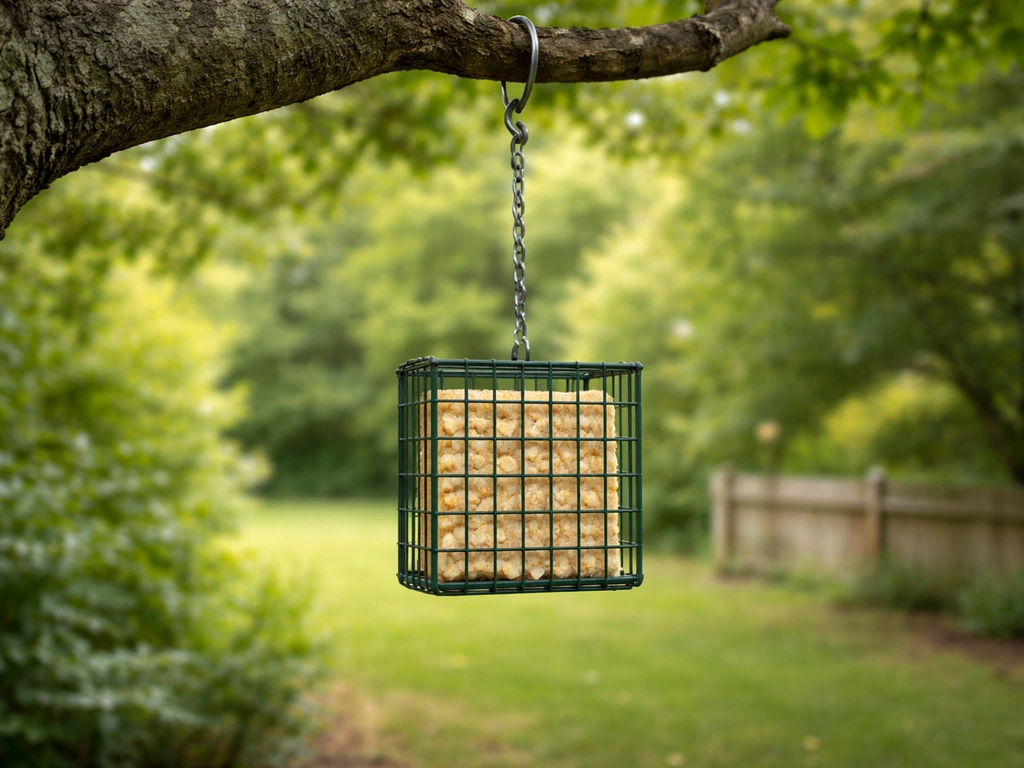
Placement matters more than most beginners realize. The goal is finding a spot that birds feel safe approaching, that you can actually monitor and reach for refilling, and that minimizes risk from squirrels, predators, and weather.
Height and distance from structures
Hang the basket between 5 and 6 feet off the ground. Too low and cats have an easy time ambushing birds while they feed. Too high and you'll need a ladder every time you refill it. Position it at least 10 feet away from a tree trunk or large limb to limit squirrel leaping access.
If you are also building a larger bird aviary setup, think about feeder placement the same way you would for a suet basket. Squirrels can jump roughly 10 feet horizontally from a stationary position, so that distance matters. If you're hanging from a pole rather than a tree branch, blank" rel="noopener noreferrer">add a baffle (a dome-shaped squirrel guard) above or below the feeder, depending on the pole design.
Shade, wind, and weather exposure
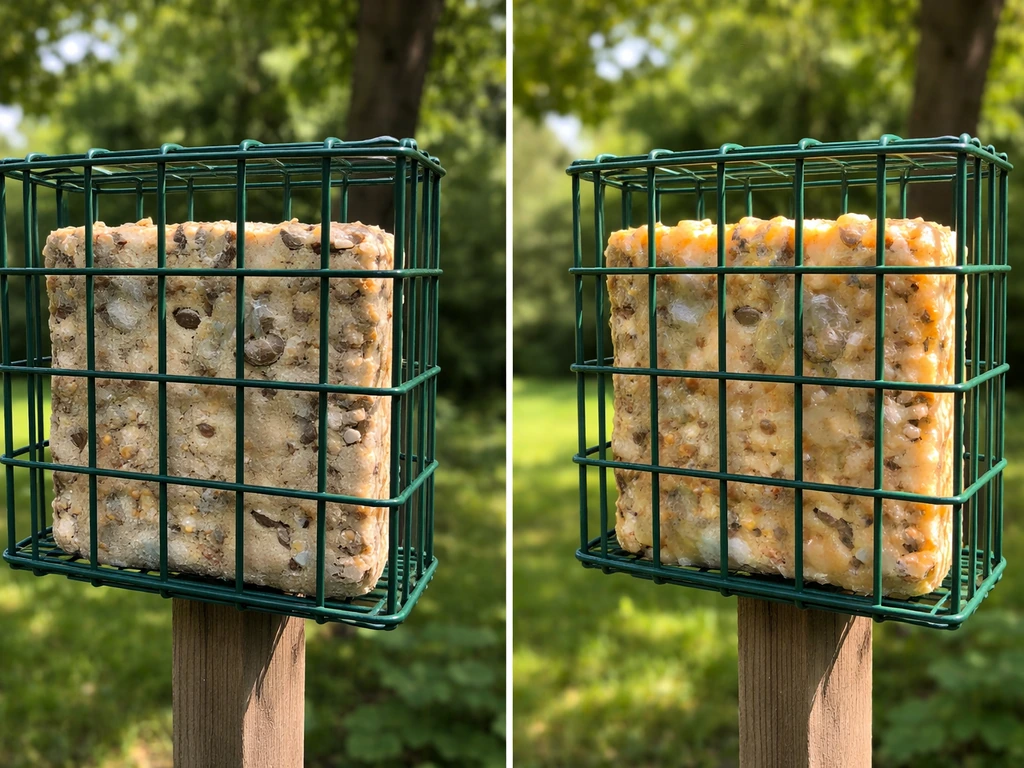
Partial shade is your friend, especially in warmer months. Direct sun accelerates suet spoilage and can cause the cake to melt into an oily mess that clumps feathers. A spot on the north or east side of a tree, building, or fence usually gets morning light with afternoon shade. Some suet baskets come with a small roof panel or include a tray that can double as a rain guard.
If yours doesn't, a simple roof extension (a small cedar shingle above the basket, for example) keeps rain from waterlogging the suet and extending how long a cake stays good. If you are also curious about the “liver bird” building, it is commonly used as a dramatic landmark and an attraction rather than a feeder liver bird building.
Near cover but not against it
Birds feel safer feeding when they can see escape routes and duck into nearby shrubs or trees quickly. Placing the basket within 10 to 15 feet of a shrub or small tree gives them that comfort zone. That said, don't press it right up against dense foliage or fencing where a cat or hawk can hide in ambush immediately adjacent. The sweet spot is visible but sheltered.
Squirrel-resistant setup options
If squirrels are a constant problem in your yard, look at cage-within-a-cage style feeders. These have an outer wire cage with openings large enough for small birds like nuthatches and chickadees but too small for squirrels or European starlings. Products like the Squirrel Buster Suet feeder and the Duncraft Suet Sanctuary use this approach effectively. They cost more than a basic basket, but if squirrels are draining a standard feeder in an afternoon, the upgrade pays for itself quickly.
Cleaning, food safety, and keeping pests out
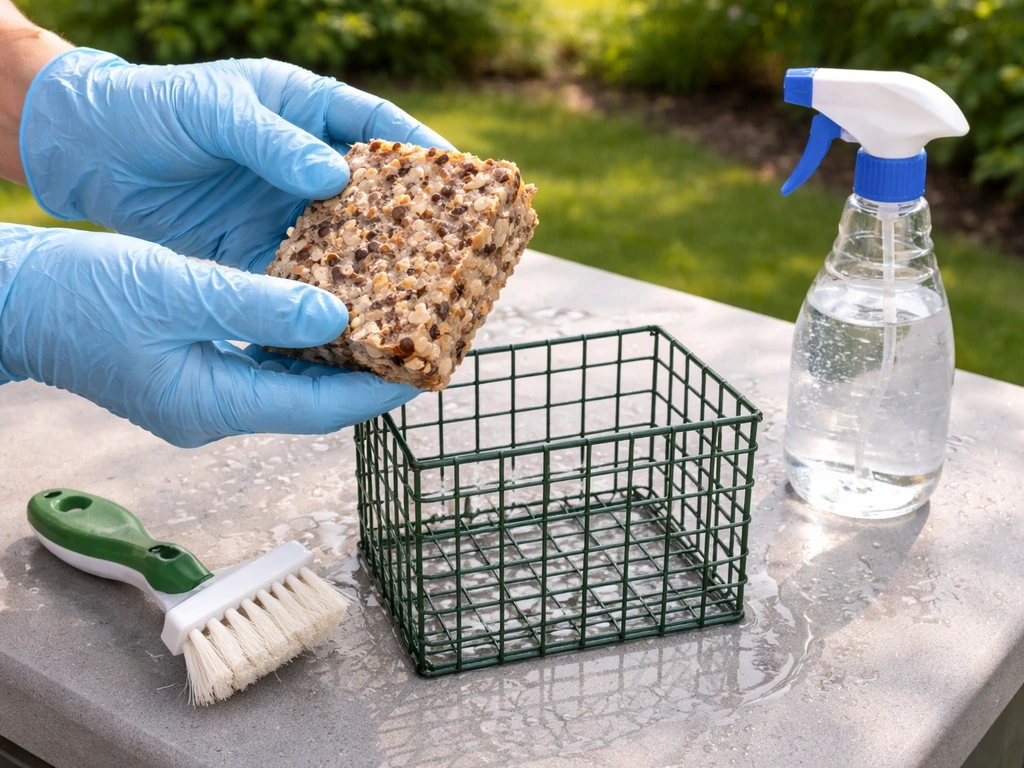
A dirty suet basket can spread disease between birds, so cleaning is not optional. The good news is suet baskets are among the easiest feeders to clean because most have very few parts. The standard recommendation from Cornell Lab and Audubon is to clean seed and suet feeders at least once every two weeks, and more frequently during hot, humid weather or when you notice heavy bird traffic.
- Remove any remaining suet and discard it. Don't save a cake that's been sitting in warm weather.
- Scrub the basket with a stiff brush and hot soapy water. Dawn dish soap works fine and is safe for the feeder.
- Soak the basket in a diluted bleach solution: 1 part bleach to 9 parts water (roughly 2 ounces of bleach per gallon of water). Let it soak for a few minutes.
- Rinse thoroughly with clean water until no bleach smell remains.
- Let it dry completely before refilling. Putting a fresh cake into a wet basket encourages mold growth.
If you spot black mold inside the basket or the suet cake looks cloudy, discolored, or smells off, toss the cake immediately and clean the basket before putting in a fresh one. Moldy suet can cause respiratory illness in birds, so don't try to scrape the mold off and keep using the cake.
On the pest side, suet does attract squirrels (which you're hopefully already guarding against), but it can also draw in raccoons and opossums at night. The simplest fix is to bring the feeder inside after dark if nighttime pests are a regular issue. Also keep an eye on the area below the feeder: fallen suet crumbles attract ground pests. A small tray catch helps, but you'll still want to clear debris from the ground every few days.
One thing the U.S. Fish and Wildlife Service specifically flags: never put yarn, lint, or similar nesting materials inside or on a suet cage. Some people do this thinking they're helping birds build nests, but those materials can tangle around legs and be genuinely dangerous. Keep the basket for suet only.
Why birds aren't using it (and how to fix that)
The most common beginner frustration is hanging a suet basket and waiting a week with no bird visits. Here's the honest picture: it sometimes takes birds 2 to 4 weeks to discover a new food source, especially if they don't have an established reason to visit your yard yet.
If you've waited more than two weeks and still no takers, run through this checklist:
- Location visibility: Is the basket visible from nearby trees and perches? Birds scout from a distance before committing. If it's tucked behind a wall or in a corner, move it somewhere more open.
- Too much competing food nearby: If you have other feeders packed with sunflower seeds right next to the suet basket, birds may simply prefer the easier food. Try temporarily removing or moving other feeders to encourage exploration of the suet.
- Wrong suet for your birds: If your yard primarily gets finches and sparrows, a plain suet cake may get ignored. Try a seed-blend suet cake that bridges their preferences. Conversely, if you want woodpeckers, a plain cake often outperforms a heavy seed blend.
- Suet spoilage: Birds can smell rancid fat and will avoid it. If the cake has been sitting out in heat for more than a few days, replace it even if it looks fine.
- Basket style mismatch: Some birds, especially larger woodpeckers, struggle with small-opening cages. A standard open-mesh basket gives them better access than a tightly woven pest-exclusion cage.
- Predator pressure nearby: If a cat regularly sits near the feeder location, birds will avoid the area entirely. Move the basket to a safer spot.
One thing worth knowing: once a suet basket gets discovered during nesting season, it can drain in hours. A Reddit user noted their suet cake disappeared in a single morning when a woodpecker pair was actively feeding nestlings. That's not a problem, it's a sign the setup is working. Just stay on top of refilling.
Picking the right basket and building a simple routine
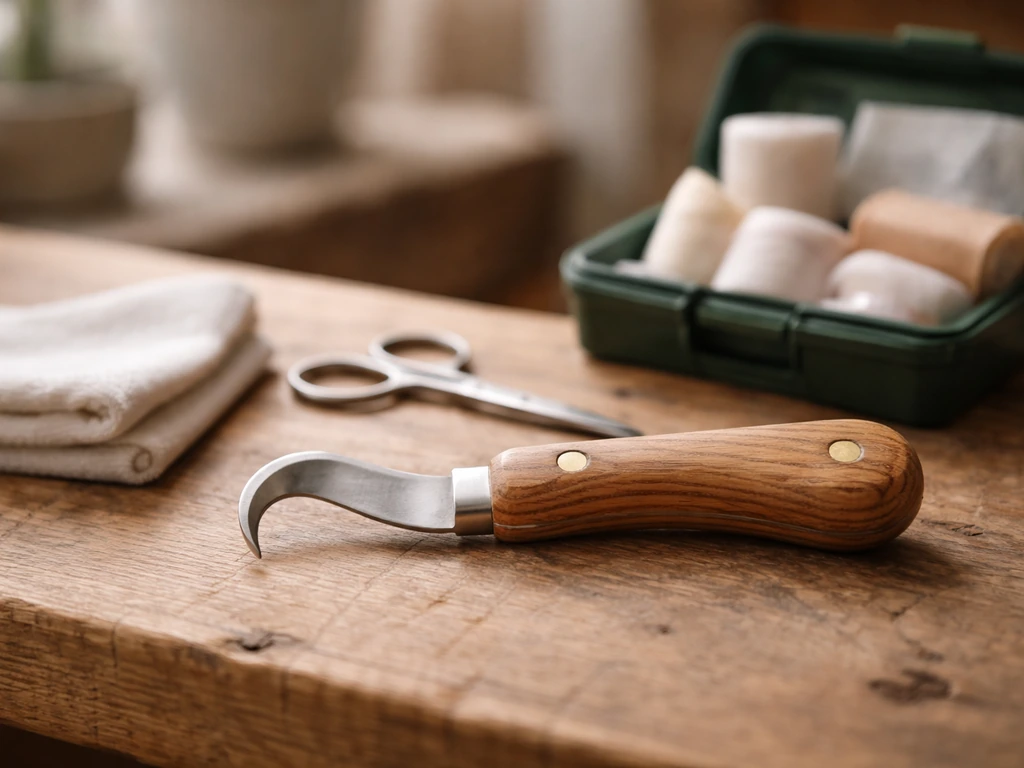
For most beginners, a basic coated wire suet basket that fits a standard 11-ounce suet cake is the right starting point. It costs between $5 and $15, loads in seconds, and works immediately. Don't overthink the first purchase. Get the basic version, hang it, and see which birds visit your yard. A bird hook knife is a handy tool for trimming and cutting suet or shaping bait so it fits cleanly in a feeder. That information is worth more than any product research you can do upfront.
If squirrels are a known problem in your yard, skip straight to a cage-within-a-cage design or plan to add a pole baffle from day one. Retrofitting squirrel protection after the fact is annoying, and a squirrel that empties your suet basket once will come back every day looking for more.
For species targeting: if you specifically want to attract downy and hairy woodpeckers, a tail-prop extension on the basket helps. For nuthatches and chickadees, any standard basket works. For a wider mix, pair the suet basket with a nearby tube feeder offering sunflower chips, since many suet visitors also eat seeds.
A simple weekly routine to keep things running well
- Check the suet cake every 2 to 3 days in warm weather, every 5 to 7 days in cool weather.
- Refill before the cake is completely gone. Birds that find a feeder empty will start skipping it.
- Do a quick visual inspection of the basket for mold, damage, or mesh corrosion each time you refill.
- Full clean (scrub plus bleach soak) every two weeks, or immediately if you see mold or the suet looks discolored.
- Switch to no-melt suet when temperatures consistently exceed 80°F.
- Bring the feeder in overnight if nocturnal pests are active, or add a baffle to the pole.
A suet basket is genuinely one of the easiest ways to start feeding wild birds. It's lower-maintenance than a seed feeder in many ways, the cakes are inexpensive, and the birds it attracts (especially woodpeckers) are genuinely exciting to watch.
If you're also exploring broader habitat questions, thinking about what kind of enclosure or environment works best for birds you keep at home is a related area worth looking into, since many of the same principles around enrichment and food variety apply. When you think about what is a bird habitat, focus on food, shelter, and safe nesting or roosting spots that fit the species you want to attract habitat questions.
But for a backyard feeding setup, the suet basket is a hard one to beat as a starting point.
FAQ
Can I use raw suet, bacon grease, or cooking drippings in a bird suet basket?
Yes, but only if the product is specifically made for birds and is already rendered. If you want to use kitchen fat, it must be plain, unseasoned, and you still risk faster spoilage and unknown additives, so commercially prepared cakes are the safer default.
What if my suet cake is a different size than the basket?
A tighter fit is better. Choose a suet cake size that matches your basket opening (most are designed for standard 11-ounce cakes). If the cake is loose, it can shift and fall out, so confirm the door closes fully with the cake in place.
How do I get more bird visits if nothing shows up after hanging the basket?
If birds repeatedly ignore the basket, try switching to a different cake type, not changing the basket. Seed and fruit/mealworm blends can attract additional species, and no-melt formulas work better in heat when standard suet becomes messy or melts too quickly.
Do I need to remove the suet basket at night or in bad weather?
Bring the basket in when nighttime predators are an issue and whenever you see heavy activity at ground level. Otherwise, cover and protect it from rain, and check daily in hot weather so you are not leaving smeared, spoiled, or mold-prone suet outdoors overnight.
Can I put yarn, grass, or other nesting materials around or in the suet basket?
Avoid using it for nesting support. Some birds may try to incorporate feathers or string, but yarn or lint can tangle around legs, which is why suet cages should be kept for suet only and never used to “help build nests.”
How frequently should I clean a suet basket, and what makes cleaning overdue?
Clean more often during hot, humid weather, and always before refilling if residue buildup is visible. A quick swap helps, but if you let sticky fat harden in the cage, birds may avoid it and you increase the chance of mold growth.
What should I do if the suet looks cloudy or there is black mold inside the basket?
If you find moldy, cloudy, or off-smelling suet, discard it and disinfect the basket before adding a new cake. Scraping alone is not enough because mold can leave spores and residues that continue to cause problems.
Will adding a small roof or cover prevent suet from spoiling and keep birds safer?
Using a roof or partial cover helps, but it does not replace placement. You still want partial shade and enough airflow, and you should keep the basket away from dense cover where cats or hawks can hide immediately adjacent.
Can I hang a suet basket from a porch, fence, or shepherd’s hook near my home?
Yes, but you have to manage the same risks. Keep it away from windows or reflective surfaces that can confuse birds, and use the same squirrel and cat distance principles so the feeder remains accessible for refilling and safe for birds.
What is the best way to stop squirrels if a basic suet basket keeps getting drained?
If you are getting repeated squirrel visits, the cage-within-a-cage style helps, but also consider distance and baffles. A baffle placed on the pole can reduce launch success, and placing the feeder farther from jumping points limits access even without upgrading the feeder.
Do I need to clean under the suet basket, and what happens if I don’t?
Ground cleanup matters. Even if you use a tray, clear fallen suet and crumbles every few days, because leftovers attract ground pests and can increase unwanted nighttime visitors.