For most UK beginners, the best bird table comes down to two very different things depending on what you actually mean by the term: if you have a pet bird indoors (a budgie, parrot, or cockatiel), you want a sturdy play stand or feeding table with safe materials and easy-clean surfaces; if you're feeding wild garden birds, you want a stable wooden platform feeder, ideally FSC-certified timber, set at 5 to 6 feet off the ground with drainage channels and a roof. Both are called 'bird tables,' both matter, and the right choice depends entirely on your setup.
Best Bird Tables UK: How to Choose and Set Up Safely
Marcus Chen
1 Jun 2026
What 'bird tables' actually means for UK bird keepers
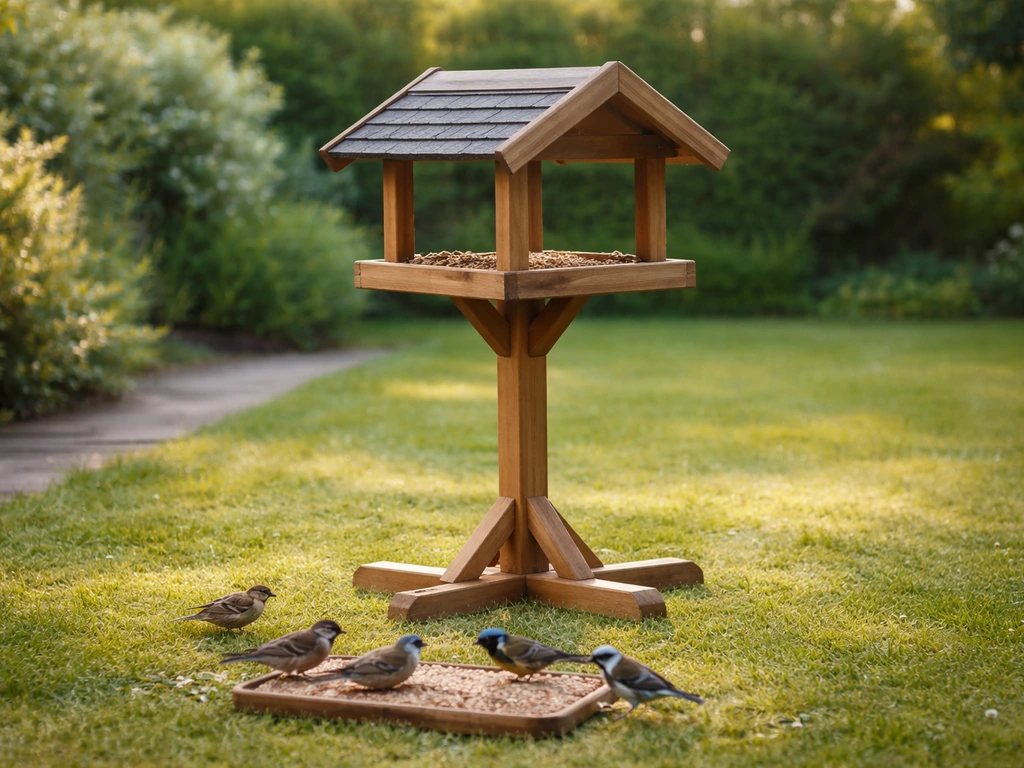
This is where a lot of beginners get confused, and honestly it tripped me up too at first. In the UK, 'bird table' usually refers to a garden feeding station: a raised platform with edges and drainage, sometimes with a roof, designed to offer wild birds a safe and sheltered place to eat. The RSPB describes these as basic platforms with edges, drainage channels, and optional roofing to keep food dry and accessible. That's the classic definition.
But if you're a pet bird owner, the same term often gets used for indoor play stands, feeding tables, and perch-and-dish setups used for budgies, parakeets, cockatiels, and parrots. These are completely different pieces of equipment with different safety requirements. Throughout this guide, I'll cover both, because the search brings in both audiences and you deserve a straight answer either way.
The key distinction worth locking in early: outdoor garden bird tables are about hygiene, predator safety, and weather protection for wild visitors. Indoor bird tables and play stands are about non-toxic materials, perch sizing, stability, and air quality for your pet. Mixing up the priorities of one with the other is one of the most common beginner mistakes I see.
Top features to look for in the best bird tables UK
Safety and materials
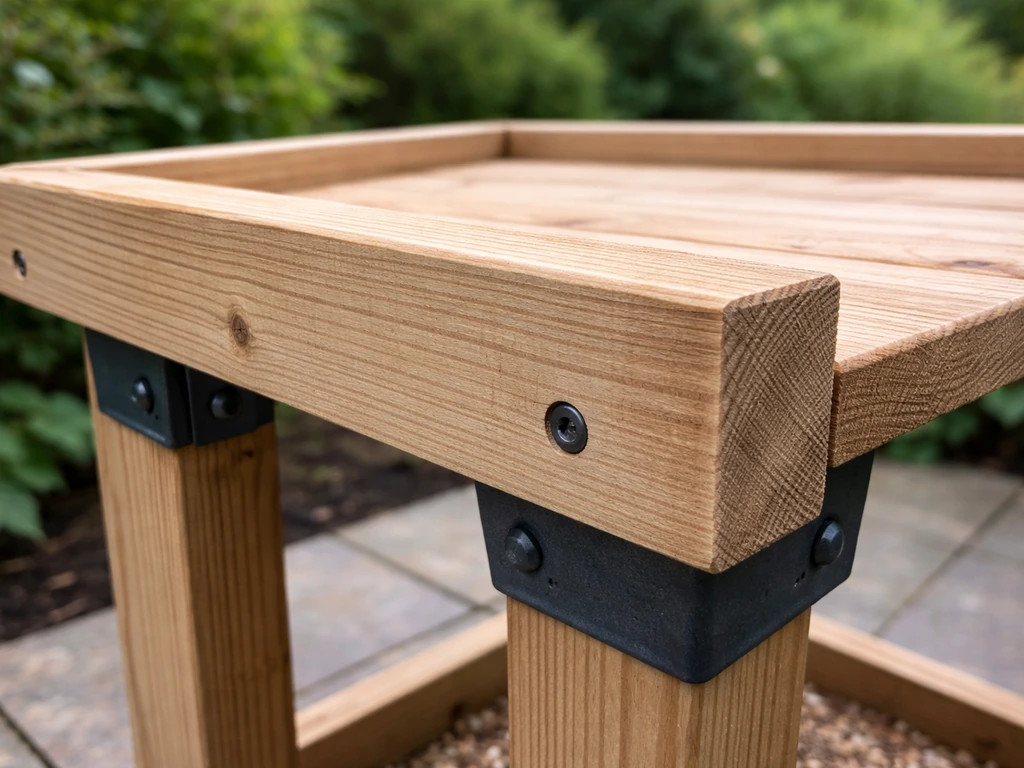
For outdoor garden tables, always choose untreated or food-safe treated timber. The RSPB specifically uses FSC-certified timber in its own range, which is a reliable baseline. Avoid anything with glossy paint, varnish, or wood preservatives that haven't been certified as wildlife-safe. Some cheap imported tables use finishes that can be harmful if birds peck at the surface, which they will. For indoor pet bird stands, this matters even more: birds are extremely sensitive to fumes, so any wood finish, paint, or metal coating needs to be explicitly non-toxic. Zinc and lead-based paints are a genuine hazard. Stainless steel hardware is the safest metal option for dishes and fittings.
Size and perch diameter
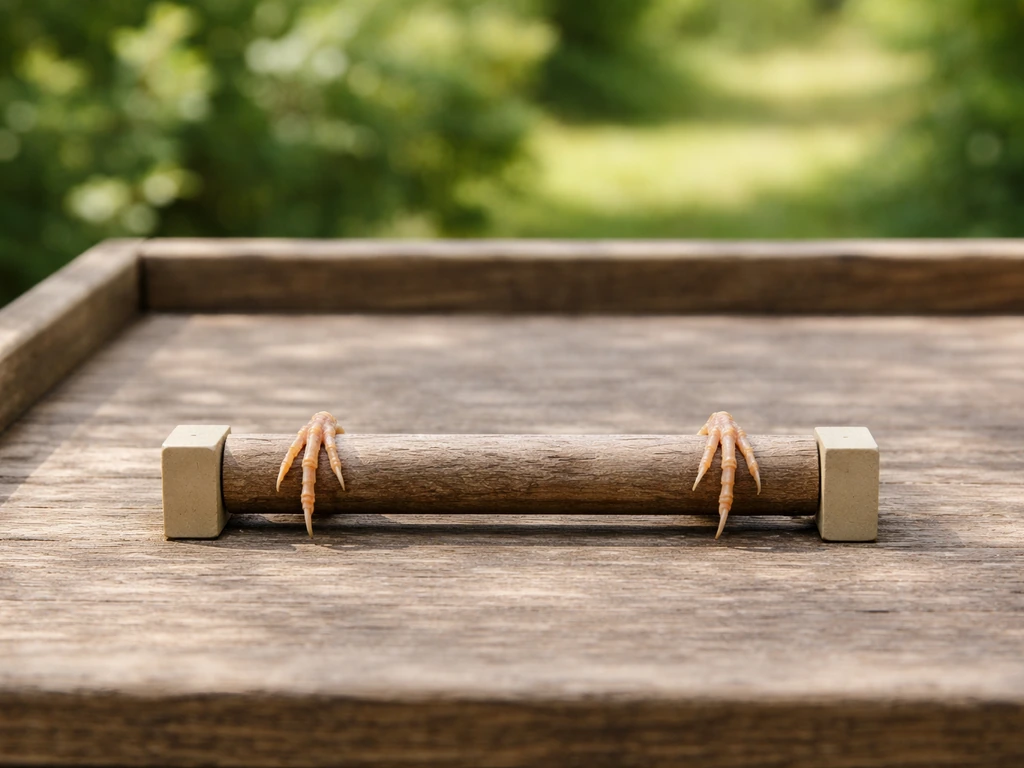
Get the sizing right for your bird. For budgies, perch diameters should sit between 1 and 2 cm so their feet can grip comfortably without overstretching. For parakeets and small parrots, perches should generally be no more than about half an inch (roughly 1.25 cm) in diameter at the thin end. For larger parrots and outdoor platforms hosting a range of wild species, perch diameters of 3 to 5 cm are recommended by the SRUC. If you're buying a garden table, check that the platform surface is large enough to hold several birds at once without overcrowding, which reduces aggression and spillage.
Stability
A wobbly bird table is a hazard in both settings. Outdoors, a table that tips in wind will scatter food, attract rats, and deter birds from returning. Indoors, a play stand that rocks when your bird lands on it will stress your bird and could cause a fall. Look for a wide, heavy base, ground spikes or wall-mounting options for outdoor tables, and rubberised feet or weighted bases for indoor stands. Don't underestimate how much force a medium-sized parrot puts through a perch when landing.
Ease of cleaning
This is the feature most beginners skip over in the shop and regret within a week. For outdoor tables, you need drainage holes or channels so rainwater doesn't pool and turn food into a soggy disease risk. Removable trays are a massive bonus. For indoor stands, smooth surfaces with no deep crevices make wiping down a two-minute job rather than a twenty-minute scrubbing session. The RSPCA and RSPB both recommend cleaning at minimum once a week, so whatever you buy needs to make that realistic.
Sharp edges and hazards
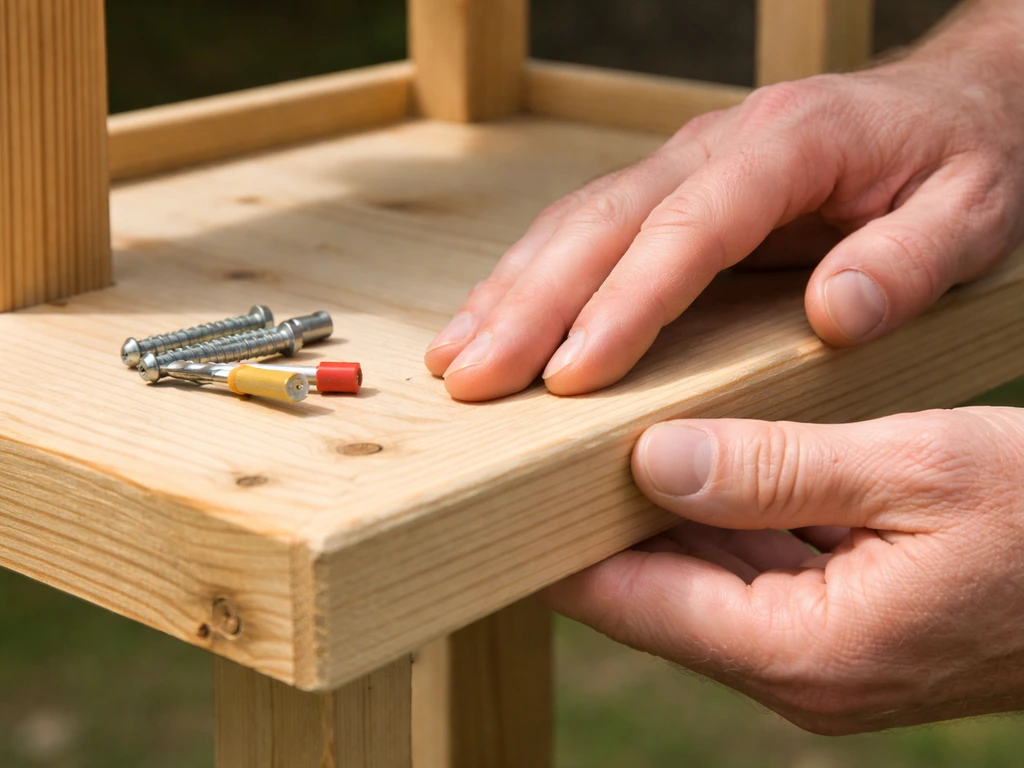
Check for splinters, exposed screws, wire ends, and sharp cut edges before putting any bird near a table or stand. Run your hand around the whole thing before assembly. Cheap flat-pack designs often have rough edges where boards join. Sand these down or return the product. For indoor stands, any chains or rope should be thick enough that a bird can't get a toe caught in a link.
Choosing the right table for your bird type and your space
There's no single best table for everyone. If you're specifically looking for the best bird table for robins, the same outdoor features like predator-safe positioning and hygiene matter even more. The right option depends on whether you're keeping a pet bird indoors, feeding wild birds in a garden, or both. Here's how to match the product to your situation.
| Setup | Best table type | Key features to prioritise |
|---|---|---|
| Small flat, pet budgie or parakeet | Compact indoor play stand with perch and dish holders | Non-toxic finish, 1-2 cm perch diameter, weighted base, easy-wipe surface |
| Larger home, medium/large parrot free-roaming | Floor-standing play stand or T-bar table | Heavy stable base, 3-5 cm perches, stainless steel dishes, no sharp fittings |
| Garden or outdoor space, wild bird feeding | FSC wooden platform feeder with roof and drainage | Roof for weather, drainage holes, 5-6 ft pole height, wide stable base |
| Flat with balcony, wild bird feeding | Wall-mounted or railing-clamp table | Compact footprint, drainage tray, easy to reach for cleaning |
| Mixed household (pet bird + garden feeding) | Separate indoor stand and outdoor table | Keep entirely separate to avoid cross-contamination of food and droppings |
If you have a small parrot or budgie in a flat, a compact play stand with a dish holder is genuinely all you need. Don't overbuy. A large floor-standing parrot stand in a one-bedroom flat will dominate the room and probably end up in a corner collecting dust. On the other hand, if you have a larger bird like an African Grey or an Amazon, a small stand that wobbles on landing is a daily stress trigger for your bird and a safety risk. Size up appropriately.
For garden bird feeding, the best design is a solid wooden platform with a roof and raised edges to keep food contained and dry. The design question of open platform versus roofed table is worth thinking through carefully, and there's more depth on this in the guide to the best bird table design if you want to go further. If you are weighing open platform versus roofed table, this guide to the best bird table design is a helpful next step to compare options. The short version: a roof makes a meaningful difference to food quality in the UK's wet climate.
Placement, setup, and daily routines
Height and positioning outdoors
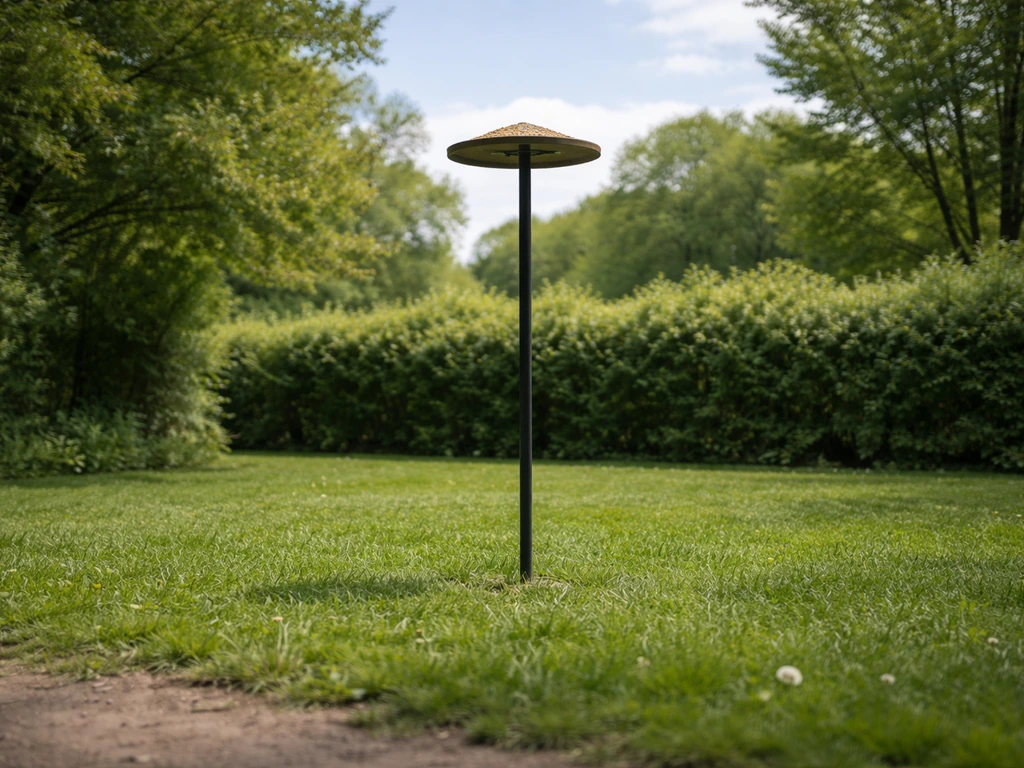
For garden bird tables, aim for a height of 5 to 6 feet off the ground. This puts the table above typical cat-jumping range while keeping it low enough for you to refill and clean without a stepladder. Higher is generally safer if your garden has cat activity. Position the table in a relatively open area so birds can spot approaching predators, but keep a small shrub or tree about two metres away so birds have somewhere to perch and wait their turn. The RSPB specifically recommends this two-metre cover distance as a balance between safety and exposure.
Keep the table well away from dense cover like thick hedges right at ground level, where cats can hide. And if you have a window nearby, be aware that feeders closer than about 9 metres from glass carry a higher window-collision risk for birds. Either keep the table very close to the window (within a metre, so birds don't build up flight speed) or further than 9 metres away.
Indoor placement for pet bird tables and stands
Place indoor stands away from kitchens, where cooking fumes (especially non-stick cookware overheating) are a serious hazard to birds. For indoor pet bird stands, height needs a different approach, but the placement rules still matter. Avoid placing stands near windows with direct sun exposure for extended periods, and keep them out of draughty corridors or spots near air conditioning vents. Birds need good airflow but not a cold draught blowing on them. The Birdline Avian Care Charter is explicit that birds should be kept in smoke-free areas and away from any sources of toxic fumes, including ammonia from cleaning products used nearby.
Cleaning routine
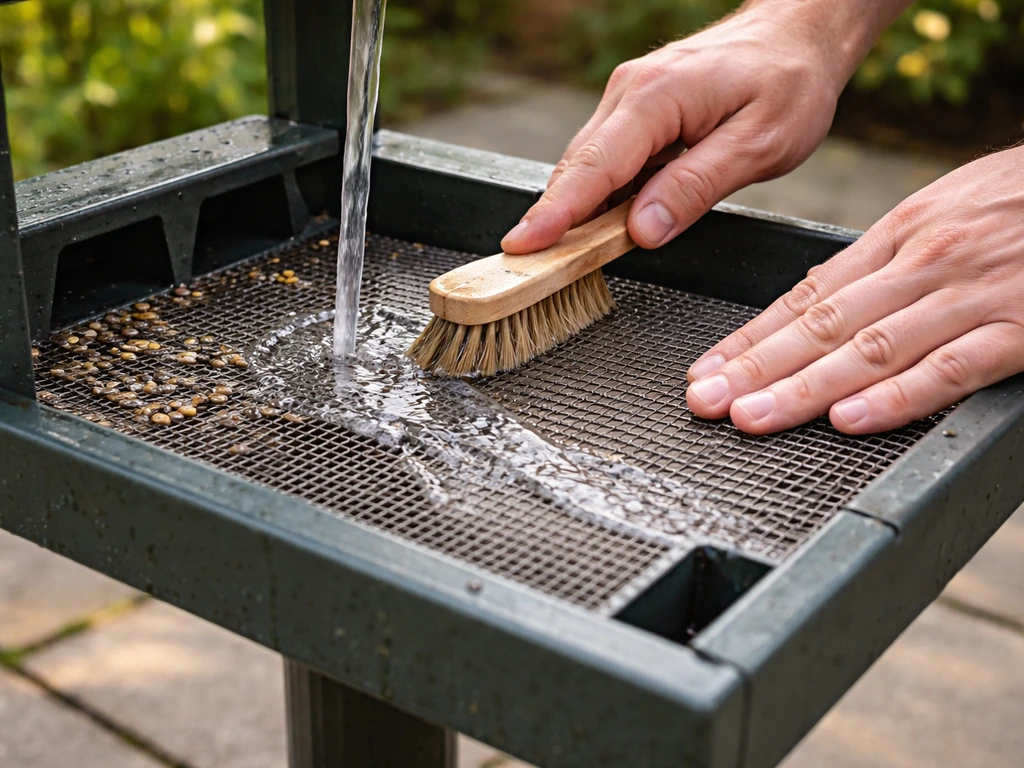
Both the RSPB and RSPCA recommend cleaning bird feeding surfaces at least once a week. For outdoor tables, brush off all old food and droppings before adding fresh food each time, then do a proper scrub-down weekly with a mild disinfectant solution. A ratio of one part bleach to ten parts warm water works well, or use an animal-safe product like Ark-Klens.
Use a long-handled brush, wear gloves, and avoid breathing in dried droppings or dust as a basic hygiene precaution. Rinse thoroughly and let the table dry before refilling. The RSPB also recommends [moving your outdoor table to a different spot weekly to prevent a build-up of droppings in one patch of lawn](https://www. rspb.
org. uk/helping-nature/what-you-can-do/activities/open-a-bird-cafe). For safe feeding, the RSPB advises cleaning the feeder once a week, removing old food and droppings beneath it, placing the feeder in a different spot every week, and avoiding flat-surface feeders [moving your outdoor table to a different spot weekly](https://www. rspb.
org. uk/birds-and-wildlife/feeding-birds-near-you/feeding-garden-birds).
For indoor play stands and feeding tables, wipe down surfaces daily and do a full disinfectant clean at least weekly. Remove dish holders and wash them separately. Avoid harsh chemical cleaners and make sure all surfaces are fully dry before your bird gets back on the stand, as residual moisture can encourage mould. Never use insecticides or flea powders near bird surfaces.
Common beginner mistakes to avoid
- Buying a flat open platform with no drainage and then wondering why the food goes mouldy after one UK rain shower. Drainage channels and raised edges are not optional extras.
- Placing an outdoor table right next to a dense hedge or fence panel where cats can crouch and ambush. Open sightlines around the table are essential.
- Using the same cleaning products you use for household surfaces without checking they're safe for birds. Bleach solutions work but must be thoroughly rinsed. Fumes from many commercial cleaners are toxic to birds.
- Ignoring perch diameter for indoor pet birds. A perch that's too thick means your bird can't grip properly and will slip, causing stress and potential injury. Match the diameter to your specific species.
- Skipping the weekly location rotation for outdoor tables. Leaving a table in one spot means droppings accumulate in the same patch of ground, creating a disease reservoir.
- Relying heavily on flat open surfaces for wild bird feeding. The RSPB has specifically warned that flat surfaces where food can sit in contaminated contact with droppings increase the risk of trichomonosis transmission between birds.
- Putting an indoor bird stand near the kitchen or in a room where candles, air fresheners, or aerosols are regularly used. Birds have highly sensitive respiratory systems and what smells fine to you can be dangerous to them.
- Choosing a table based purely on looks or price without checking the material finish. Cheap tables with glossy or unspecified paint coatings may contain toxic compounds, especially on anything imported.
- Not anchoring an outdoor table properly. A top-heavy table that tips in the wind dumps food on the ground, attracting rats and grey squirrels, and deters birds from returning.
Shortlist recommendations by use case
Small homes and flats: indoor pet bird feeding
Look for a compact tabletop or floor-standing play stand made from natural untreated wood or powder-coated steel with a certified non-toxic finish. It should have at least two dish holders for food and water, a perch sized to your bird (1 to 2 cm for budgies, slightly thicker for cockatiels and small parrots), and a pull-out or removable tray at the base for catching mess. If you have a budgie or parakeet, you genuinely don't need anything large or elaborate. A well-made compact stand from a reputable UK bird supplier is the right call. Prioritise easy cleaning over aesthetics.
Larger homes with free-roaming birds
A floor-standing T-bar or multi-perch play stand works well here. Look for a weighted base (at least 3 to 4 kg for anything housing a medium parrot), stainless steel food and water cups, and natural wood perches in the 2 to 4 cm range depending on species. Some designs include a small ladder or climbing section, which is useful enrichment. Check that all hardware is stainless steel rather than zinc-plated, and that any rope or chain elements have large enough links to be toe-safe.
Garden and outdoor wild bird feeding
The RSPB's own range of FSC-certified wooden bird tables is a solid benchmark for what good looks like. You want a roofed design (essential in the UK), drainage holes or channels built into the platform floor, raised edges to stop food blowing off, and a sturdy post with a ground spike or heavy base.
If you want the best heavy duty wooden bird tables, focus on durability like FSC-certified timber, a wildlife-safe finish, and a stable, heavy base with proper roof and drainage. Aim for 5 to 6 feet of height. If you're on a balcony or have no lawn, look for a wall-mounted or railing-clamp table with a removable drip tray underneath.
The best wood for a garden bird table is naturally durable hardwood or pressure-treated softwood with a wildlife-safe finish, which is covered in more detail in the guide to the best wood for bird tables. If you're comparing options, focus on wildlife-safe finishes and durable timber suited to outdoor weather best wood for bird tables. If you specifically want the best bird table for robins, stick to a roofed, raised design that keeps seed clean and easily accessible.
For setup guidance on what food to actually put on the table once you have it, the guide on what to put on a bird table is the logical next step.
Quick safety checklist before your bird uses any table
- Check all surfaces for splinters, sharp edges, and exposed screws or wire ends.
- Confirm any paint, varnish, or wood treatment is certified non-toxic for birds.
- Verify perch diameter matches your bird species (1-2 cm for budgies, 3-5 cm for larger birds).
- Ensure the base is stable and won't tip under your bird's weight or in wind.
- Place it away from kitchen fumes, direct draught, prolonged direct sun, and sources of aerosol or smoke.
- Set up a weekly cleaning schedule using a bird-safe disinfectant and rinse thoroughly.
- For outdoor tables, check drainage holes are clear before each refill.
- Move outdoor tables to a fresh spot weekly to prevent ground contamination buildup.
FAQ
Can I use an indoor bird stand as an outdoor bird table in the garden?
Yes, but only if it is for wild birds outdoors. Indoor play stands should not be used as outdoor feeding stations because finishes and adhesives that are safe indoors may not withstand pecking, rain, and sunlight. If you do convert an indoor stand, treat it as a replacement risk, check that the wood is untreated or wildlife-safe, and that any trays and dishes can be removed and disinfected weekly.
What makes the best bird table for robins specifically?
For wild garden feeding, use a robin-friendly raised platform with a roof and raised edges, keep it 5 to 6 feet high, and position it near cover but not in dense hedges at ground level. A roof matters most for seed and suet because wet food clumps and rots quickly in UK weather.
How often should I clean my bird table, and what if birds are feeding every day?
Aim for at least weekly cleaning for both types, but expect to clean more often if you get lots of wind-driven rain or heavy traffic. Outdoor, brush off old food before adding fresh, then do a full scrub weekly and let it fully dry. Indoor, wipe down daily and disinfect weekly, especially around dish holders where moisture builds up.
What if I can’t place the outdoor table at 5 to 6 feet, is there a safer workaround?
If you cannot place the table 5 to 6 feet up, prioritise stability and predator safety instead. For outdoor tables, anything lower increases cat-jumping and ground access, so compensate with a wider base plus ground spike or heavy base, and place it away from thick ground-level cover. For indoor setups, stability matters more than height, use weighted bases or rubberised feet to stop rocking.
What should I do when the food gets wet or soggy on my outdoor bird table?
Wet seed is the fastest way to create mould and disease risk, so remove any visibly damp food promptly. Outdoor drainage channels help, but you still need to refresh feed and ensure the table fully dries after cleaning. If rain is persistent, a roofed table will reduce how often you have to swap food.
My indoor stand rocks slightly when my bird lands, is that ever acceptable?
Rubberised feet are helpful for indoor rocking, but they should not replace a stable design if your bird is large or forceful. For medium parrots, choose a weighted base and confirm the perch height and diameter match the species so landing load is distributed. Indoors, avoid placing stands on slick floors where rubber can slip.
How do I inspect a cheap bird table for safety before using it?
Old flat-pack tables are more likely to have rough seams, protruding wire ends, and sharp cut edges. Before assembly and after, run a hand along every join, and check that any rope or chain has toe-safe link sizes. If you see splinters or residue from wood treatment, return it rather than sanding to guess.
What specific materials or coatings should I avoid when buying the best bird tables UK?
Use non-toxic, wildlife-safe finishes and avoid anything glossy or treated with uncertified wood preservatives for outdoor pecking birds. Outdoors, stainless steel hardware is the safest for dishes and fittings. For indoor stands, also avoid zinc-based or lead-based painted hardware, fumes and residue are a bigger risk than many people expect.
How far should a garden bird table be from windows to reduce collisions?
For outdoor positioning near windows, keep the feeder at least about 9 metres away if possible to lower collision risk, or place it very close (within about a metre) so birds do not build up speed. If you are stuck in between, consider adding window decals or adjusting placement, but the key decision is either close-by or far-by, not middling.
Are the same best bird table rules valid for balconies or small gardens?
Balcony use is a special case because wind and limited access make cleaning and stability harder. Choose a railing-clamp or wall-mounted option with a removable drip tray, then secure it against wobble. Also increase attention to daily checks after rain to remove damp feed and prevent droppings build-up.
Can I use insecticides near my bird table or stand?
Avoid insecticides or flea powders near any bird feeding surface, even if the product is not sprayed directly onto the table. If you treat nearby areas for pests, do it when birds are not in the area and ensure any treated surfaces are fully dried and ventilated before birds return.