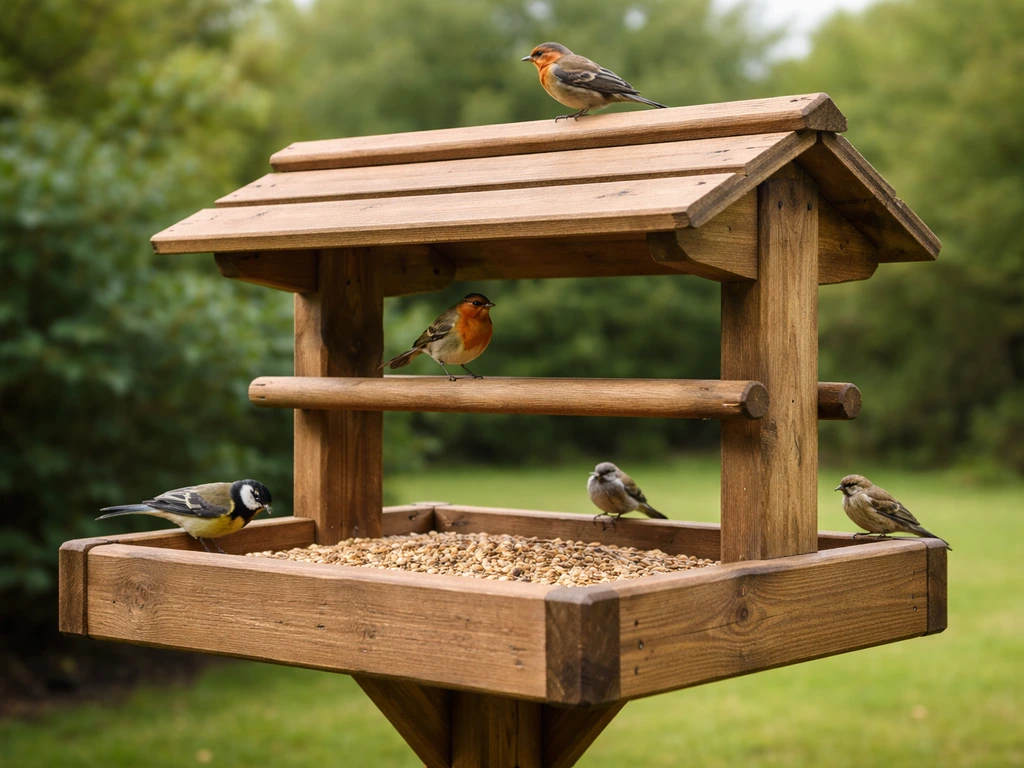
For most garden birds, a good starting point is a mix of sunflower hearts, a quality seed blend, suet pellets or balls, and live or dried mealworms. Add a shallow dish of fresh water and you have everything you need to attract a wide range of species from the first day. That said, what you put out really should shift with the seasons, and there are a handful of common mistakes that can actively harm the birds you're trying to help. Here's how to get it right.
What to Put on a Bird Table: Beginner Food Guide
Marcus Chen
6 Jun 2026
Quick note before we dive in: this guide is about feeding wild birds that visit your garden, not about diet for pet birds. If you've arrived here looking for advice on what to feed a pet parrot or budgie, that's a completely different topic. The bird table world is its own thing, and it's genuinely rewarding once you get the basics sorted.
Choosing safe foods for a bird table
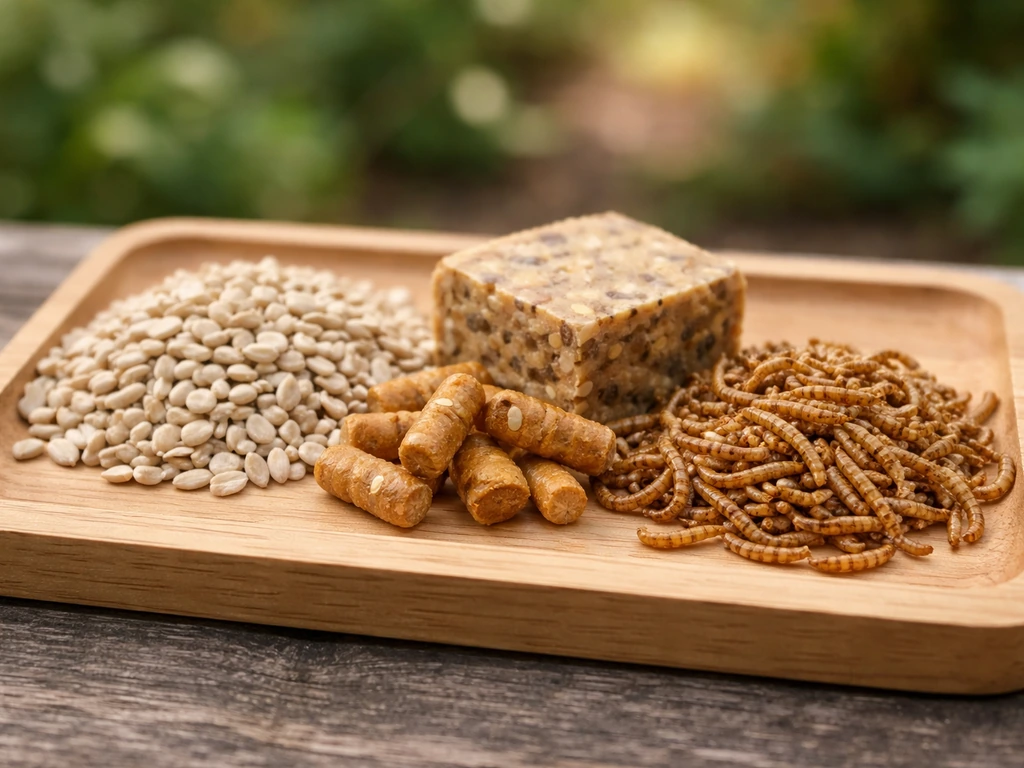
The safest and most universally attractive foods for a bird table are ones that closely match what garden birds would find in the wild. Sunflower hearts are probably the single best food you can offer because they're calorie-dense, hull-free (so no mess), and eaten by almost every common garden bird. A good no-mess seed mix is the next staple. Look for blends that list sunflower hearts, millet, and flaked maize near the top of the ingredients, and avoid cheap mixes that are mostly wheat and barley fillers that most birds simply won't eat.
Suet products (balls, blocks, or pellets) are brilliant for energy and welcomed by robins, starlings, blackbirds, and tits. To narrow it down, the best bird table for robins is one with secure perches and easy-access spots where they can feed comfortably. Mealworms, either live or dried, are a fantastic protein source that robins in particular go absolutely wild for. Blackbirds will take suet pellets and mealworms readily too. Fruit like cut apples or halved grapes works well for thrushes and blackbirds, especially when placed on the flat tray of the table rather than in hanging feeders. Peanuts (unsalted, whole or in a mesh feeder) are great in winter and early spring for species like great tits, nuthatches, and woodpeckers.
- Sunflower hearts: the single most widely eaten food, suitable year-round (with seasonal caveats below)
- No-mess seed mix: look for sunflower, millet, and flaked maize as leading ingredients
- Suet balls, blocks, or pellets: high energy, loved by robins, tits, starlings, and blackbirds
- Dried or live mealworms: excellent protein source, especially prized by robins
- Peanuts in a mesh feeder: only unsalted, and pause in warmer months (see seasonal section)
- Cut apples, pears, or grapes: placed flat on the tray, great for thrushes and blackbirds
- Niger (nyjer) seeds: ideal for attracting goldfinches, requires a specialist narrow-port feeder
Portion size matters more than most people realise. The RSPB explicitly recommends adjusting the amount of food you put out based on demand, so you're not leaving piles of seed sitting out all day. A good rule of thumb when starting out is to put out a small amount in the morning and see how quickly it's eaten. If it's gone within an hour or two, offer a bit more. If it's still sitting there at dusk, reduce the next day's portion. Uneaten food is one of the biggest causes of problems at garden feeding stations.
Foods to avoid and common feeding mistakes
The number one thing I'd tell a first-time bird feeder is this: wet bread is not a kindness. It's one of the most popular things people put out and one of the most problematic. It swells in birds' stomachs, has almost no nutritional value, and goes mouldy incredibly fast, creating a contamination risk. Salted peanuts, processed meat, salty crisps, and flavoured foods are all harmful too. Stick to natural, unseasoned options.
Mouldy or old food is a serious hazard. Trichomonosis, a disease that can devastate finch populations, spreads through contaminated food and water. If seed has been sitting in a wet tray for days and has started to clump or smell, it needs to go in the bin, not stay on the table. The same goes for suet that's gone soft and discoloured in warm weather. The Wildlife Trusts are clear on this: never put out large amounts at once, because food can begin to rot before birds have a chance to eat it.
- Wet or mouldy bread: low nutrition and goes bad fast, avoid entirely
- Salted or flavoured nuts: toxic to birds, only offer plain unsalted peanuts
- Desiccated coconut: can swell inside birds, unsafe
- Cooked oats that go sticky: similarly dangerous as they can harden around beaks
- Whole peanuts in spring and summer: choking hazard for nestlings if parent birds take them to the nest
- Milk or dairy: birds are lactose intolerant
- Cheap filler-heavy seed mixes: most of the content ends up as waste on the ground
- Over-large portions left out overnight: attracts rats and leads to mould and disease build-up
One mistake I made early on was putting out a full feeder's worth of seed every morning regardless of how much was left from the day before. Within a week I had damp, compacted seed at the bottom of the feeder, which is exactly the environment where harmful bacteria and fungi thrive. Feed little and often is the mantra from both the BTO and the Wildlife Trusts, and it genuinely makes a difference.
Suet, seeds, and mealworms: what to offer by season
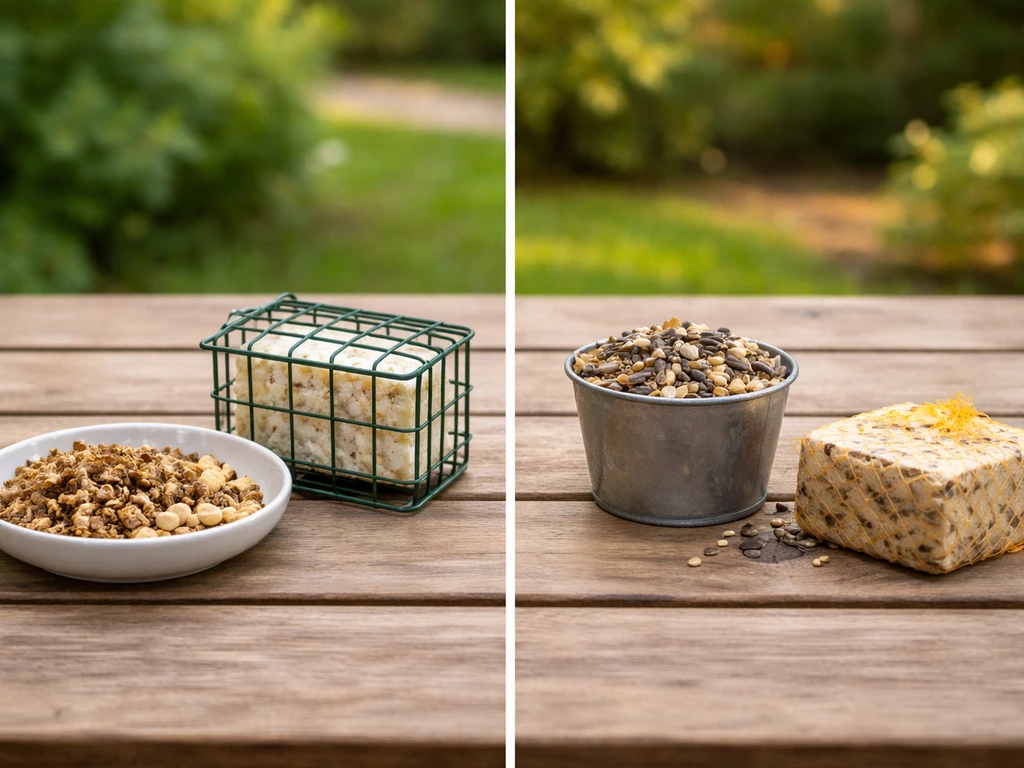
This is the part that trips up a lot of well-meaning bird feeders, and the advice changed significantly in recent years. The RSPB and BTO now both recommend pausing seeds and peanuts from 1 May to 31 October to reduce the risk of spreading trichomonosis among finch populations, particularly greenfinches and chaffinches. This might sound counterintuitive but the reasoning is solid: during spring and summer, birds have access to natural insect and plant food sources, so supplementary seed feeding is less necessary and the risk of disease spreading through feeders outweighs the benefit.
During the May to October period, shift your focus to protein-rich foods like mealworms and suet pellets, which support nesting and fledgling birds without the same disease risk. Fruit placed on the tray also works well through summer. Bird-friendly planting in your garden, things like berry-producing shrubs and insect-attracting flowers, also supports birds during this period in a way that doesn't concentrate disease risk at one feeding point.
| Season | Best foods to offer | What to pause or reduce |
|---|---|---|
| November to April (winter/spring) | Sunflower hearts, seed mixes, peanuts in mesh feeders, suet balls and blocks, dried mealworms | Nothing specific, this is peak supplementary feeding season |
| May to October (summer/autumn) | Suet pellets, live or dried mealworms, cut fruit (apple, pear, grapes), niger seeds for goldfinches | Seeds and whole peanuts (RSPB/BTO guidance to reduce trichomonosis risk) |
Winter is when your bird table genuinely makes the biggest difference to survival. Suet products with added ingredients like insects or berries are worth paying a little more for in January and February when natural food is at its lowest. High-fat, high-calorie options help birds maintain body temperature overnight when temperatures drop. In mild UK winters you can get away with less, but during cold snaps, doubling your normal amount for a few days is absolutely the right call.
Water and placement: keeping birds coming back safely
A lot of people set up a great bird table and then forget that water is just as important as food, sometimes more so. The RSPB recommends a bird bath with shallow, sloping sides and a maximum depth of around 10 cm and ideally more than 30 cm wide. The shallow slope is critical because birds need to be able to stand and drink without submerging. A deep bowl or bucket is not a bird bath, it's a hazard.
Water is particularly critical in summer when natural sources dry up, but birds need to drink in cold weather too, and if your bird bath freezes over in winter, birds are left without a reliable source. A simple trick is to float a small ball on the surface overnight to slow freezing, or use a purpose-made bird bath heater if you're serious about year-round provision. The RSPB says you should replace the water daily in hot weather and give the bath a thorough clean at least once a week.
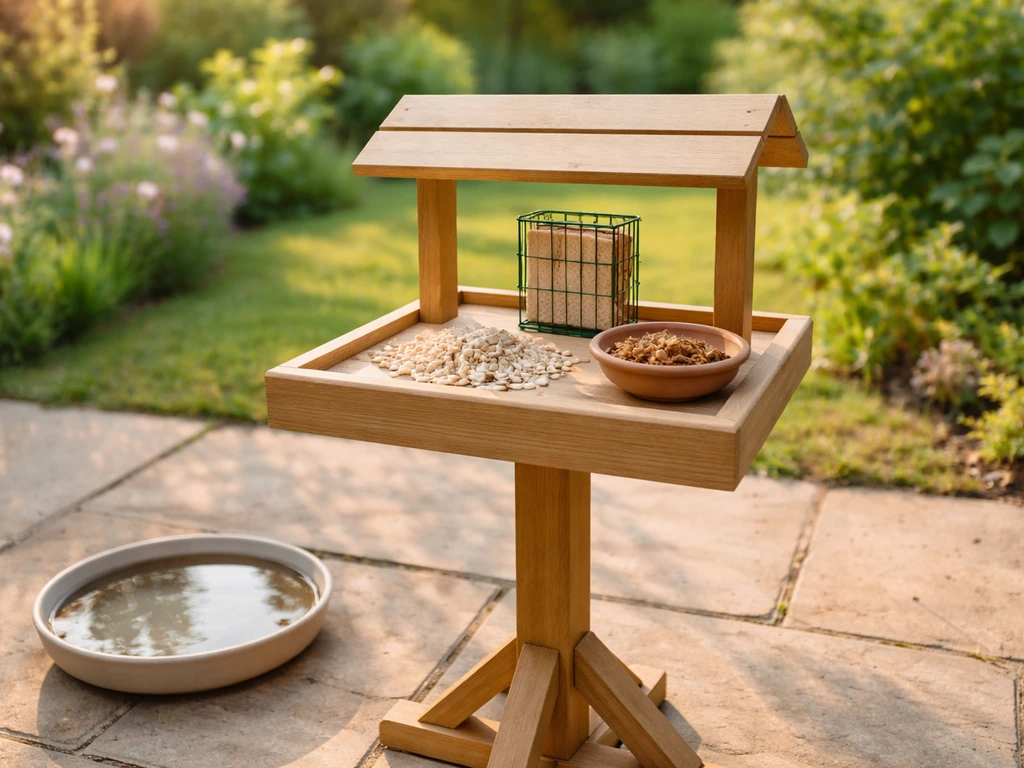
Keep the bird bath close to the bird table but not directly underneath it, otherwise seed debris and droppings will constantly contaminate the water. Placing it about 1 to 2 metres away from the table, in a position where birds have a clear sightline to spot approaching cats, is the sweet spot. The BTO is clear that feeders and bird baths are the most likely places for disease to spread in gardens, so keeping both clean is non-negotiable, not just a nice-to-have.
How to set up the table to minimize waste and pests
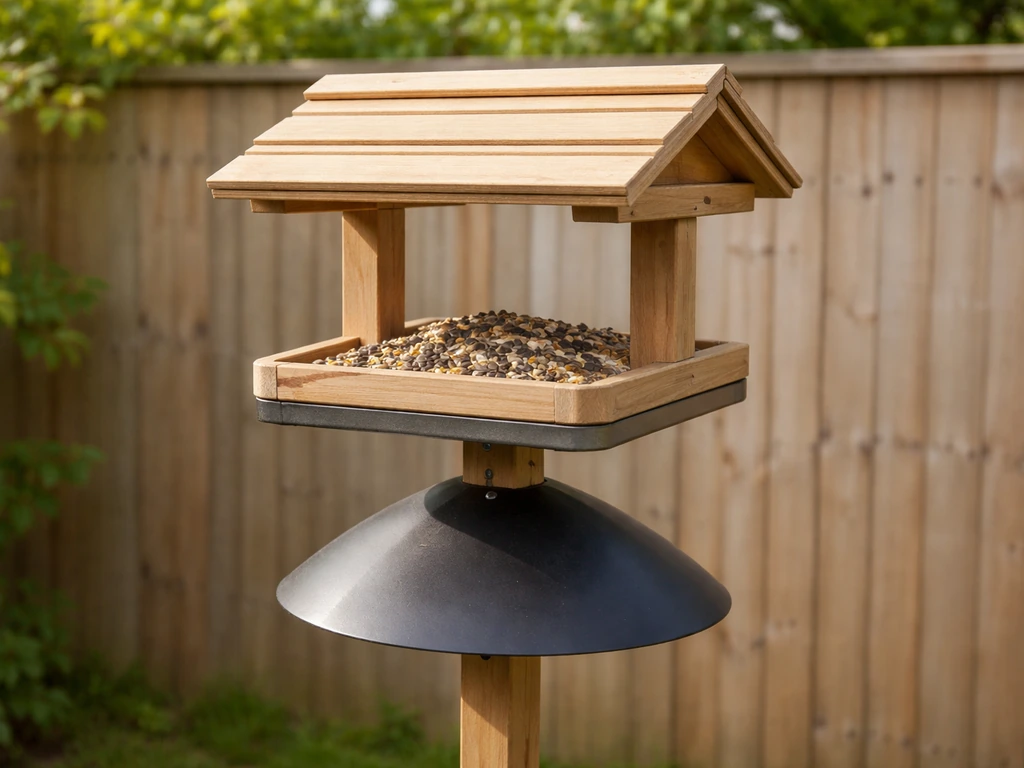
Placement is one of the things most people get wrong the first time, and it affects everything from how many birds visit to how much mess you're dealing with and whether squirrels or rats become a problem. If you are choosing a new table or adjusting an existing one, you also need to get the height right, which affects how safe and comfortable it feels for visiting birds how high should a bird table be. The Wildlife Trusts recommend positioning your feeding station in a relatively open area, away from dense cover where cats can hide and ambush. A distance of at least 2 metres from the nearest fence or shrub gives birds time to react to a threat. But you also want it close enough to some cover, like a hedge or shrub, that birds can retreat to if they feel unsafe. Around 2 to 3 metres from cover is the ideal balance.
If squirrels are a problem in your garden (and they usually are), a baffle guard on the post underneath the table is the most effective deterrent. Some bird table designs already include squirrel-resistant features, and if you're shopping for a new one it's worth looking at design choices like a roof overhang that prevents squirrels jumping down onto the tray. The best bird table designs account for this. If you want an easy route, look for one of the best bird tables UK shoppers recommend for stable feeding, good access, and hassle-free cleaning.
To reduce waste, match the foods you offer to the birds you're trying to attract. Cheap mixes full of wheat and milo end up on the ground uneaten, which attracts pigeons and rats. Using no-mess mixes or specifically sunflower hearts means almost everything you put out actually gets eaten. A tray with drainage holes is also important so rain doesn't pool and turn your seed into a soggy mess. If your current table doesn't have drainage, drilling a few small holes is a quick fix. If you're also building or upgrading the table itself, choosing the best wood for a bird table helps it last through wet weather and stay safe for visiting birds best wood for bird table.
On the pest front, never put food directly on the ground unless it's specifically for ground feeders like blackbirds and dunnocks, and even then keep it close to the table where you can monitor and clean it. Food that scatters to the ground beneath the table should be swept up regularly, as the Garden Wildlife Health guidelines explicitly recommend, because accumulations of waste food and droppings beneath feeders are a direct disease risk.
Cleaning and hygiene schedule for bird feeding
Hygiene is the unsexy part of bird feeding that genuinely matters. The BTO points out that feeders and bird baths are the most concentrated points of disease risk in a garden feeding setup, because sick birds contaminate surfaces with saliva and droppings. A beautiful, well-stocked bird table that never gets cleaned is actually a disease vector, not a wildlife haven.
UK Pet Food's best-practice guidelines recommend brushing the bird table tray daily to remove droppings and seed debris. That sounds like a lot but honestly it takes about 30 seconds with a small brush and dustpan. Do this before you refill, not after. Weekly, you should do a more thorough clean of the whole table, removing any remaining food, scrubbing the surface with warm water, and then disinfecting. The recommended disinfectant is a 5% bleach solution, according to UK Pet Food guidance. Before applying it, dampen the surfaces with water first, as both BTO and Garden Wildlife Health guidelines note this reduces the risk of inhaling dried dust and prevents the disinfectant being neutralised by debris.
- Daily: brush the tray clear of droppings and old seed debris before refilling
- Daily in summer: replace bird bath water completely
- Weekly: full scrub of the table surface with warm water, then apply a 5% bleach solution, rinse thoroughly, and allow to dry before refilling
- Weekly: thorough bird bath clean with a brush and fresh water
- Monthly: inspect the table post and structure for damage, mould, or areas where waste is collecting
- Seasonally: consider moving the table slightly to a fresh spot on the lawn or patio to avoid build-up of droppings in one area
If you ever notice sick or dead birds in your garden, Garden Wildlife Health guidance says to stop feeding for at least 2 to 4 weeks to allow the disease risk to reduce. It feels counterproductive, but concentrating birds at a contaminated feeding point during an outbreak makes things significantly worse. Clean everything thoroughly before you start again.
One last thing: always wash your hands after handling feeders, trays, or anything from the bird table area. This isn't overly cautious, it's just good practice when you're handling surfaces that wild animals have been in contact with regularly.
Pulling it all together
A well-run bird table really comes down to four habits: offering the right foods in sensible portions, adjusting what you put out by season, keeping water fresh and accessible, and staying on top of cleaning. You don't need expensive gear or a huge garden setup to do this well. Even a basic wooden table at a sensible height (which is another topic worth looking into separately) stocked with sunflower hearts, a suet product, and a clean water dish will bring in a satisfying range of species within days. Get those four habits locked in, and everything else is fine-tuning.
FAQ
Can I mix all the foods together in one pile on the bird table?
It’s better to separate types (seeds, suet, mealworms, fruit) into different sections or trays. This lets you remove only spoiled items, reduces cross-contamination, and makes it easier to track what each species is eating so you can adjust portions.
What should I do if the birds keep only one food and ignore the rest?
Reduce the ignored items first, and don’t keep large amounts out to “use them up.” For example, if seed is being taken quickly but fruit or mealworms are left behind, start smaller and switch to foods that match current demand to avoid waste and damp spoilage.
Is it safe to put out sunflower seeds with the shells on (whole seeds)?
Sunflower hearts are preferred because they are hull-free and stay cleaner. If you use whole shelled seeds, expect more husks on the tray and more mess underneath, which increases cleaning effort and the chance of wet, mouldy debris building up.
How often should I clean a bird table if I have a lot of traffic or wet weather?
If rain pools on the tray, or you see lots of droppings and seed husk, clean more frequently than once a week. A good approach is daily brushing before refilling, plus an extra quick clean on rainy days, and a full clean/disinfect step when food starts to look or smell stale.
Do I need to clean the underside and post area too?
Yes, especially if seed falls or droppings collect under the table. Sweep and remove debris regularly around the base because waste food concentrated on the ground can become a disease risk, even if the tray itself looks clean.
What’s the best way to prevent freezing in winter without using heaters?
Use practical surface management: keep the bird bath close and shaded from wind where possible, replace water more frequently, and consider adding a safe floating object to slow freezing overnight. If ice forms, break it safely rather than leaving birds to peck at thick ice.
Can I feed birds when it’s very hot, or will the food spoil too fast?
You can feed in heat, but you must be stricter with portion size and timing. Offer smaller amounts more often, remove leftovers promptly, and replace bath water daily. Avoid any foods that soften quickly (especially if the tray is staying damp).
Are “healthy” kitchen leftovers like oats, rice, or cooked food okay?
In most cases, no. Many human foods are low value for birds or carry higher contamination and spoilage risk. Stick to the reliable categories in the guide (seeds like sunflower hearts, suet, mealworms, suitable fruit) unless you are specifically feeding a type known to thrive on that item.
What should I do if I want to attract birds but also keep away rats and pigeons?
Choose low-waste options like sunflower hearts and no-mess seed blends, and set portion size so the food is mostly eaten quickly. If you’re getting lots of spill to the ground, improve tray drainage (or add drainage holes) and sweep beneath the table regularly.
How far from hedges, fences, or shrubs should the bird table be?
Use a safety balance. Position it roughly 2 to 3 metres from nearby cover so birds can retreat quickly, and aim for at least a couple of metres away from fences or dense areas where predators can hide. Adjust if you notice regular squirrel or cat access routes.
Can I keep feeding year-round, including seeds and peanuts, despite disease concerns?
You should follow the seasonal pause described in the guide for seeds and peanuts (1 May to 31 October). If you ignore that, the risk of spreading trichomonosis among finches increases. During that period, prioritise suet and mealworms instead, and keep fruit options controlled and on a tray rather than hanging.
What’s the safest response if I find a sick or dead bird near the feeder?
Stop feeding immediately for at least the 2 to 4 week window, then clean and disinfect the feeding and bathing areas thoroughly before restarting. Don’t switch foods during an outbreak, because the concentration of birds at the same point is the main problem.
Should I wash my hands only after cleaning, or after any contact with the feeders?
Wash after any handling of trays, feeders, or anything from the feeding area, even if you didn’t clean. Wild bird saliva and droppings can get onto surfaces you touch, and handwashing reduces the risk of transferring contamination indoors.
Next Article
Best Heavy Duty Wooden Bird Tables: Buyer Guide
Buyer guide to choosing the best heavy duty wooden bird tables for safe, stable feeding, perching, and easy cleaning.