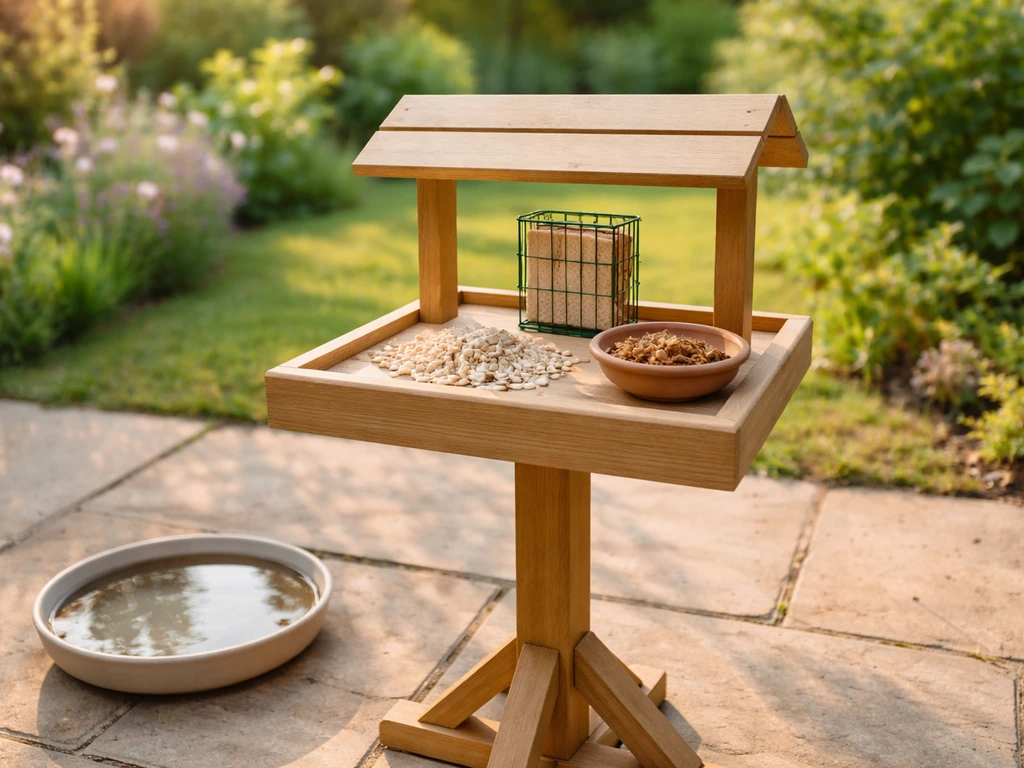
Aim for the feeding platform to sit about 4 to 6 feet (roughly 1.2 to 1.8 metres) off the ground. That range keeps the table above a cat's casual jumping height, gives most garden birds a comfortable approach angle, and still lets you reach it easily for cleaning and refilling. Most off-the-shelf UK bird tables land around 1.5 metres tall for exactly this reason. But that number is a starting point, not a fixed rule, because the right height shifts depending on which birds you want to attract, what predators are lurking, and how your garden is laid out.
How High Should a Bird Table Be? Practical Height Guide
Marcus Chen
9 Jun 2026
The best starting heights: ground-level vs raised tables
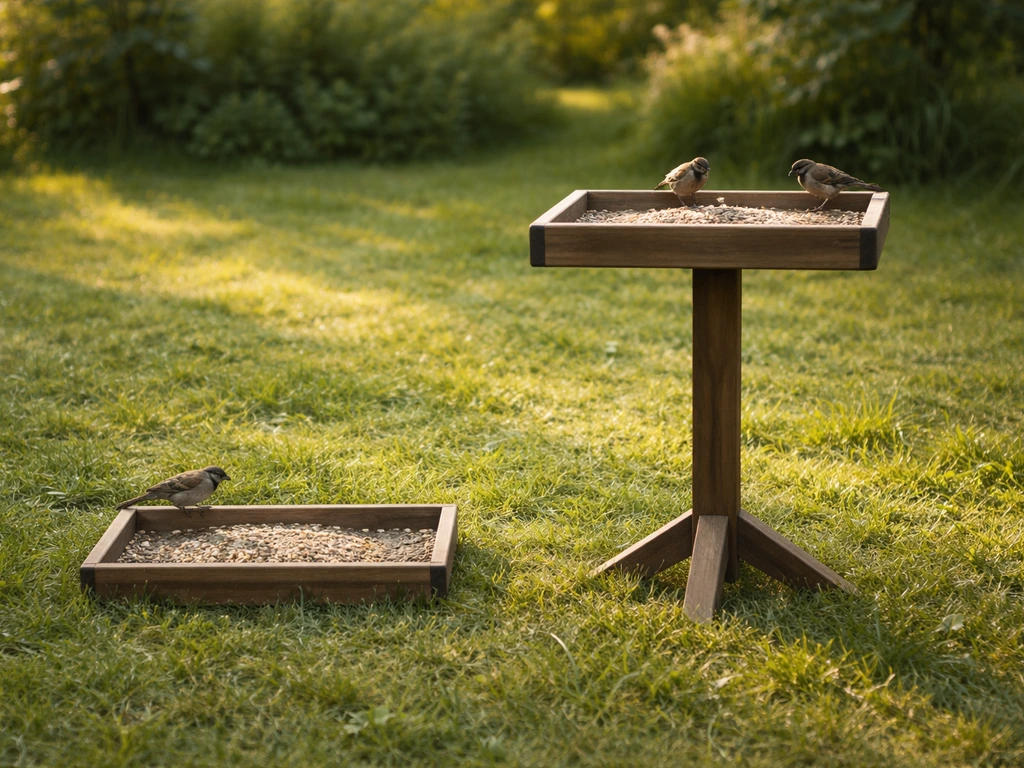
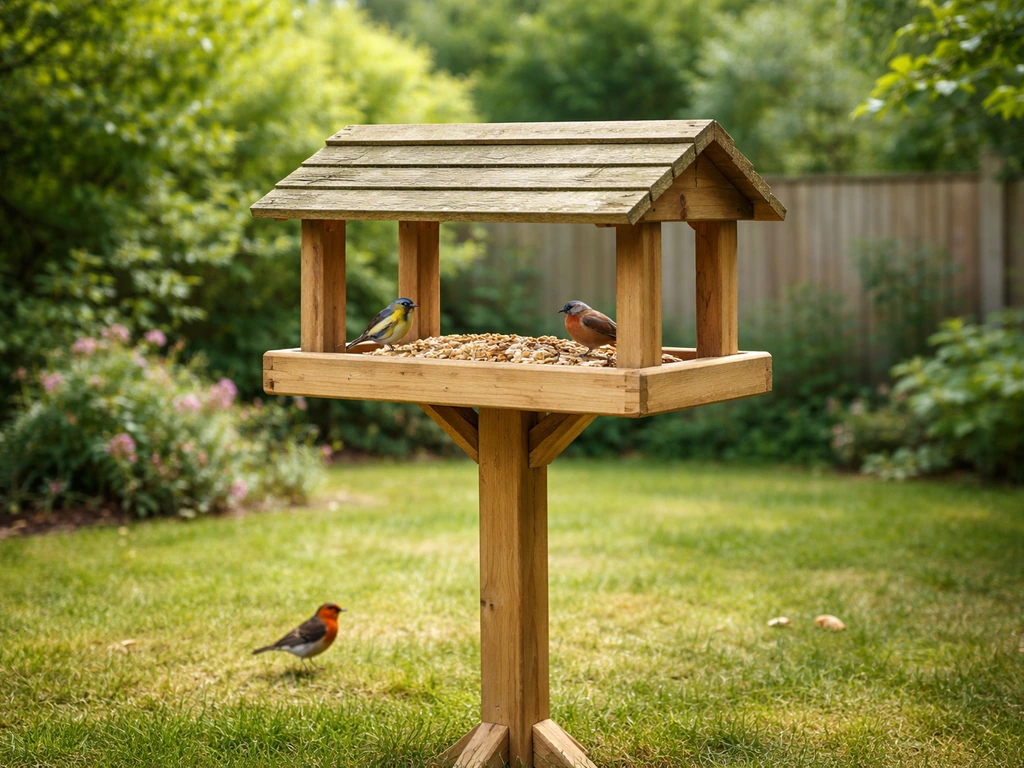
There are really two categories of bird table setup, and height means something different for each. A bird table is the general term for an outdoor feeding platform that lets birds perch and eat while staying safe from hazards in your garden. A raised post-mounted table (the classic garden bird table) should have its platform at blank" rel="noopener noreferrer">4 to 6 feet from the ground. This puts food out of easy reach for ground-level predators, reduces the chance of a cat getting a running jump at birds, and suits a wide range of common garden species like blue tits, sparrows, and finches.
A ground-level feeding station, which is just a flat tray or scattered food placed directly on the lawn or a low tray a few inches off the grass, serves a completely different set of birds. Larger species like blackbirds, robins, doves, and wood pigeons genuinely prefer feeding near the ground because that is where they naturally forage. Research from Project FeederWatch at Cornell confirms that species like sparrows and doves often skip elevated feeders entirely in favour of flat, low surfaces. So if your garden birds are mostly ground feeders, a raised table at 5 feet is not wrong, it just will not attract them. You may need both.
| Setup Type | Recommended Height | Best For |
|---|---|---|
| Post-mounted bird table | 4–6 ft (1.2–1.8 m) | Tits, sparrows, finches, small garden birds |
| Ground tray / low platform | 2–6 inches off the grass | Blackbirds, robins, doves, pigeons |
| Hanging feeder on a pole | 5–6 ft (1.5–1.8 m) to hook | Tits, goldfinches, nuthatches |
| Wall-mounted or bracket feeder | 5 ft (1.5 m) minimum | Small birds; height limits cat access from walls |
What actually changes the ideal height
Bird size and species preferences
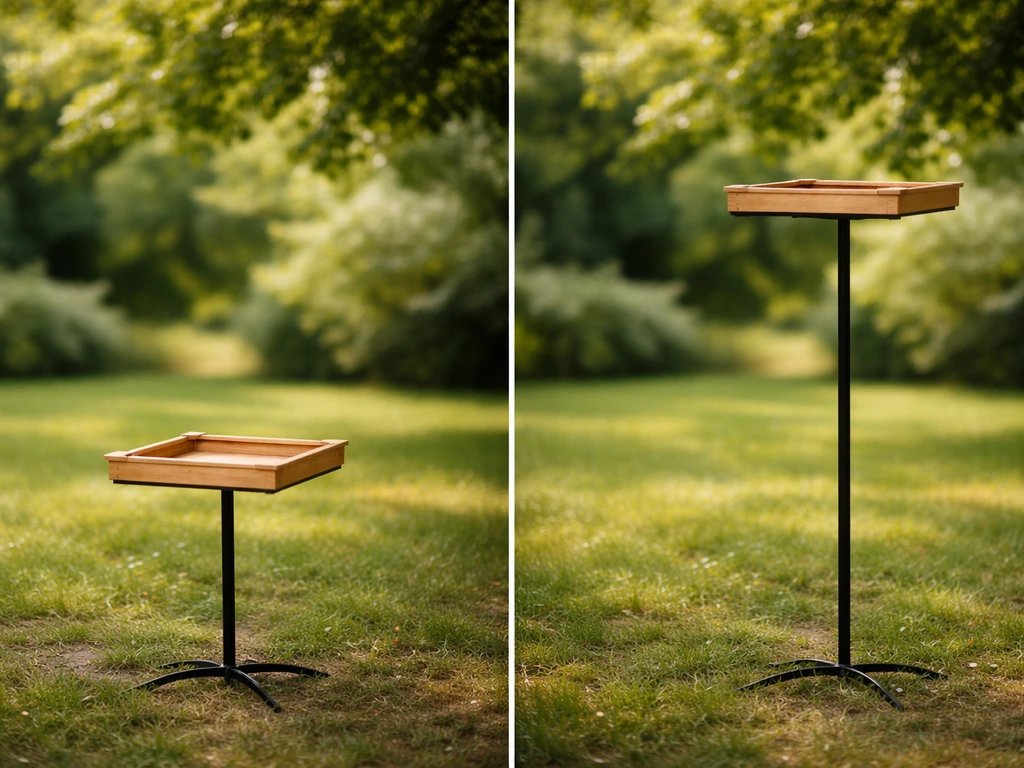
Larger birds tend to feel safer closer to the ground. Smaller birds, being quicker and more agile, are comfortable at greater heights and often prefer the elevated vantage point. Webbs Direct sums this up neatly: bigger birds trust their size and prefer ground-level feeding, while smaller species use height as a safety buffer. If you are setting up specifically for robins, for example, a lower platform (2 to 3 feet) can actually work better than the standard 5-foot height. Cardinals, finches, and jays all respond well to table-level feeding at a moderate elevation rather than very high placements.
The type of feeder or table you have
A flat open platform table sits at whatever height the post puts it. A hanging feeder suspended from an arm adds another 6 to 12 inches below the hook point. A seed tube or nyjer feeder needs to be high enough that birds can perch and feed without their tails dragging, but not so high it becomes inaccessible for refilling. Whatever the design, the practical rule is: the feeding surface itself should be in that 4 to 6 foot zone, not the top of the post or the hanging point.
Predator access in your specific garden
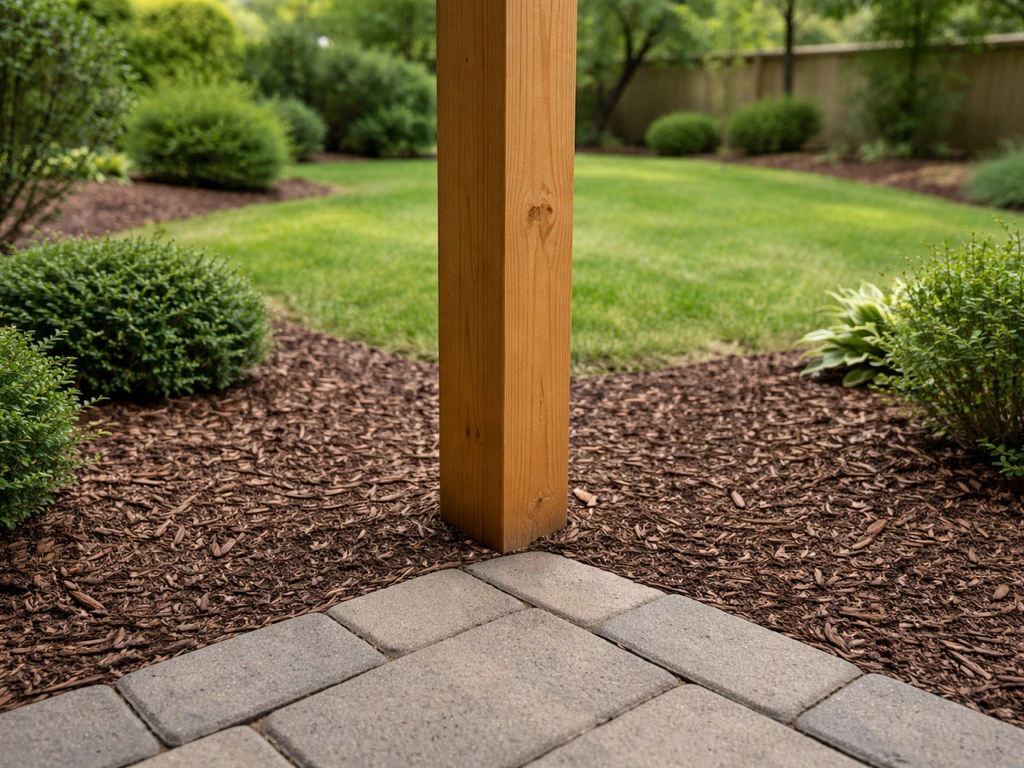
If you have cats in the neighbourhood, height becomes more critical. A fit domestic cat can jump 5 to 6 feet from a standing start, and even more from a raised surface like a fence, wall, or step. Placing a table close to those structures can effectively cancel out the height advantage entirely. Bird Barn specifically flags this: it is not just about how high the table is, it is about whether a nearby structure gives a cat a launching pad. In a cat-heavy garden, 6 feet on an open post away from walls and steps is far safer than 5 feet right next to a fence.
Safety and comfort: cats, weather, and landing space
Height alone does not make a bird table safe. The RSPB's guidance is clear that you need to think about the whole picture: avoid dense cover directly beneath or right beside the table, because that is exactly where a cat will crouch and wait. The UKPetFood best-practice guidelines recommend keeping the feeding station at least 2 metres from any vegetation or structure a cat could use as an ambush point. At the same time, birds need to feel they have an escape route. A small bush or tree about 2 metres from the table gives them a safe staging post to check for danger before dropping down to feed, and a quick bolt-hole if something spooks them.
One practical trick that works well is adding a predator guard to the post itself. An inverted metal cone or even a large upside-down biscuit tin secured around the pole makes it much harder for a cat to climb up. This is a cheap addition that can meaningfully reduce risk without you having to raise the table even higher.
Weather is the other comfort factor. A table that is fully exposed to wind and driving rain will see far less use than one with a roof and a sheltered aspect. The RSPB recommends a position that provides shelter from weather extremes while still giving birds a clear sightline so they can spot approaching predators. A table jammed into a corner of the garden, protected by a wall on two sides, sounds ideal for shelter but can become a trap if a cat uses that same corner.
Where to place it in the yard, not just how high
Height and location are inseparable, and this is where a lot of first-time setups go wrong. The two main concerns beyond predator access are window collision risk and proximity to cover.
Window strikes are a real problem. The research-backed rule of thumb is: place your table either closer than 3 feet (about 1 metre) to a window, or further than 30 feet (about 10 metres) away. The logic is counterintuitive. Very close to a window, birds cannot build up enough speed to injure themselves in a collision. At 30-plus feet, they can see the reflected sky in the glass and adjust. It is the middle distance, roughly 3 to 30 feet, where birds fly at full speed and get hurt. Environment and Climate Change Canada and Ornithology Education both cite this same threshold.
For cover proximity, a tree or dense shrub about 2 metres (6 feet) from the table is ideal. Close enough that birds can dart to safety in under a second, far enough that a predator cannot use it as a hiding spot within striking range. Tufts wildlife researchers note that birds need about 12 feet of clear space between a threat and safe cover, so you want that cover reachable but not so close it becomes a hazard.
- Place the table in a quiet part of the garden with a clear sightline in most directions
- Keep a shrub or tree about 2 metres away as a bolt-hole and staging perch
- Position at least 2 metres from walls, fences, or steps that could give cats a launching point
- Stay under 3 feet or over 30 feet from windows to reduce collision risk
- Face the table opening away from prevailing wind where possible
- Make sure you can reach it comfortably for weekly cleaning and refilling
Adjusting after you start feeding
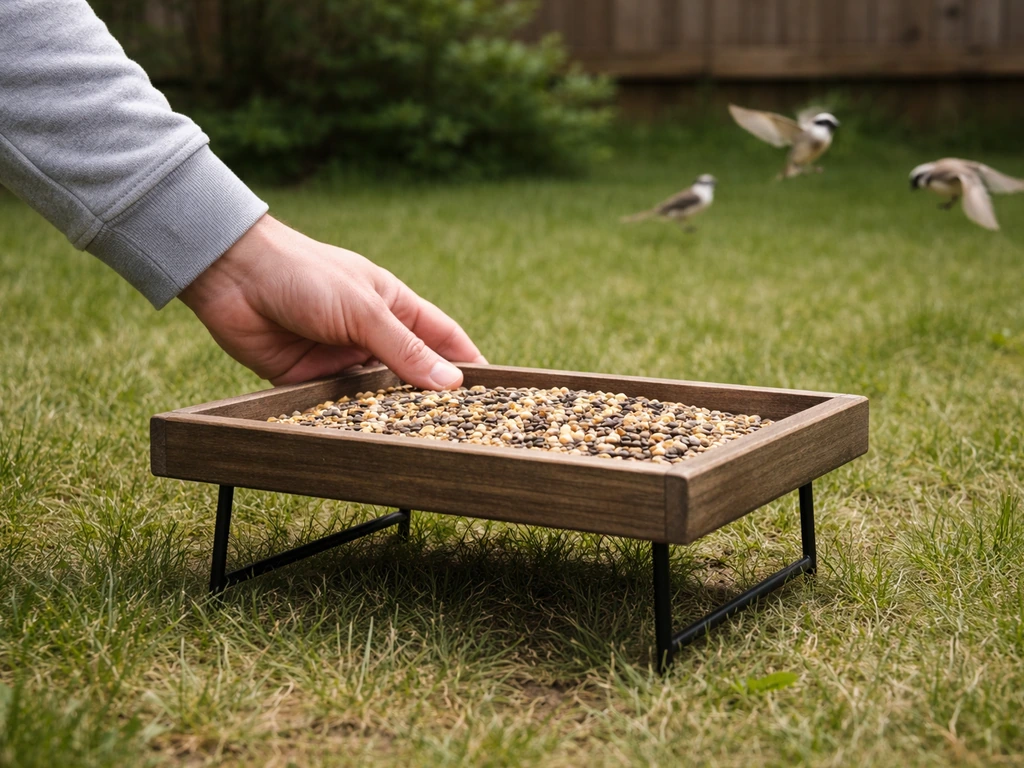
Here is what nobody tells you upfront: birds may ignore your table for the first two to four weeks. That is normal. They are cautious about new objects in familiar territory. Give it time before you start moving things around. But if after a month you are genuinely seeing zero interest, bird behaviour will tell you what to fix.
If birds come to the area but hover nervously without landing, they are likely uncomfortable with the exposure. Try moving the table slightly closer to a tree or shrub. If birds land but leave immediately without eating, something is spooking them at close range, often a reflective surface, a wind-triggered object nearby, or a cat that has been sitting near the base. If only large birds are using it and you want small birds, raise the platform or switch to a hanging feeder higher up. If you are trying to attract ground feeders like robins or blackbirds and they ignore the raised table, put a separate flat tray with mealworms or fruit directly on the lawn.
The key habit is to actually watch the table at different times of day for a week before making changes. Early morning (just after dawn) and late afternoon are peak feeding times. Watch where birds approach from, where they pause before landing, and what direction they flee when spooked. That information tells you far more than any rulebook about whether height and placement are working.
Common mistakes that come up over and over
Mounting it too high
Some people assume higher means safer and stick the table at 7 or 8 feet. That can deter even confident small birds and makes cleaning and refilling awkward enough that it gets neglected. A table that does not get cleaned regularly becomes a health risk for birds through mould and salmonella. Practical access matters.
Placing it right next to a wall or fence
This feels natural because walls and fences are where we tend to put garden furniture. But it negates much of the height benefit. A cat on a 4-foot fence can reach a 5-foot table platform with almost no effort. If the table has to go near a boundary, use a predator guard on the post and leave as much clear ground between the fence base and the post as possible.
Ignoring ground feeders entirely
First-time bird feeders often buy a raised table and wonder why robins and blackbirds are not using it. These birds feed naturally at ground level. A separate low tray or scattered food on the lawn a couple of metres from shrubby cover will serve them far better than any raised platform. Consider keeping a separate low tray for ground feeders if you are also weighing the best wood for bird table options for durability and easy placement.
No perching or landing clearance
A table crammed against a wall, or with feeders hanging so close together that birds cannot spread their wings to land, will get ignored. Birds need clear approach and exit lines. Make sure there is open space on at least two or three sides of the platform.
Putting it in the wrong spot and never revisiting it
Seasons change the equation. A spot with great summer shelter from a deciduous tree offers almost no cover in winter when the leaves have dropped. A position that worked well in spring might get too much direct summer sun and spoil food quickly. Revisit your placement every few months, especially if bird activity drops off. The best bird table design and the best wood choice matter less than getting the position and height right and staying flexible about both. If you want a quick shortlist, focus on the best bird tables UK shoppers rate for stability, easy cleaning, and predator safety. If you want the best heavy duty wooden bird tables, focus on sturdy construction and solid placement so it stays safe and easy to maintain.
FAQ
What if I want more small birds, should I raise the table above 6 feet?
If the feeding surface is already within the 4 to 6 foot zone, don’t keep raising the post. Instead, adjust location (clear approach space on multiple sides, keep away from ambush cover) and consider adding a lower tray nearby for ground feeders. Going too high can reduce visits from small birds and makes refilling less consistent.
How do I measure “table height” correctly for different bird table styles?
For a post-mounted table, measure the height to the platform where birds stand and feed, not the top of the post. For hanging feeders, measure to the perch or seed outlet plus the distance birds will stand below it. If birds’ tails are likely to drag or they struggle to perch comfortably, the effective feeding height is too high even if the post height sounds right.
Can I use one height to attract all birds, or do I need different heights?
A quiet but important exception is for robins and similar ground-focused birds, where a lower setup (about 2 to 3 feet) can work better than the standard raised height. If you’re unsure, use both: keep the main raised table in the 4 to 6 foot zone and add a separate low tray on the lawn at the same time.
Is 6 feet enough if my table is near a shed, fence, or wall?
Yes. If you place the raised table too close to a fence, wall, or step, a cat can still reach it using the launch point. Aim for height benefits without nearby jumping surfaces, keep clear ground around the base, and use a predator guard on the pole if the table must be near a boundary.
My birds won’t land, they hover nervously. Does that mean the table is too high?
If birds hover but do not land, the issue is often exposure (too open), a reflective surface, or a nearby trigger that spooks them (moving objects in wind). Try shifting the table slightly toward a nearby shrub or tree for cover and a more protected feel, then rewatch at peak times before making bigger changes.
What should I do if birds land briefly but won’t eat?
If birds land and then leave without eating, treat it as a close-range safety problem rather than a height problem. Check for cats at the base, reflections from shiny feeders or glass, and blocked escape routes (for example, dense cover that is too close on one side or no clear landing space).
Is it better to put the table in a corner for shelter, or does that increase risk?
If you place it in a corner for shelter, you might unintentionally create a “trap” if cats patrol and crouch there. For safety and for better bird access, keep open approach and exit lines on at least two or three sides, and avoid dense vegetation directly beside or underneath.
How long should I wait before changing the height or moving the bird table?
Start with the standard guidance, then fine-tune after observing. Birds often ignore new feeders for 2 to 4 weeks, so don’t change height immediately. If you see no interest after about a month, adjust systematically (first location, then effective feeding height, then consider offering a separate low tray).
What’s the best approach to window collision risk if I can’t place the table far from windows?
Use the window-distance rule based on where birds fly in and out: place the table very close (under 3 feet) or far away (over 30 feet), avoid the middle range (about 3 to 30 feet). Also check for nearby glass panels, not just the main window you look at from the patio.
How do I balance bird escape cover and avoiding cat ambush spots when space is limited?
Yes, because “effective safety” includes how cats and birds use cover. Keep feeding stations roughly around 2 metres from vegetation or structures that cats could ambush from, while also leaving an escape staging spot for birds around that distance. If you’re tight on space, favor open approach lines over dense cover right by the table.
Does height affect bird health through cleaning and maintenance?
Cleaning height affects whether you actually maintain the table. If raising it makes refilling and scrubbing inconsistent, you’ll likely end up with mould or dirty seed buildup that reduces use and can harm birds. Choose a height that you can reach comfortably and plan a routine, not just a predator-proof number.
What if only big birds use the feeder and the small ones ignore it?
If only larger birds are using the feeder and smaller species are absent, the height is a common factor. Try raising less aggressively or switch part of your setup to a hanging feeder positioned to create an easier perch level, and consider adding smaller-bird-friendly food options on the appropriate style of station.
I have robins and blackbirds, but they ignore my raised table. Should I lower the whole setup?
If you want ground feeders and you already have a raised table, add a separate low tray or scattered food directly on the lawn, placed a couple of metres from shrubby cover. Don’t remove the raised table immediately, because different species often use different stations even in the same garden.
Can having multiple feeders on one table make the height guidance irrelevant?
Avoid stacking multiple feeders so close together that birds cannot spread their wings to land and perch safely. Also make sure there is room for birds to approach and depart from different angles, not just one tight route. If space is cramped, birds may choose not to use the station at all.
Should I revisit table height seasonally, or only once per year?
Yes. Weather changes what birds tolerate, especially wind exposure and rain splash, and it can also change cat activity patterns in cover. Recheck placement every few months, especially after foliage changes, and keep the feeding platform within the 4 to 6 foot zone unless you are deliberately targeting a ground-feeding species.
Next Article
What to Put on a Bird Table: Beginner Food Guide
Beginner guide to what to put on a bird table, what to avoid, safe setups, and water plus seasonal feeding tips.