The best heavy duty wooden bird tables are solid, stable, generously sized, built from untreated or bird-safe finished hardwood, and easy to wipe down without leaving chemical residue behind. That combination of weight, wood quality, and cleanability is what separates a table your bird will safely use every day from one that wobbles, splinters, or quietly poisons your bird through off-gassing finishes or harsh cleaning sprays.
Best Heavy Duty Wooden Bird Tables: Buyer Guide
Marcus Chen
5 Jun 2026
What a heavy duty wooden bird table actually needs to do
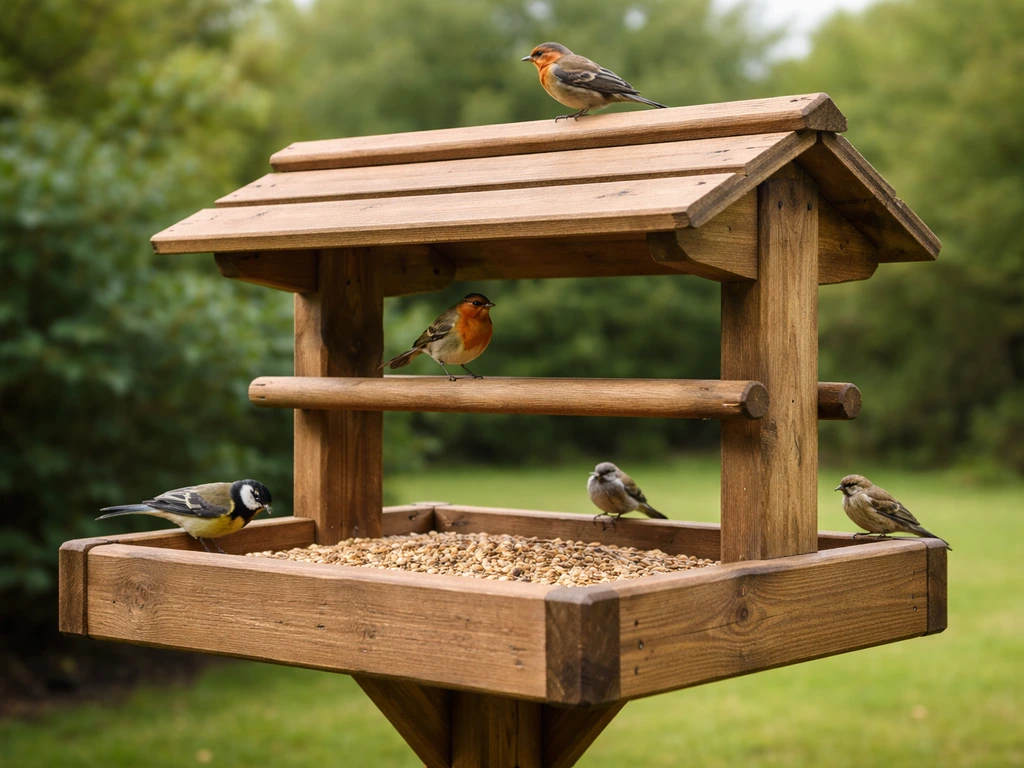
When people say they want a heavy duty bird table, they usually mean one of three things: it shouldn't tip over when a large parrot lands hard, it should survive daily cleaning without warping or rotting, and it should hold multiple perches, bowls, and toys without the surface feeling crowded. Let's be concrete about each of those.
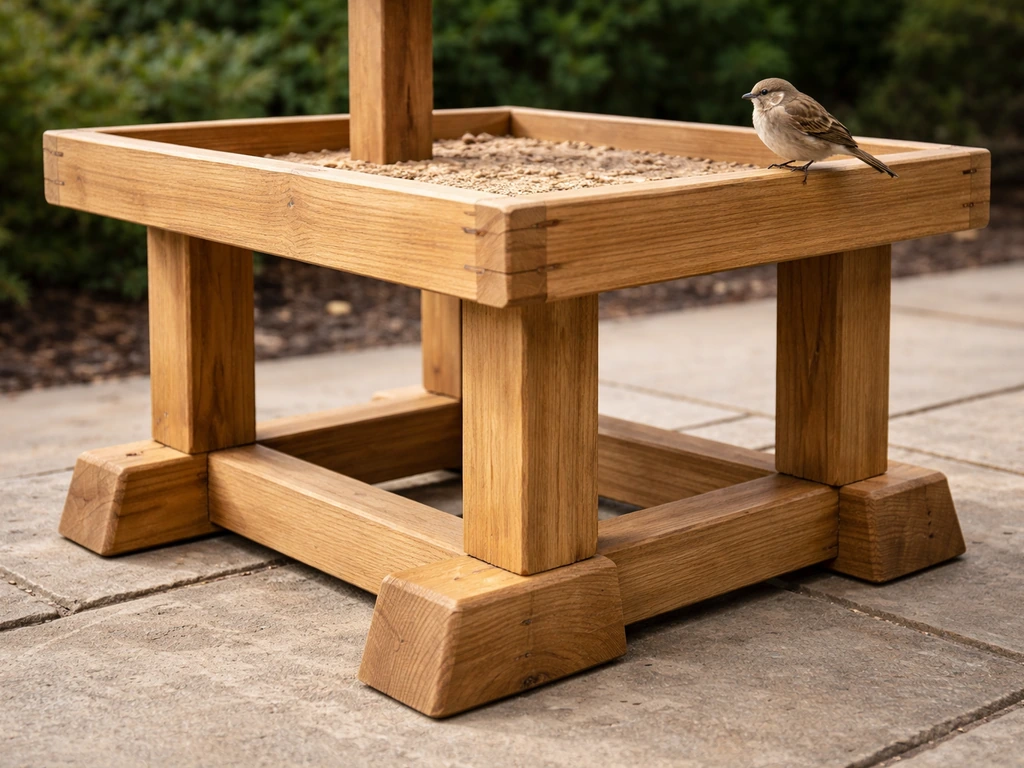
Stability is the most critical spec, and it's the one most commonly underestimated. A tabletop play stand for a large macaw or cockatoo needs a wide, weighted base and thick legs, ideally with a crossbar or lower shelf that adds lateral rigidity. If the table rocks even slightly when you push it, a bird the size of a large parrot will rock it much more dramatically. For smaller birds like cockatiels or conures, a lighter stand is fine, but the base-to-height ratio still matters. As a rough guide: the base footprint should be at least half the height of the stand.
Weight capacity rarely gets listed clearly by sellers, which is frustrating. A solid hardwood tabletop stand that weighs around 4 lbs (like many A&E Cage Company models) is typically built for small to medium parrots. For large macaws or multiple birds using the surface simultaneously, you want something heavier and braced, not a lightweight flat-pack version. Surface area matters too, a 17x17 inch tabletop is reasonable for a single medium parrot, while a 20x15 inch surface starts giving you room for a second perch or a bowl alongside a play area.
Safety in design means no sharp hardware, no exposed screws that a beak can work loose, no gaps that a toe or wing tip can get caught in, and no finish that flakes or chips into the food zone. If you're buying a heavy duty wooden bird table, you're trusting it with an animal that chews everything. That's the filter every spec has to pass.
Wood choices and durability: what holds up and what doesn't
Solid hardwood is almost always better than composite or MDF for a bird table that's going to get wet, chewed, and scrubbed regularly. Hardwoods like maple, oak, and birch resist moisture better than softwoods, don't splinter as readily when a parrot works at an edge, and hold their structural integrity through repeated cleaning. Pine is common and acceptable for perches and trim, but it's softer and will show wear faster as a tabletop surface.
MDF and particle board are the ones to avoid entirely in a bird table context. They swell and delaminate when wet, they contain adhesives and resins that can off-gas, and they simply can't survive the cleaning schedule a bird surface demands. Even if the price looks tempting, you'll replace it within a year.
The finish question is where most people get tripped up. Many wooden bird tables are sold with a varnish, lacquer, or stain that looks attractive but isn't bird-safe. The rule here is simple: if the product listing doesn't explicitly state the finish is non-toxic and bird-safe, assume it isn't. Look for tables described as unfinished or finished with food-grade oils (like pure linseed or hempseed oil) or water-based, VOC-free sealers. If you're buying unfinished and treating it yourself, do so well before the bird uses it and allow full off-gassing time in a ventilated space away from your birds. Birds have respiratory systems so sensitive that fumes from paints, varnishes, and even some wood treatments can cause serious harm.
Solid wood vs composite: quick comparison
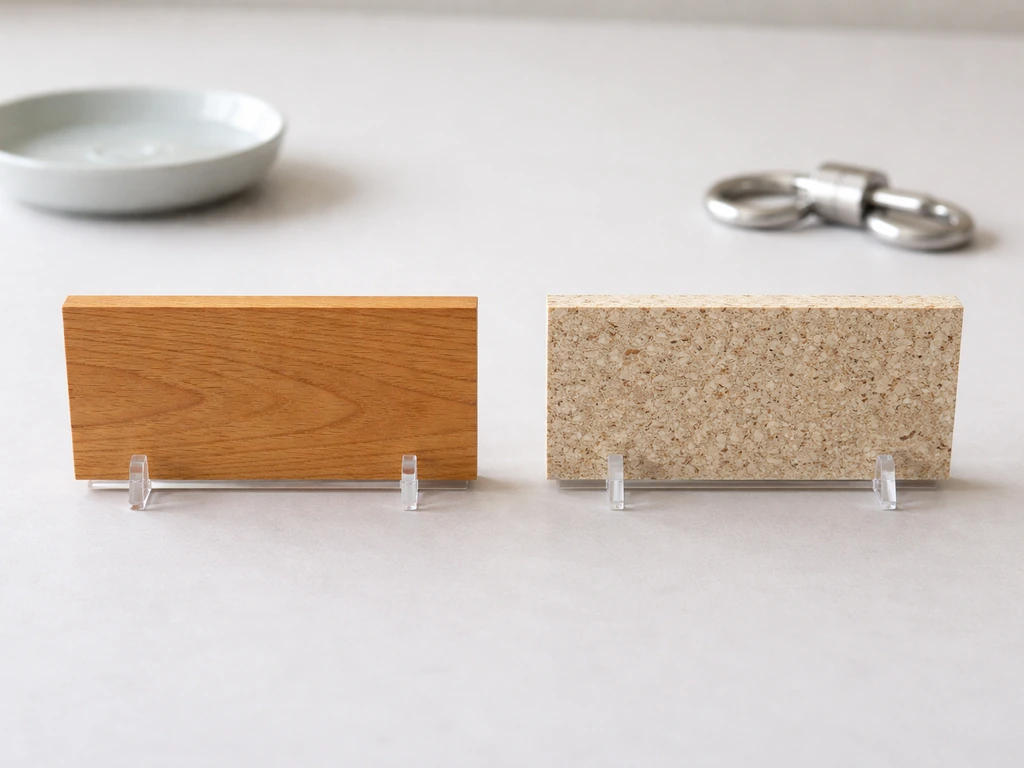
| Material | Durability | Moisture Resistance | Chew Safety | Cleanability | Bird-Safe Finish Options |
|---|---|---|---|---|---|
| Solid hardwood (maple, oak, birch) | Excellent | Good with proper sealing | Good (dense grain) | Excellent | Yes — unfinished or food-grade oils |
| Solid softwood (pine, fir) | Moderate | Moderate | Fair (softer, splinters more) | Good | Yes — if unfinished or sealed correctly |
| Plywood (good grade) | Good | Moderate | Fair | Good | Possible with bird-safe sealer |
| MDF / particle board | Poor | Very poor (swells) | Poor (crumbles, glues) | Poor | Not recommended |
Design features worth paying attention to
Size is the first design decision and it flows directly from your bird's size and wingspan. A small bird like a budgie or cockatiel doesn't need a lot of horizontal surface, but a large parrot needs room to turn around, spread a wing slightly, and still have space for a food bowl without being crowded. A 17x17 inch surface is a practical starting point for medium parrots (African greys, Amazons, smaller cockatoos); go larger for macaws or multi-bird setups.
The height of the surface matters a lot for daily interaction. A table that puts the bird at roughly chest height for you is the easiest for training, feeding, and interaction without either of you straining. If you're curious about the specifics on surface height and its effect on bird behavior and safety, that's a topic worth reading about separately.
Leg construction is what separates genuinely heavy duty stands from lightweight ones. Four thick, widely spaced legs with floor pads are stabler than three thin ones. Crossbars between the legs add significant rigidity and often provide a natural lower perch or toy hanging point. For tables on hard flooring, rubberized feet are essential to prevent sliding when a bird lands enthusiastically.
Edge protection is a detail worth examining closely on any wooden bird table. Squared-off sharp edges can cause injury if a bird lands awkwardly or is startled into a wing-flap. Rounded or slightly chamfered edges are significantly safer. For the same reason, any drilled holes (for perch dowels or cup holders) should be cleanly finished with no rough interior edges.
- Minimum surface: 17x17 inches for medium parrots, larger for macaws or multi-bird setups
- Four legs preferred over three; look for crossbar bracing
- Rubberized or non-slip feet on all legs
- Rounded or chamfered edges on the tabletop perimeter
- Stainless steel or BPA-free plastic cup holders (not painted metal)
- Removable trays or surfaces for easier cleaning
- No loose screws, staples, or hardware accessible to beaks
Cleaning, sanitation, and keeping the wood in good shape
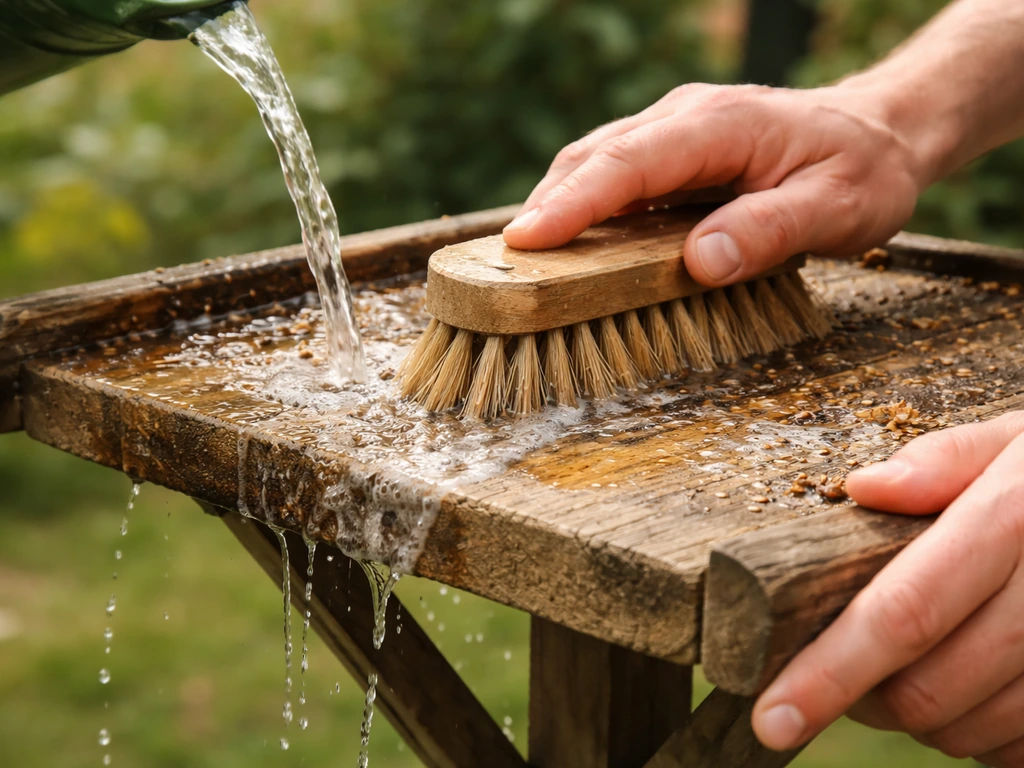
This is the section most people skip when buying and then regret later. Birds are messy. A wooden bird table will accumulate droppings, food debris, and moisture every single day, and if you don't have a safe, consistent cleaning approach from the start, you'll end up with a warped, smelly surface that becomes a bacterial hazard.
For daily cleaning, plain warm water and a stiff scrubbing brush is genuinely the right call. The RSPCA recommends exactly this for everyday maintenance, water and a brush, and it's advice that protects both the wood and your bird. No aerosols, no sprays, no strongly scented products. Birds' respiratory tracts are acutely sensitive to airborne chemicals, and even a quick spray of a household disinfectant in the same room can cause respiratory irritation or worse. PetMD also specifically addresses aerosol and fumes poisoning in birds, warning that airborne sprays can irritate and poison birds blank" rel="noopener noreferrer">household disinfectant in the same room.
For weekly deep cleaning, use a dedicated bird-safe disinfectant. F10SC is widely used in veterinary settings precisely because it's broad-spectrum, chlorine-free, and aldehyde-free with low toxicity at working dilutions. Whatever product you use, follow the dilution instructions exactly, pre-clean the surface first (disinfectants don't work well on soiled surfaces), and rinse thoroughly afterward to remove all residue before the bird returns. Always move your bird out of the room entirely while cleaning and disinfecting, don't rely on just cracking a window.
Avoid bleach, ammonia-based cleaners, and anything labeled as an aerosol near your bird's environment. Bleach and ammonia fumes are specifically flagged as high-risk by avian health resources, especially in poorly ventilated spaces. The same goes for scented cleaning wipes, which often contain chemical fragrances that are just as problematic.
To protect the wood itself, don't let the surface stay wet after cleaning. Wipe it down, allow it to air dry fully, and consider a light annual application of a food-grade oil on unfinished surfaces to maintain some moisture resistance. Avoid silicone-based wood conditioners and anything with added fragrances.
Where to put the table, and how to use it for enrichment
Placement isn't just about convenience, it's a safety issue. The kitchen is the single worst place to put a wooden bird table, even though it's tempting because that's where you're preparing food. Kitchen fumes (from cooking, nonstick cookware, cleaning products, and even scented candles) spread quickly and can reach concentrations that harm birds before you notice anything wrong. The CDC specifically advises against housing birds in areas where food and drinks are prepared, served, or stored, and the RSPCA makes the same point directly.
The best placement for a wooden bird table is a well-ventilated room away from the kitchen, away from exterior doors that create cold drafts, and away from air conditioning or heating vents that direct forced air directly at the table. Natural light is a bonus, but avoid positioning the table where the bird gets direct midday sun with no shade option. A living room or dedicated bird room with good air circulation and no aerosol products nearby is the ideal setup.
For enrichment, a solid wooden bird table becomes genuinely useful when you treat it as a base for rotating activities rather than a fixed setup. Hang different toys from perch dowels on different days, use the surface for supervised foraging (scattering pellets or chopped veg across the surface), and use tabletop time as a training session anchor. The stable surface of a good heavy duty table makes target training and step-up practice much easier than doing it on a perch.
If you're setting up multiple perch zones, the old guideline of about 10 inches of perch space per bird is a useful reference point for whether a given tabletop gives you enough room. For a single bird, most properly sized tables provide this easily; for two birds using the same surface, check the total perch length available before buying.
How to choose the right table for your bird: a quick checklist
If you're standing at the buying decision right now, run through this before you click purchase. This is the 'good enough' filter that eliminates the obvious mistakes without requiring hours of research. If you are still deciding on what to put on a bird table, use a simple, bird-safe rotation that matches your bird’s size and chewing habits heavy duty bird table. If you’re still unsure what to look for, this guide to what is a bird table will help you understand how they work and why stability and safety matter.
- Is the wood identified? Look for a named hardwood (maple, birch, oak). Reject listings that just say 'wood' or 'natural wood' with no species.
- Is the finish explicitly described as bird-safe or non-toxic? If not, contact the seller before buying.
- Does the surface size fit your bird? 17x17 inches minimum for medium parrots, larger for macaws.
- Does it have four legs with crossbar bracing, or a demonstrably stable base design?
- Are the feet rubberized or non-slip?
- Are the edges rounded or chamfered, with no exposed sharp hardware?
- Is there a removable tray or easily cleaned surface?
- Are cup holders stainless steel or BPA-free? Avoid painted metal cups.
- Can it be placed in a room away from the kitchen and away from aerosol-prone areas?
Small birds (budgies, lovebirds, parrotlets) can work with compact tabletop stands, but even for them, stability matters more than size. Medium birds (cockatiels, conures, caiques) need the mid-range surface dimensions. Large birds (African greys, Amazons, cockatoos, macaws) need heavy construction, wide bases, and generous surface area, don't try to economize on size for a large parrot. The best wood for a bird table and the right design are topics worth digging into separately if you're still weighing options. The best wood for bird table choices typically come down to solid hardwoods that resist moisture and wear best wood for a bird table. If you want a shortcut, the best bird table design choices come down to stable construction, bird-safe materials, and the right cleaning setup for your setup.
Mistakes people make when buying wooden bird furniture
I see these errors come up repeatedly, and most of them are totally avoidable with five minutes of extra scrutiny before buying.
- Buying on aesthetics, not specs. A beautiful rustic-looking table with an unknown stain finish is a potential health hazard. Always prioritize material transparency over looks.
- Underestimating how much space a bird actually uses. A medium parrot doing a full wing stretch needs more horizontal clearance than people expect. Size up when in doubt.
- Ignoring the base design. A tall, narrow table with thin legs is unstable regardless of how heavy the top is. Check the base footprint before anything else.
- Cleaning with whatever's under the sink. Aerosol sprays, bleach, ammonia, scented multipurpose cleaners — all of these are dangerous around birds. Set up a dedicated bird-safe cleaning kit before the table arrives.
- Putting the table in the kitchen or near the stove. Convenience is not worth the respiratory risk. Choose placement based on air quality first.
- Skipping the pre-use off-gassing period. Any new wooden table with a finish needs time in a ventilated space before your bird uses it. Don't skip this step even if the seller says it's bird-safe.
- Buying something with painted metal hardware or cup holders. Paint chips are ingested. Stick to stainless steel or food-grade plastics for all food contact surfaces.
- Assuming 'natural wood' means safe. Pressure-treated lumber uses preservatives that are toxic to birds. Always confirm the wood source and treatment history for any unfinished option.
The good news is that a genuinely great heavy duty wooden bird table is a long-term investment. If you're specifically looking for the best bird table for robins, focus on sturdy perching space and safe materials that hold up outdoors and in regular cleaning. Get the material, finish, and dimensions right once, maintain it properly with bird-safe cleaning practices, and it'll serve your bird safely for years. If you’re comparing products, a guide to the best bird tables UK options can help you pick a size, wood type, and finish that match your bird’s needs. The mistakes above are mostly first-purchase errors, once you know what to look for, the decision gets a lot easier.
FAQ
How can I tell if a wooden bird table’s finish is truly bird-safe before my bird uses it?
Look for explicit wording like non-toxic or food-safe, and avoid listings that only say “natural,” “pet-friendly,” or “aquarium safe” without naming the finish type. If it’s unclear, assume it can off-gas, treat it as unfinished, and ventilate it for a full week in a separate room before introducing the bird, then recheck for any stickiness or odor with the bird present for only a short test session.
Is “untreated” wood always safe, especially if the table still smells like chemicals?
Not necessarily. Untreated can still include stain from manufacturing, oils used for handling, or residues from glue and coatings. If you notice a strong odor or any tackiness, wash with warm water and a brush, dry completely, then extend ventilation time. Do not place the bird on it until odor has faded and the surface is dry and non-tacky.
Can I use bleach or peroxide to handle heavy droppings buildup on wood?
It’s better to avoid bleach entirely, especially around birds, because fumes and residue risks are high. For deep cleaning, pre-scrub with warm water, then use a bird-safe disinfectant at the exact dilution, rinse thoroughly, and dry fully. If staining remains after safe disinfection, spot-clean the stain gently rather than repeating harsh chemicals.
What should I do if my wooden table starts to warp or swell after cleaning?
First, stop using the table until it’s fully dry and stable, then reassess your cleaning method. Most warping comes from leaving the surface wet, using too much water, or skipping thorough drying. Switch to minimal water scrubbing, wipe dry, and air-dry with good airflow. If warping affects stability or leaves gaps where toes can catch, replace the table rather than trying to force it flat.
How do I remove stubborn residue without using sprays or aerosols?
Use warm water plus a dedicated stiff brush, then repeat with fresh water until no residue transfers to a white cloth when rubbed lightly. For sticky spots, gently scrub with warm water and a small amount of mild, fragrance-free dish soap on the cloth, then rinse repeatedly. Rinse is critical, because soap residue can irritate birds even if it’s “pet-safe.”
Is it safe to disinfect the table while the bird is in the same room if I crack a window?
No. Ventilation helps, but it does not eliminate airborne risk from disinfectant fumes and aerosol mist. Move the bird to a different room entirely, clean in a way that avoids splashing, keep the bird out until the surface is rinsed, dry, and there is no chemical smell.
How can I check stability at home before letting a large bird use it?
Do a controlled test: push the table gently in different directions, then do a stronger “landing simulation” by applying downward pressure where a bird would land (with the table empty). If it wobbles, rocks, or shifts even slightly, reconsider the base footprint, leg spacing, and whether it has a bracing shelf or crossbar. Also confirm rubber feet are intact and not worn smooth.
What edge and hardware details are most likely to cause injury or chewing problems?
Avoid squared, sharp edges and any exposed screw ends a beak could loosen. Check that holes for perch dowels are smooth and sealed without rough interiors, and confirm that any cup holders or attachments are firmly fixed so they cannot be levered out. If the table has removable parts, verify they cannot be dislodged when a bird climbs or chews.
Can I put the table outdoors, or do “heavy duty” wooden tables still degrade?
Some can handle outdoor use if they are properly sealed and protected from prolonged rain and standing moisture, but “heavy duty” alone is not a guarantee. Outdoor placement usually means faster wear, repeated drying, and more cleaning needs, plus higher risk of mold if the surface stays damp. If you plan outdoor use, choose designs that dry quickly, keep it under shelter, and do a monthly inspection for soft spots or swelling.
What’s a practical way to plan perch and toy space for multiple birds on one table?
Instead of only counting tabletop area, estimate usable perch length and keep clear zones for bowls and foraging so items do not crowd. As a practical check, ensure each bird can access at least one perch surface without climbing over another bird’s feet. If you add multiple toys, hang them from different dowels or locations so one bird cannot monopolize the only safe stepping points.
How often should I re-oil or re-finish an unfinished wooden table?
Only after the surface has dried fully and you’re sure it’s safe for birds, and generally on a schedule based on dryness and wear rather than the calendar. Many keepers use a light application of food-grade oil for maintenance, but avoid “over-conditioning” that leaves any slick residue the bird can contact. After any re-oiling, ventilate and wait until the surface is dry, odor-free, and non-tacky before returning the bird.
Are silicone products safe to use on a wood bird table for protection?
It’s best to avoid silicone-based conditioners and anything with added fragrances. Even if they protect against moisture, residue can create a slick surface, attract chewing, and complicate future cleaning. Stick to bird-safe, food-grade oils for unfinished wood, and otherwise maintain with proper drying and bird-safe disinfectants.