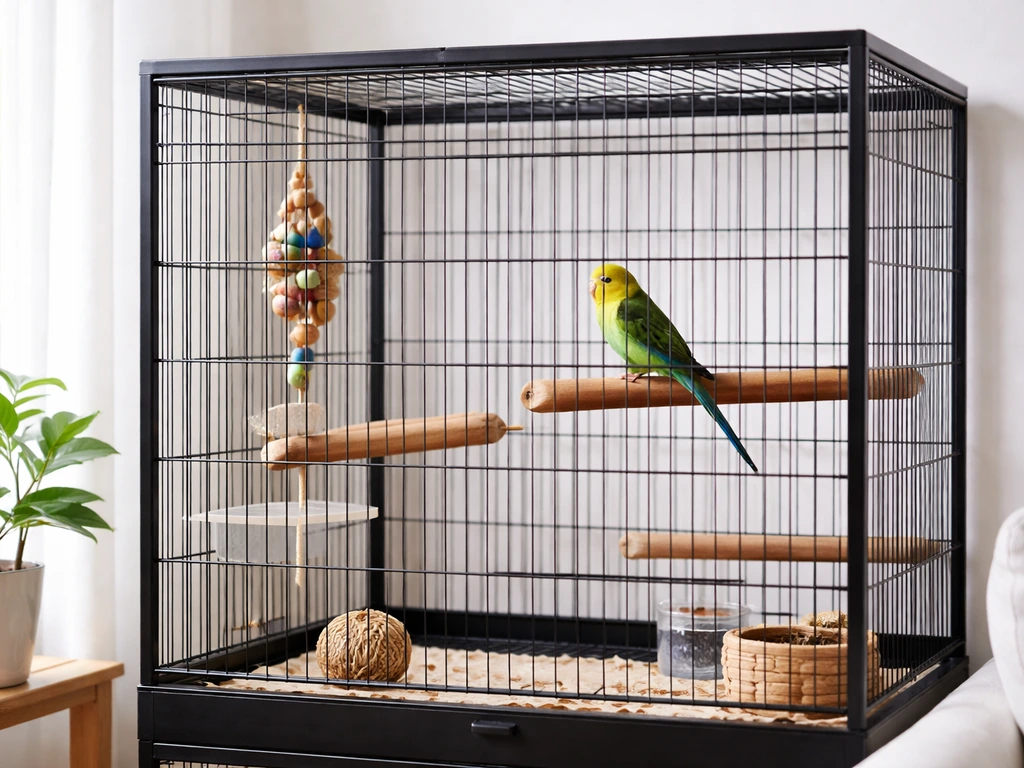
The minimum cage size depends entirely on your bird's species, but here's a practical starting point: a budgie or parakeet needs at least 18" W × 18" D × 18" H, a cockatiel needs at least 24" L × 24" W × 30" H, a pair of finches needs at least 24" L × 14" W × 18" H, and a small conure needs something closer to 36" × 24" × 48". Those are floor-level minimums, not ideals, and the cage dimensions are only half the equation. Bar spacing, usable interior space, perch placement, and daily out-of-cage time all determine whether your bird actually has enough room to thrive.
How Much Space Does a Bird Need? Cage and Playtime Guide

Marcus Chen
18 Jun 2026
Why "minimum" doesn't mean what you think it means
The word "minimum" in cage sizing gets misread constantly. First-time owners see a number, buy the cage that hits it, and assume the job is done. What minimum actually means is: this is the smallest space where the bird can survive without the enclosure itself causing harm. It doesn't mean the bird is comfortable, stimulated, or getting adequate exercise. Think of it like the legal minimum wage, it's the floor you cannot go below, not a target to aim for.
The Merck Veterinary Manual pairs minimum cage dimensions with maximum bar spacing because both matter for safety. A cage can be technically large enough in volume while still being dangerous if the bars are spaced too far apart, allowing a bird to push its head through and get trapped. That's not a rare freak accident. It's one of the more common cage-related injuries vets see. So when you're sizing a habitat, you're really checking two things simultaneously: does the interior give the bird room to move, and do the bars prevent escape and entrapment?
Floor space, bar spacing, and usable space: how to read a cage
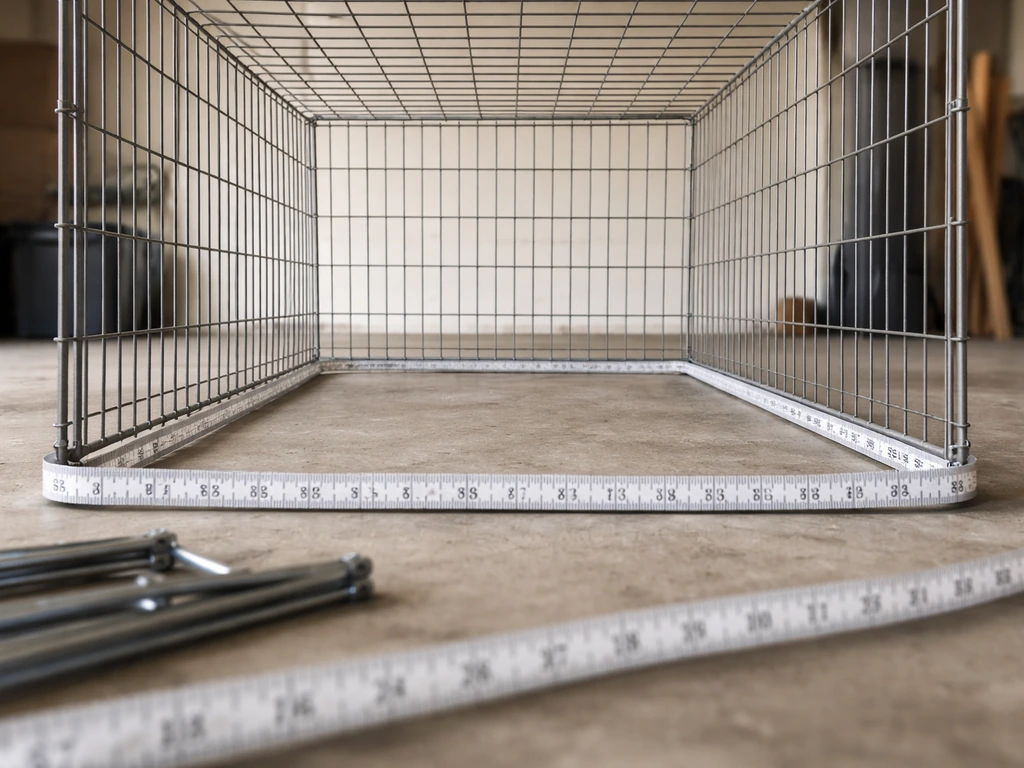
When you look at a cage listing online, the dimensions shown are almost always exterior measurements. The actual interior footprint is smaller once you account for the frame and feeder doors. More importantly, not all interior space is usable. A tall, narrow tower cage might advertise impressive height but offer almost no horizontal flight room, which is the direction most small birds actually move. Width and depth matter more than height for most species.
Here's how to actually evaluate a cage before buying it. First, check the interior width and depth, not the total outer dimensions. Then calculate how much of that floor space will be taken up by perches, food dishes, and toys. A 24-inch wide cage with two perches installed end-to-end and food cups on both sides can leave almost no clearance for wing stretching. The RSPCA recommends that a cage's width and depth should be at least 1.5 times the bird's wingspan for birds that get regular out-of-cage flight time. For birds without regular flight access, the bar needs to be higher.
Bar spacing is non-negotiable. Here's the breakdown by species group, pulled from clinical veterinary guidance:
| Bird Type | Max Bar Spacing | Why It Matters |
|---|---|---|
| Finches | ⅜ inch or smaller | Tiny heads and legs can slip through wider gaps |
| Budgies / Parakeets | ½ inch or smaller | Standard for most small hookbills |
| Cockatiels / Lovebirds / Parrotlets | ½ inch or smaller | Head-through risk with wider spacing |
| Conures / Caiques / Poicephalus | ¾ inch or smaller | Larger birds need wider spacing but still have limits |
One common beginner mistake: trusting the bar spacing listed in a product description without verifying it yourself. A Reddit thread on budgie cages documented exactly this problem, where the listed spacing differed from what was actually on the cage. Before you put a bird in, grab a ruler and physically measure a few bar gaps. It takes 30 seconds and can prevent a serious injury.
Space needs by species
Different birds have genuinely different movement styles. Finches are horizontal fliers and need length more than height. Parakeets climb, forage, and fly short bursts. Cockatiels are larger and more active. Conures are curious, physical, and need room to really move around. Here are species-specific targets that reflect both clinical minimums and practical reality.
Budgies and parakeets
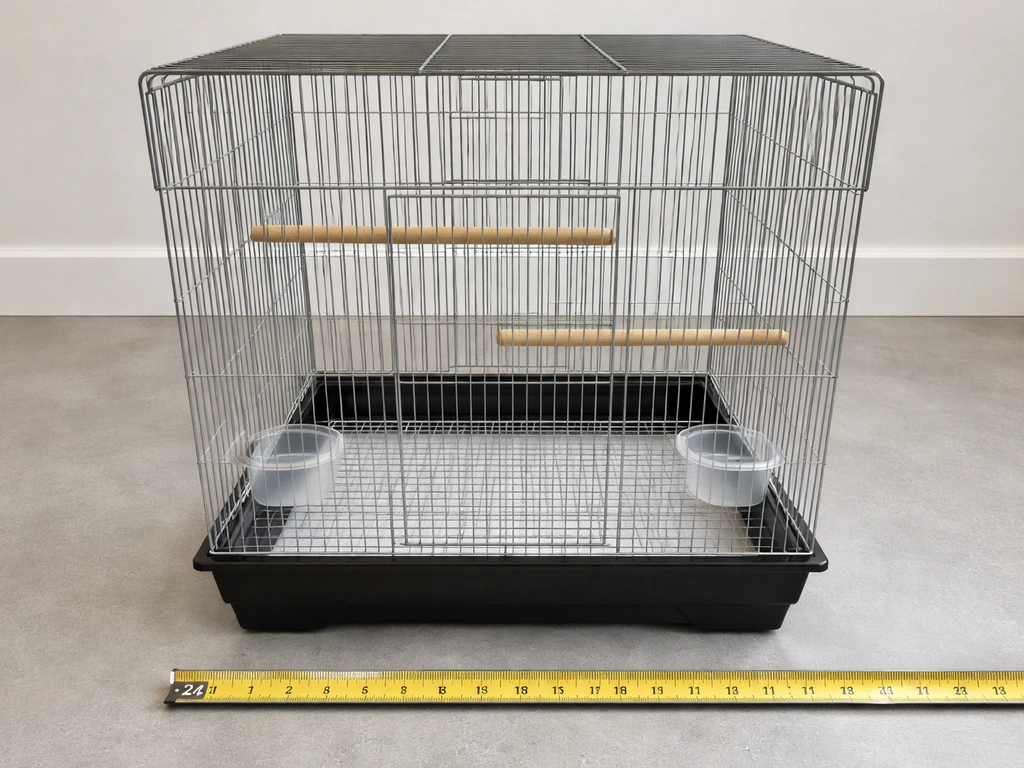
The absolute floor is 18" × 18" × 18", but that's tight for a single bird and genuinely too small for two. A more realistic starting point for a pair is 24" wide by 18" deep by 24" tall. Bar spacing should be ½ inch or smaller. Perches should be at least 4 inches long and roughly ⅜ inch in diameter so the bird's foot wraps correctly without strain. If you're keeping two budgies together (which most bird vets recommend, since they're social flock birds), go bigger than the single-bird minimum.
Finches
The minimum for a pair of finches is 24" L × 14" W × 18" H, but length is the critical dimension here. PetMD’s finch care sheet also lists 24” L × 14” W × 18” H as a minimum habitat size for a pair and recommends ⅜-inch bar spacing or smaller. Finches fly horizontally between perches rather than climbing, so a long, lower cage serves them better than a tall, narrow one. Bar spacing of ⅜ inch or smaller is essential. One thing that affects usable space that often gets overlooked: a removable grate above the cage floor keeps droppings away from where the birds land and forage. Without it, floor space becomes a contamination zone rather than usable habitat.
Cockatiels
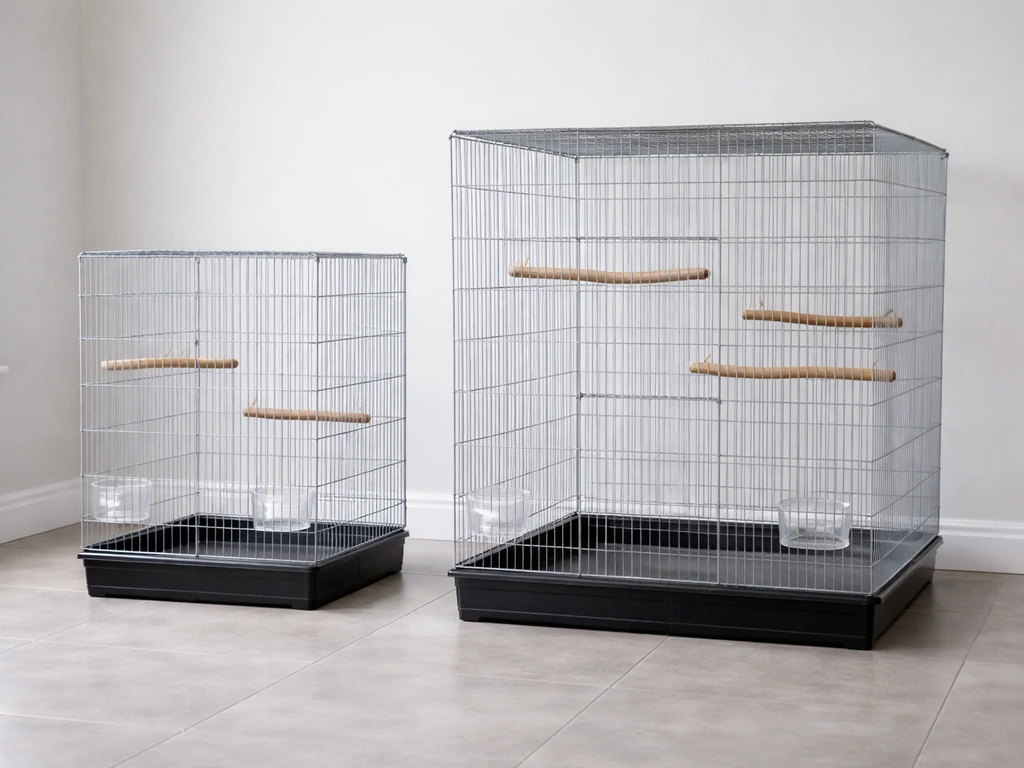
Cockatiels need a minimum of 24" L × 24" W × 30" H, and some guidance from Chewy and other care resources suggests going to 30" wide by 30" tall as a more comfortable starting point. Bar spacing of ½ inch is the standard, though some sources extend this to ⅝ inch for cockatiels. I'd stay at ½ inch to be safe since cockatiels will test gaps when they're curious. Cockatiels are active birds that benefit enormously from a wider cage rather than a taller one for the same reason as finches: horizontal movement is natural for them.
Conures and similar mid-sized parrots
The Merck Veterinary Manual minimum for conures, caiques, and Poicephalus species is 36" × 24" × 48". That's a significant footprint and a real commitment in a small apartment. Bar spacing can go up to ¾ inch for these birds without safety risk. Conures are high-energy and genuinely need room to climb, forage, and explore. A cage that hits the minimum dimensions but is stuffed with toys leaves almost no movement space. For conures especially, what you put inside the cage matters as much as its outer size.
Perches, climbing, and the exercise space that actually matters
Perches are not just where your bird sits. They're the primary movement infrastructure inside the cage. A bird should be able to hop between at least two perches without its tail hitting the cage wall, and the perches should be at different heights to encourage vertical movement. The Avian Welfare Coalition recommends at least 4 inches of perch space per small bird in shared housing, which gives you a concrete planning number when setting up a multi-bird cage.
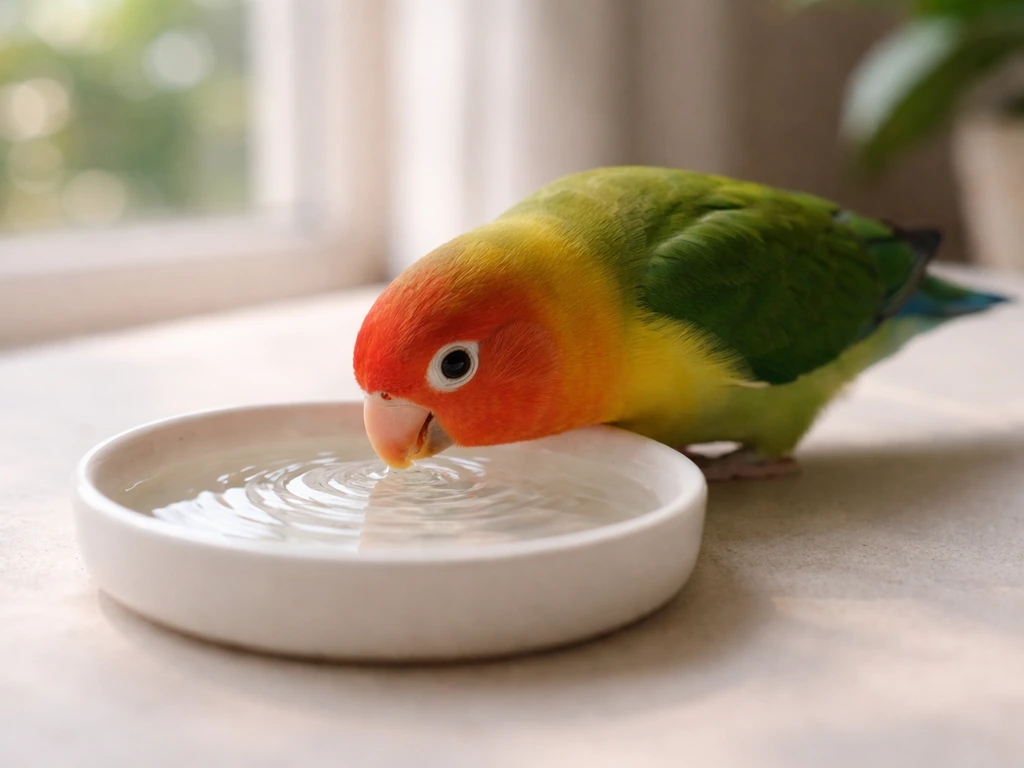
Out-of-cage time is not optional for most pet birds. Water needs vary by species and diet, but birds generally require clean water available throughout the day out-of-cage time is not optional for most pet birds. The RSPCA is explicit: birds should have regular opportunities to fly in a safe indoor environment outside the cage. For most companion parrots and parakeets, that means at least 1 to 2 hours of supervised out-of-cage time daily in a bird-proofed room. A smaller cage is more acceptable if the bird gets genuine daily flight time in a safe space. A large cage with zero out-of-cage time is still a welfare problem for active species.
When you're planning enrichment placement, think in zones. You want a foraging zone (lower perches with food puzzles), a climbing zone (ropes or ladders between levels), and a resting zone (higher perch where the bird feels secure). If all three are crammed into one area, the bird can't meaningfully move between behaviors. Best Friends Animal Society recommends including multiple enrichment categories: toys, ropes, perches, and bird-safe plants, and thinking about play areas outside the cage as an extension of the bird's total habitat, not a bonus. Even if your bird spends time indoors, natural outdoor features like trees can still support its behavior by offering safe perching and spotting opportunities.
One big cage vs. multiple zones: what actually works
A lot of first-time bird owners fixate on getting the biggest cage possible and treating that as the solution to space needs. A good way to think about what does a bird need is to plan for both safe cage space and meaningful daily out-of-cage time space needs. In reality, a well-designed smaller cage paired with consistent supervised out-of-cage time in a safe room often serves the bird better than a massive enclosure the owner never interacts with. The cage is home base and sleeping quarters. The room (or a dedicated play area with a bird gym or play stand) is where real exercise and mental stimulation happen.
If you have the space, a dedicated bird room or a corner of a living room with a play gym and foraging station is worth more to your bird than adding another 6 inches to the cage dimensions. The key constraint is safety: the out-of-cage area needs to be free of ceiling fans, non-stick cookware fumes (which are acutely toxic to birds), open windows, cats, and other hazards. A large but unsupervised out-of-cage area is dangerous. A smaller, bird-proofed space with you present is genuinely better.
For owners with multiple birds of the same species, you might consider separate sleeping cages with a shared daytime play space rather than one giant communal cage. This approach gives each bird a safe retreat and reduces territorial stress, particularly for cockatiels and conures.
When you're tight on space: what to do and what not to compromise
Small apartments and limited budgets are real. Here's how to handle space constraints without shortchanging your bird. First, choose a species that genuinely fits your space. Finches and parakeets can thrive in smaller footprints with proper care. Conures and larger parrots need room that a studio apartment may simply not support safely, and it's better to know that before buying the bird.
If you're committed to a species that needs more space than your cage can provide, the upgrade that matters most is consistent supervised flight time in a cleared room, not a bigger cage. In most cases, you should never assume that rain itself is enough, since birds often need shelter, airflow, and dry perches even when it’s wet outside consistent supervised flight time. A 20-minute flight session in a closed, bird-proofed bedroom does more for a cockatiel's physical health than a cage that's 4 inches wider. The cage upgrade that makes the most difference is going wider rather than taller, since horizontal space drives actual movement.
Here's what you absolutely cannot compromise on: bar spacing. When you’re figuring out what do you need for a pet bird, bar spacing is one of the first safety checks to do before you buy a cage. No matter how tight the budget, a cage with incorrect bar spacing is a safety hazard that can result in a trapped or injured bird. This is not a "it's fine for now" situation. Bar spacing is the one specification where the minimum is also the hard line. Similarly, do not undersize for your species group. A budgie in a cage smaller than 18 inches in any dimension is cramped in a way that affects its physical health and behavior over time.
Upgrades that actually help in small spaces
- Choose a wide, horizontal cage layout over a tall, narrow tower (horizontal space is more valuable for most species)
- Add a play gym or tabletop perch stand outside the cage to extend usable space without a bigger enclosure
- Use foraging toys that encourage movement inside the cage rather than static food dishes
- Rotate toys regularly so the bird continues to explore and interact rather than habituating to a static environment
- Bird-proof one room for supervised flight time rather than relying solely on cage space
Your quick-start sizing checklist
Before you buy a cage or bring a bird home, run through this. It takes less than 10 minutes and will prevent most of the common beginner sizing mistakes. To figure out what you need for bird watching, start with the basics: binoculars, the right field guide, and a plan for spotting in the locations where birds naturally feed and rest.
- Identify your species and find its minimum cage dimensions (use the figures in this article as a starting point, then verify against veterinary sources)
- Measure the interior width and depth of any cage you're considering, not the exterior
- Physically measure bar spacing with a ruler before purchase, don't trust the listing
- Confirm bar spacing matches your species: ⅜ inch for finches, ½ inch for budgies and cockatiels, up to ¾ inch for conures
- Plan perch placement: at least two perches at different heights, with clearance for the bird's tail on both sides
- Identify where out-of-cage time will happen: a specific room or zone that can be consistently bird-proofed
- Commit to a daily supervised out-of-cage routine before you finalize your cage choice, since a smaller cage is only acceptable with reliable flight time built in
- If budget or space is tight, pick a species whose minimums you can actually meet, rather than stretching to fit a species that needs more room
Getting the space right at the start saves a lot of frustration later. A bird in an appropriately sized, properly set-up cage with daily flight time is dramatically healthier and easier to bond with than one that's cramped, bored, or stressed. Understanding what your bird needs in terms of diet, water, and enrichment beyond just square footage ties directly into whether the space you've planned actually works day to day, and those factors are worth thinking through alongside the cage decision from the beginning. In rain or wet weather, birds still need a safe way to stay dry, avoid hypothermia, and keep their feathers protected what does a bird need in the rain.
FAQ
If a cage meets the “minimum” dimensions, does that mean it’s safe and comfortable for my bird?
It means the bird can survive, not that it will thrive. Comfort depends on usable interior space after perches and dishes are installed, and on activity level. A “minimum” cage with poor layout can still limit wing stretching and normal movement, leading to stress and overgrown nails or poor fitness.
How do I measure the cage interior correctly when listings show exterior dimensions?
Use a tape measure inside the bars for width and depth at the floor level, then measure the usable height from the cage floor/grate to the lowest obstruction (usually the top perch or toy mounts). Also check how feeder doors and removable frames reduce the actual clearance you can place perches and toys around.
What’s the quickest way to verify bar spacing before putting a bird in?
Unbox the cage if possible, then measure multiple gaps with a ruler or calipers at different spots (corners and center). Confirm the smallest gap around where your bird would climb or stretch. If the listing and your measurement disagree, trust your measurement and consider the cage unsafe.
Do I need to buy perches right away, or can I use the ones that come with the cage?
Often you should replace the included perches. Starter perches may be too small in diameter, poorly positioned, or low-quality (flat, abrasive, or unevenly cut). Aim for perches that let the bird hop between at least two surfaces without the tail scraping, and vary heights to support normal movement patterns.
How much out-of-cage space do I need if my cage is large?
Think in terms of time plus safety, not just cage size. Even with a roomy cage, most active species need daily supervised flight or purposeful flying practice in a bird-proof room. If you cannot offer consistent safe flight time, you generally need a larger cage plus extra enrichment and more time with direct supervision.
Can I leave the bird on a stand or play gym instead of giving floor-level cage space?
A stand is helpful for enrichment, but it cannot replace the cage as the primary space for resting, eating, and short movements. Make sure the cage still provides safe, accessible perching and enough width/depth for wing stretching. Also avoid placing the bird where droppings can contact food or where the bird may slip onto unsafe surfaces.
If I keep two birds together, is the rule just “double the minimum cage size”?
Not exactly. Two birds need extra room for separation and reduce competition, but the layout matters more than simply increasing one dimension. Ensure multiple perches at different heights, enough distance so birds can avoid constant contact at feeding spots, and watch for resource guarding, especially with cockatiels and conures.
Does cage height matter as much as width and depth for all birds?
Width and depth matter most for many small birds because they move horizontally and need room to spread wings. Height can still be important if your bird climbs regularly, but a tall narrow cage often provides limited usable flight space. When choosing, prioritize the direction your bird naturally travels between perches.
Is a removable grate above the cage floor always necessary?
It is strongly beneficial, especially if your bird forages near the floor or if hygiene is hard to maintain. A grate helps keep droppings away from where the bird lands, reducing contamination. If you skip it, you may need more frequent cleaning and careful placement of food and favorite perching spots.
What should I do if my apartment layout forces me to choose a cage that feels too small?
Use a safety-first tradeoff. Do not compromise bar spacing, and avoid undersizing for your species. Then compensate with a bird-proof play area and consistent supervised flight time, plus enrichment zones in the cage. If you cannot provide daily supervised flight time, it’s usually better to choose a species that fits your space.
How do I know if my cage placement is reducing the “real” space my bird has?
Placement affects airflow, visibility, and perceived security. Put the cage away from drafts and direct sun that can overheat, and avoid placing it where pets or frequent human traffic block access to perches. Also check that you can fully open doors and that walls or furniture are not forcing perches too close to surfaces.
What room hazards should I check before letting my bird fly outside the cage?
Do a quick pre-flight scan: ceiling fans, open windows, accessible cords, non-stick cookware, smoke sources, and other pets. Non-stick fumes can be dangerous even without visible smoke. Keep the bird out of kitchens and rooms with chemical cleaners or aerosols unless you can fully control exposure.
Next Article
How Much Water Does a Bird Need? Daily Amount Guide
Estimate daily bird water needs by species, diet, and heat, plus safe setup, cleaning routine, and hydration warning sig